Photogaleries

M-47E VLPD 26/70E “Lanzador” AVLB prototype gallery
m47lanzadorproto1
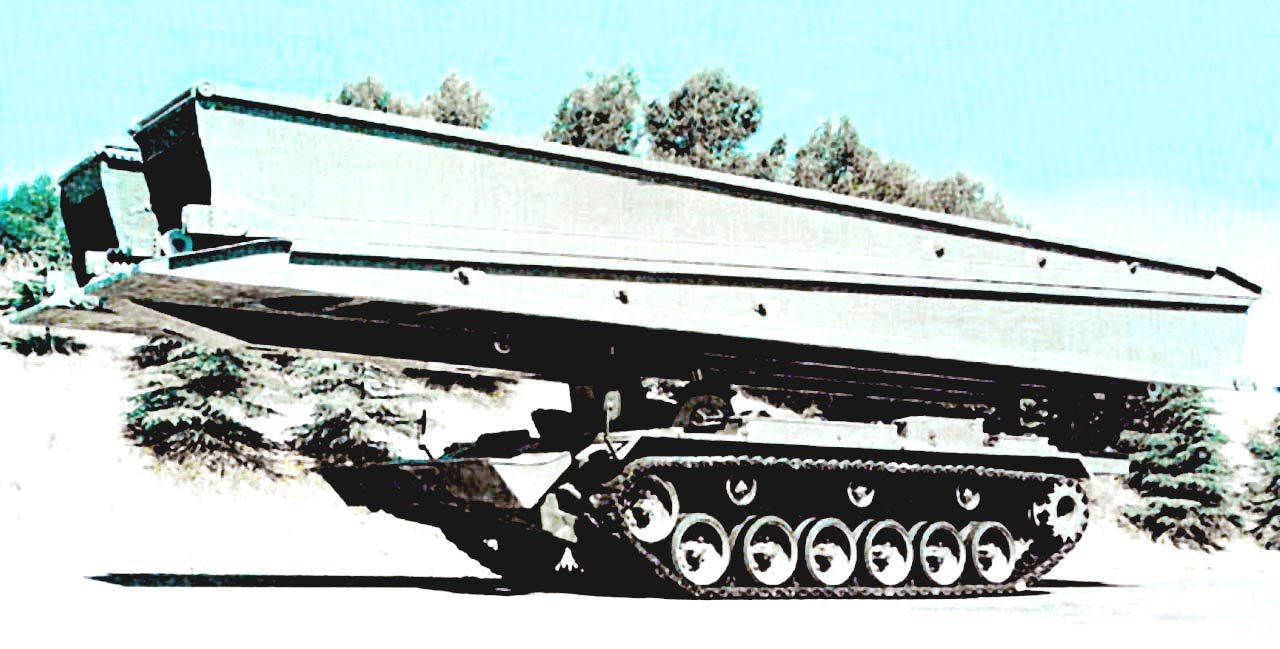
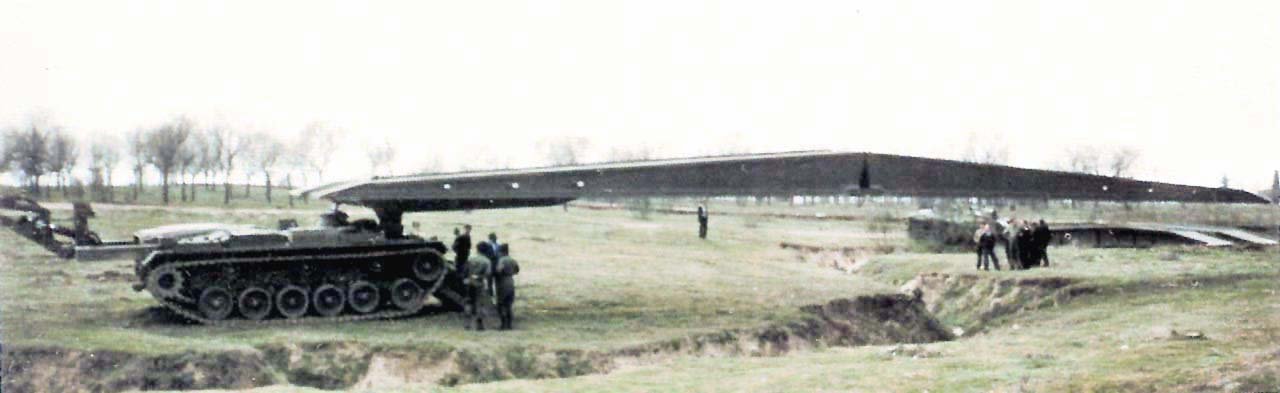
In the early 1980s, the Spanish Army considered acquiring a new bridge-laying vehicle to replace the seven M-60 AVLBs already in service. These were becoming outdated and had the problem of being easily spotted by the enemy at long range during bridge deployment and retrieval. The Army contacted the Spanish company Talbot S.A., which presented a design for a vehicle called the M-47E2 LP. This vehicle incorporated an MLC-60 scissor-type bridge mounted on an M-47E1 medium tank chassis, but the project was rejected because it presented the same problems as the M-60 AVLB vehicles. In 1988, the project was revived at the army’s request, but with a sliding-type bridge instead of a scissor-type bridge. The Peugeot-Talbot company (formerly Talbot S.A.) built a prototype designated “M-47E VLPD 26/70E Lanzador” (Launcher) (on the image), and in 1990 it was delivered to the 12th Engineer Battalion of the 12th Armored Brigade “Guadarrama” for evaluation.
m47lanzadorproto4
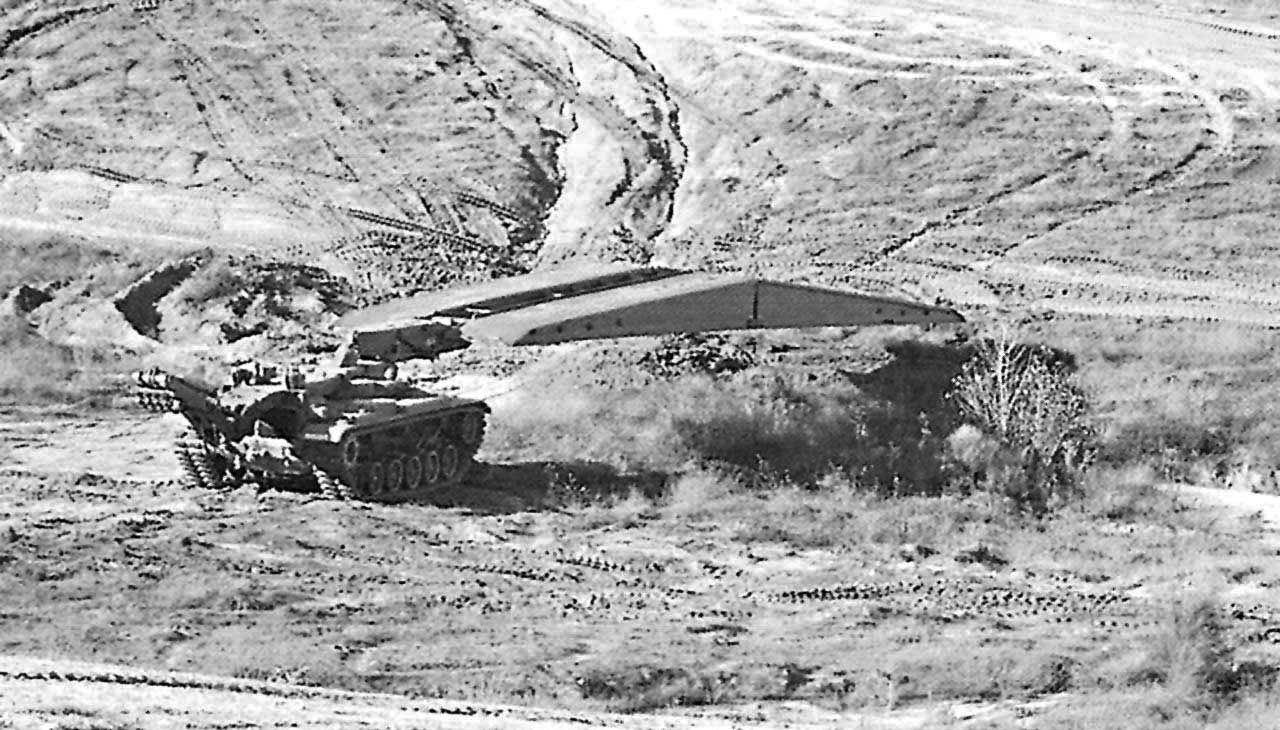
The M-47E VLPD 26/70E bridge-laying prototype (on the image) incorporated a German-made Dornier Leguan MLC-70 sliding bridge mounted on the chassis of an American M-47E1 medium tank, which was in service with the Spanish Army at the time. This bridge could support vehicles weighing up to 70 tons and span gaps of 24 meters. It was a sliding, horizontally deployed bridge, making it very difficult for the enemy to detect during deployment and retrieval. Constructed of aluminum, it weighed 10.5 tons and consisted of two 13-meter-long half-bridges that were transported one on top of the other. These half-bridges were coupled together and then deployed as a single unit thanks to a hydraulic system powered by an axial piston hydraulic pump located inside the hull. The deployment/retrieval operation took approximately 5 minutes. At the lower front, it had a hydraulically operated stabilizing/pushing blade that aided in vehicle stability during launching and retrieval. It also served to prepare the vehicle’s positioning area and the bridge’s support zone.
m47lanzadorproto7
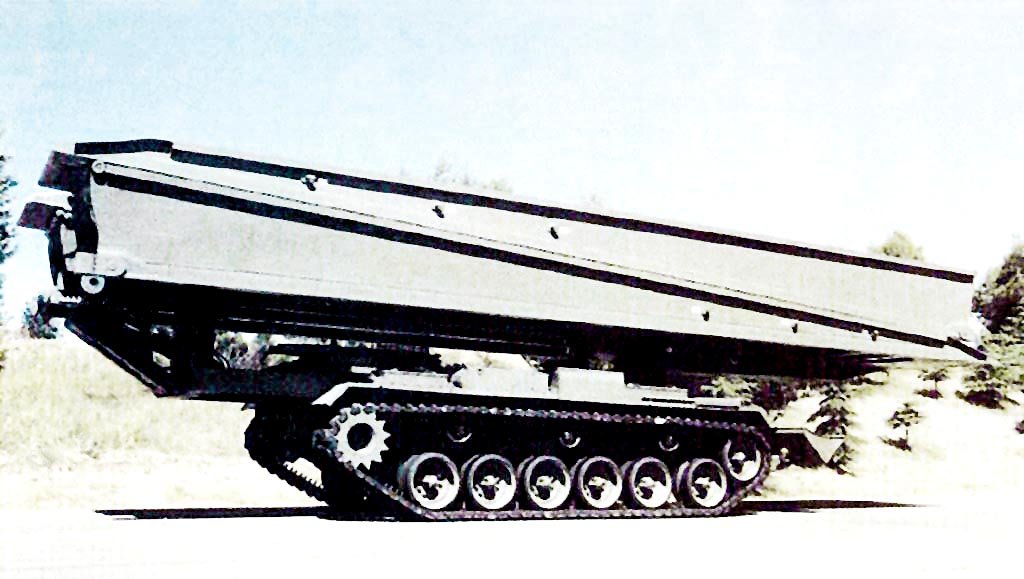
The “Lanzador” prototype (on the image) used the same M-47E1 chassis as other prototype engineering vehicles developed in the 1980s by Talbot S.A., such as the M-47E2R recovery vehicle, the M-47E2I engineering vehicle, and the planned M-47E2 LP bridge-laying vehicle, so its mobility and performance were similar. The crew consisted of two members: the commander and the driver. The running gear consisted of six double road wheels on each side and three double support rollers. The suspension consisted of torsion bars with hydraulic shock absorbers on the first, second, fifth, and sixth road wheels, with the idler wheel at the front and the drive wheel at the rear. The armor consisted of welded steel plates and offered complete protection against small arms fire and splinters. The acronym VLPD 26/70E refers to “Vehiculo Lanza Puentes Deslizante de 26 metros, clase 70, Español” (26-meter Sliding Bridge Launching Vehicle, Class 70, Spanish).
m47lanzadorproto5
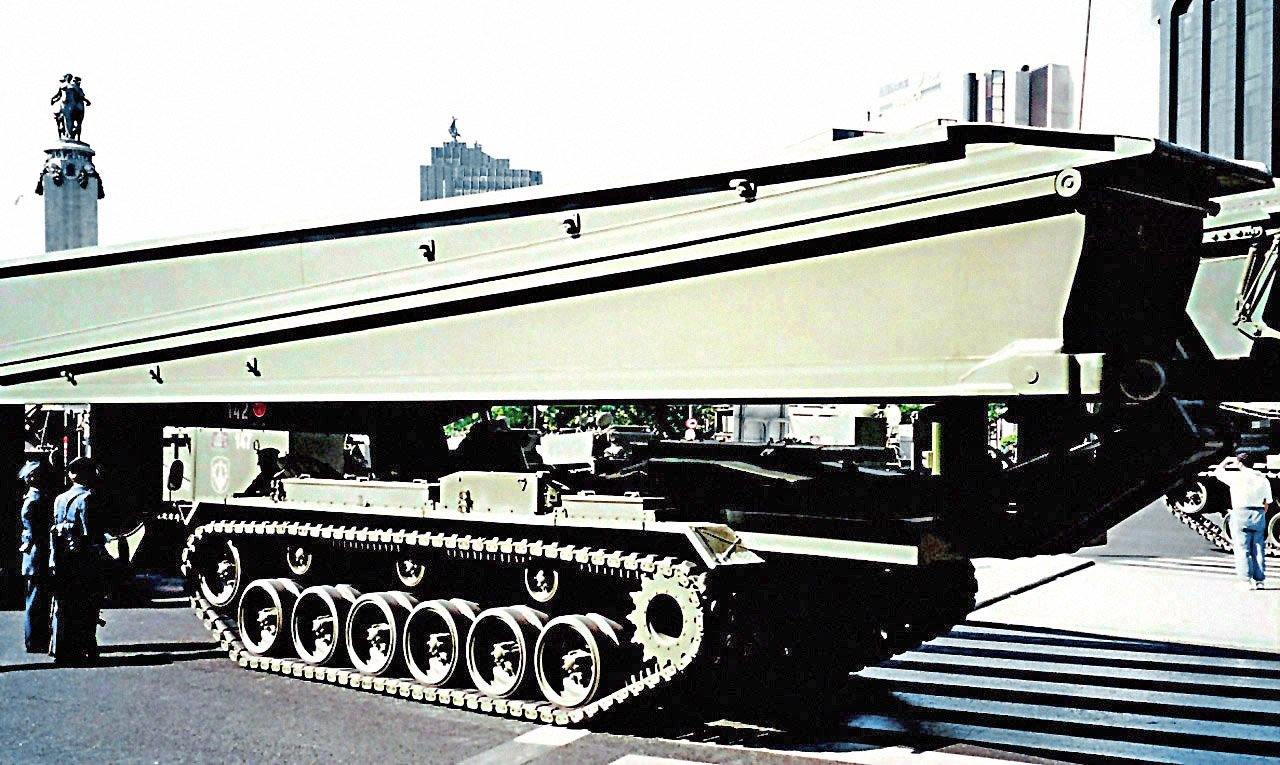
The M-47E VLPD 26/70E (on the image) was equipped with a 760 hp Continental AVDS-1790-2D diesel engine and was coupled to an Allison CD 850-6A transmission, the same as those installed on the M-60 MBT. The maximum road speed was 56 km/h (without the bridge) or 43 km/h (with the bridge) and the range was about 600 km. It could climb gradients of up to 60% (without the bridge) or 45% (with the bridge), and could cross trenches up to 2.30 meters wide. It could overcome vertical obstacles of 0.48 meters (with the bridge) and it could ford watercourses up to 1.20 meters deep without preparation. The armament consisted of a 12.7mm M-2 machine gun with 600 rounds and eight smoke grenade dischargers located in the rear end of the vehicle, on the bridge support. A TEESS concealment system was also included, which generated smoke by injecting fuel into the exhaust.
m47lanzadorproto2
M-47E VLPD 26/70E prototype (on the image) was delivered to the Army in 1990 for rigorous testing. Despite the excellent results, the vehicle was not put into series production, and Peugeot-Talbot was left without a contract once again, as had happened with the three other engineer vehicles they had previously designed and developed. The trials allowed the Army to draft the operational and technical requirements for a future bridge-laying vehicle, which finally came to fruition in 1996. Thanks to the acquisition of 50 American M-60A1 MBTs through the TLE program, a direct consequence of the FACE Treaty, the Army had 12 of them and the corresponding funds to convert them into a new bridge-laying vehicle designated “M-60A1 VLPD 26/70E”. Finally, Peugeot-Talbot saw its years of effort rewarded and manufactured the new bridge-laying vehicles between 1996 and 1999. According to some sources, the Lanzador bridge-laying vehicle prototype ended up serving with the 11th Mechanized Engineer Battalion of the 11th Mechanized Brigade “Extremadura” and is believed to have been in service at least until 2013, its current whereabouts being unknown.

Related posts