Photogaleries

ESPAÑA class gallery 2
alfonso13ship3
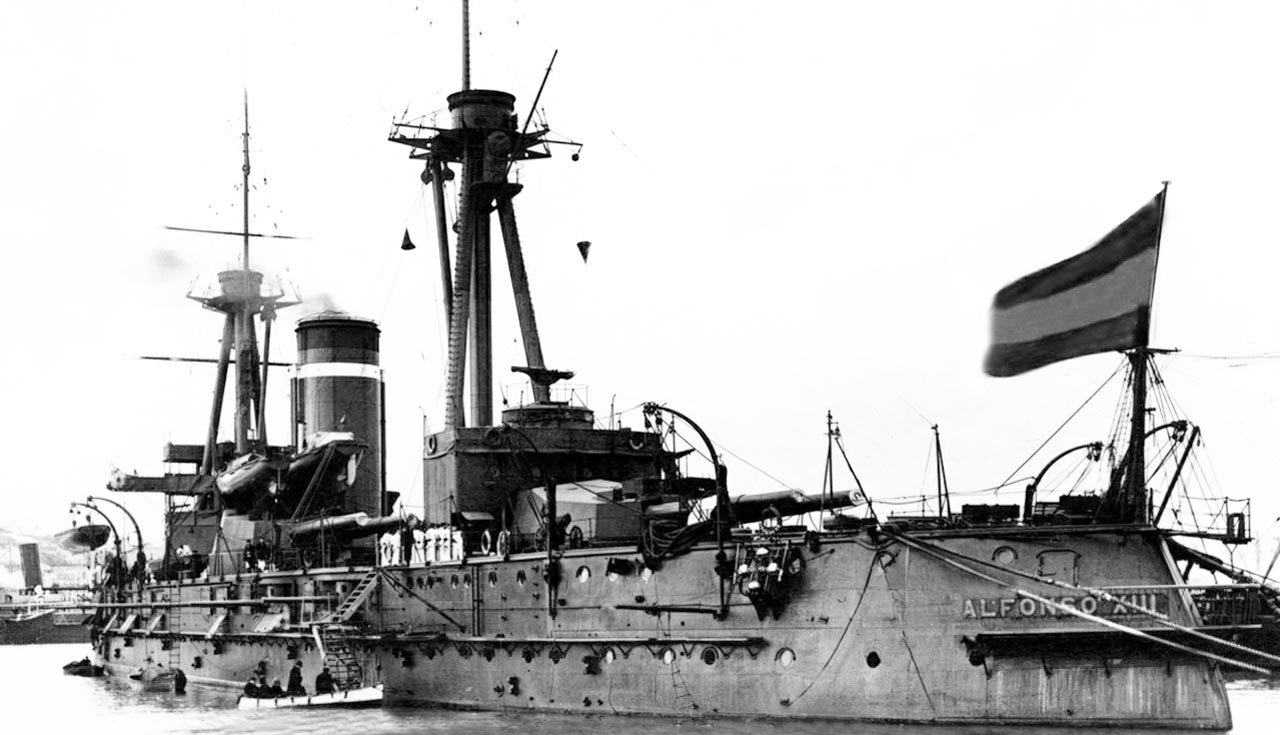
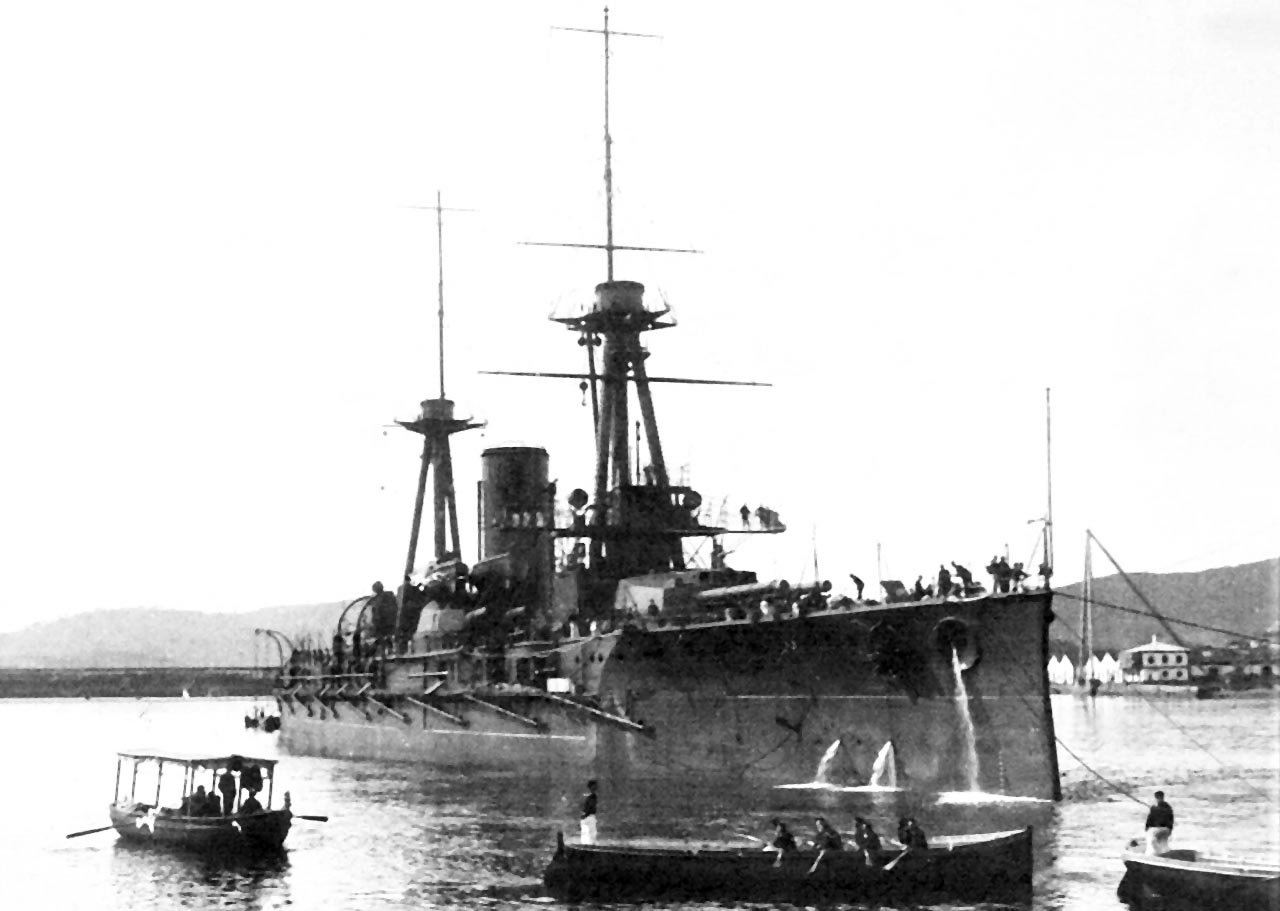
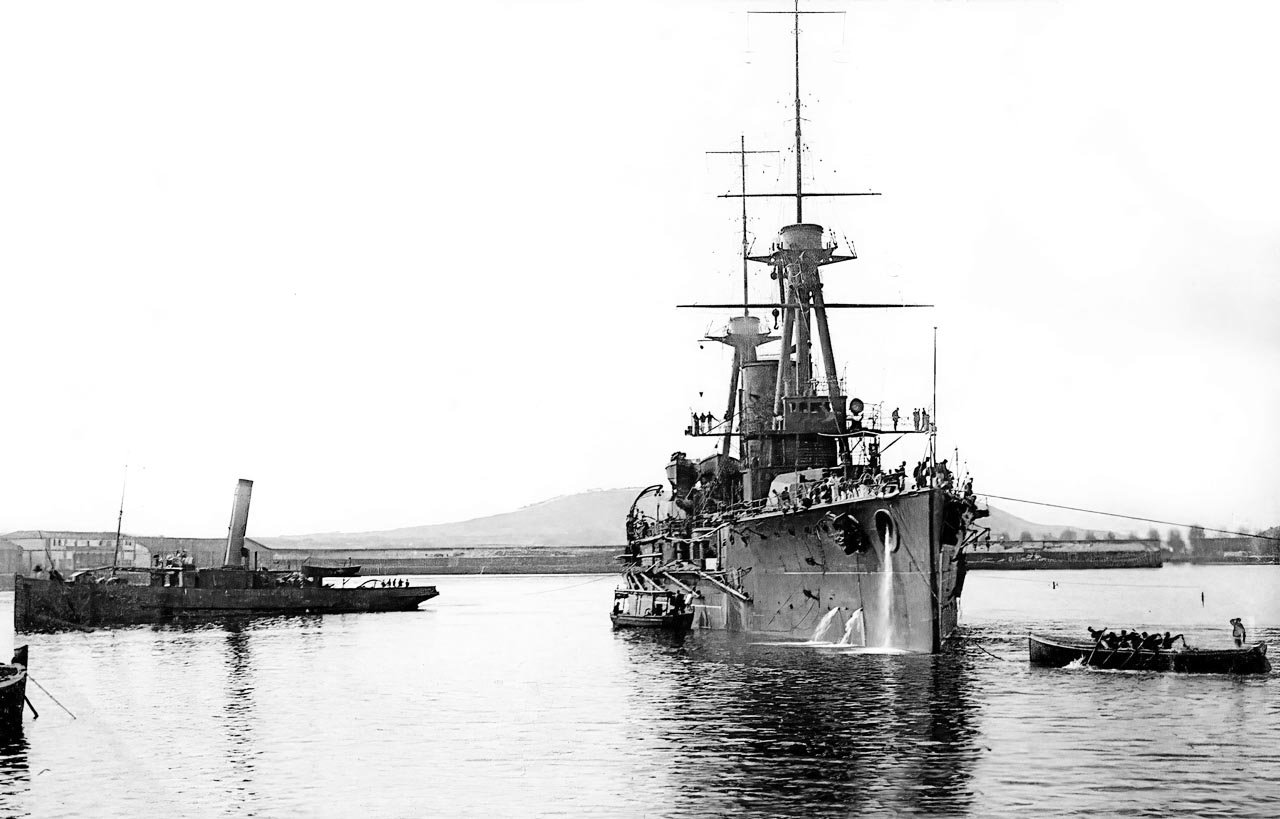
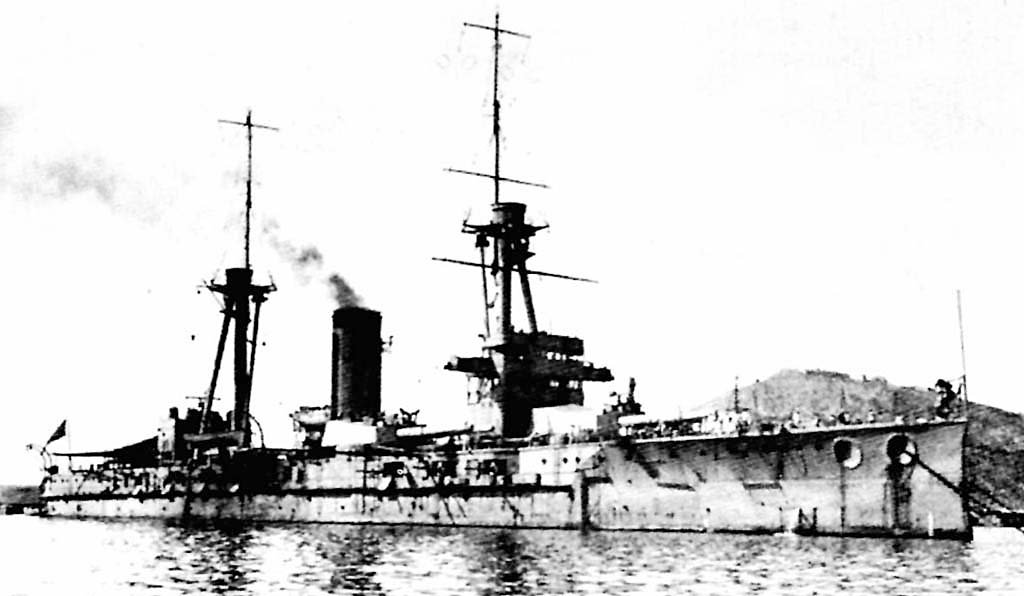
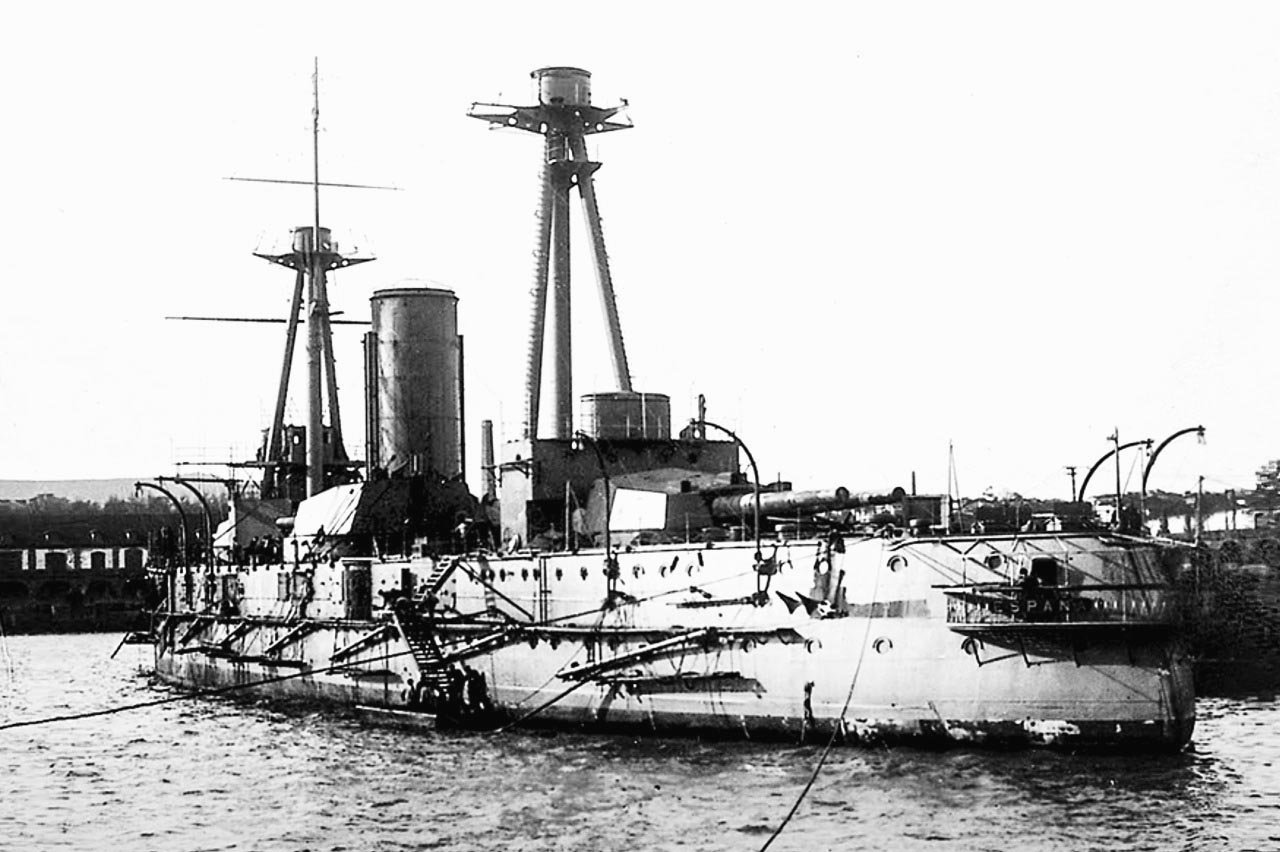
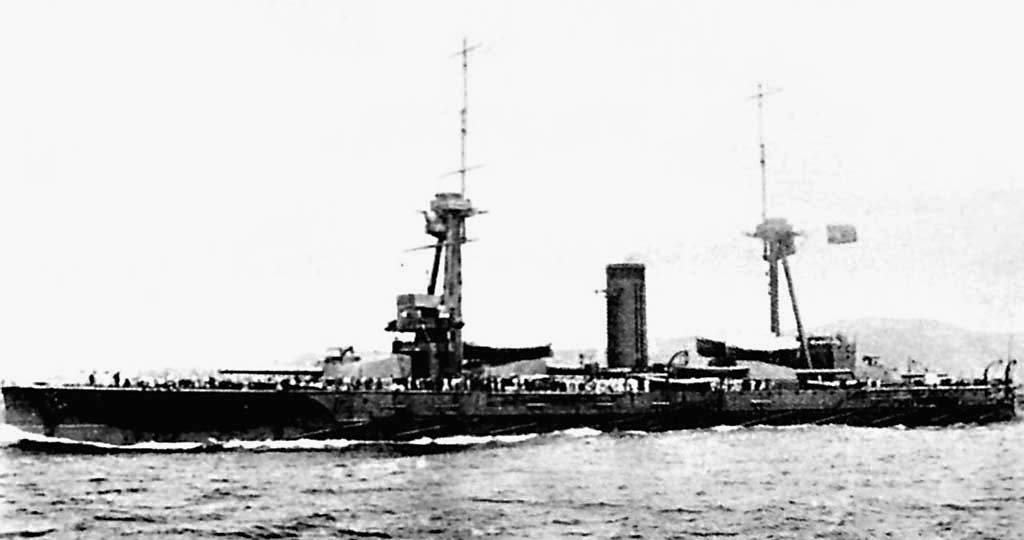
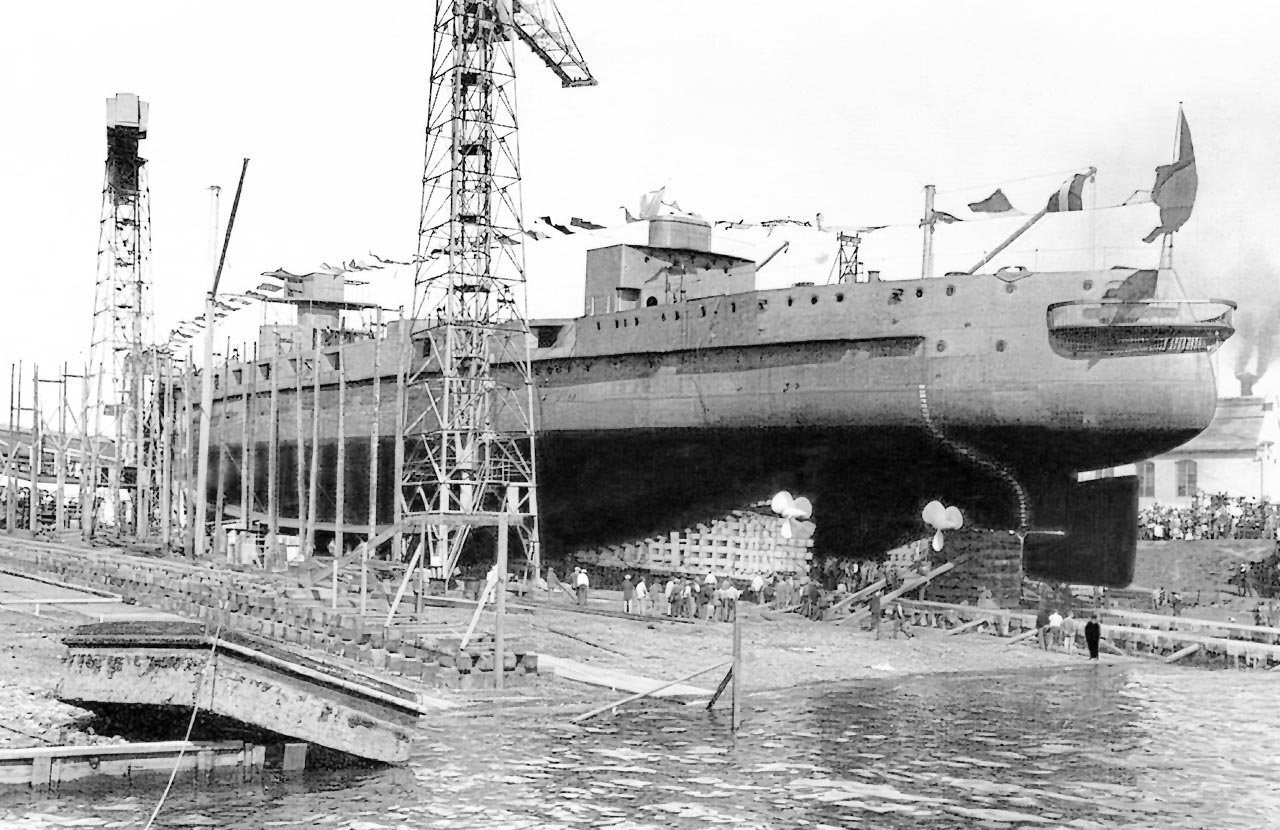
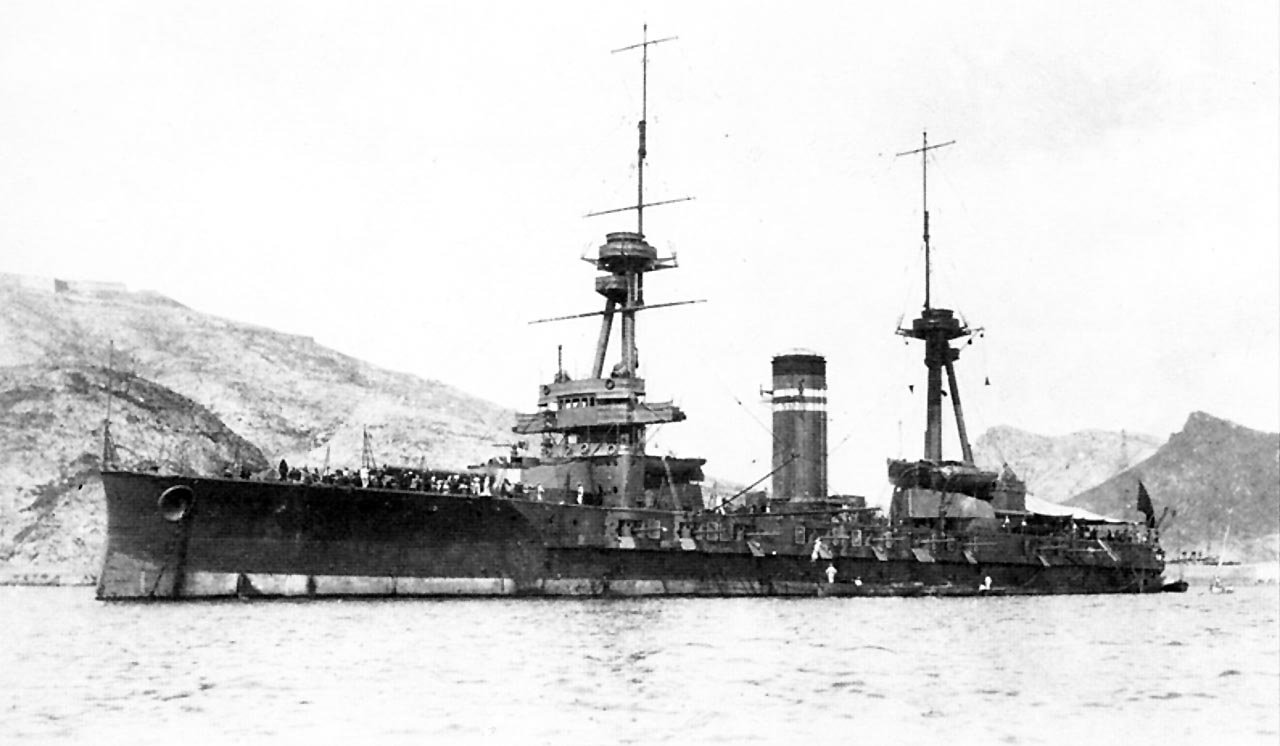
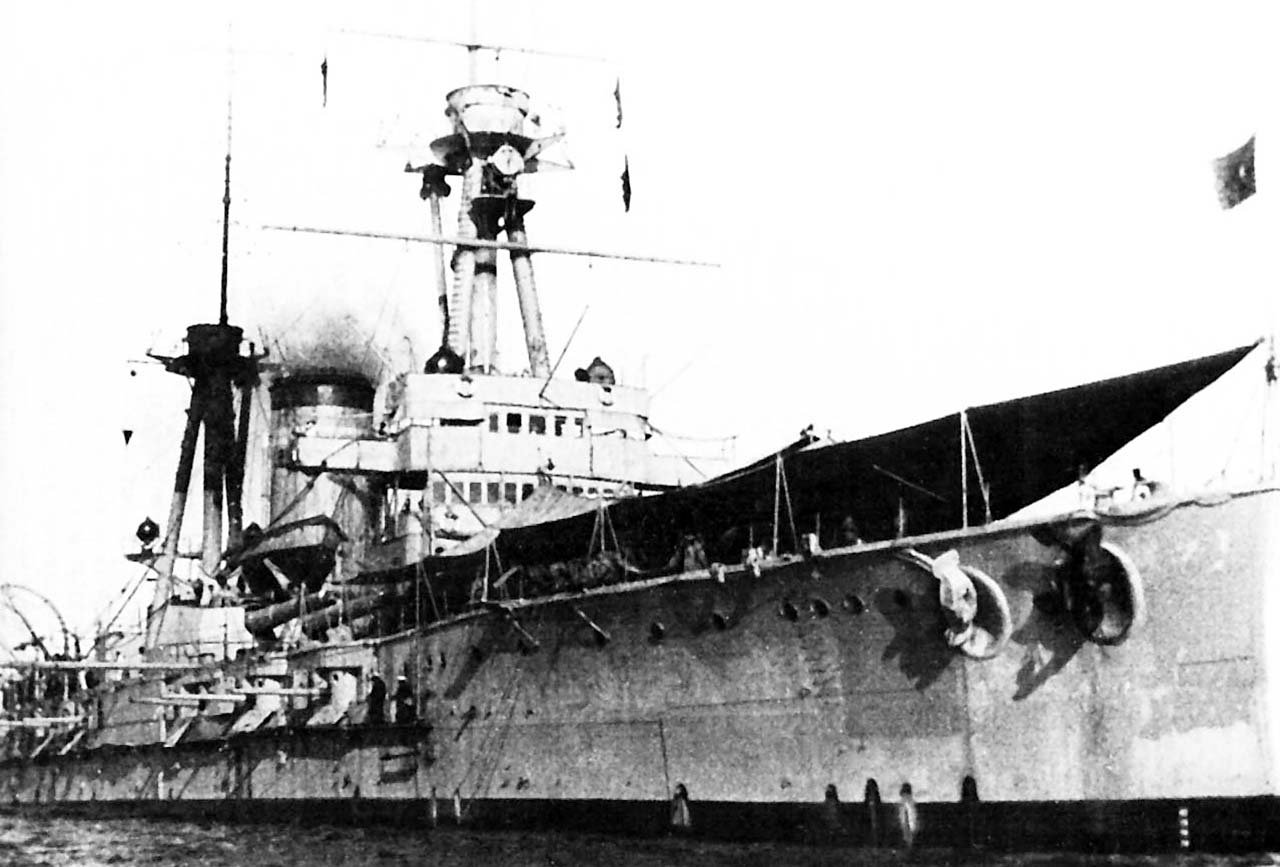
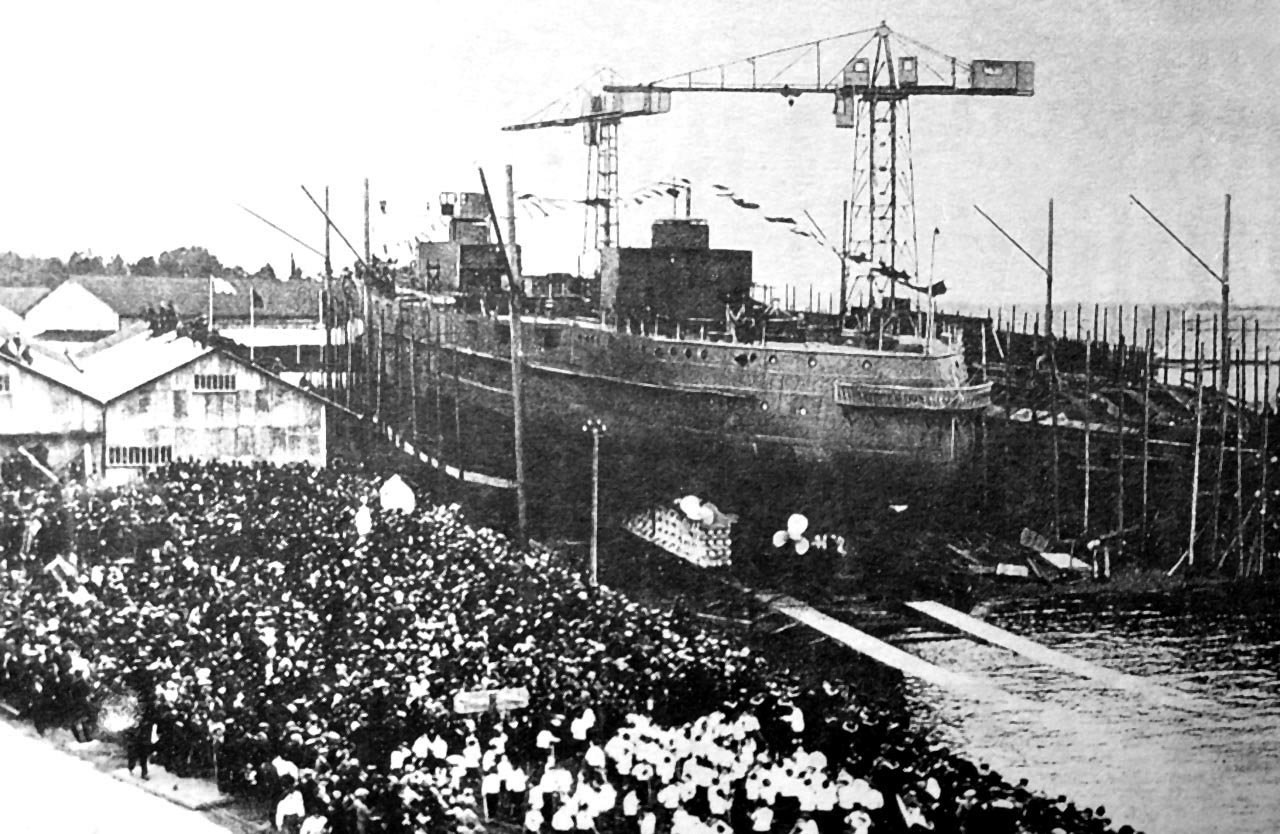
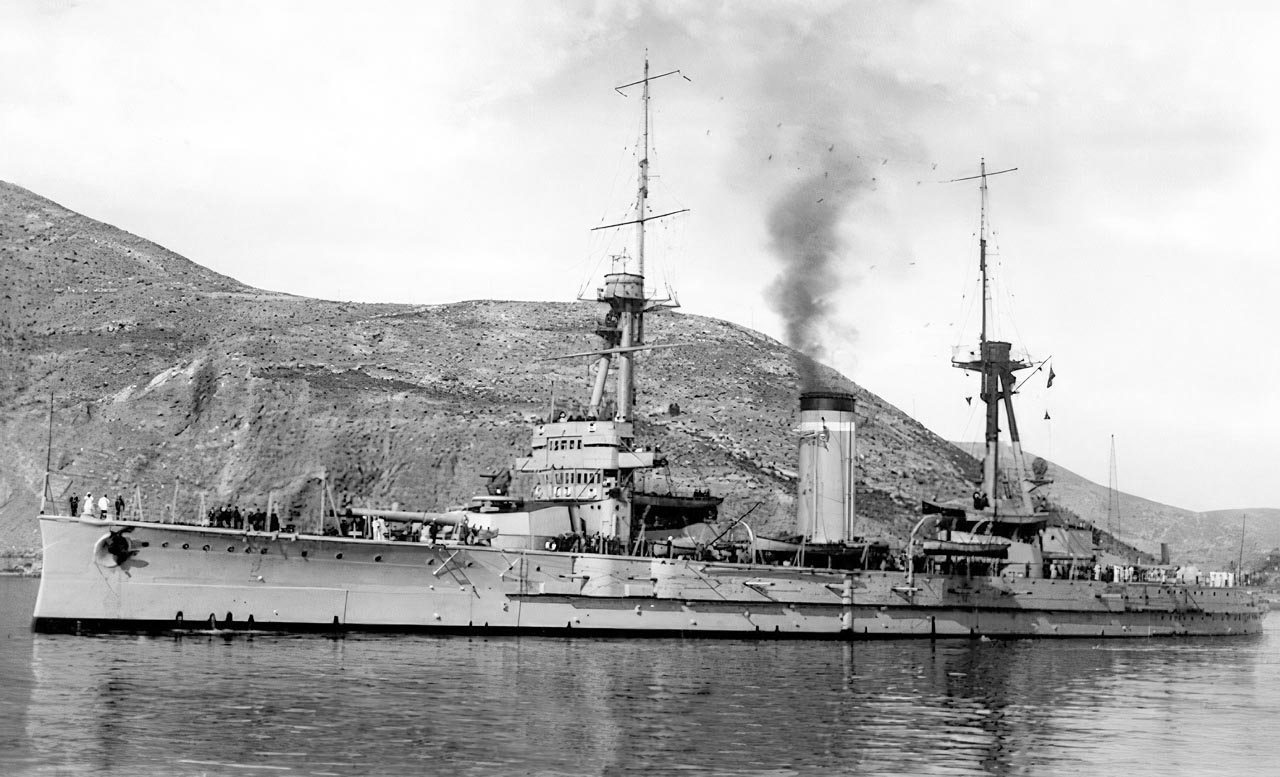
(Alfonso XIII battleship image). The second ship of the class was named Alfonso XIII, its keel was laid on February 23, 1910, and it was launched three years later, on May 7, 1913. The ship was delivered to the Spanish Navy on August 16, 1915, and was assigned, along with its sister ship España, to the First Division of the Training Squadron, based in El Ferrol. The delay in the ship’s delivery was due to the outbreak of World War I and the fact that both the main armament and fire control equipment were manufactured in Great Britain, a major belligerent in the conflict. Because of this, Spain had to obtain the fire control equipment from other neutral countries, so when the battleship Alfonso XIII was completed in mid-August 1915, it did not have the equipment originally designed for it.
alfonso13ship20
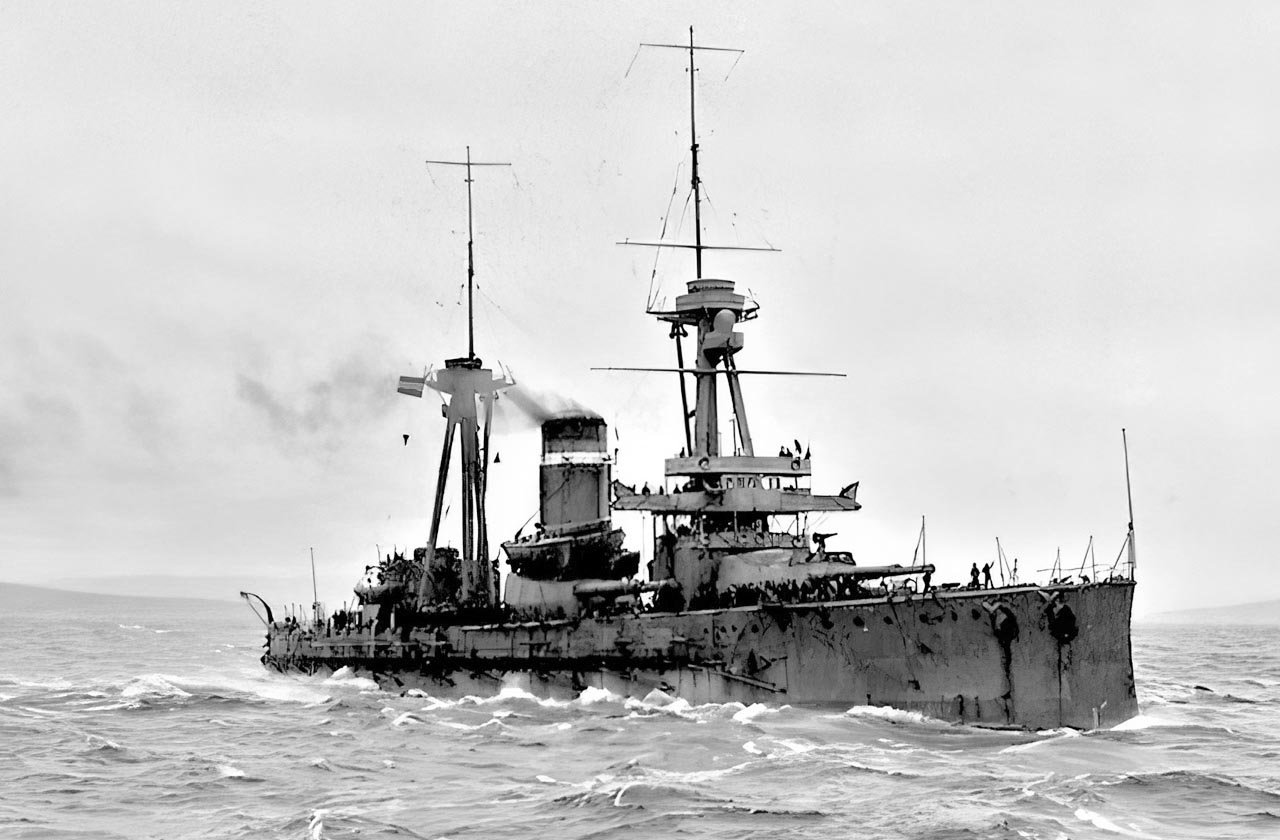
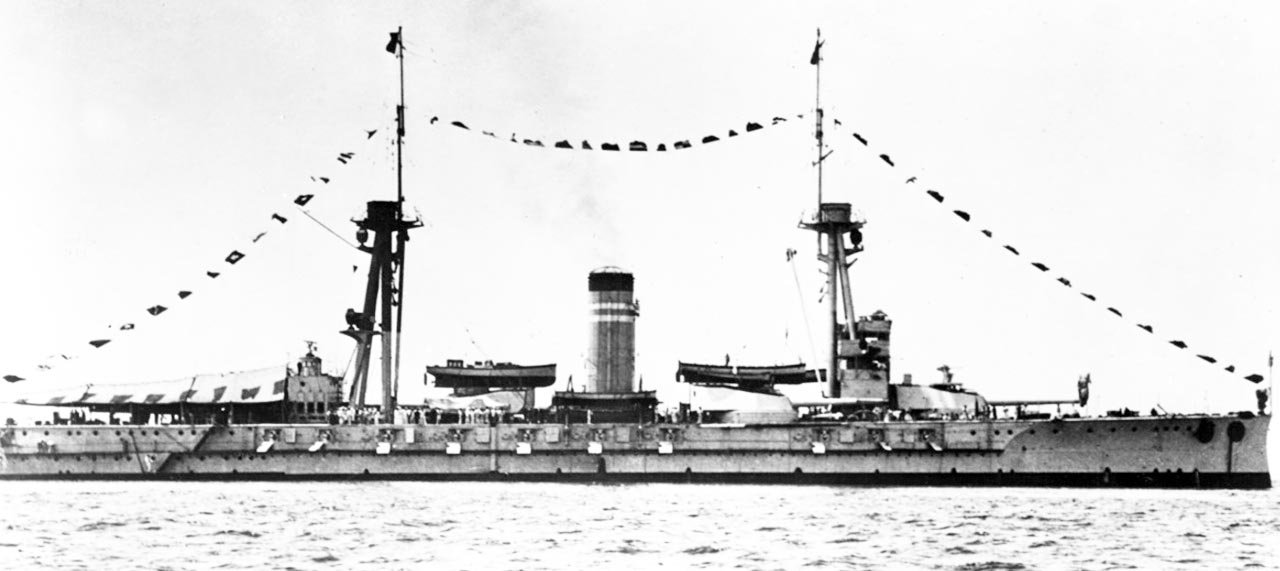
(Alfonso XIII battleship image). The first years of service of the Alfonso XIII were spent routinely participating in naval maneuvers in Galicia and the occasional naval review in the waters off Santander during the holidays of the King of Spain. In September 1916, it participated in the search for the destroyer Terror, damaged by a storm in the Bay of Biscay. In April 1917, it took part in the rescue of the tugboat Antelo, and in August of that same year, it went to Bilbao, where a landing party helped protect a railway line and several mines during a general strike. During a clash with strikers and revolutionaries, one crew member was killed and several were wounded, resulting in the arrest of 22 revolutionaries who were detained on board the ship.
alfonso13inbarcelona
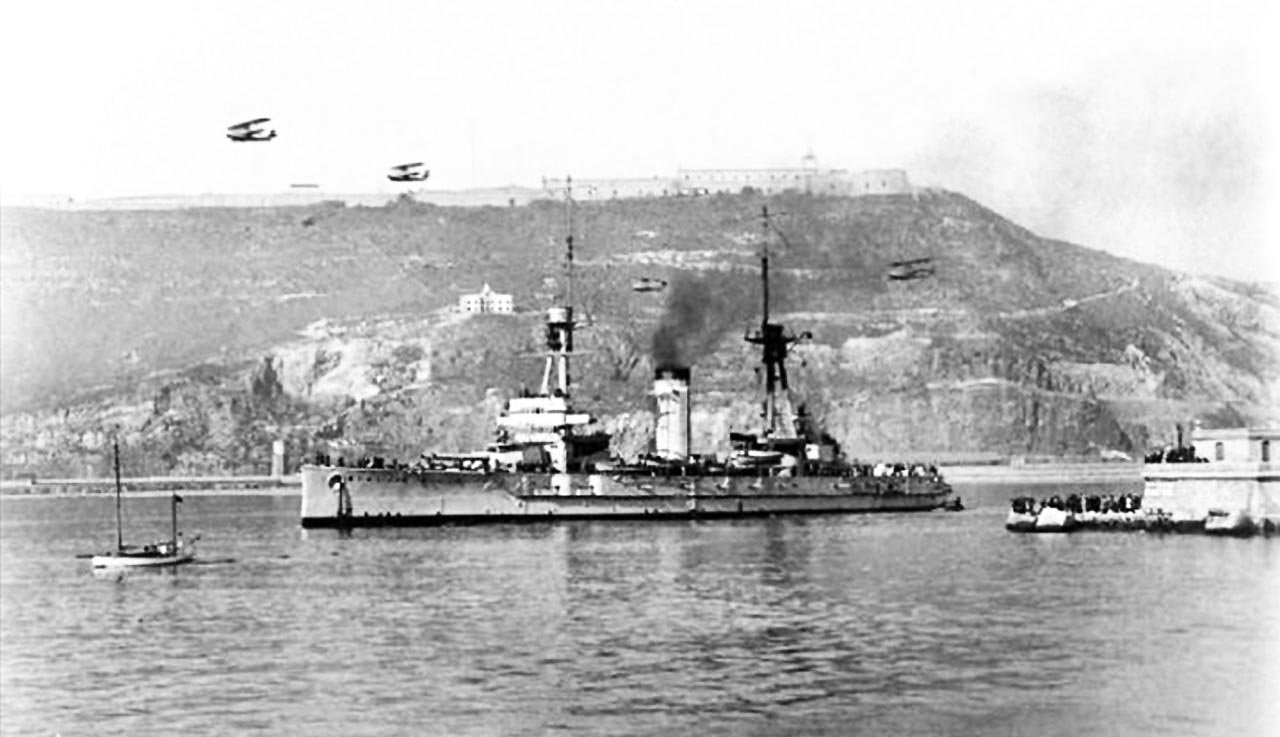
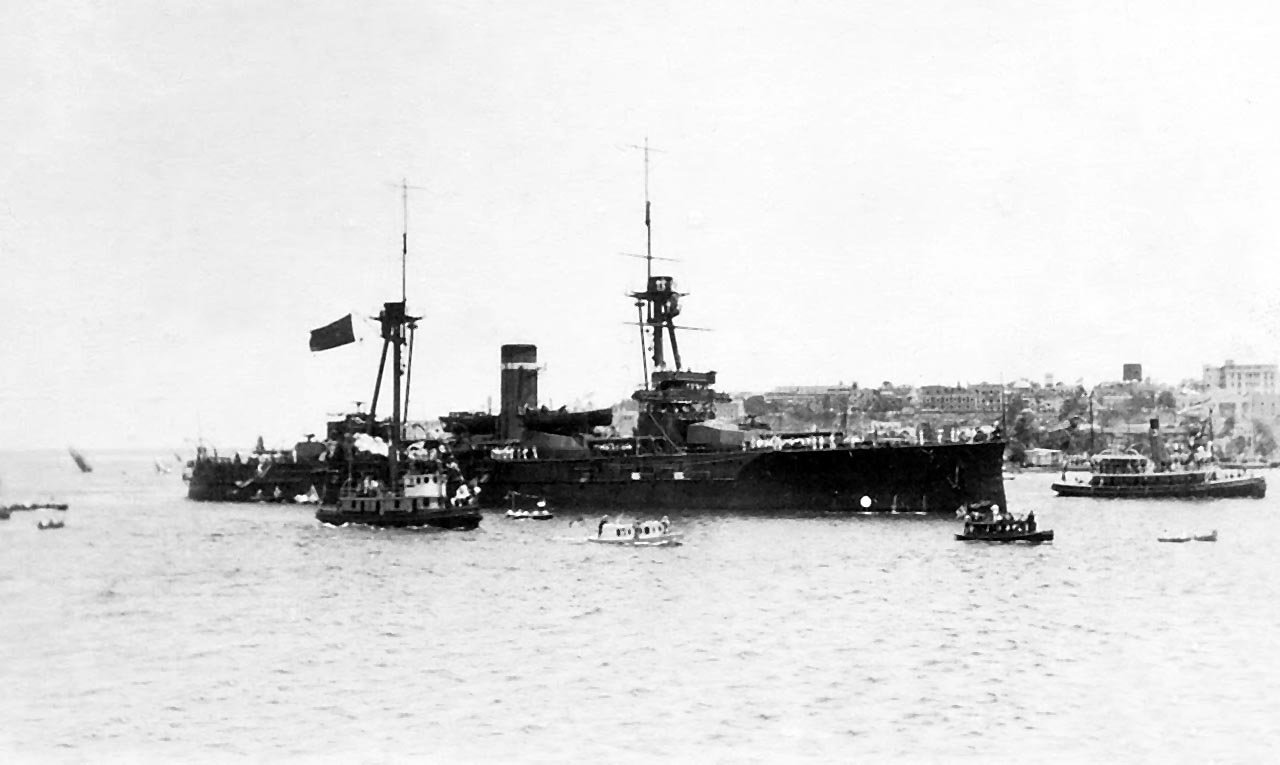
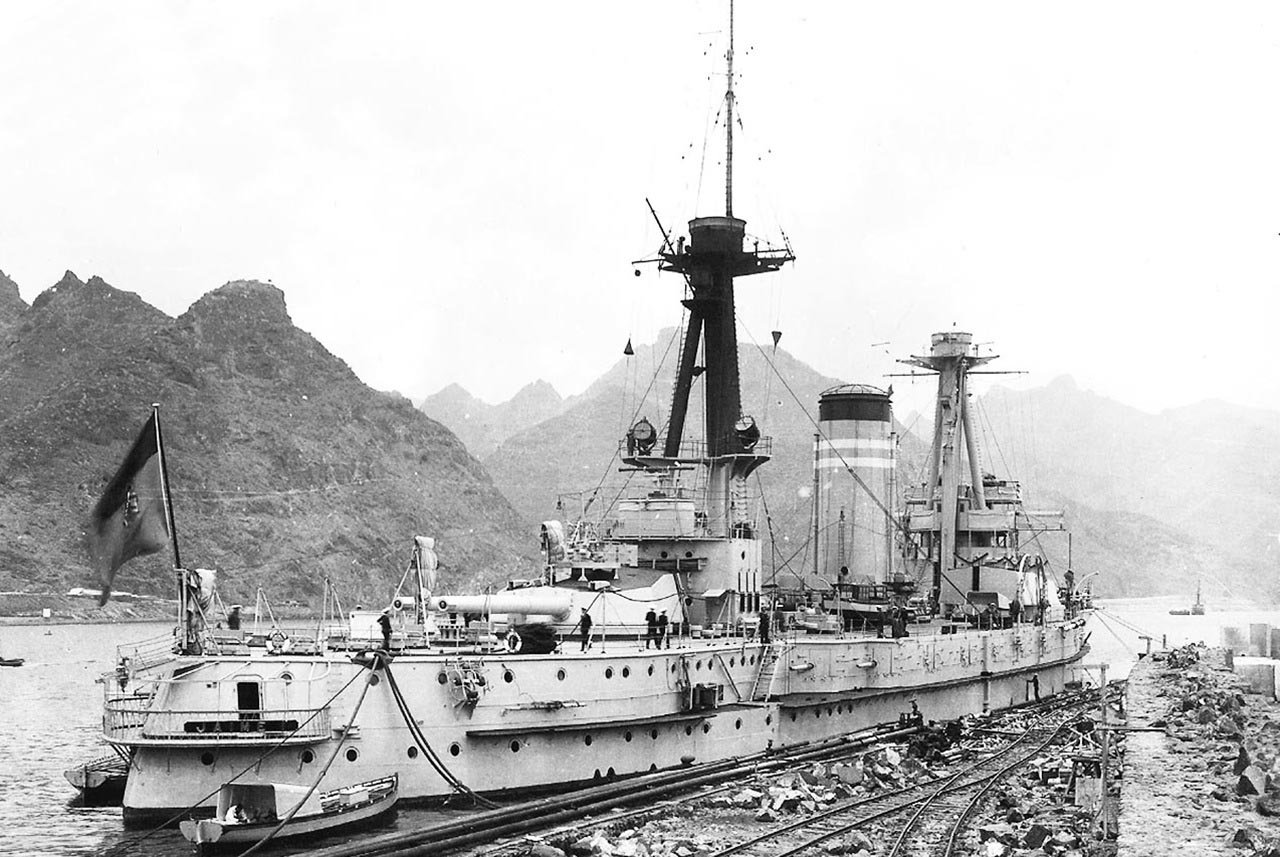
(Alfonso XIII battleship image). During 1918, the Alfonso XIII carried out surveillance missions along the Moroccan coast, and in early 1919 it sailed for Barcelona to celebrate the commissioning of the submarine Narciso Monturiol. Upon arrival, it encountered a strike against the Barcelona Traction company. Again, it dispatched a detachment of infantrymen ashore to protect the company, a mission that lasted for the forty-four days of the strike. In mid-August, it began important maneuvers in the Rías Baixas, Galicia, with the Squadron Commander, Vice Admiral Pintado, on board. During 1920, the ship made several transatlantic cruises and visited Cuba and Puerto Rico during the summer, where it received a warm welcome. Afterwards, it visited Annapolis and in mid-October arrived in New York, after which it returned to Spain in November.
alfonso13ship18
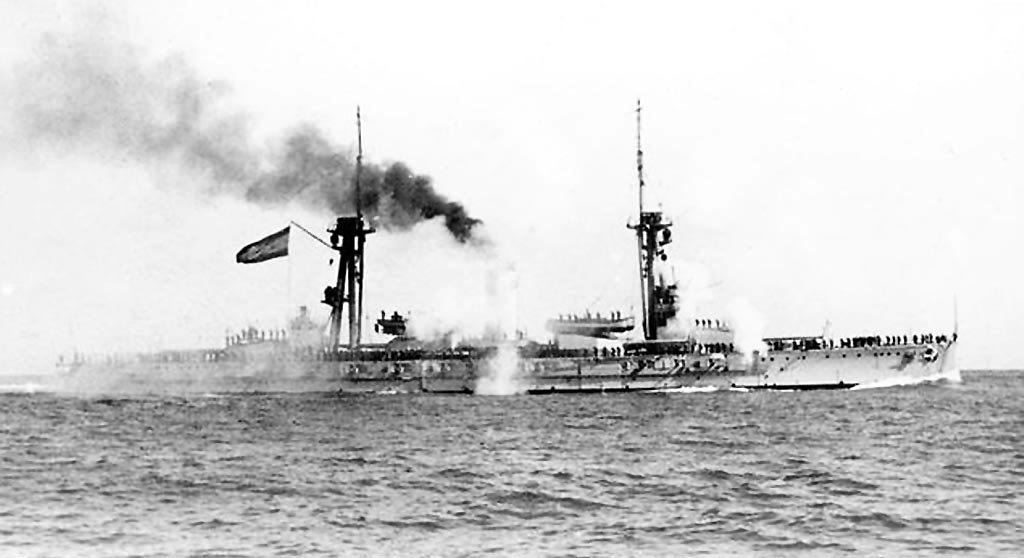
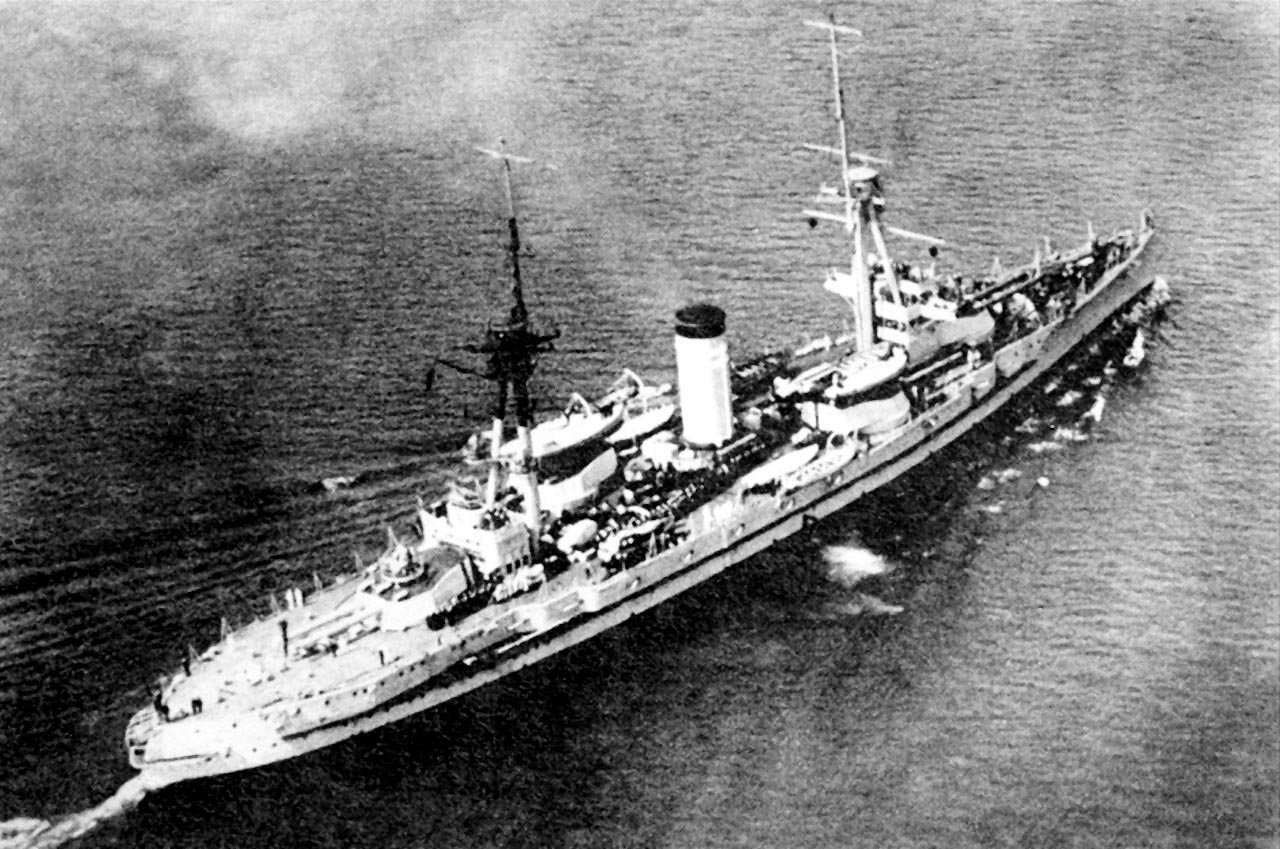
(Alfonso XIII battleship image). The Alfonso XIII began 1921 with a visit to Lisbon to pay tribute to the Portuguese soldiers who had fallen during World War I. Afterwards, a more belligerent period began, starting in April with its deployment in the waters off Alhucemas, supporting the Spanish contingent. Later, in August, following the Disaster of Annual, the Alfonso XIII arrived in Melilla, and on the 11th, it began bombarding rebel positions. Its landing party remained in the area to support Army units. In September, along with its sister ship, the España, it attacked Rif positions south of Melilla during the assault by units of the Spanish Legion. In October, its rifle company landed in support of troops in the Tiguisz area, and it finished 1921 supporting Spanish troops wherever needed. During this period, the battleship Alfonso XIII fired 515 305mm shells and 538 101.6mm shells.
alfonso13ship9
(Alfonso XIII battleship image). 1922 began with intense military activity for the Alfonso XIII off the coast of Morocco. It participated in several simulated landings and the bombardment of artillery batteries located in the Rif Mountains, sustaining some hits without casualties. On August 21, 1923, it took part in the amphibious assault on Afrau to relieve the besieged position of Tifaruin in Beni Said, and five days later participated in the rescue of the crew of the battleship España, which had run aground. In mid-November 1923, it paid a courtesy visit to the Italian fleet in the ports of La Spezia and Naples, along with its sister ship Jaime I and other ships of the Spanish Navy, returning to Barcelona two weeks later.
alfonso13ship21
(Alfonso XIII battleship image). In April 1925, the Rif War expanded to include towns in the French Protectorate, forcing France to intervene. In June of that year, a combined landing by the Spanish Army and Navy, supported by French units, was planned for Alhucemas. The landing was scheduled for September, but preparations by the Spanish Navy began in May, with the Alfonso XIII, the flagship, dispatched along with its sister ship, the Jaime I, and other warships from Cartagena to the Bay of Algeciras. On June 10, the landing support fleet was placed under the command of the High Command, but it wasn’t until September 1 that the force departed for Alhucemas to carry out diversionary attacks. On September 5, the dictator Primo de Rivera, then head of the Spanish government, was picked up in Río Martín to witness the operations firsthand.
alfonso13ship22
(Alfonso XIII battleship image). On September 8th, the Spanish fleet, composed of the battleships Alfonso XIII and Jaime I, the seaplane tender Dédalo, four cruisers, and landing craft, joined a French fleet consisting of the battleship Paris, two cruisers, and several other vessels. The plan was to land 18,000 men, and for this purpose, in addition to naval support, air support and tanks were also included. This is considered the first combined arms amphibious landing in history involving the use of tanks and massive air support from the sea, and a precursor to the Allied amphibious landings in World War II. Although only 13,000 soldiers were ultimately landed, the landing was a success and greatly contributed to the Spanish victory two years later.
alfonso13ship16
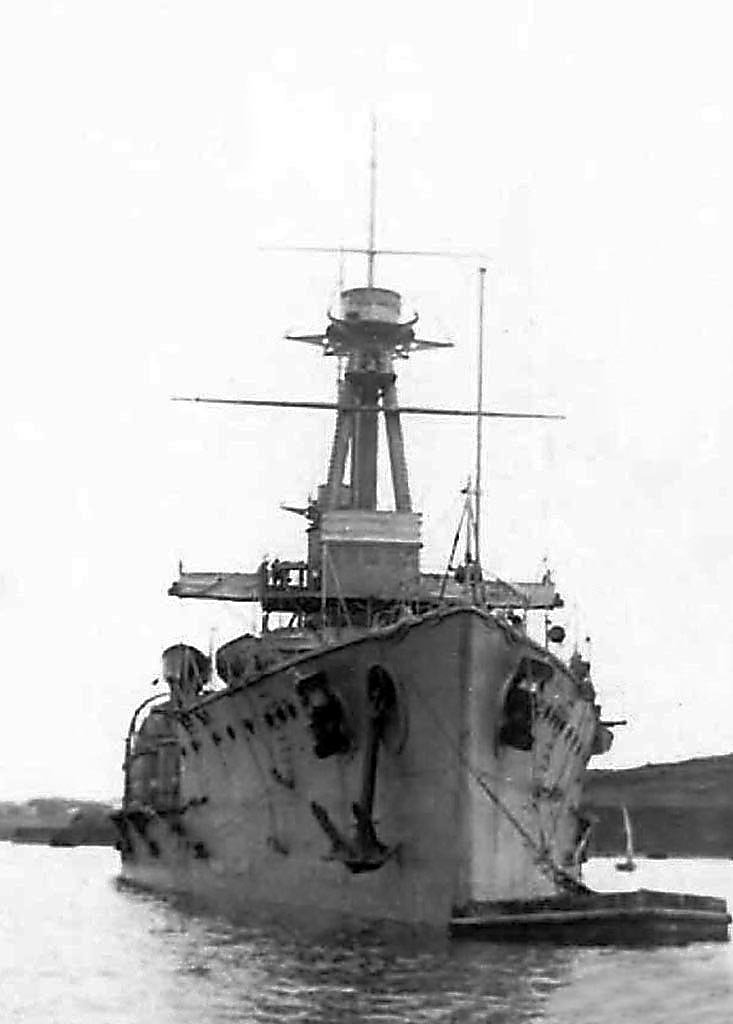
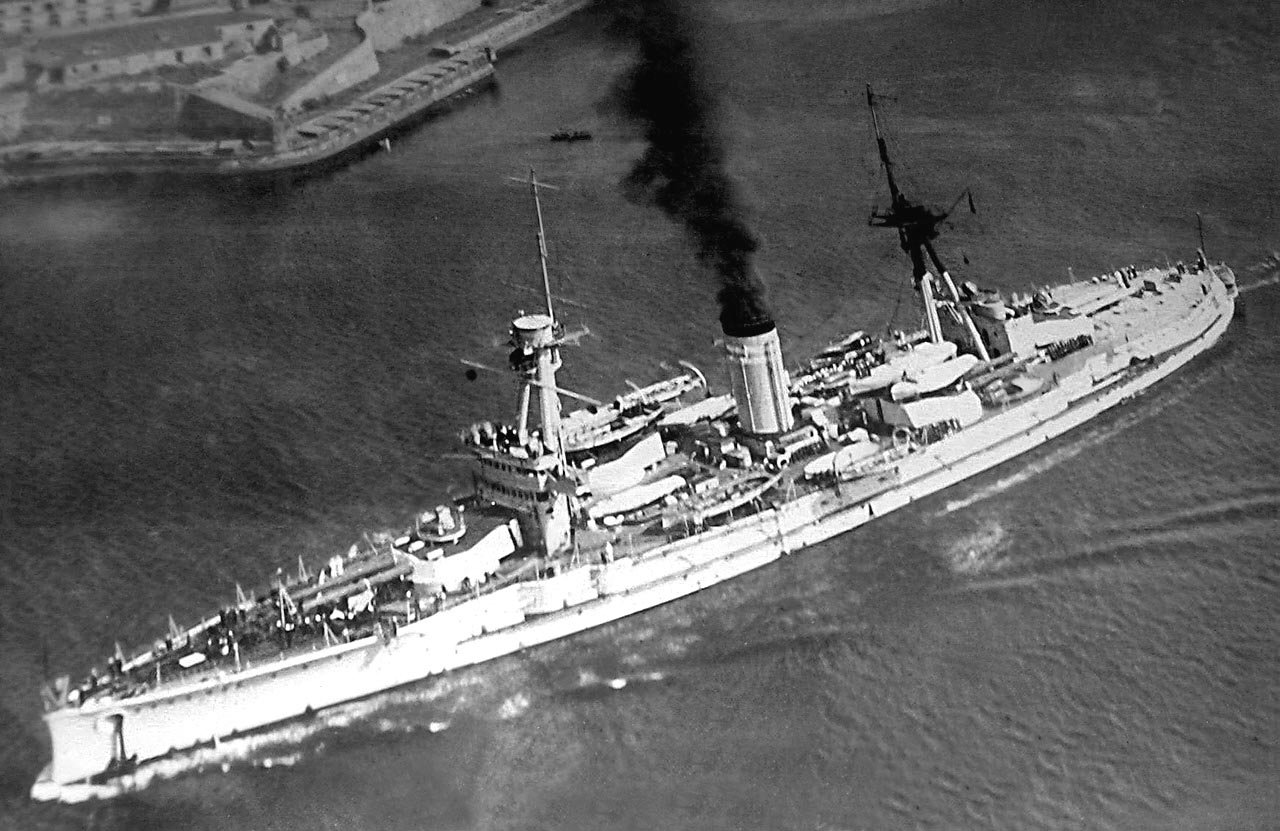
(Alfonso XIII battleship image). The Alfonso XIII continued its support missions until the end of the Rif War. Afterward, it resumed its normal peacetime duties and in October 1927 was assigned to a new unit designated simply as a “Squadron” alongside its sister ship, the Jaime I, and two cruisers. In the autumn of 1929, it participated in major maneuvers between Cartagena and the Balearic Islands, which highlighted the obsolescence of this battleship and its sister ship compared to newer vessels in the Navy. During the 1929 Barcelona International Exposition, it participated in a grand naval parade alongside British, French, Italian, and Portuguese ships.
españa2ship4
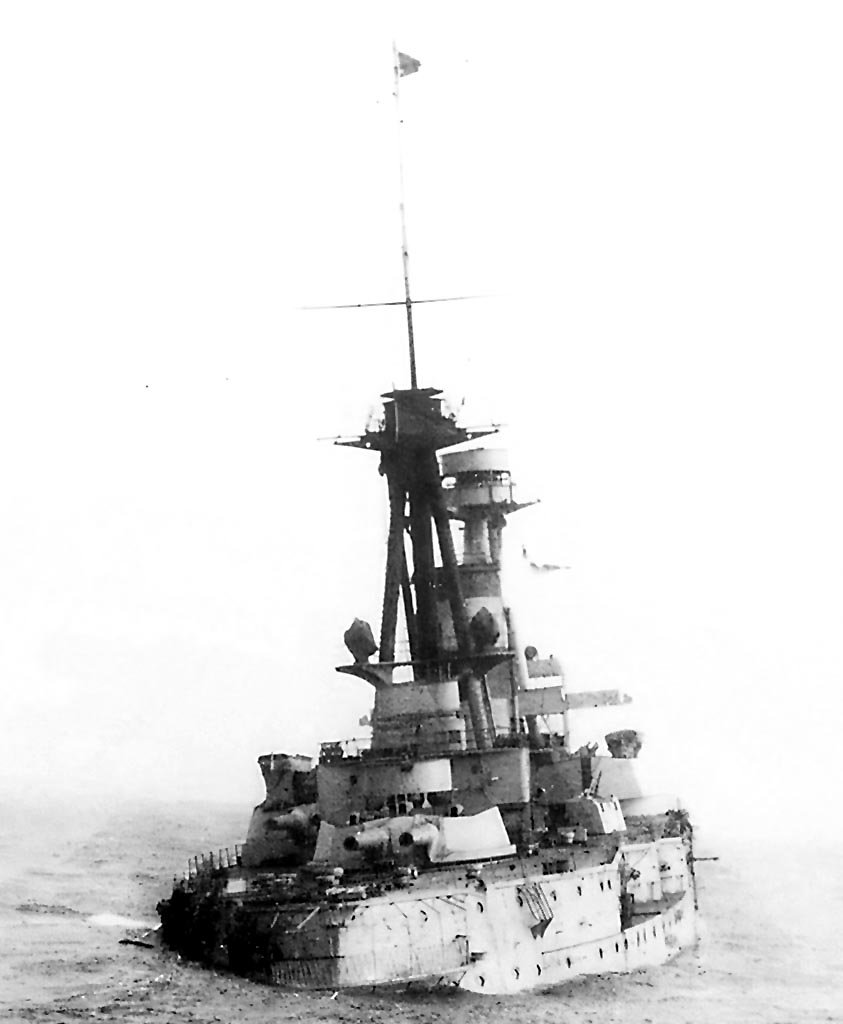
(España (former Alfonso XIII) battleship image). On April 17, 1931, the Alfonso XIII was renamed España due to the fall of the Monarchy and the proclamation of the Second Republic in Spain. On June 15, the new government decided on austerity measures and placed the España (Alfonso XIII) and the Jaime I in reserve at the El Ferrol naval base. Five months later, the ship was decommissioned, remaining in this condition for five years. In 1934, plans were drawn up to rebuild the ship, along with its sister ship, in the style of the German Deutschland-class battleships. These plans included replacing the coal-fired machinery with gasoline-powered machinery, installing a new secondary battery with 120mm guns, aligning the four 305mm turrets on the longitudinal axis, and lengthening the hull. However, the financial crisis and political instability in Spain prevented these plans from being carried out.
españa2ship9
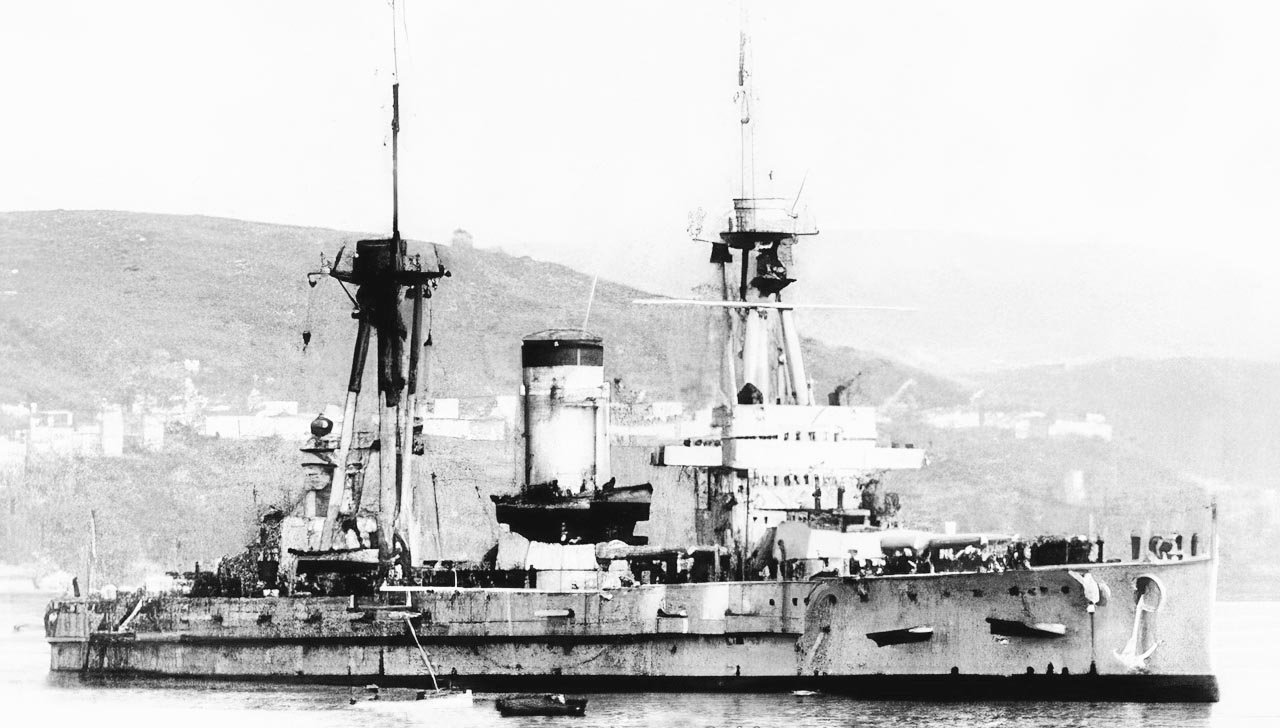
(España (former Alfonso XIII) battleship image). During the five years of inactivity of the España (Alfonso XIII), some 101.6mm guns and the anti-aircraft guns were removed for land-based use, the machinery had become unusable, preventing the ship from moving, and the four 305mm turrets were disabled. On November 30, 1935, orders were given to begin refitting the ship for the long-awaited reconstruction, which had been scheduled for 1937. The forward (A) and aft (D) turrets were repaired, and the boilers were refurbished to allow the ship to move again. But unfortunately, on July 18, 1936, the Spanish Civil War broke out, and once again the reconstruction could not be carried out.
españa2ship2
(España (former Alfonso XIII) battleship image). At the start of the Civil War, the España (Alfonso XIII) had been laid up since 1931, and its propulsion, navigation, weapons, and communications systems were practically inoperable. On the first day of the war, the ship’s crew, loyal to the Republic, clashed with some of the officers and other forces sympathetic to the Nationalist cause, initiating a battle that lasted four days, but the ship could not be refloated to escape El Ferrol. Most of the Spanish Navy’s ships declared their loyalty to the Republic in those early days, making the battleship España (Alfonso XIII) strategically very valuable to the Nationalists, despite its deplorable condition. Within three weeks, some minor repairs were carried out, allowing it to sail again on August 12th, and two of its 305mm guns and six of its 101.6mm guns were also put back into service.
españa2ship7
(España (former Alfonso XIII) battleship image). The battleship España (Alfonso XIII) began the war with an incomplete crew, comprised mostly of volunteers and plagued by mechanical problems. Its first mission as a Nationalist vessel was to blockade Republican ports on the Cantabrian Sea and attack coastal targets, as its engines were inadequate, allowing it to sail at medium speed only. It began by attacking Guipuzcoa and the road from San Sebastian to Bilbao, and on August 15th, it attacked the CAMPSA oil depots in Santander, continuing towards the border and attacking border forts on the 16th and 17th. On the 19th, it attacked the forts of San Marcial and Guadalupe, returning to El Ferrol on August 21st.
305mmgunatvickers3
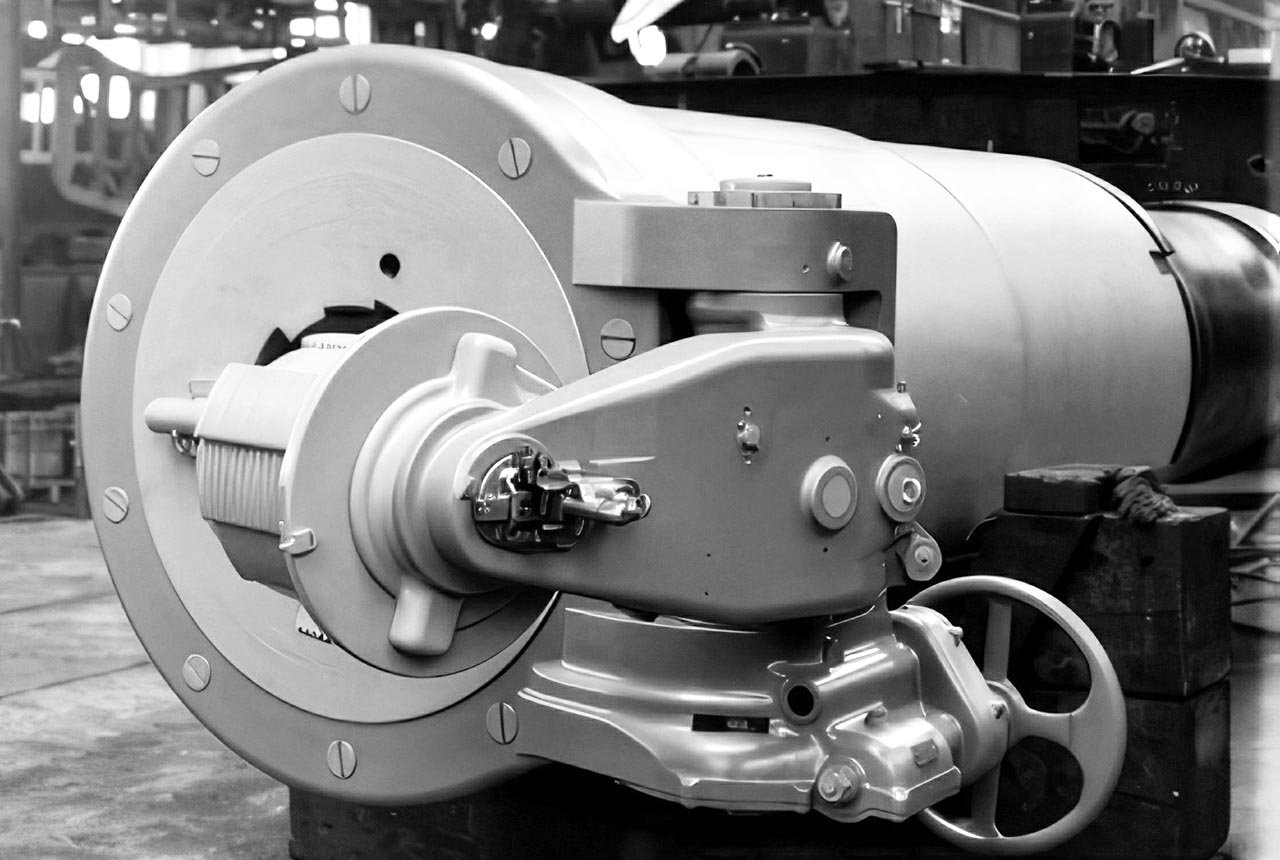
(305/50mm gun breach image). After this first mission, it became clear that the ship’s condition was far from adequate. Of the eight 305mm guns, only six were operational, as one of the turrets had been cannibalized to repair the other three. It only had twelve 101.6mm guns in service, and these were badly worn. The machinery only allowed it to sail at a maximum of 14 knots and for short periods of time. Due to these ailments and its age, the crew nicknamed it “Grandpa.” On August 25th, it sailed with the destroyer Velasco towards Fuenterrabía, capturing the ship Konstan two days later, which was taken to El Ferrol by the destroyer. After attacking Fort Guadalupe again, it headed for Gijón in search of new targets.
españa2ship1
(España (former Alfonso XIII) battleship image). On August 31, while off Cabo Mayor, Santander, the battleship was attacked by a Republican submarine, probably the C-4, which launched a torpedo that struck its bow. Fortunately for the battleship, the torpedo did not explode and only caused a slight dent in the hull. It also received several air attacks that failed to hit it. Between September 25 and October 13, the bulk of the Republican fleet deployed in the Bay of Biscay, so the battleship España (Alfonso XIII) remained in port undergoing repairs to avoid an unequal confrontation with much superior forces.
españa2ship5
(España (former Alfonso XIII) battleship image). At the end of October 1936, the ship received new German-made anti-aircraft armament, specifically four 105mm guns and two 20mm guns. A 305mm gun was also put back into service from one of the two damaged turrets. On October 29, it put to sea again, and in three days captured two merchant ships. On the 30th, it was attacked by the Republican submarine C-5, which launched several torpedoes without hitting it. In the first half of January 1937, it laid mines in Avilés, Gijón, and Castro Urdiales (Santander). On January 22 and 25, it captured two steamships and suffered an air attack, which was unsuccessful. In mid-February, it captured another ship in the waters off Gijón and spent March patrolling the Cantabrian Sea, capturing three more vessels.
españa2ship6
(España (former Alfonso XIII) battleship image). In April, the España (Alfonso XIII) began the month attacking land targets in Castro Urdiales, Santoña, and Santander. On the 11th, it bombarded Gijón, and on the 15th, 18th, 24th, and 26th, it intercepted five British merchant ships attempting to reach port. In most cases, the merchant ships turned back after the battleship spoke with British destroyers patrolling the area, although the merchant ship Oak Grove, intercepted on the 24th, obtained permission to enter the port of Santander. However, during the interception of the merchant ship Cousset on the 26th, and even with the presence of the British battleship HMS Royal Oak, the merchant ship had to turn back to avoid further problems.
españa2shipsinking2
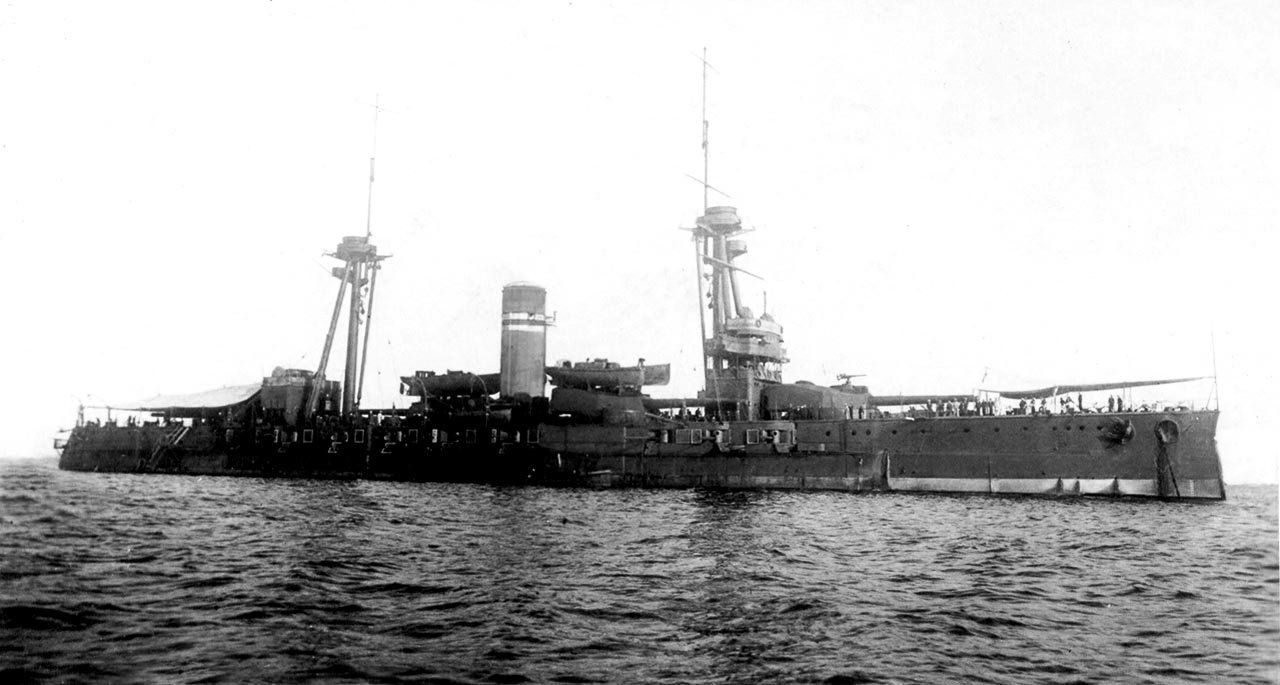
(España (former Alfonso XIII) battleship image). On April 30th, at approximately 7:00 AM, while the España (Alfonso XIII) was en route to blockade the British freighter Knitsley near Castro Urdiales, off Cape Quintres, it struck a mine that tore a large gash in its hull. The resulting flooding caused it to list to port, and the destroyer Velasco, with which it was conducting the interception, quickly came to its aid. The flooding could not be stopped, and in less than three hours, the old battleship sank irretrievably. The mine explosion resulted in five deaths, but the rest of the crew was rescued by the destroyer Velasco, which even entered the minefield during the rescue operation. Thus ended the career of the second battleship named España, whose wreck was discovered by the Spanish Navy on September 30, 2016, at a depth of 80 meters off the coast of Cabo de Ajo in Galizano, Santander.
jaime1ship3
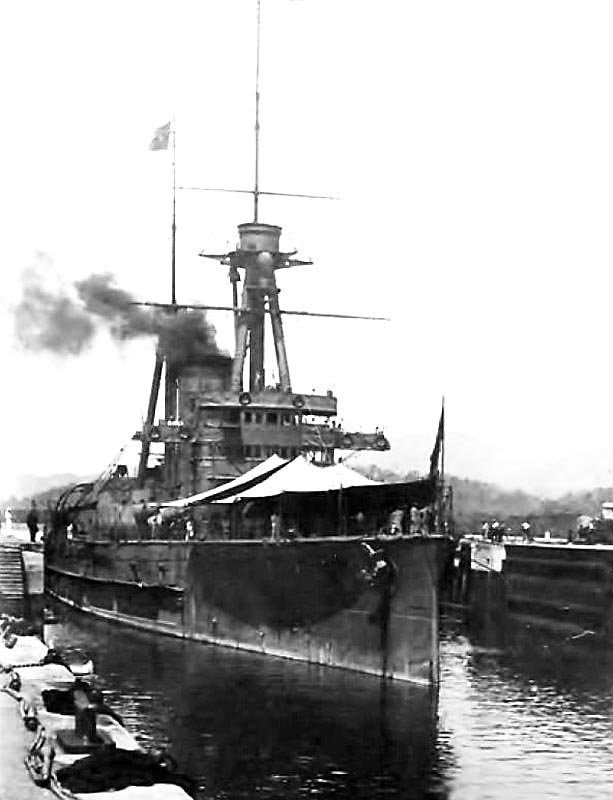
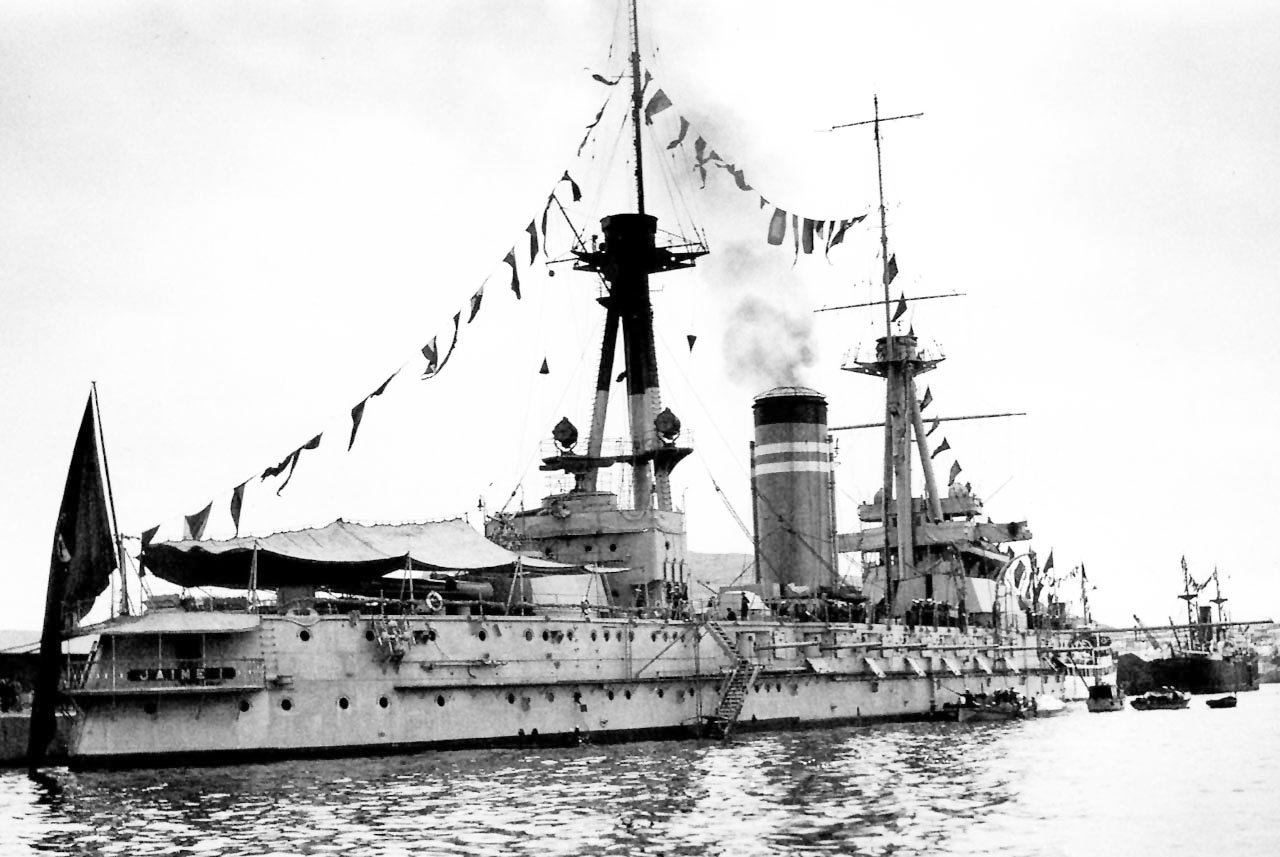
(Jaime I battleship image). The third and final ship of the class was named Jaime I, its keel was laid on February 5, 1912, and it was launched on September 21, 1914. In May 1915, the ship was almost finished, awaiting only the 305mm guns, and machinery trials began. By 1917, the Jaime I was ready for its sea trials, but these did not begin until May 1921. The ship was finally delivered to the Spanish Navy on September 1921, with a huge delay due to WWI which prevented the receipt of British materials and equipment. This delay meant that, despite being a completely new ship, it was outdated and could not be compared with any contemporary battleship of other navies. It was assigned to the First Division of the Training Squadron based in El Ferrol, where it was deployed with its two sister ships.
jaime1ship13
(Jaime I battleship image). The Jaime I’s first mission was a visit to Istanbul in December 1922, where it unfortunately collided with the merchant ship Grass, sustaining considerable damage to its hull. It then sailed to the Italian arsenal at Pola for repairs. In November 1923, it visited the Italian fleet alongside its sister ship, the Alfonso XIII, a cruiser, two destroyers, and four submarines. In 1924, it conducted operations off the coast of Morocco in support of Spanish troops, sustaining minor damage from a Rif coastal defense battery. In 1925, it participated in the Alhucemas landing, delivering its 76mm landing guns to the Army. It remained in this area until the end of the operation, returning to Cartagena in early November.
jaime1ship23
(Jaime I battleship image). Following the victory in the Rif War, the battleship Jaime I transported a Spanish delegation to visit Ceuta, Melilla, and Alhucemas, now known as Villa Sanjurjo. The delegation included the King and Queen of Spain and a large group of high-ranking army officers. In October 1927, it joined the so-called “Squadron” along with the Alfonso XIII and two Príncipe Alfonso-class cruisers. It participated in maneuvers with the rest of the fleet until 1931, but with the establishment of the Second Republic, this ship was also placed in reserve at the El Ferrol naval base in June 1931. Unlike its sister ship, the Alfonso XIII, which was renamed España, it was inactive for a shorter period and was recommissioned on April 20, 1933, and appointed flagship of the fleet.
jaime1ship5
(Jaime I battleship image). In October 1934, the Jaime I was sent, along with the cruiser Almirante Cervera, to quell the so-called “Asturias Revolution.” It bombarded the Cimadevilla district of Gijón and Santa Catalina Hill. It also landed a company of marines to support the security forces and delivered a large quantity of ammunition to the troops deployed there. In 1935, it remained the only battleship in service with the Spanish Fleet and participated in maneuvers in the Canary Islands. At the beginning of July 1936, the ship was in the port of Vigo, from where it sailed to its home port of El Ferrol on July 14th. That same afternoon, it departed for Santander, where its commanding officer and second-in-command were replaced by officers loyal to the Republican government. This decision was made on July 13th when the Navy Headquarters in Madrid was alerted by crew members stationed in El Ferrol to the Jaime I’s commander’s plans for rebellion.
jaime1ship15
(Jaime I battleship image). On July 17th, the ship was ordered to return to the port of Vigo to refuel and await further orders. During this voyage, the crew began to receive news of the uprising in Melilla and started taking precautions to prevent the officers from gaining complete control of the ship. On the 19th, at 2:00 AM, the Jaime I departed Vigo for Cádiz in a tense atmosphere of mistrust that erupted at 12:45 PM on the 20th, when a gun battle broke out between supporters of the Nationalist uprising and those loyal to the Republic. The Republicans seized control of the ship and headed for Tangier, where they were attacked by Nationalist aircraft, which caused no damage. On the 21st, the ship arrived in Tangier and encountered other ships loyal to the Republic anchored there. From that moment on, the crew of the Jaime I, with its clear anarchist leanings, would be known as the “Red Guard”.
jaime1ship18
(Jaime I battleship image). Pressure from several foreign governments and General Franco forced the Jaime I and most of the ships anchored in Tangier to leave the port and head for Gibraltar, where they would be resupplied. On the night of July 21, this Republican flotilla anchored in the Bay of Algeciras, but no agreement was reached with the British, and all the ships sailed to Malaga on the 22nd, entering the port of that city on the 23rd. From then on, Malaga was established as the Jaime I‘s base of operations, with the mission of cutting off supplies to the Nationalist troops coming from Africa. On July 25, the battleship bombarded the fortress of El Hacho in Ceuta, and the following day it did the same in Melilla. During this second action, it was attacked by Breguet XIX light bombers, which caused panic on board, forcing it to withdraw hastily and clearly demonstrating the crew’s lack of preparedness.
españaclassdrawing3
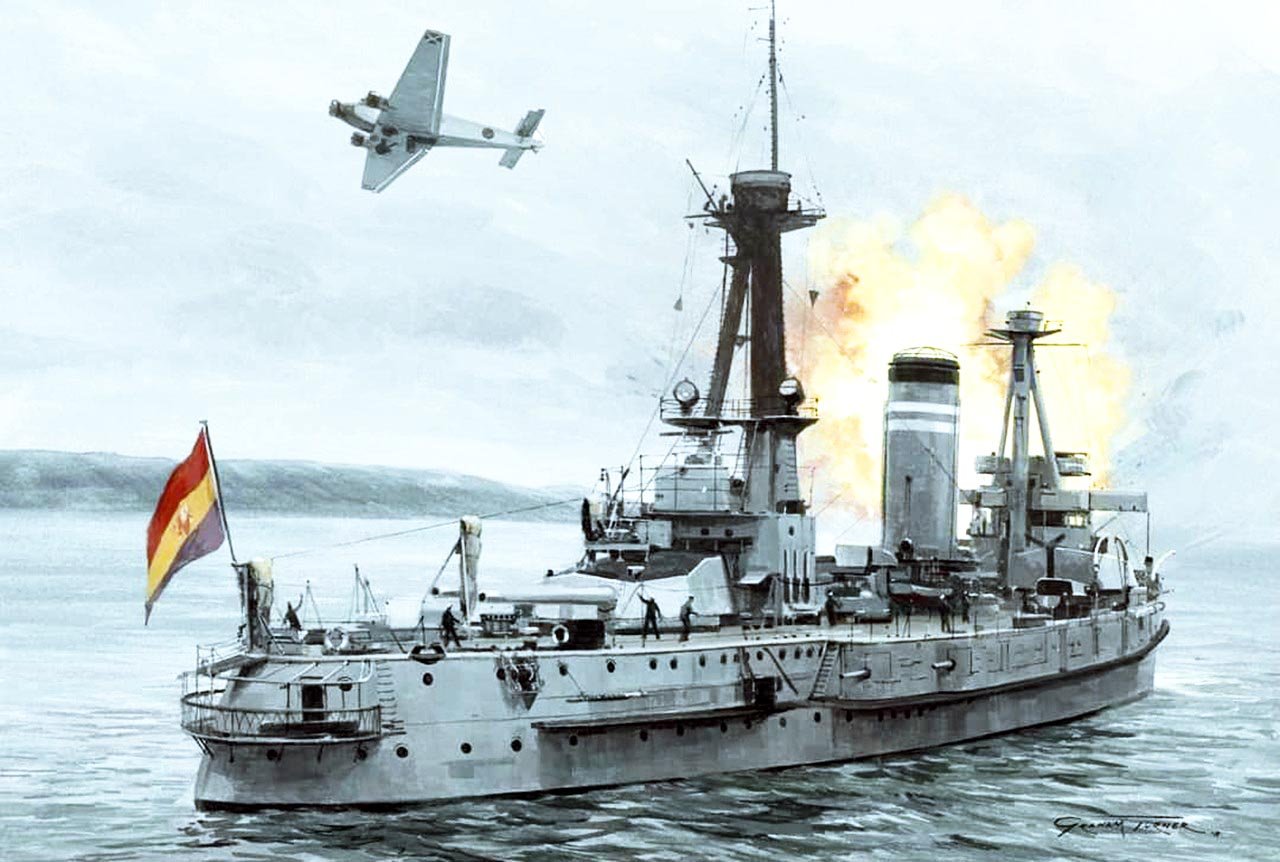
On August 3, 1936, it bombarded the Punta Carnero fort and troops deployed in Algeciras and returned to Malaga, returning on the 6th to bombard the port and coastal defenses of Algeciras. On the 13th, while at its base in Malaga, it was attacked by two Junkers Ju-52s (on the image), which hit it with a bomb in the bow, causing six deaths, several injuries, and minor damage. From August 16 to 22, the Jaime I supported a landing at Porto Cristo, Mallorca. The battleship was known by the codename “Santiago Uno,” and on August 31, it was again called upon to support the Republican troops who had landed and were bogged down in their advance. On September 3, it bombarded Son Cervera and later Palma de Mallorca, although it was in vain, as the Republican advance was repelled, and they were forced to abandon the island under the protection of the battleship, which also withdrew afterward.
jaime1ship8
(Jaime I battleship image). On September 21, 1936, the Jaime I departed Malaga along with the cruisers Miguel de Cervantes and Libertad and six destroyers for the Bay of Biscay, arriving on the 25th and entering the port of Gijón to resupply. On the 27th, the mere presence of the Jaime I managed to break the naval blockade imposed by the Nationalist fleet in those waters, as they withdrew to their base in El Ferrol to avoid the risk of engagement. After bombarding a bridge in Deva, it returned to Santander and then sailed to the port of Bilbao, where it remained until October 2nd, when it departed for Cartagena. Before leaving, four 101.6mm guns were unloaded and left to defend Bilbao.
jaime1ship14
(Jaime I battleship image). After its return to Cartagena, the battleship spent several weeks patrolling the surrounding waters. On November 22nd, while anchored alongside the cruiser Miguel de Cervantes, it was attacked by the Italian submarine Torricelli, which was supporting the Nationalists. The submarine struck the cruiser, causing serious damage, but the Jaime I narrowly escaped. From that moment on, the battleship remained in port due to submarine threats. In early 1937, the General Staff of the Republican Navy warned in a report that the condition of the ship’s boilers and piping prevented it from maintaining the necessary speed for operations, and that its anti-aircraft defenses were “extremely poor.” It was then decided to use the Jaime I as a “naval artillery platform” (floating battery), for which purpose the complement of the secondary 101.6mm battery was completed and the anti-aircraft artillery reinforced.
jaime1ship12
(Jaime I battleship image). In February 1937, the ship was sent to Almeria, although it remained inactive until April 15, when it was deployed with other ships to carry out a bombardment of Malaga and Motril (Granada). On its return to Almeria, the battleship ran aground at Punta Sabinal, near the port. This setback could have been very costly, as the Nationalists were alerted to the situation by the German cruiser Leipzig and dispatched the powerful cruiser Canarias to intercept it, but the Jaime I managed to free itself and return to Almeria. On May 13, the battleship came to the aid of the British destroyer Hunter, which had struck a mine. On May 21, it was docked in Almeria when it was attacked by five Italian Savoia-Marchetti S-79 bombers piloted by Italians and Spaniards. In two successive passes, the S-79s dropped twelve 250 kg bombs and about sixty 100 kg bombs on it, of which at least one 250 kg bomb hit it directly, causing significant damage.
jaime1sinking
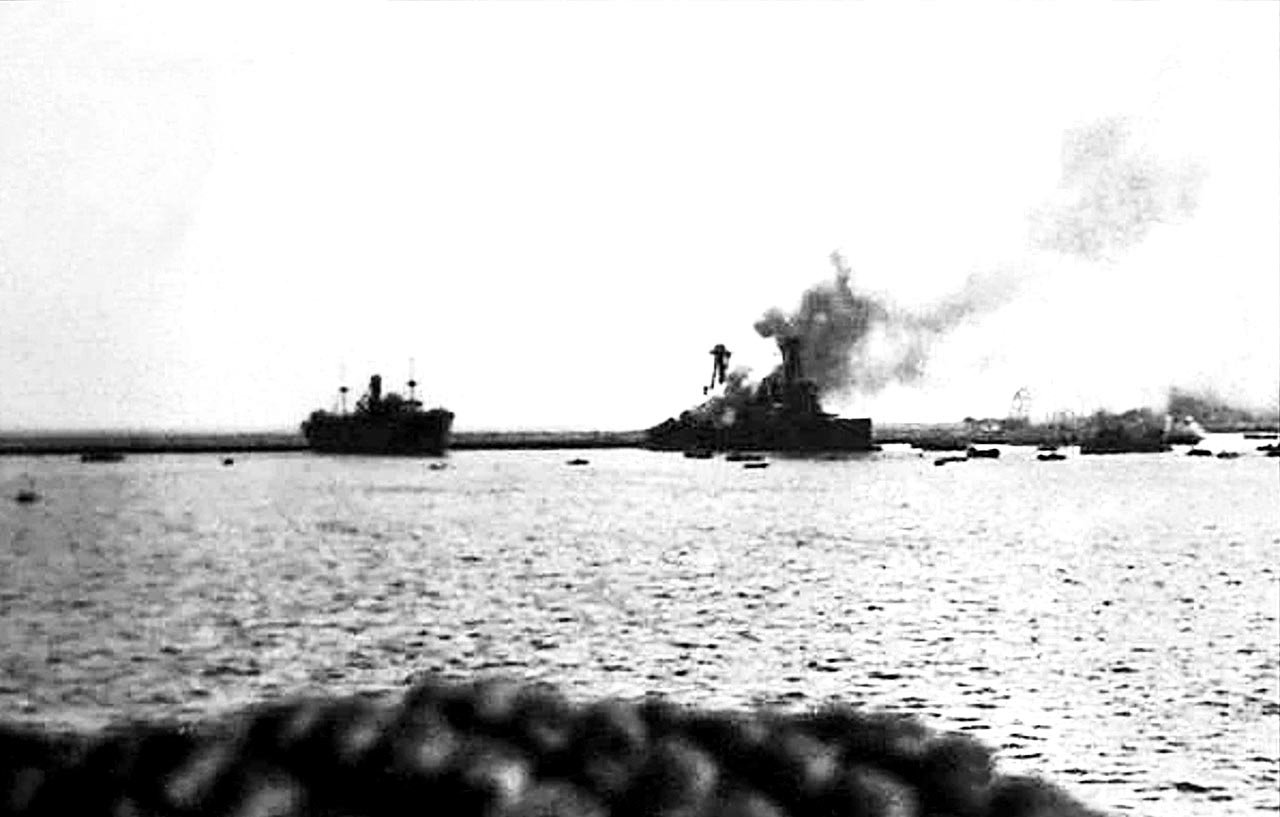
(Jaime I battleship image). While en route to Cartagena, on the night of May 24-25, 1937, the Jaime I was attacked by several seaplanes from the AS/88 squadron of the German Condor Legion based in Cádiz. The ship managed to reach Cartagena for repairs on May 28. On June 17, while undergoing repairs, a massive internal explosion occurred in the powder magazine of turret number 3. The explosion caused over 300 deaths and 200 injuries, leading to the sinking of the ship, which came to rest on the seabed. Analysis of the incident concluded that the explosion could have been caused by two factors: an accidental explosion from a blowtorch spark, or an act of sabotage. On July 3, 1939, the Jaime I was officially decommissioned and sent for scrapping, as once refloated, it was determined that the damage it had sustained was irreparable.
305mmcdgd9battery7
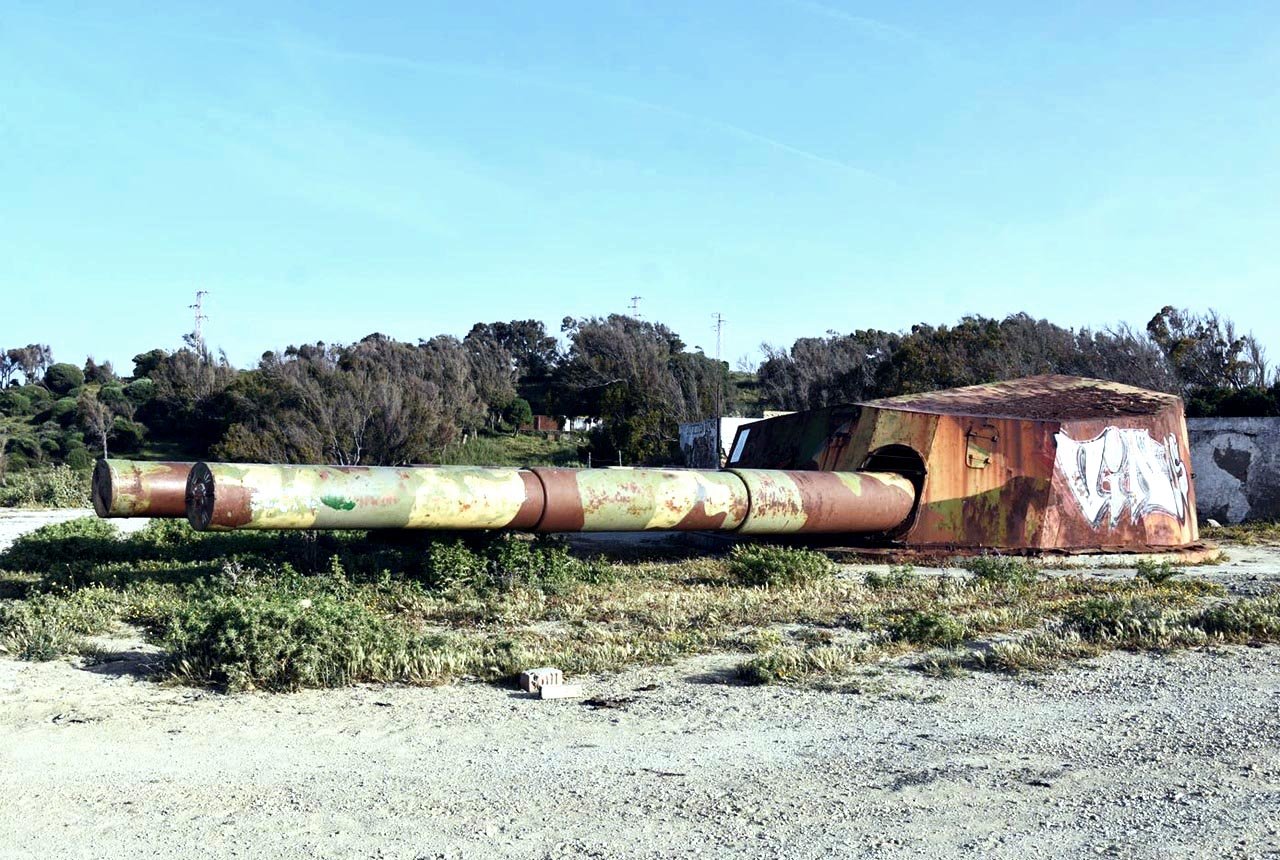
All the 305mm guns of the battleship Jaime I were removed and used in coastal artillery batteries. In 1940, the forward (A) and aft (D) turrets were installed in coastal batteries D-9 (on the image) and D-10 at El Vigía and Cascabel, respectively, near Tarifa, Cádiz. They remained in service until 1985 and currently remain in those locations, completely abandoned and vandalized. The remaining guns were used in single turrets at other coastal batteries, such as E-21 Cabo Blanco and D-17 Guadiaro, located in Mallorca and Cádiz, respectively. Some of these guns are well-preserved in various military museums and can be visited today, while others have been scrapped or sadly abandoned.

Related posts