Photogaleries

ESPAÑA class gallery 1
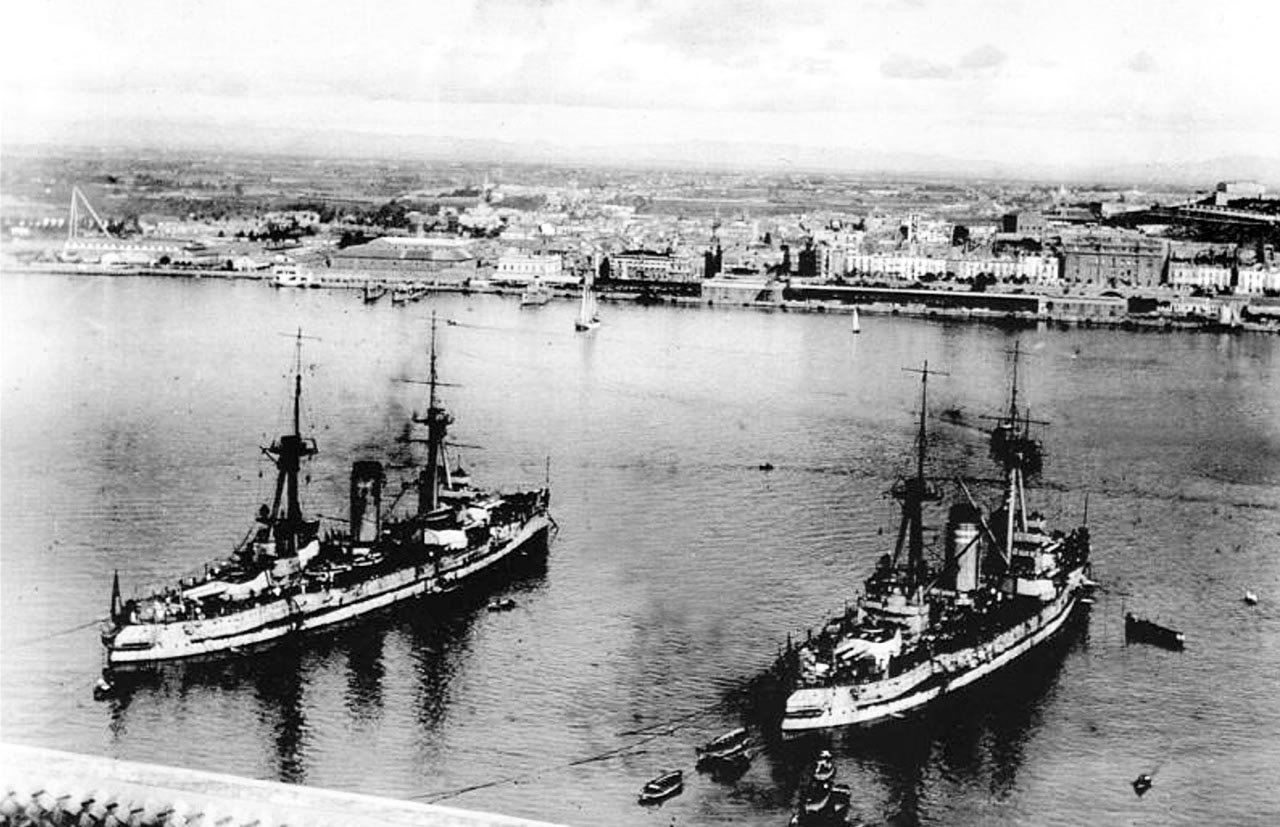
alfonso13&jaime15
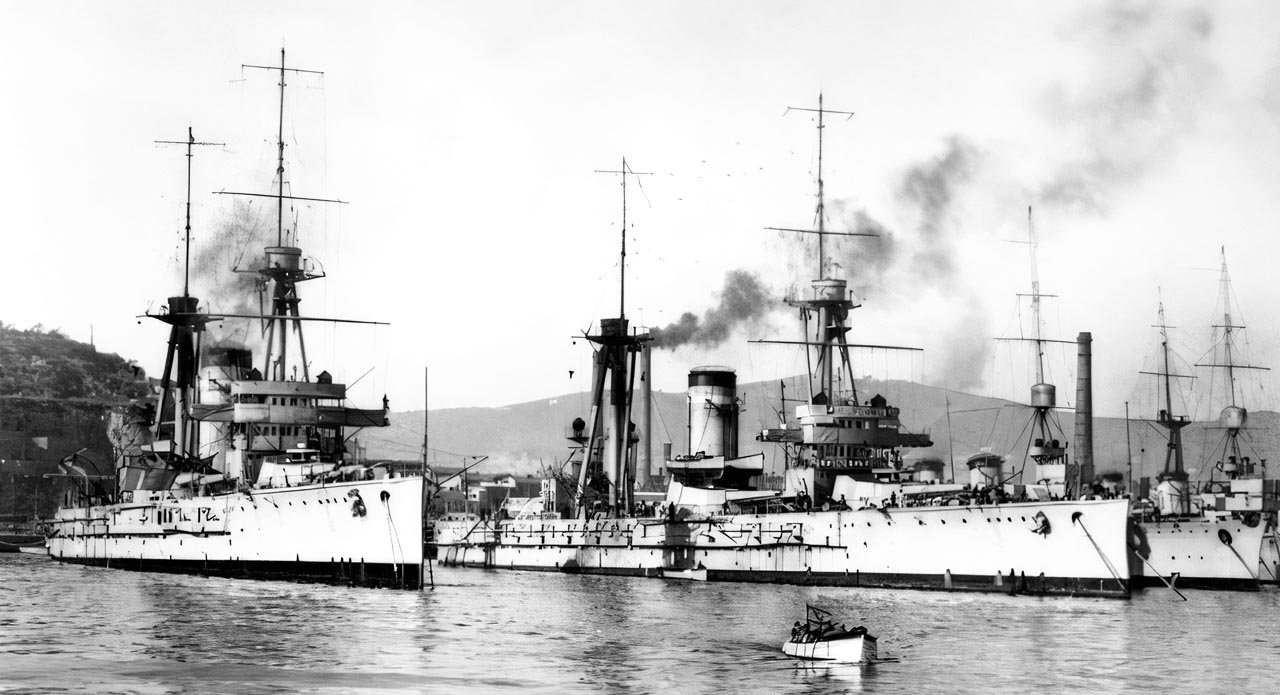
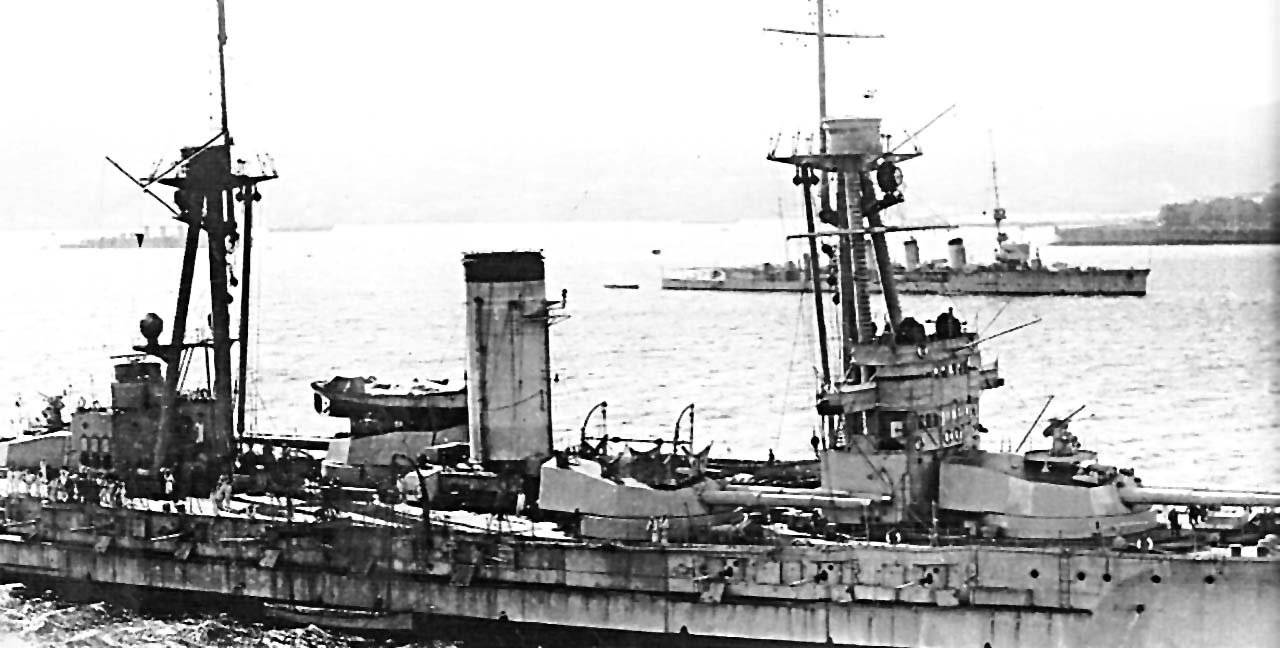
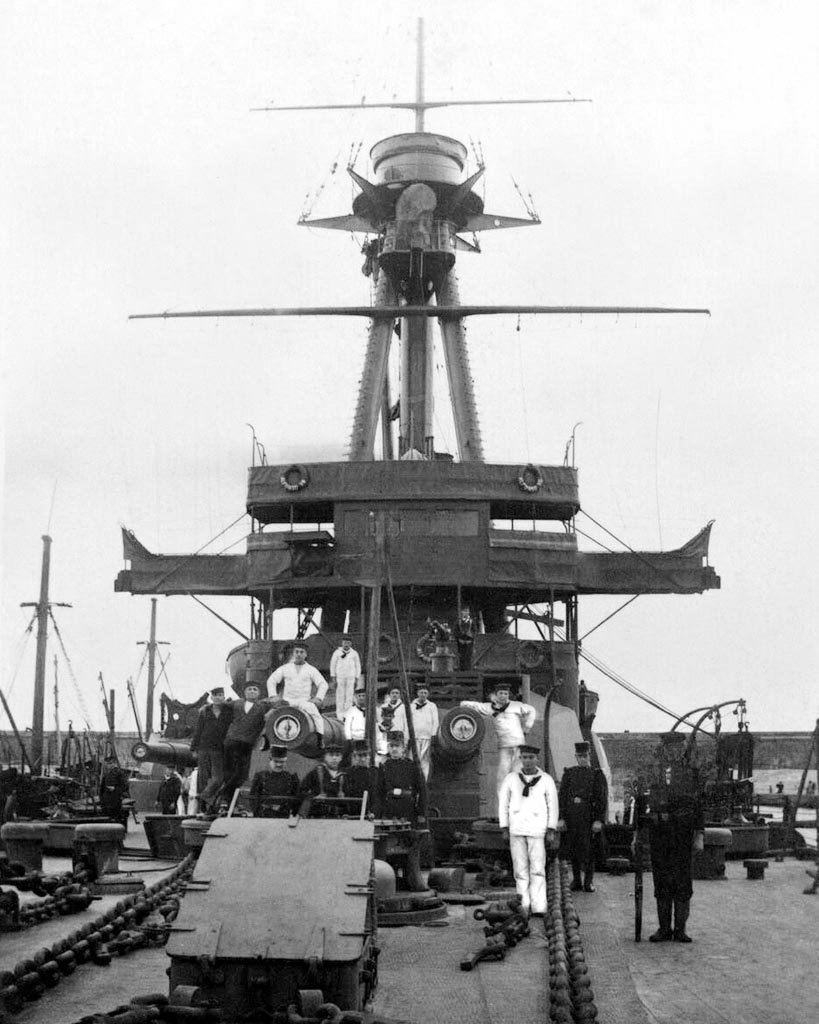
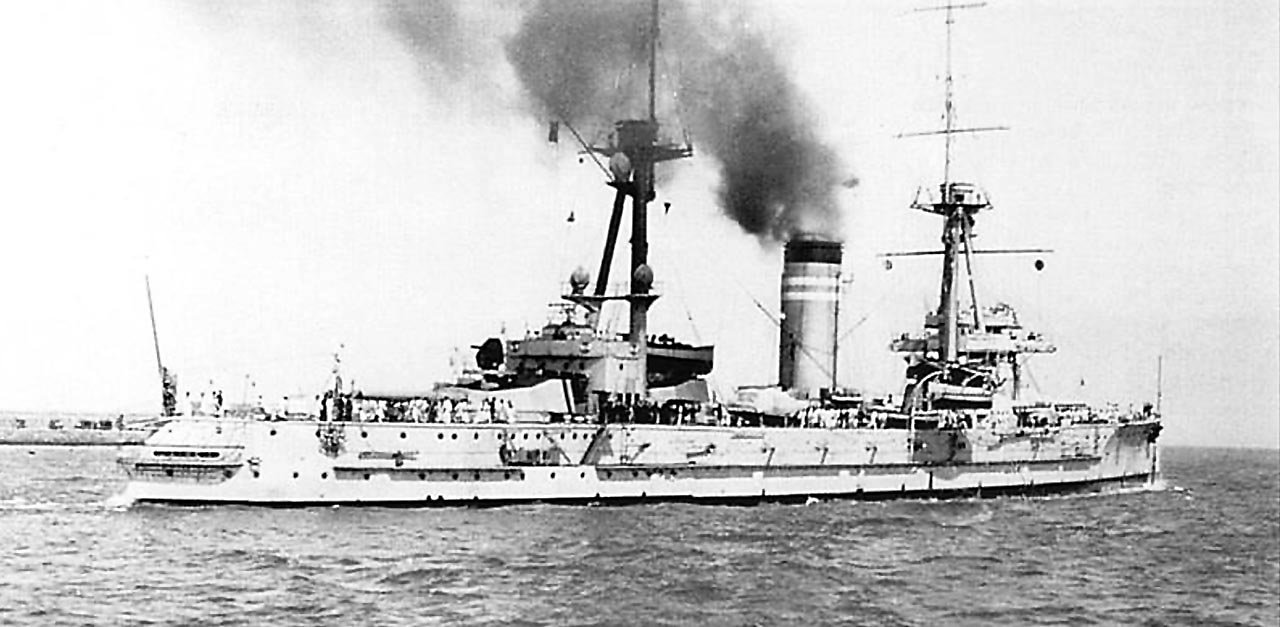
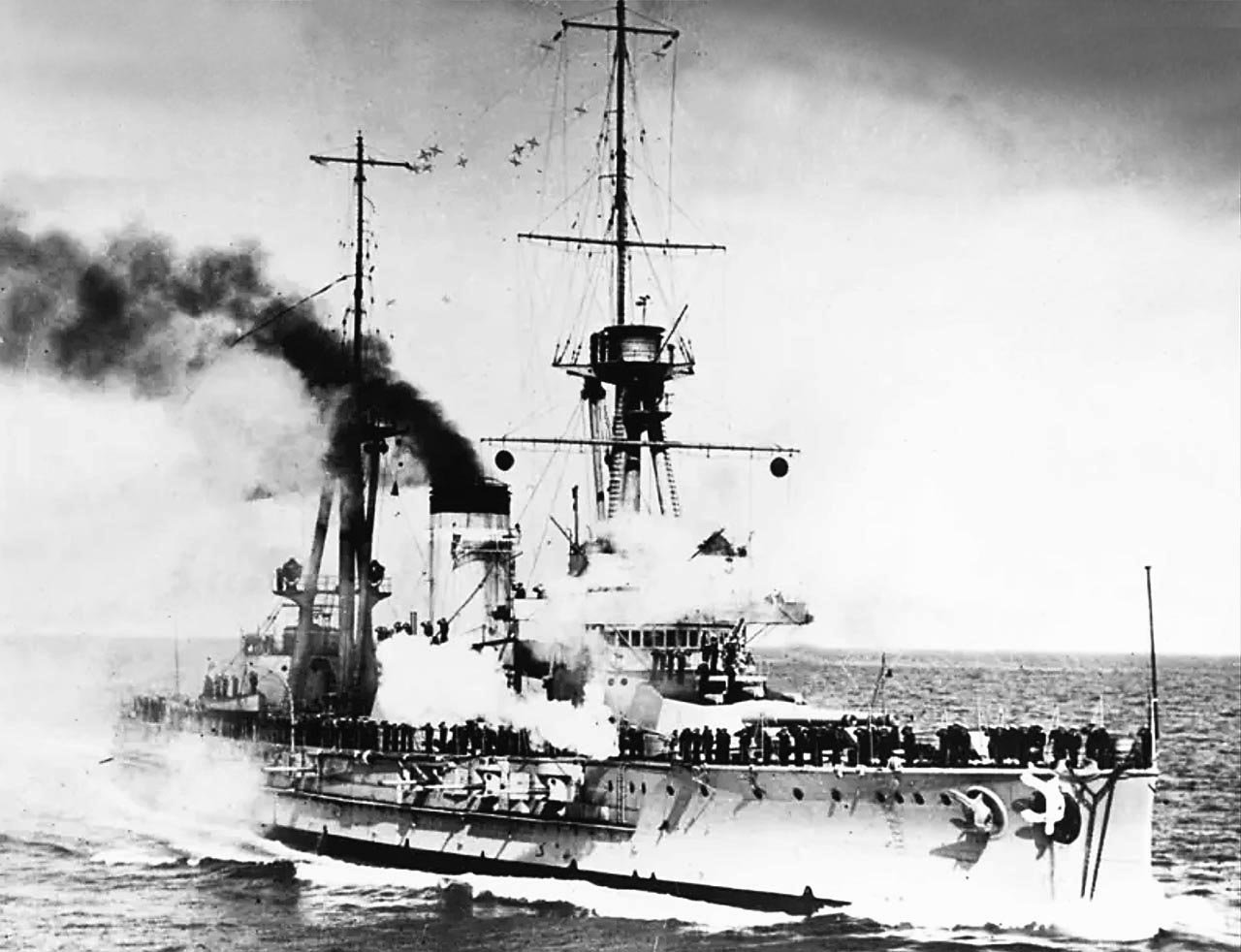
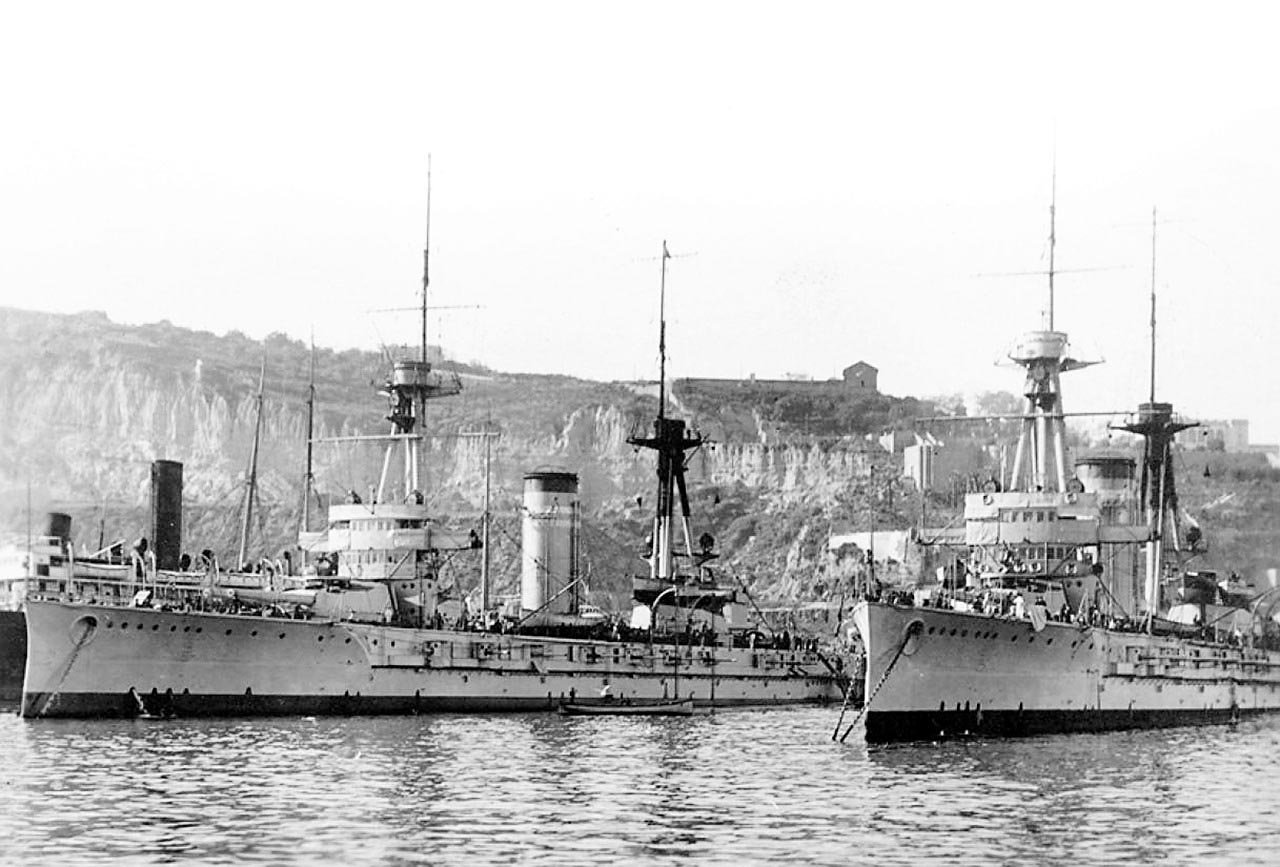
(Alfonso XIII & Jaime I battleships image). The defeat of the Spanish fleet against the American fleet at the Battle of Santiago de Cuba on July 3, 1898, left the Spanish Navy and Spain itself in a state of shock. This event, coupled with the loss of the last colonies, has since been known as the “Disaster of ’98” and resulted in the loss of numerous naval vessels for the Spanish Navy. Consequently, in 1903, a Naval Plan was initiated for the reconstruction of the battered Spanish fleet, which included the construction of seven 15,000-ton battleships. However, this plan ultimately never materialized due to political and economic difficulties. Nevertheless, in 1908, a fleet modernization plan known as the “Maura-Ferrándiz Fleet Plan” was launched, which would culminate in the construction of three battleships of the España class.
alfonso13&jaime12
(Alfonso XIII & Jaime I battleships image). Although the ships were initially designed in the pre-dreadnought style, the commissioning of the British battleship HMS Dreadnought in 1906 radically changed previous ideas. HMS Dreadnought revolutionized battleship construction by being equipped with a large number of heavy-caliber guns of the same caliber, a concept known as “all-big-gun”. The España-class battleships were authorized just six months later, and it was decided to employ this new concept in their design. Of course, their size and displacement were limited by the size of the shipyard where they were to be built, as the economic and political crisis of the time in Spain did not allow for major renovations of these facilities. Furthermore, the main mission of these ships would be the defense of the main Spanish naval bases, located at Cádiz, Cartagena and El Ferrol, so they did not need to have a huge range.
alfonso13&jaime13
(Alfonso XIII & Jaime I battleships image). In 1907, the Spanish Navy finalized the design requirements with the assistance of Vickers and Armstrong Whitworth, and in September of that year, Vickers submitted a proposal for a 15,000-ton vessel armed with eight 305mm (12-inch) guns. The design competition opened in April 1908, attracting four renowned shipbuilders who were tasked not only with designing the ships but also with undertaking the remodeling and modernization of the Spanish shipyard where they would be built. The four contenders were: the French firm Schneider-Creusot, the Italian Gio. Ansaldo & C., a group of Spanish companies backed by Palmers Shipbuilding & Iron Company and William Beardmore & Company, and the Spanish firm Sociedad Española de Construcción Naval (SECN), formed by Vickers, Armstrong Whitworth, and John Brown & Company. For this purpose, on January 7, 1908, a budget of 135 million pesetas was approved for the construction of three 15,000-ton battleships at the El Ferrol Shipyards in La Coruña.
alfonso13&jaime14
(Alfonso XIII & Jaime I battleships image). Of the four design proposals submitted, only three were considered, with the one from the group of Spanish companies supported by Palmers Shipbuilding being rejected. Ansaldo presented two different designs: one with two triple turrets fore and aft with a twin turret on the centerline amidships, and another with four twin gun turrets for the main battery with one forward, one aft, and two offset amidships. Interestingly, the designs submitted by Schneider-Creusot and SECN had a main gun arrangement similar to Ansaldo’s four-twin-turret proposal. In October 1908, the Artillery Committee, after studying the submitted designs, concluded that the SECN and Schneider-Creusot designs were superior to Ansaldo’s. A month later, the Naval Construction Committee declared SECN’s design the winner, and that same month the Office of the Navy Controller informed the Navy Staff that SECN’s proposal should be accepted.
españaclass6
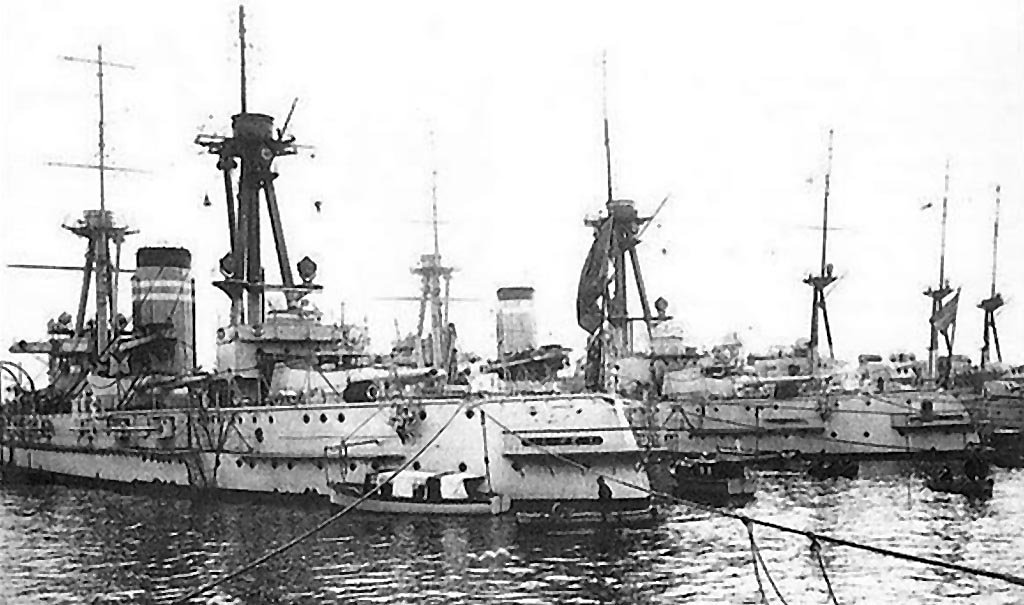
(España class battleship image). After the SECN design was approved, having met all requirements and with no administrative, legal, or cost issues encountered, the Spanish Navy requested several modifications in February 1909. These included individual rangefinders for each gun turret, increased length and height of the belt armor, and increased freeboard to improve navigation in rough seas. The modifications were accepted by SECN in March, and in April 1909, the contract for the construction of the three battleships was signed. These would be named España, Alfonso XIII, and Jaime I, and would form the España class.
españaclass7
(España class battleship image). The general characteristics of the España-class battleships were as follows: maximum displacement 16,450 tons, overall length 139.88 meters, maximum beam 24 meters and a normal draft of 7.77 meters. These ships developed 20,100 shp, reaching a top speed of 19.5 knots and a range of 3,249 nautical miles (6,010 km) at 10.75 knots (carrying 1,020 tons of coal). The crew consisted of 850 men, and the armament comprised eight 305mm guns in twin turrets, twenty 101.6mm guns in casemates, two 47mm guns, two 70mm landing guns, and two Maxim machine guns. The maximum armor thickness was 250mm on the conning tower and barbettes.
españa2ship8
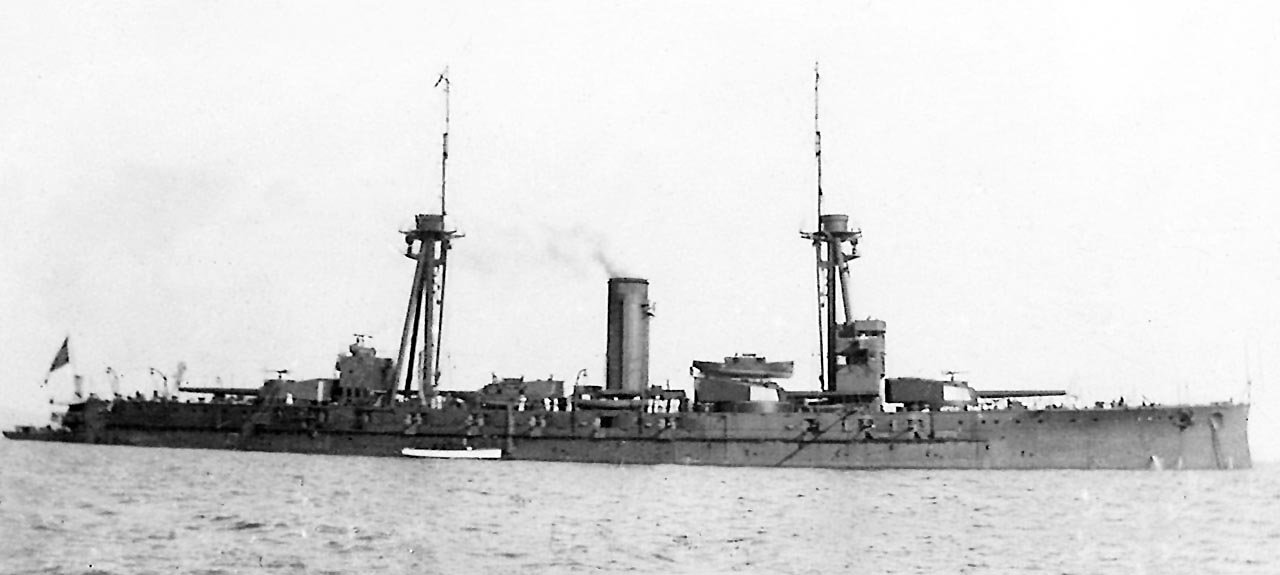
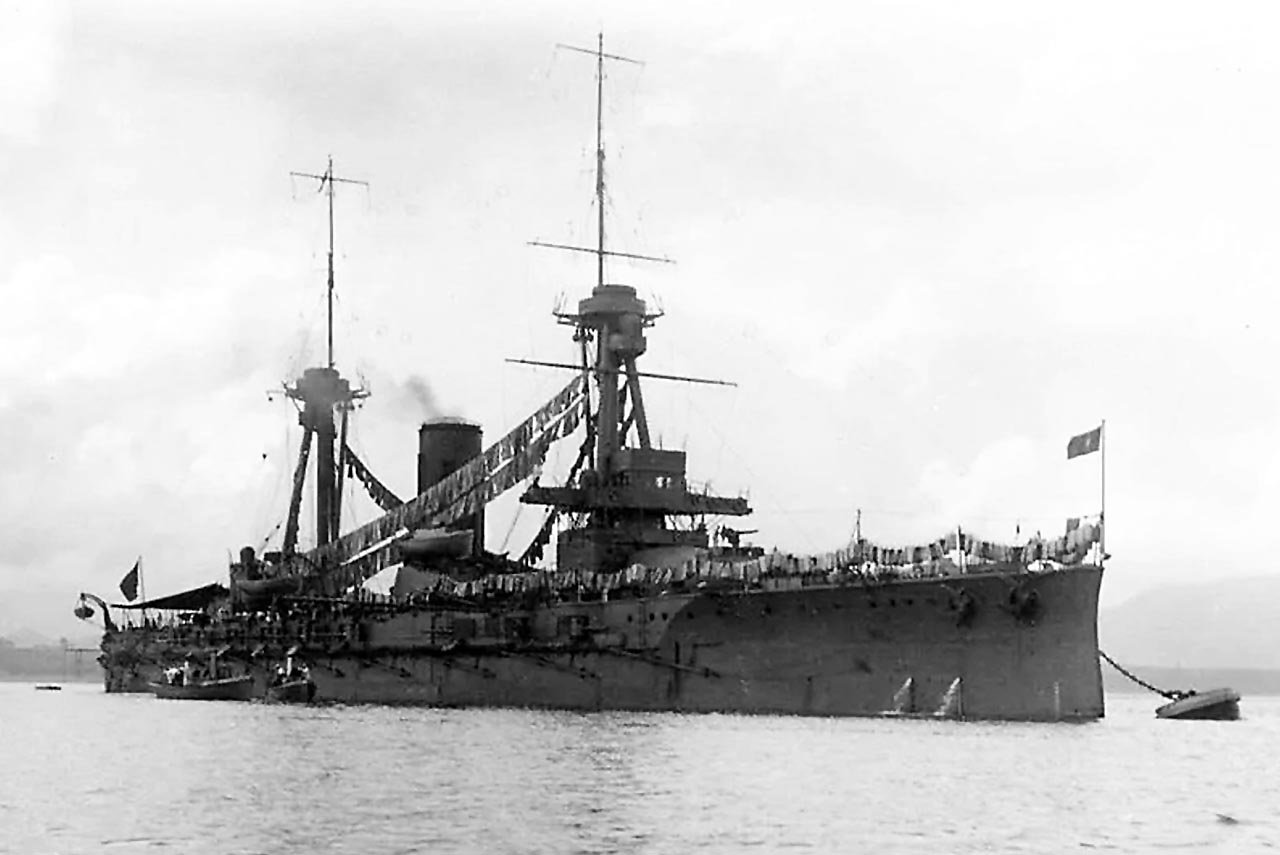
(España (former Alfonso XIII) battleship image). The construction of these battleships received extensive technical and material assistance from Great Britain. The steel for the ships was supplied by “Altos Hornos de Vizcaya” and “Metalurgica Duro-Felguera” companies, and both the main and secondary guns were to be manufactured by Armstrong in England. The appearance of these ships was quite harmonious, with a hull with a continuous deck and no forecastle, the command bridge and conning tower forward, the auxiliary bridge and director’s tower aft, two tripod masts, and a single funnel amidships, although due to the arrangement of the wing turrets, the deck gave the impression of being unfinished, as no more superstructures could be built. Each mast had a boat-raising strut, and the foremast had a fire control crow’s nest. They also incorporated six 75cm searchlights, two installed on each bridge and one on each mast, below the crow’s nest.
alfonso13ship5
(Alfonso XIII battleship image). The crew consisted of approximately 850 men, divided into 10 brigades: 8 of sailors and gunners, and 2 of stokers. Of these, 118 were officers and petty officers, and 732 were sailors and specialists. The ship’s living conditions were quite poor, although the Admiral had 170 square meters of living space! Nevertheless, the crew included a chaplain, two doctors, a diver, a cook, four bakers, sixteen electricians, a tailor, a shoemaker, two barbers, and all manner of specialists: mechanics, telegraph operators, engineers, gunners, and stokers.
jaime1ship16
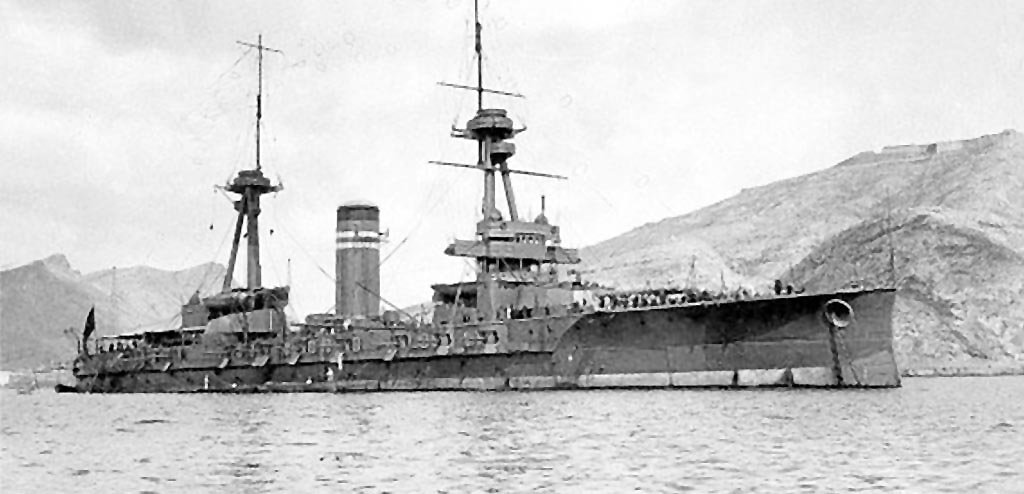
(Jaime I battleship image). The España-class battleships were the first Spanish ships to carry turbines, and their machinery consisted of twelve coal-fired water-tube Yarrow boilers connected to four-shaft Parsons steam turbines that generated a maximum of 20,100 shp, or up to 22,000 shp with forced boiler operation. The projected maximum speed was 19.5 knots at 15,400 shp but in trials it reached 19.9 knots at 20,100 shp. However, a cruising/economic speed of 10.75 knots at 4,680 shp was established. These ships were propelled by four 2.4-meter diameter three-blade propellers and steered by a single semi-balanced rudder. Due to their short length, they were quite maneuverable ships, capable of a 180° turn at maximum speed in a space of only 321 meters.
alfonso13ship19
(Alfonso XIII battleship image). The normal coal load was 1,020 tons, although it could carry a maximum of 1,985 tons. Coal consumption at cruising speed was 3.37 tons/hour, while at maximum speed it reached 15 tons/hour. The range with 1,020 tons of coal was 3,249 nautical miles (6,010 km) at 10.75 knots or 2,264 miles (4,188 km) at 17.5 knots.However, with 1,985 tons of coal, the range was 6,322 nautical miles (11,695 km) at 10.75 knots or 4,407 nautical miles (8,153 km) at 17.5 knots.
blindajelateral1
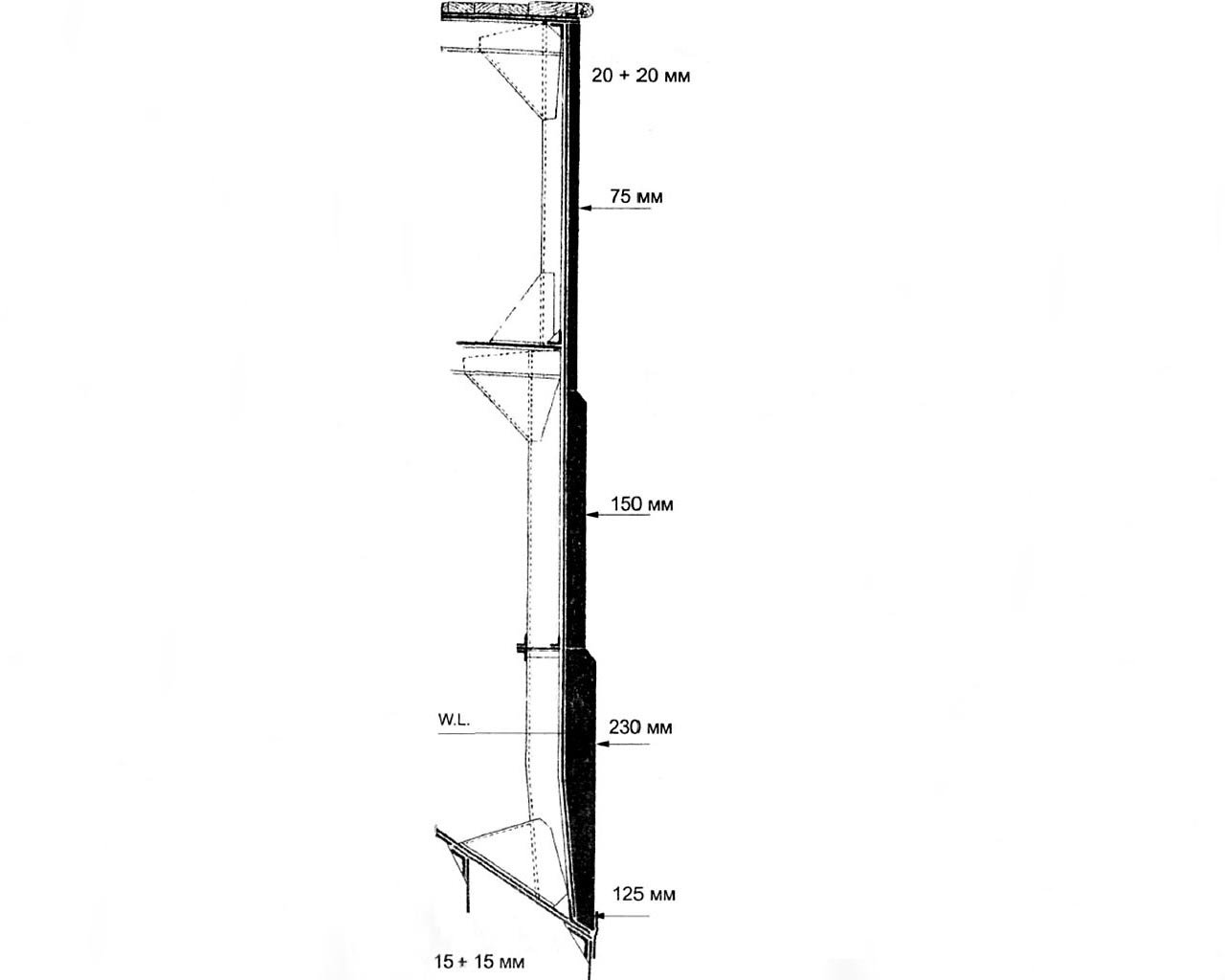
(España class battleship vertical armor scheme). The armor plating of the España-class battleships consisted of hardened Krupp steel plates with Krupp homogeneous steel used for armor thinner than 100mm, both types built in Great Britain. The armor belt was made up of a strake of plates 2.20 meters wide and was submerged 1.40 meters at the normal draft of 7.77 meters. This part of the belt was called the “flotation belt” and the maximum thickness was 203mm, tapering to 120mm on either end of the central citadel. The flotation belt was 203mm thick between frames 50 and 192, 100mm between frames 30 and 50 and from frame 192 to 202, 75mm between frame 202 and the transverse bulkhead, and 50mm between frames 0 and 30. Above this belt was another one 1.80 meters wide, which had a maximum thickness of 150mm between frames 50 and 162, 100mm between frame 30 and 50 and 50mm between frame 0 and 30. Finally, on top of these two belts, a third one was installed, 2.70 meters wide and with a maximum thickness of 75mm between frames 46 and 170, and which corresponded to the 101mm gun battery, and which had open gun ports.
esquemablindaje1
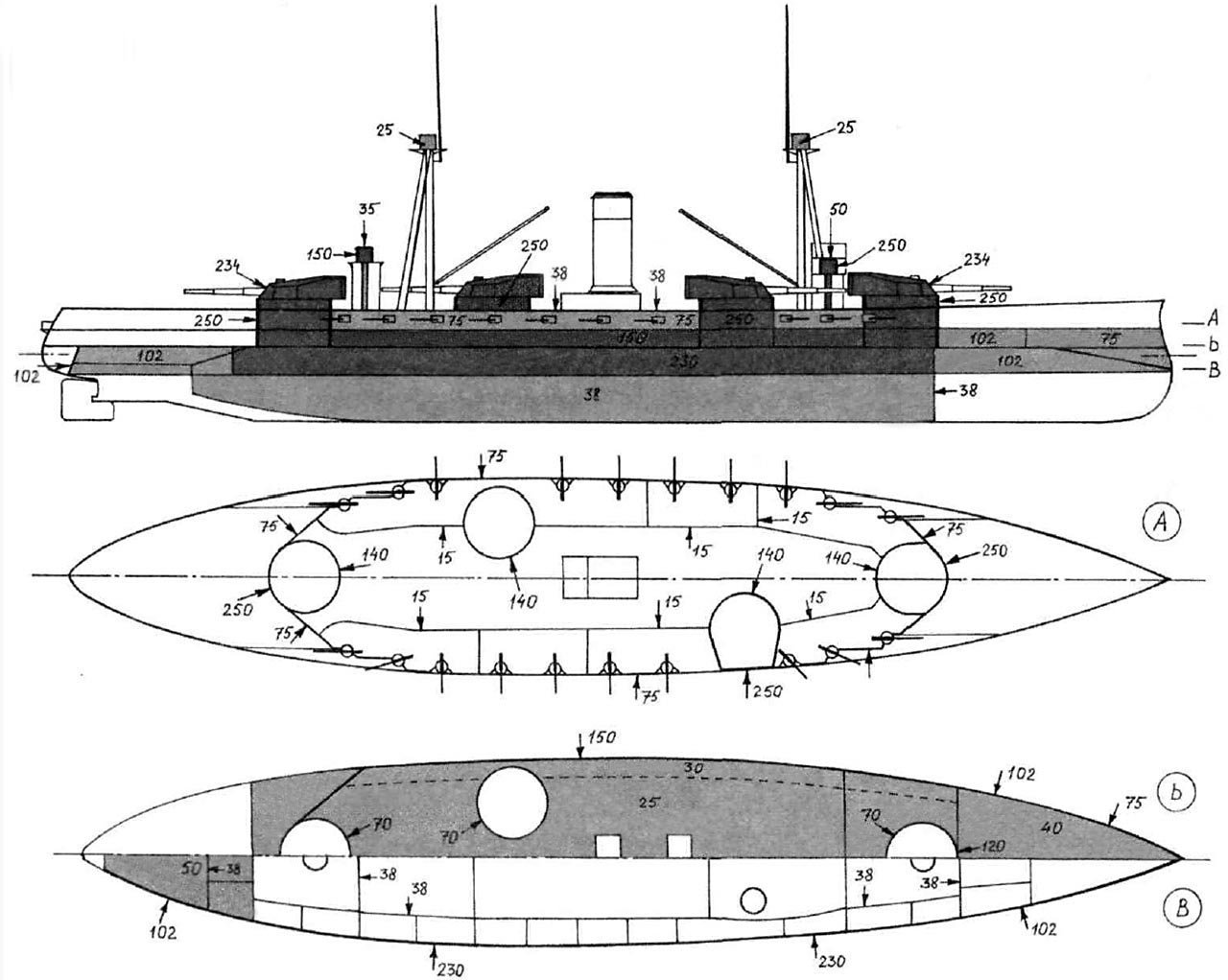
(España class battleship armor scheme). The protection was completed with a 38mm thick armored deck and two protective decks between 25mm and 50mm thick. The 305mm turrets had 203mm plates on the sides and 234mm on the front, and the barbettes were protected with a homogeneous 250mm thick plate. The conning tower had a maximum thickness of 250mm on the sides and front and 50mm on the roof, while the aft auxiliary bridge had 150mm on the sides and front and 35mm on the roof. The fire control systems in the mastheads also had 25mm thick armor.
españa1ship7
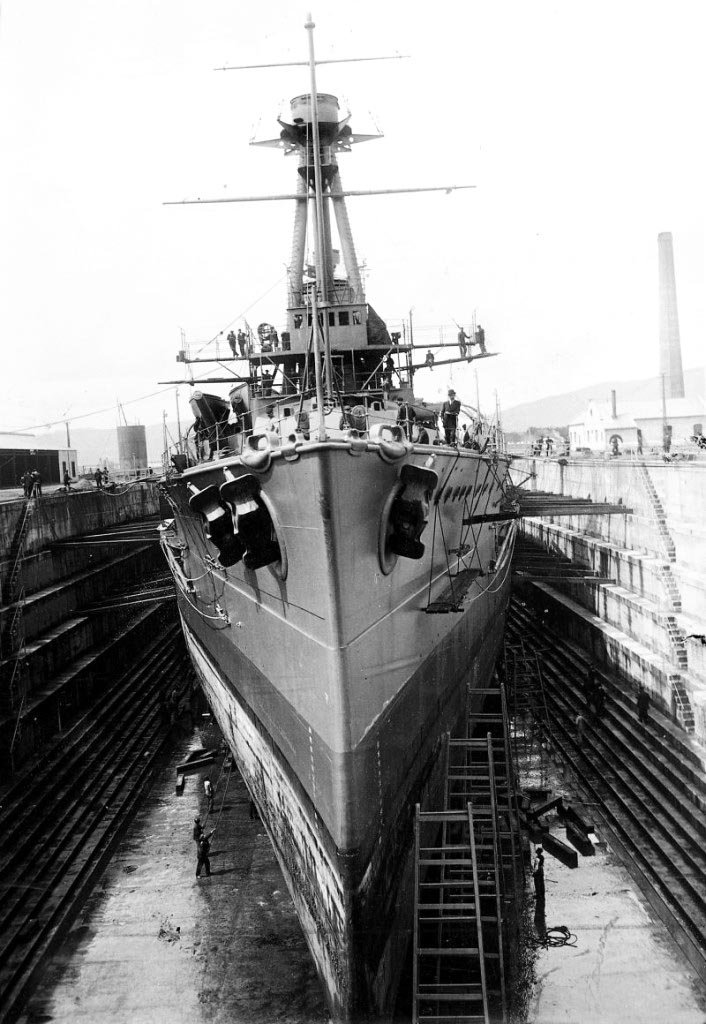
(España battleship image). The armor plating accounted for 24.8% of the ship’s total weight, considerably less than other dreadnought battleships of the era, but its weakest point was underwater protection. This protection consisted primarily of a 38mm thick torpedo bulkhead extending from the barbette of the forward 305mm gun turret to just beyond the aft 305mm gun turret. However, the main problem was that this bulkhead was installed too close to the outer hull, preventing it from absorbing damage effectively. Furthermore, a poorly designed damage control system hindered its ability to respond effectively to damage sustained. At the time of their entry into service, these ships had a Bullivant anti-torpedo net installed, but these were removed later.
españa2ship15
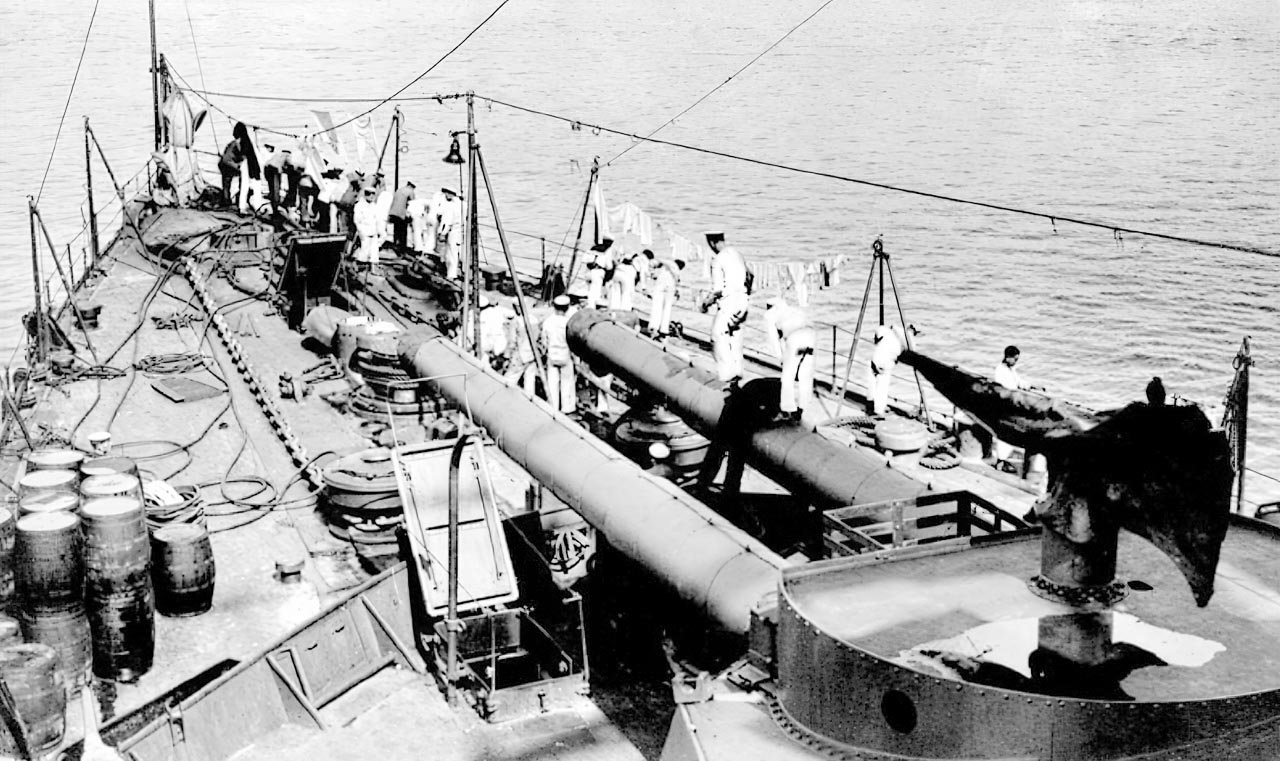
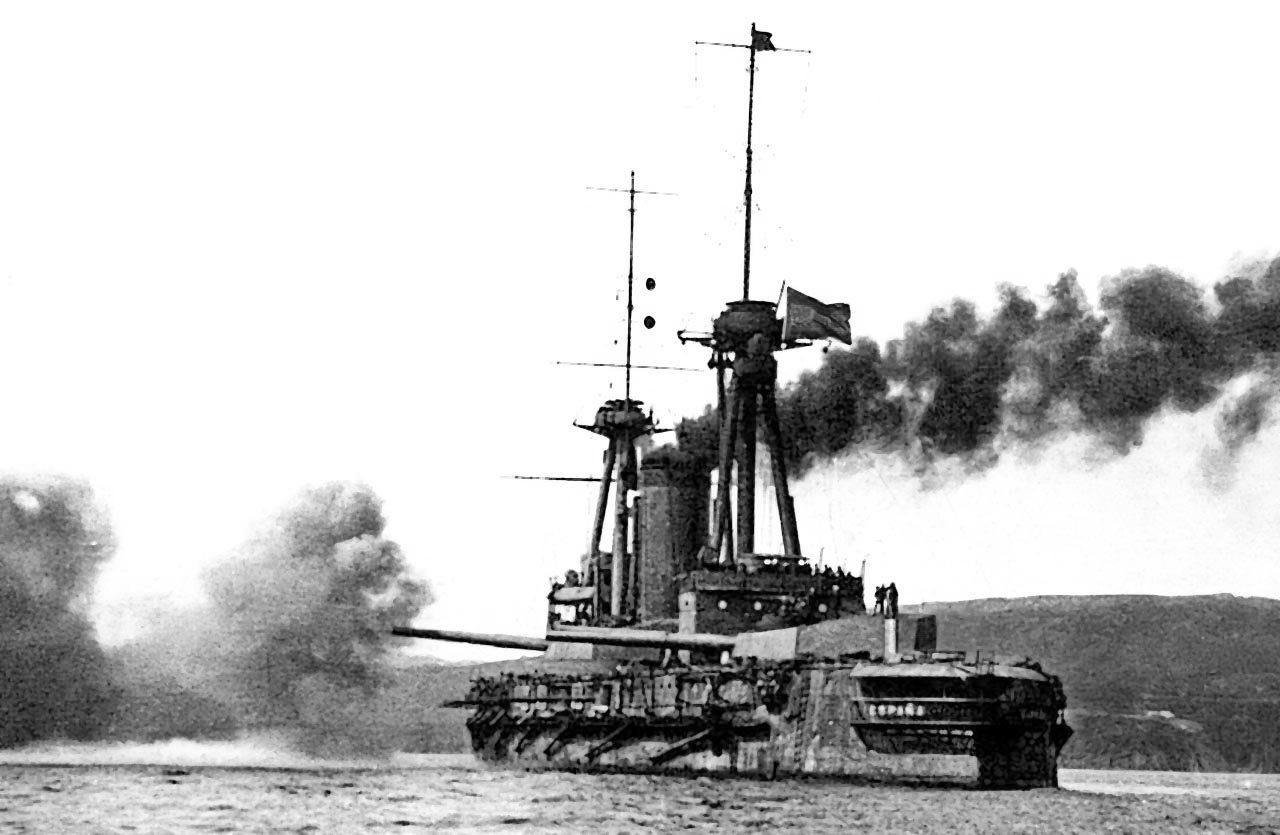
(España / Alfonso XIII battleship image). Armament was one of the strengths of the España-class battleships, as despite their modest size they boasted a main battery of eight 305/50mm Vickers Mark H guns mounted in four twin turrets. One was forward (A) and another aft (D), along the ship’s longitudinal axis, while the other two (B and C) were positioned on the port and starboard sides, near the ship’s centerline but offset from the longitudinal axis, en echelon as wing turrets. This asymmetrical arrangement allowed all eight guns to be fired broadside and six to be used while retreating or in pursuit, although the latter action was practically impossible, as the blast from the third turret could severely damage the bridges. The forward (A) and aft turrets (D) had a 270° arc of fire, while the wing turrets (B and C) had a 180° arc of fire to their side and an 80° arc of fire to the opposite side.
turretscheme1
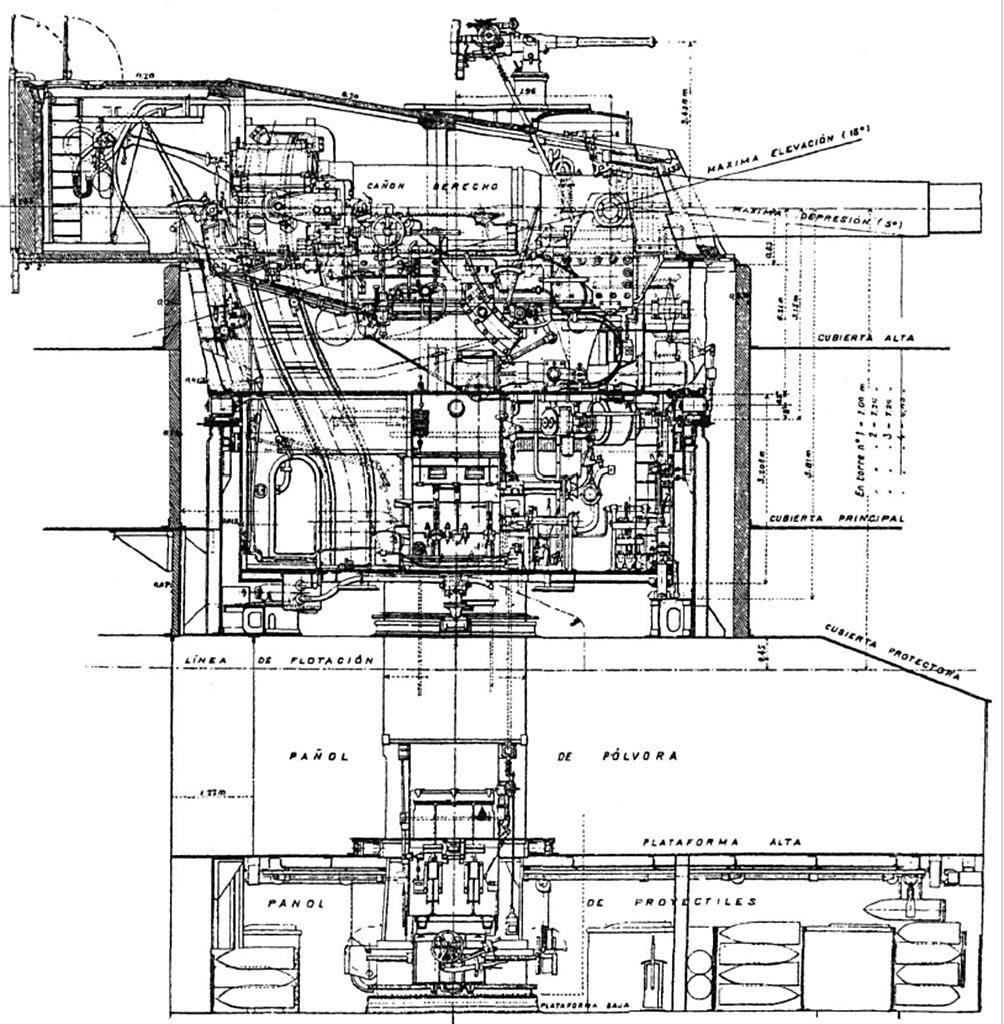
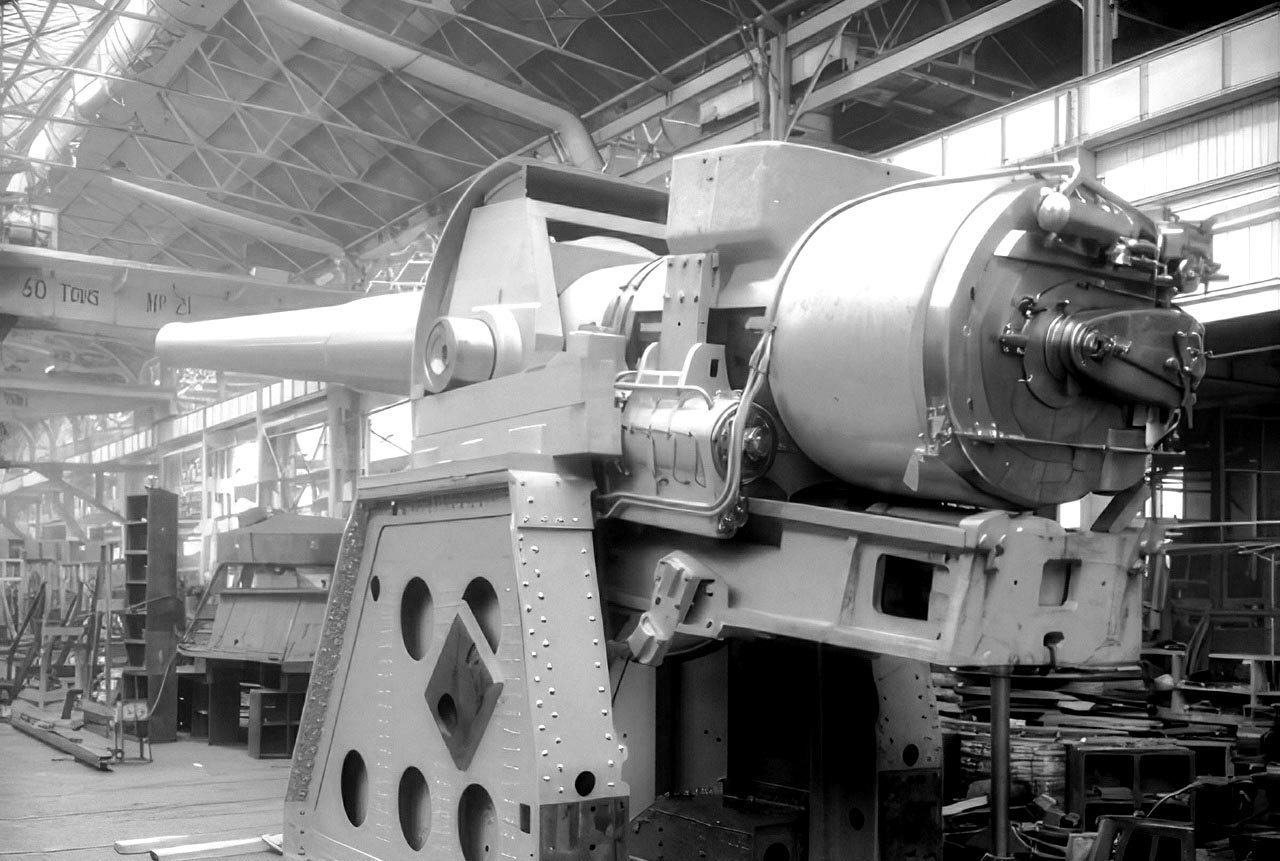
(Blueprint of the 305mm gun turret). Two of the turrets were built by Vickers and the others by Armstrong. Each turret carried 127,711 kg of armor, were hydraulically operated, and each required a crew of 34. They had two elevators for handling and raising ammunition from the magazine. The guns were rifled, with 72 grooves, and had a Welling screw breech with twelve sections. Each gun weighed 65.64 tons, including the breech screw, breech ring, breech arm, and accessories. In addition, there was the 5,385 kg cradle, the 16,808 kg slide, the 878 kg vertical aiming fork, and the 2,414 kg loading arm. In total, each twin turret weighed approximately 314.31 tons. The 305/50mm guns had a maximum range of 21,500 meters, an elevation range of -3° to +18°, and could be loaded at any elevation. The guns were positioned at a height of approximately 8.50 meters above the water and the maximum theoretical rate of fire was 2 rounds per minute, although in practice it was 1 round per minute.
españa2ship13
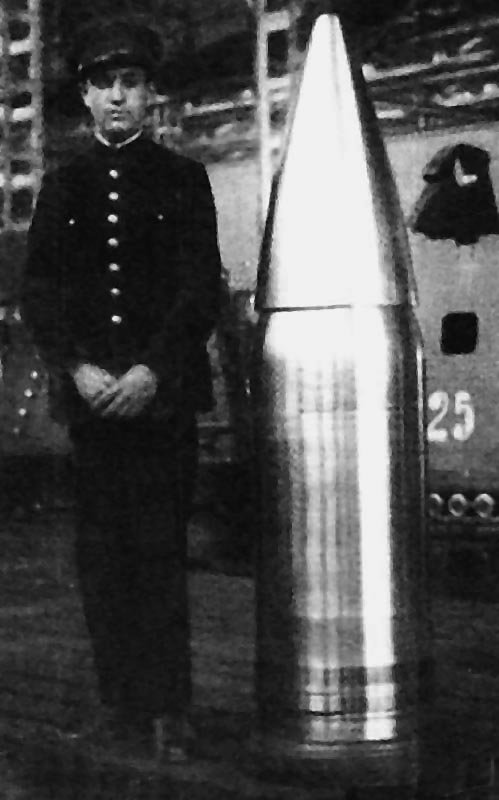
(305mm shell image). These guns fired 385.60 kg shells at a muzzle velocity of 914 m/s and used a 127.90 kg powdergun propellant charge of C.S.P.2 (Chilworth Smokeless Powder No.2). Five different types of shells were available: -armor-piercing (AP), made of hardened steel with 10 kg of TNT, -semi-armor-piercing (SAP), with 30 kg of TNT, -high explosive (HE), with an ordinary shell containing 32.50 kg of gunpowder, -shrapnel shell (anti-personnel) and practice shell. Each turret had 172 rounds, divided into: 30 armor-piercing, 70 semi-armor-piercing, 30 high-explosive, 30 shrapnel, and 12 practice rounds.
españaclass5
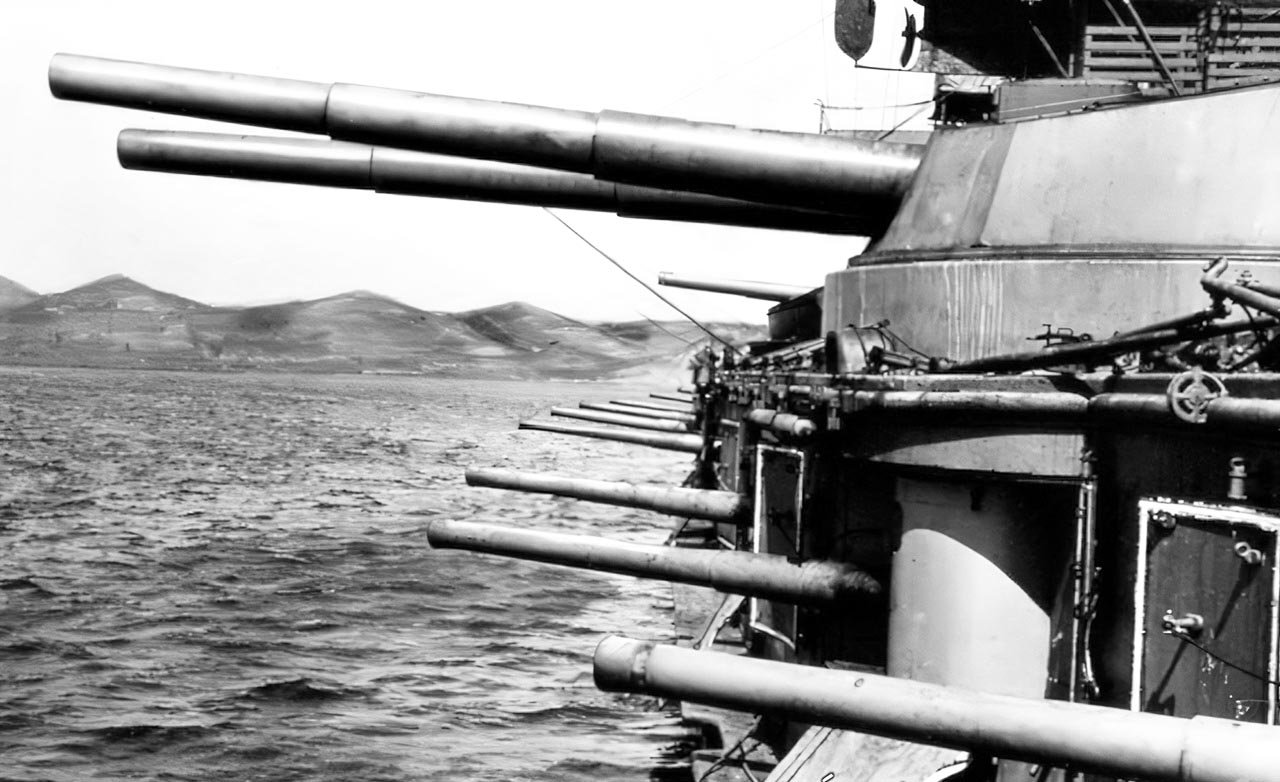
(España class battleship image). The secondary battery consisted of twenty Vickers 101.6/50mm Model E guns, individually mounted in casemates, ten on each side. These guns were mounted below the main deck and their primary mission was to counter torpedo boats. They had a maximum range of 9,000 meters at the maximum elevation of 15° and a maximum rate of fire of six to twelve rounds per minute. These guns fired 14 kg rounds with a muzzle velocity of 900 m/s and were available in four different types: standard, high-explosive (HE), filled with 1.34 kg of TNT, semi-armor-piercing (SAP), and anti-personnel (shrapnel). These guns had the drawback of being mounted too close to the waterline, so they could not be used in rough seas.
alfonso13ship6
These ships also carried two 47/50mm Skoda guns, although some sources claim they were Vickers, mounted on the roofs of the forward (A) and aft (D) turrets (on the image). These were vertically linked to the left-hand gun of each turret to serve as sub-caliber rounds for firing and aiming exercises. Two Armstrong 76/17mm landing guns were also on board, which could be disembarked and used ashore to support the Marines. Finally, two Maxim machine guns completed the armament. In the mid-1920s, two 76.2/34mm Model FF anti-aircraft guns were installed on the roofs of turrets A and D. These guns were manufactured in Spain by SECN in Placencia de las Armas and fired 5.7 kg rounds to a maximum distance of 5,300 meters with a muzzle velocity of 579 m/s.
305mmgunatvickers2
(305/50mm gun image). The artillery was divided into four groups for easier control. One group manned turrets A and B, another turrets C and D, another the port 101.6mm guns, and the last group the starboard 101.6mm guns. Artillery fire was directed from three different locations: a command tower on the forward bridge, a director’s tower on the aft bridge, and the central fire control station on the protective deck. To direct fire, these ships were equipped with two rangefinders mounted in the fighting tops of each mast and were protected by 25mm thick armor plating.
españa1ship4
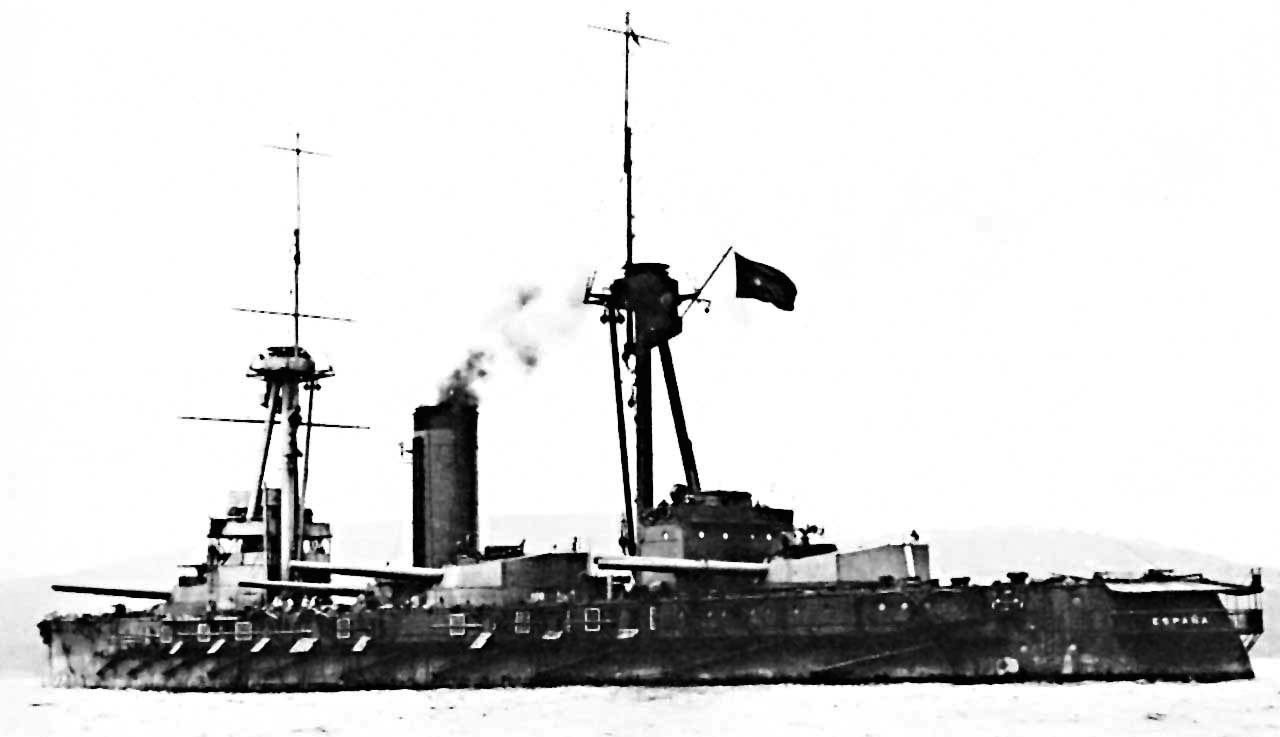
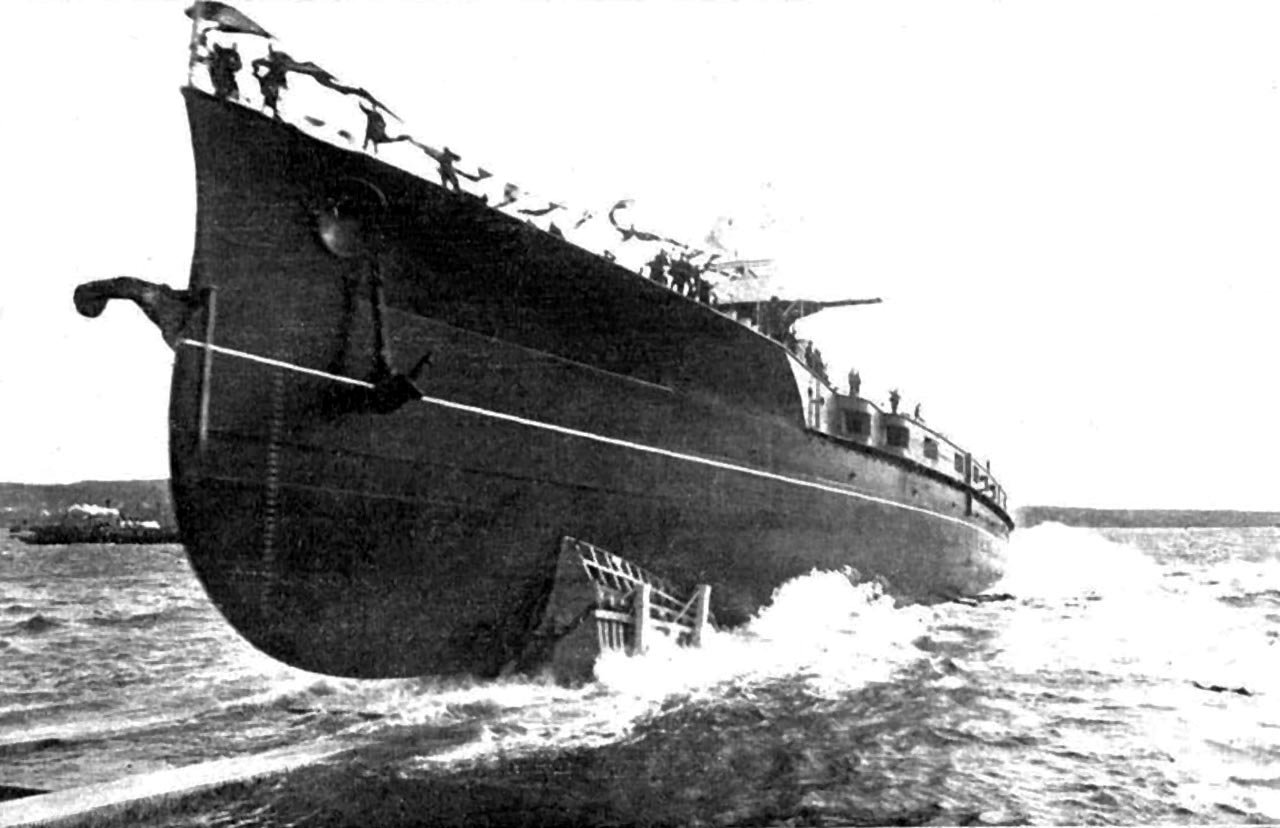
(España battleship image). The first ship of the class was named España, its keel was laid on February 5, 1909, and it was launched three years later, on February 5, 1912. The ship cost a total of 43 million pesetas and was publicly exhibited for the first time on October 13, 1913, at a naval review held in Cartagena, which was attended by French President Raymond Poincaré. Ten days later, on October 23, 1913, it was commissioned into the Spanish Navy. In June 1914, it underwent gunnery trials and was assigned to the First Division of the Training Squadron, based in El Ferrol, along with its sister ship, the Alfonso XIII. It did not participate in any actions during World War I because Spain remained neutral during the conflict.
españa1ship15
(España battleship image). In August 1914, the battleship España represented Spain during the opening ceremony of the Panama Canal. In October 1920, it sailed to Chile to commemorate the Centennial of that country’s Independence. During this visit, on January 29, 1921, the ship ran aground in Chilean waters off Puerto Montt while preparing to return to Spain. The ship suffered considerable damage to its hull, with dents 46 meters long and several holes caused by rocks, which forced it to undergo emergency repairs in Chile and more extensive repairs in Balboa, Panama. It was then able to return to Spain without further incident.
españa1ship19211
(España battleship image). Following the outbreak of the Rif War against Morocco in mid-1921, the battleship España participated in several missions supporting ground troops and providing cover for the Vélez and Alhucemas crags, firing a total of 846 101.6mm shells. On August 1, 1922, it resumed diplomatic duties by transporting the President of Argentina to Santander, and a week later the Royal Family presented the Prince of Asturias, Alfonso de Borbón y Battenberg, as a midshipman.
españa1ship3forcas1
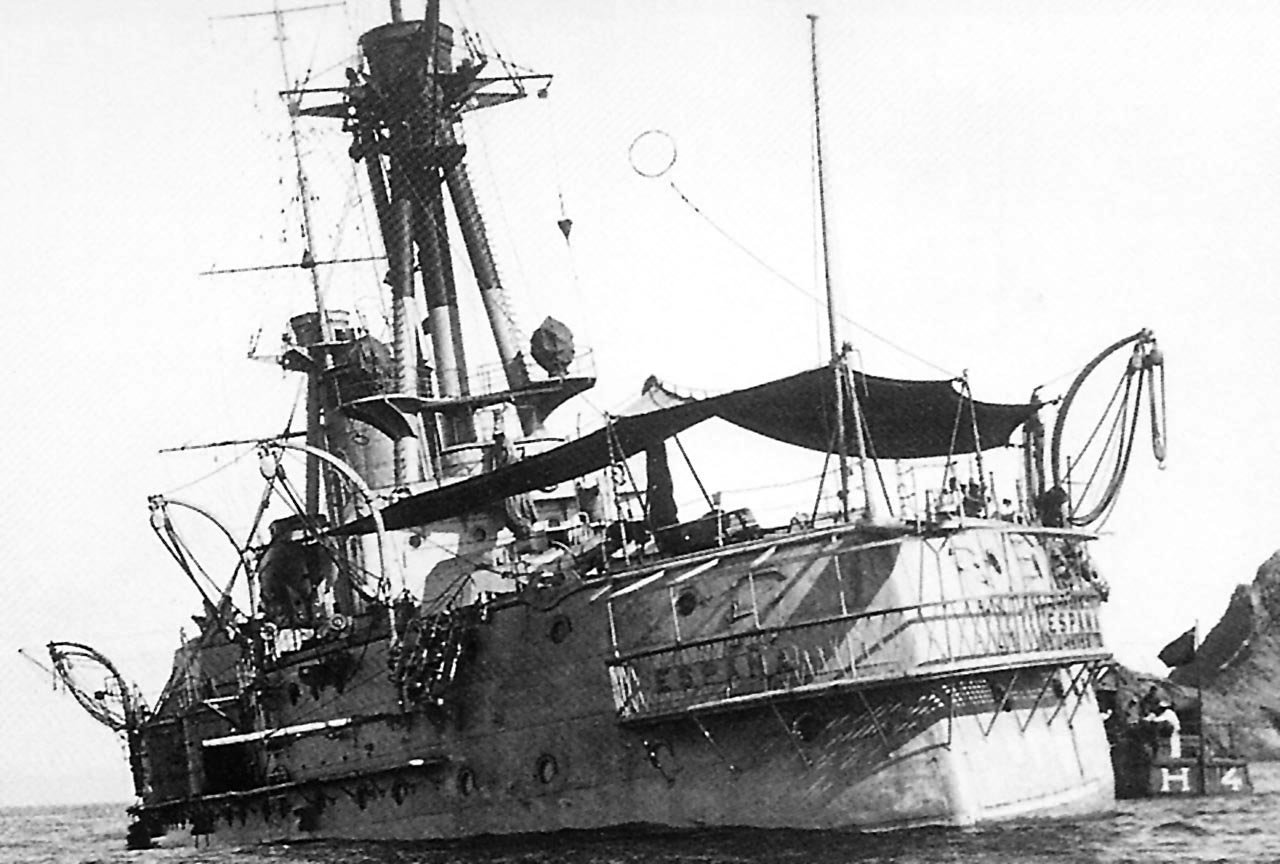
(España battleship image). After completing a mission supporting ground troops in the Tifarauin area, the battleship España headed to Malaga to refuel before continuing on to Melilla. At midday on Sunday, August 26, 1923, the battleship España was sailing at half speed close to the coast near Cape Tres Forcas when it ran aground due to the thick fog covering the area. The impact left the ship grounded on some rocks near the Tres Forcas lighthouse, about 200 meters from the shore. The ship began to flood due to a breach in the port hull and engine room, which allowed a large influx of water, causing it to list rapidly to port. Although the ship’s commander, Pedro Sanz, gave orders to pump out the water, the engine room and the wireless telegraph station flooded in a short time.
españa1ship3forcas3
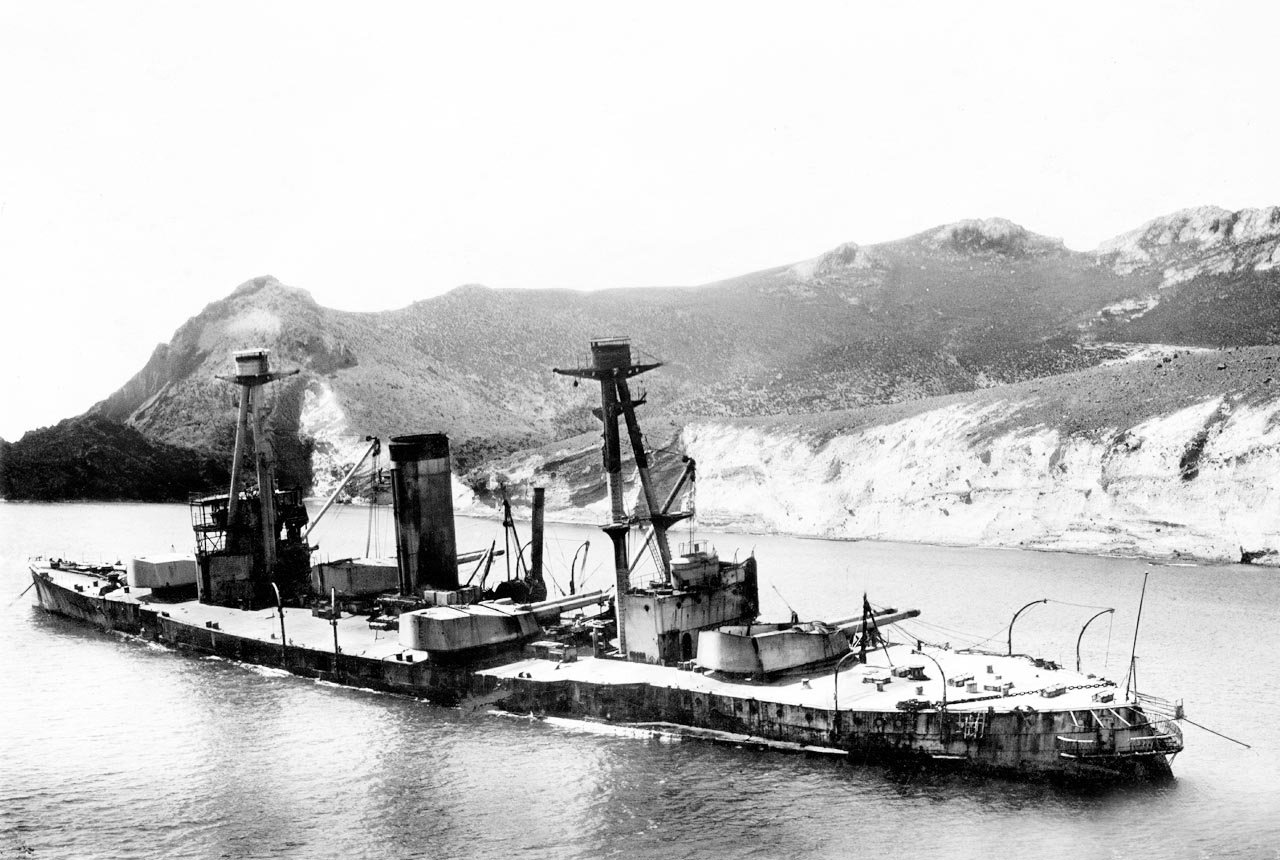
(España battleship image). Following notification of the accident, the Navy dispatched several ships to rescue the España, including the battleship Alfonso XIII, the seaplane tender Dédalo, and various coast guard vessels, torpedo boats, and steamships, which could do little for the stricken vessel. Fortunately, no crew member was injured, and all were rescued by the rescue flotilla sent for that purpose. The captain, two officers, and thirty sailors remained on the España to assist in the rescue operations. The refloating operation for the España began on August 30th, with the participation of several ships and four powerful British tugboats that arrived from Gibraltar. The Spanish government approved a special budget for these efforts, but unfortunately, although several attempts were made to move the battleship over the following months, all proved unsuccessful. Attempts were made to reduce the ship’s weight by dismantling the guns and machinery, removing the ammunition, and even removing parts of the ship’s armor plating, but none of this enabled the España battleship to be moved.
305mmcdglamarquinabattery2
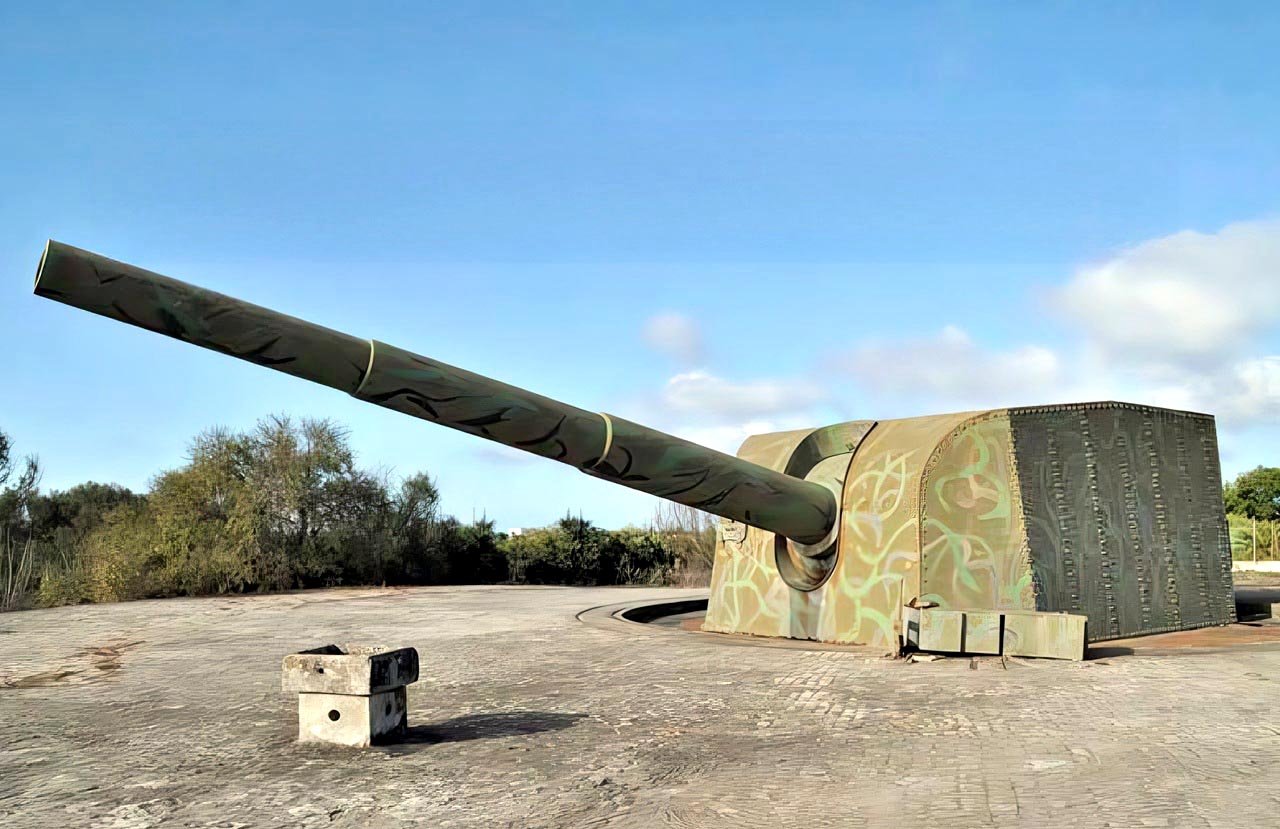
In September 1924, the 305mm turrets and 101.6mm guns were removed. The 305mm guns were lowered to the seabed and later recovered by the submarine salvage vessel Kanguro. These guns were subsequently installed in turrets at various coastal batteries, for example, three of these guns were installed in single turrets at the A-12 La Marquina coastal battery (on the image), located in San Fernando, Cadiz, and remained in service until 1999. Despite the failure of the refloating operations, the ship was prepared to be raised with the help of Italian equipment the following December 1924. When everything was almost ready for the refloating of the battleship España in December, severe storms broke out in the area of ​​the grounding in mid-November 1924, and on November 20th one of them caused enormous damage to the ship, which would eventually break in two shortly afterward. This damage made any kind of rescue impossible, and the battleship España was abandoned by the Navy to rest on the seabed after its brief career.

Related posts