Photogaleries

9M133 KORNET (AT-14 Spriggan) anti-tank missile gallery
kornet7
In the late 1980s, the Soviet Union began developing a new high-performance missile to complement the 9K111 Fagot (AT-4 Spigot) and 9K113 Konkurs (AT-5 Spandrel) missiles, the most widely deployed within the Red Army. Of course, the new missile had to have a much more effective guidance system than the previous wire-guided missiles, so it was decided that they would be equipped with a laser beam guidance system and that it would be an all-weather system.
kornetem1
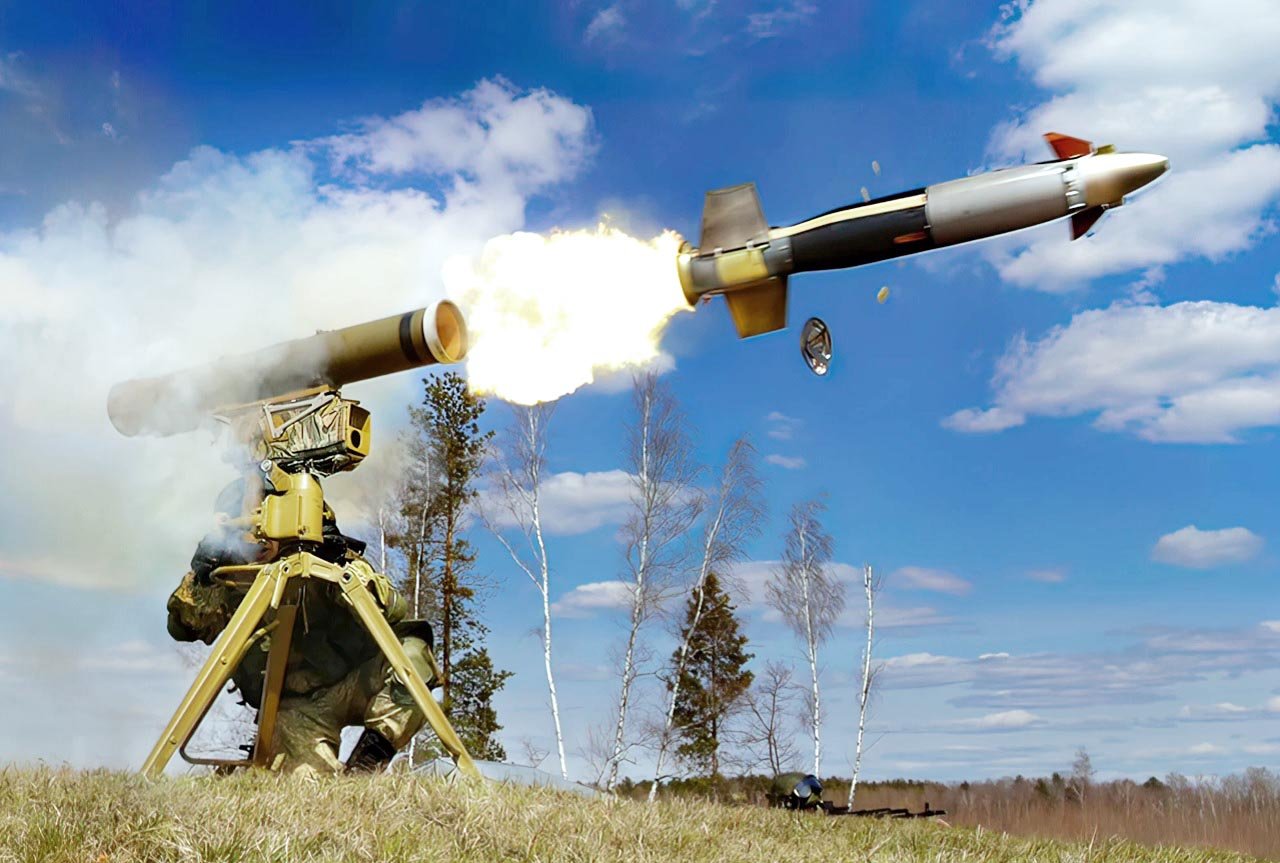
Beginning in 1988, the KBP Instrument Design Bureau began developing the new missile. The new system was externally similar to earlier Soviet anti-tank missiles, although its capabilities were greatly improved. The new system was designated “9M133 Kornet” and was publicly unveiled in 1994 at the exhibition in Nizhny Novgorod, specifically the export variant “Kornet-E”. In the West, it received the designation “AT-14 Spriggan”, but the new missile was not inducted into the Russian Army until 1998. Since then, several variants have entered service, the most recent being the 9M133M Kornet-M or 9M133 Kornet-EM (on the image) in its export version, which entered service in 2012. This variant marked the entry of this missile into the “fire and forget” missile class.
kornet8
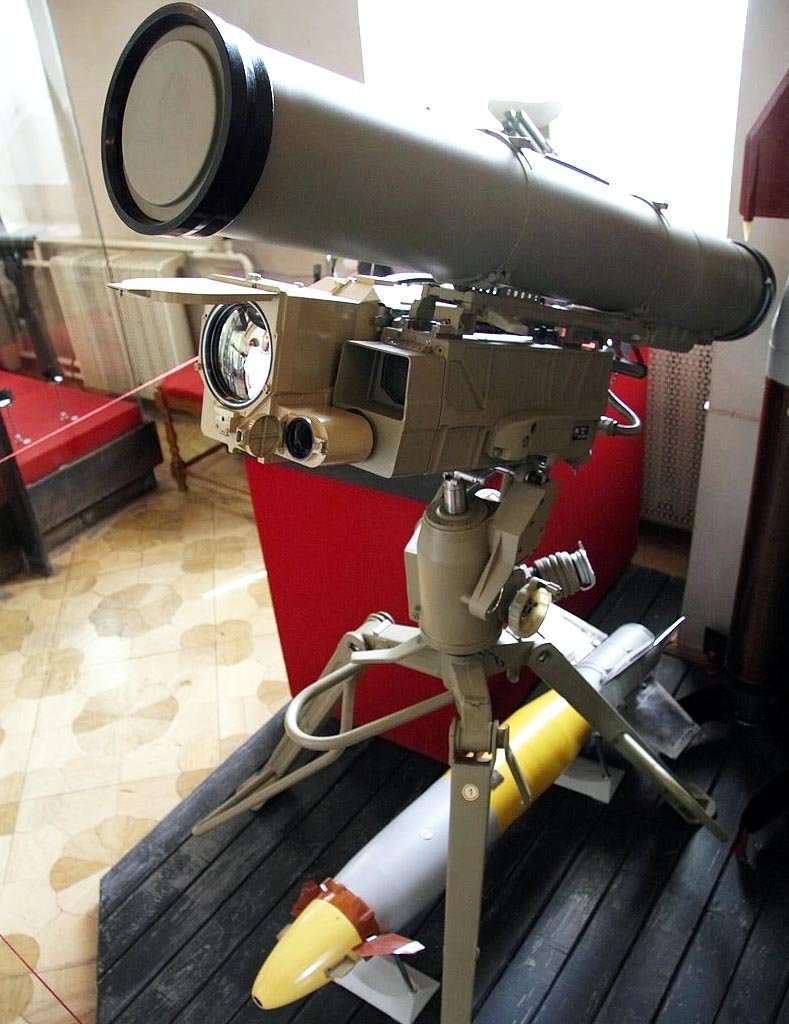
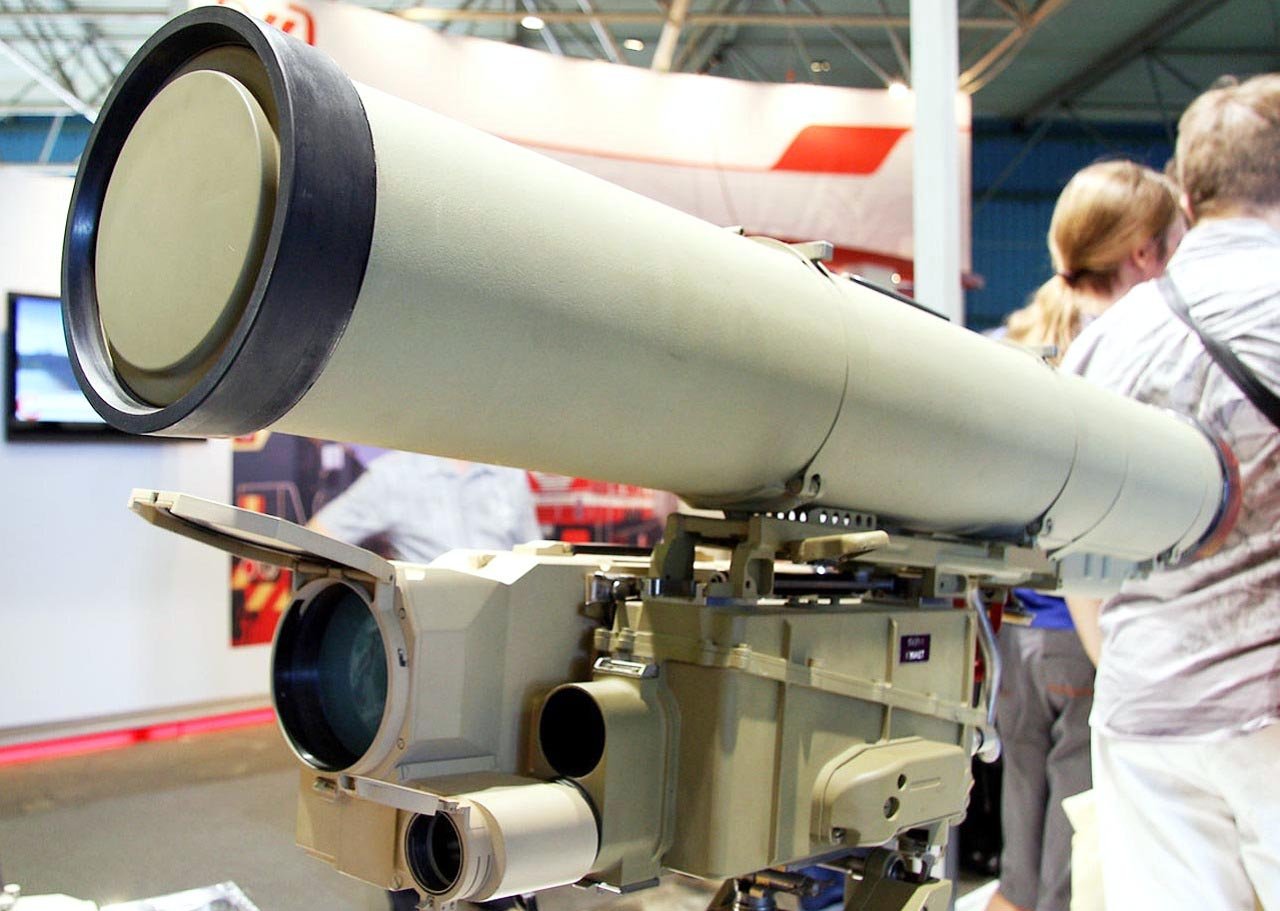
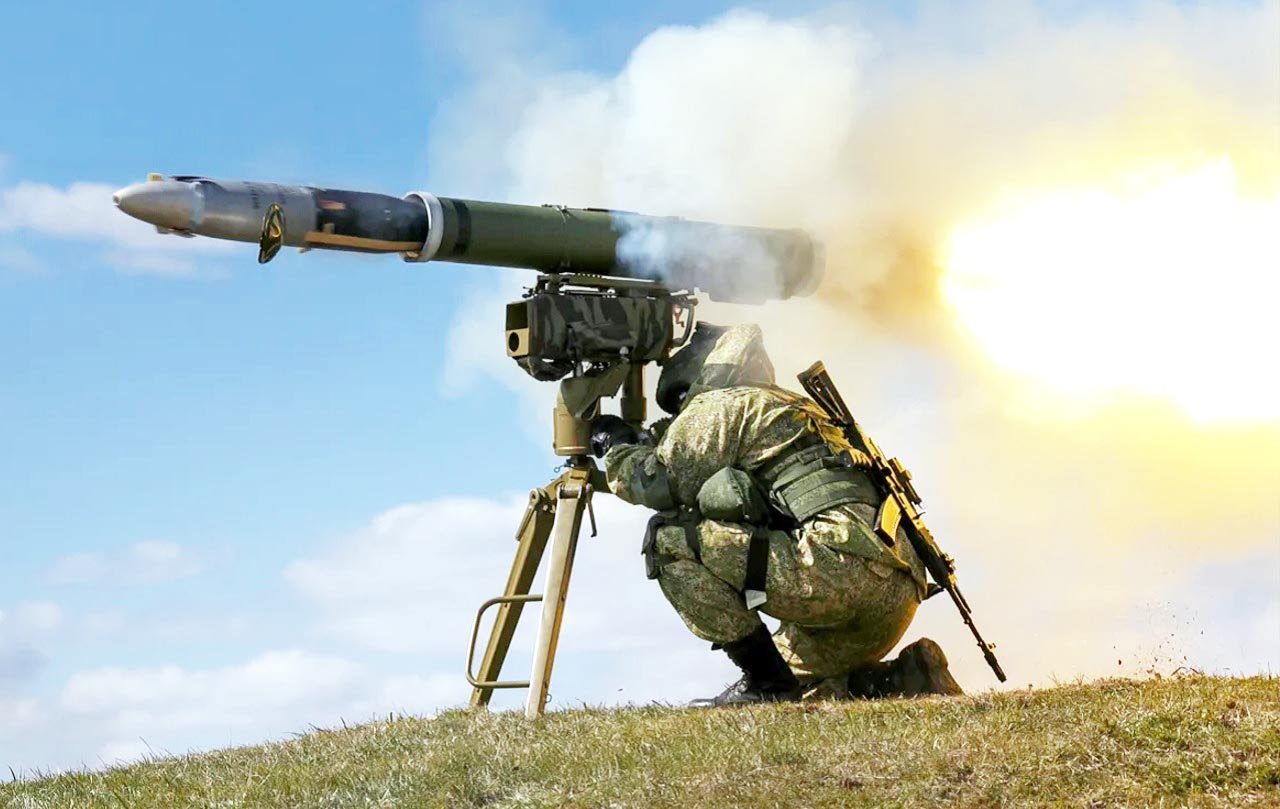
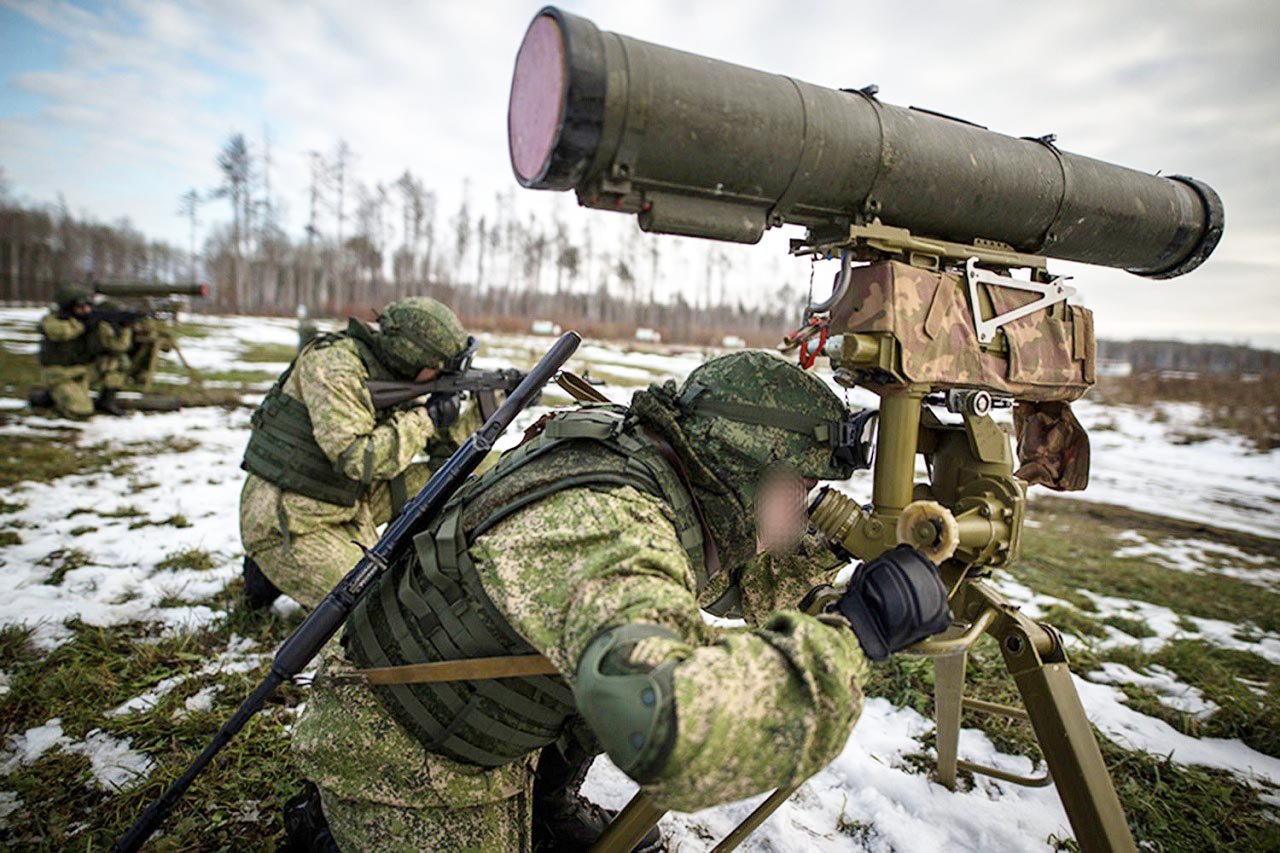
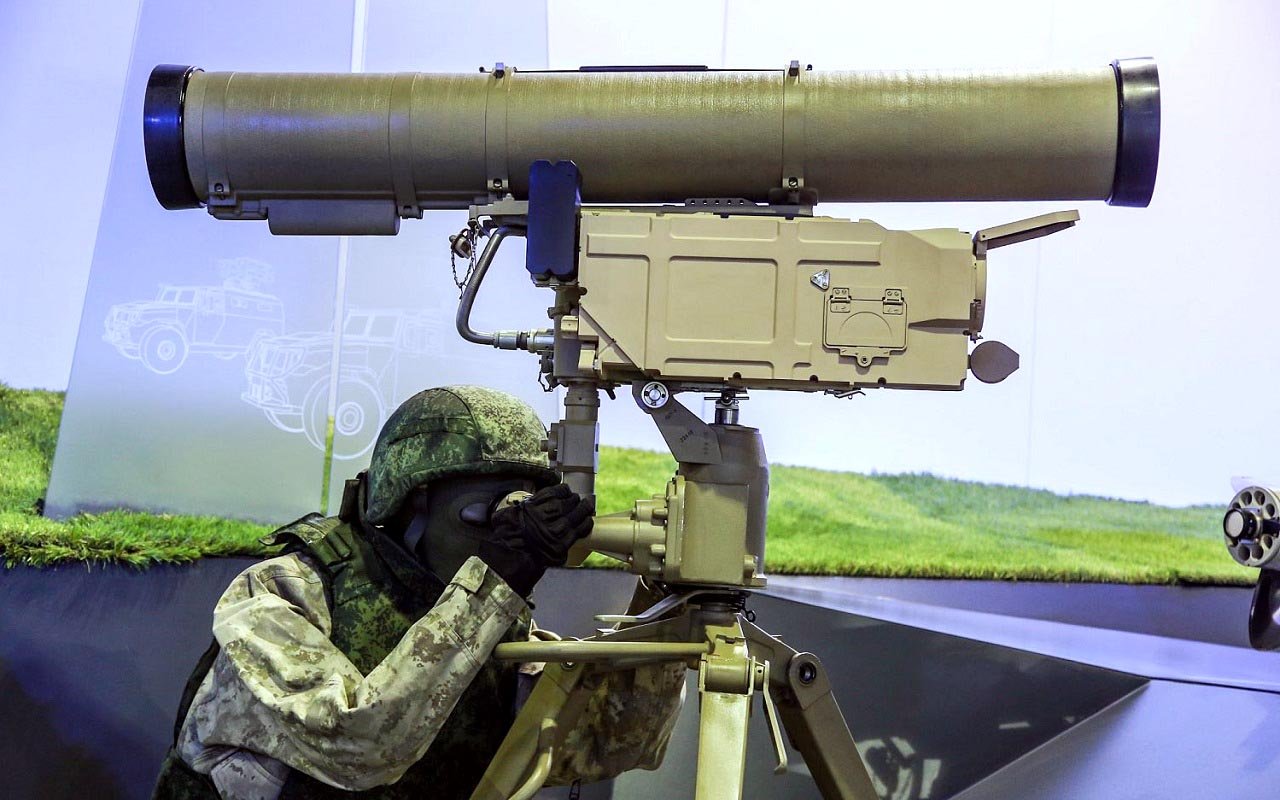
The 9M133 Kornet system consists of three main components: the 9P163-1 launcher tripod, the 1P45-1 guidance device, and a 9M133 missile in its launch container. The guidance system, mounted on the tripod, consists of the 1P45-1 sight-tracker and the 1PN79-1 thermal sight. The system is man-portable and can be operated by two operators. It can be divided into several parts for easy transport, as the total ready-to-fire weight reaches 66 kg.
kornete2
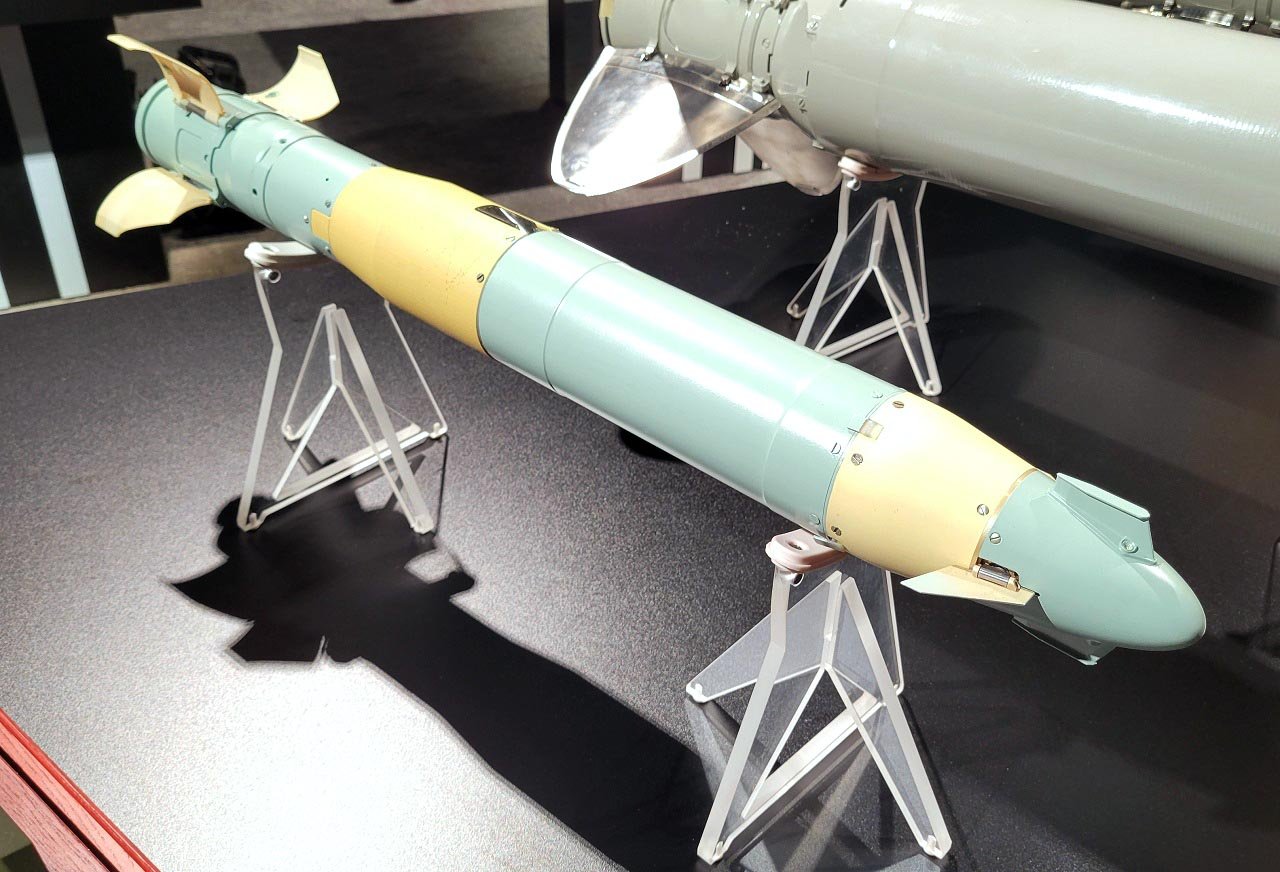
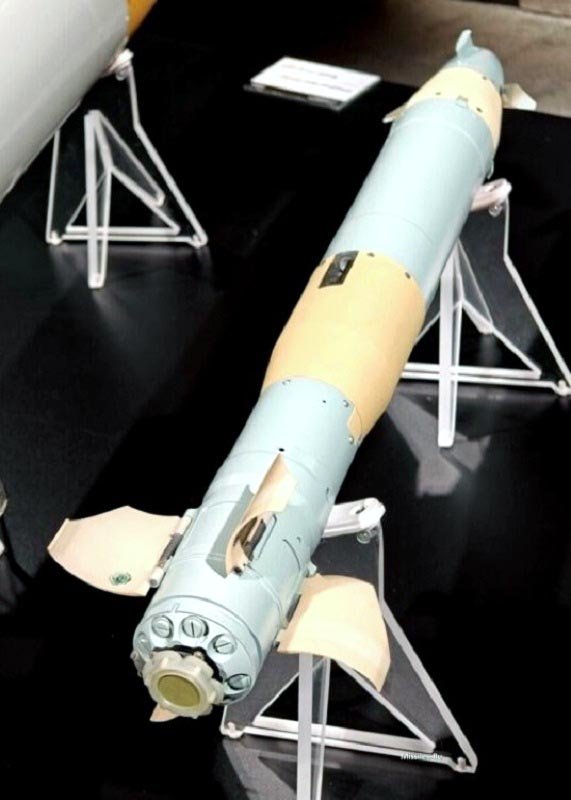
(Kornet-E missile image). The missile has an unconventional internal layout, with the laser beam sensor located at the rear of the guidance section, housed in the missile’s nose. The warhead is also located unusually, behind the solid rocket fuel. This arrangement offers some advantages, but also some drawbacks to the missile’s capabilities. It has the advantage that the precursor charge has more time to detonate the explosive reactive armor; however, it appears that the plasma jet has to pass through more missile components to reach the tank’s main armor, which can deform the plasma jet and reduce its penetration capability.
kornete4
(Kornet-E missile image). All missiles of the 9M133 Kornet family have the same dimensions: 1.10 meters in length, 152mm in caliber, and 460 mm in wingspan. The launch container is slightly larger, measuring 1.21 meters long by 160mm in diameter. The weight varies from model to model, ranging from 29 to 33 kg, as does the range, which varies from 5,000 to 10,000 meters. The missiles are propelled by solid rocket fuel and have speeds ranging from 900 to 1,152 km/h.
kornetfamily2
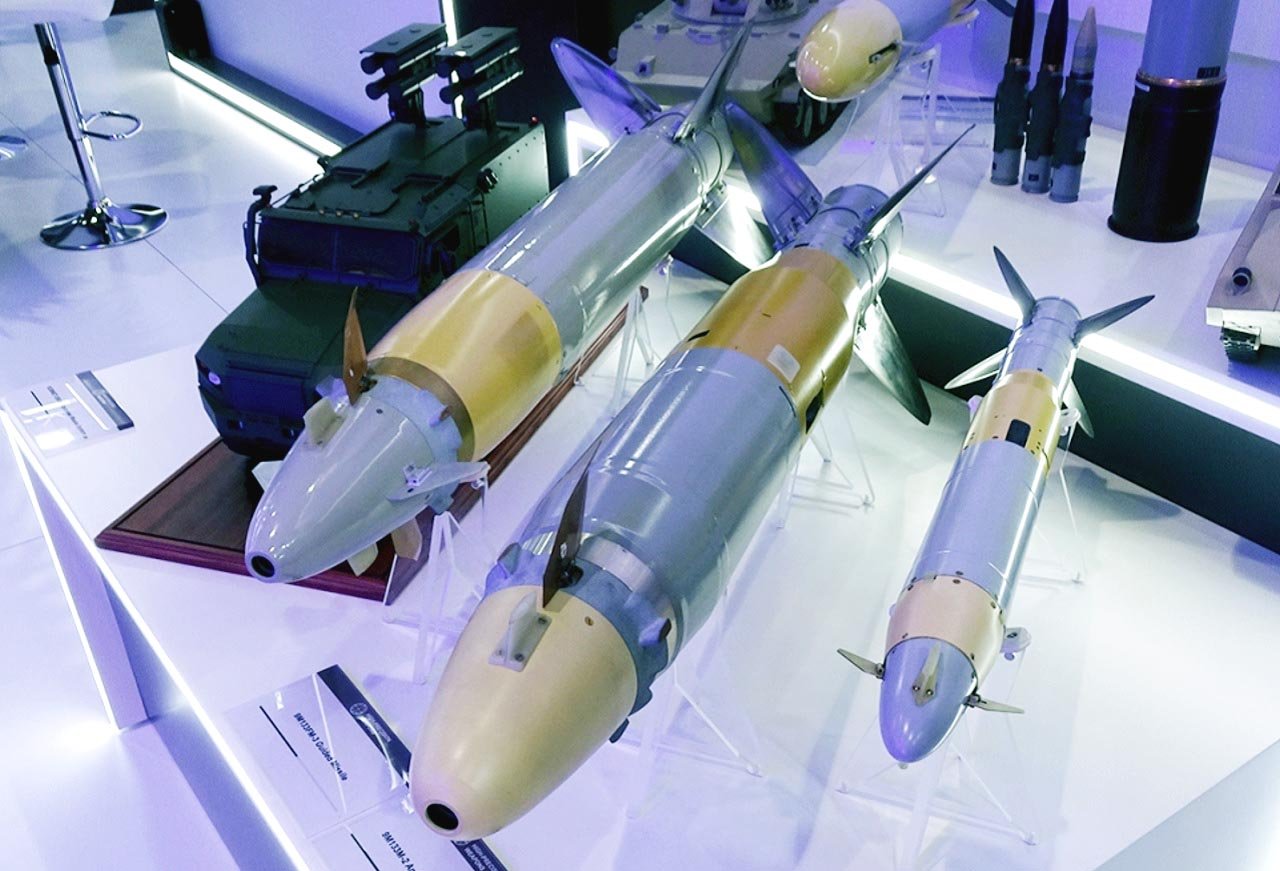
(9M133FM3+M2+Bulat missiles image). Kornet family missiles have a laser guidance system with SACLOS (semi-automatic line-of-sight) fire control, allowing it to be used at any time of day or night in any weather conditions. The range is 5,500 meters during the day and 3,500 meters at night, and its laser encoding allows simultaneous firing from multiple positions following a single laser beam. The missile is highly resistant to electronic and optical interference and it has the ability to attack targets on their weakest point, the roof (top attack mode).
kornete1
(Kornet-E missile image). The thermal imaging sights were developed by NPO GIPO and consist of an optoelectronic unit with controls, a gas cooling system, and an infrared waves range receiver powered by a nickel cadmium battery. There are different types of sights depending on the missile variant used. The 1PN79M “Metis-2” thermal sight weighs 11 kg, while its lightweight version, the 1PN79M-1, weighs 8.5 kg. They are for the “Kornet-E” missile and can detect targets at 4,000 meters, allowing recognition at 2,500 meters. The 1PN80 “Kornet-TP” thermal sight is for the “Kornet-P” missile and is only available to the Russian Army. It can detect targets at 5,000 meters and recognize targets at 3,500 meters.
kornet14
The AT-14 Spriggan system has been designed to engage any type of ground target, so the missiles have been equipped with different warheads. The 9M133 Kornet and 9M133-1 (Kornet – Kornet E) missiles, and the 9M133M-2 (Kornet M/EM) missile have a tandem HEAT shaped hollow charge warhead composed of two OKFOL shaped hollow explosive charges and are mainly for fighting against armored vehicles, although they can also be used against infrastructure. The 9M133 can penetrate up to 1,000 mm of armour behind ERA, the 9M133-1 up to 1,200 mm of armour behind ERA or 3.5 metres of concrete, and the 9M133M-2 up to 1,300 mm of armour behind ERA or 3.5 metres of concrete. The main charge in all cases has a diameter of 152mm.
kornet9
The 9M133F-1 and 9M133F-2 missiles carry an anti-personnel thermobaric warhead composed of RDX explosive, aluminum & isopropyl nitrate with a small amount of shrapnel and its destructive power equivalent to 10 kg of TNT. Finally, the 9M133F-3 missile’s warhead is of the anti-personnel blast fragmentation type, equivalent to 7 kg of TNT with limited penetration capability in soft-skinned vehicles and infrastructure.
kornet6
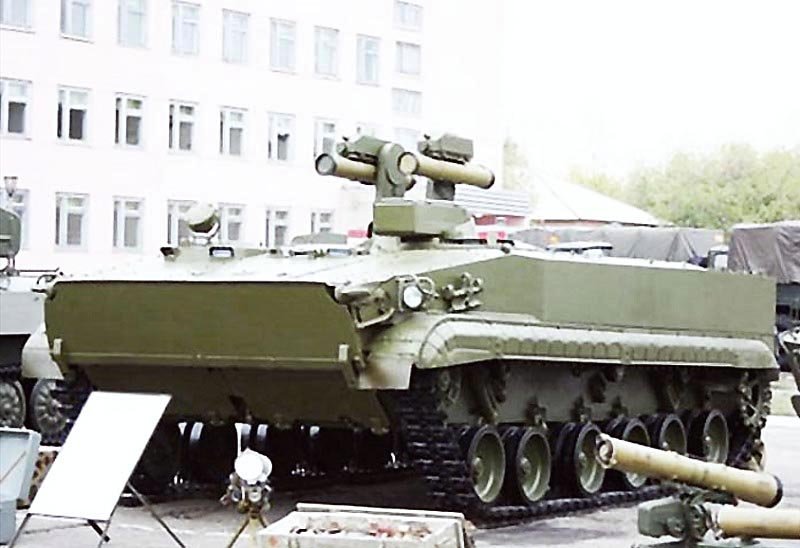
(9P163M-1 tank destroyer image). The Kornet missile is the core of some tank destroyer vehicles, such as the 9P163M-1 based on a BMP-3 IFV chassis, which is fitted with a retractable mast equipped with two 9M133 missiles. After firing, reloading is carried out automatically from a 16-missile magazine installed inside the hull. The Peruvian Army has also developed several “Alacran” tank destroyers based on the AMX-13 light tank chassis, equipped with turrets carrying two or three Kornet missiles.
kornetem2
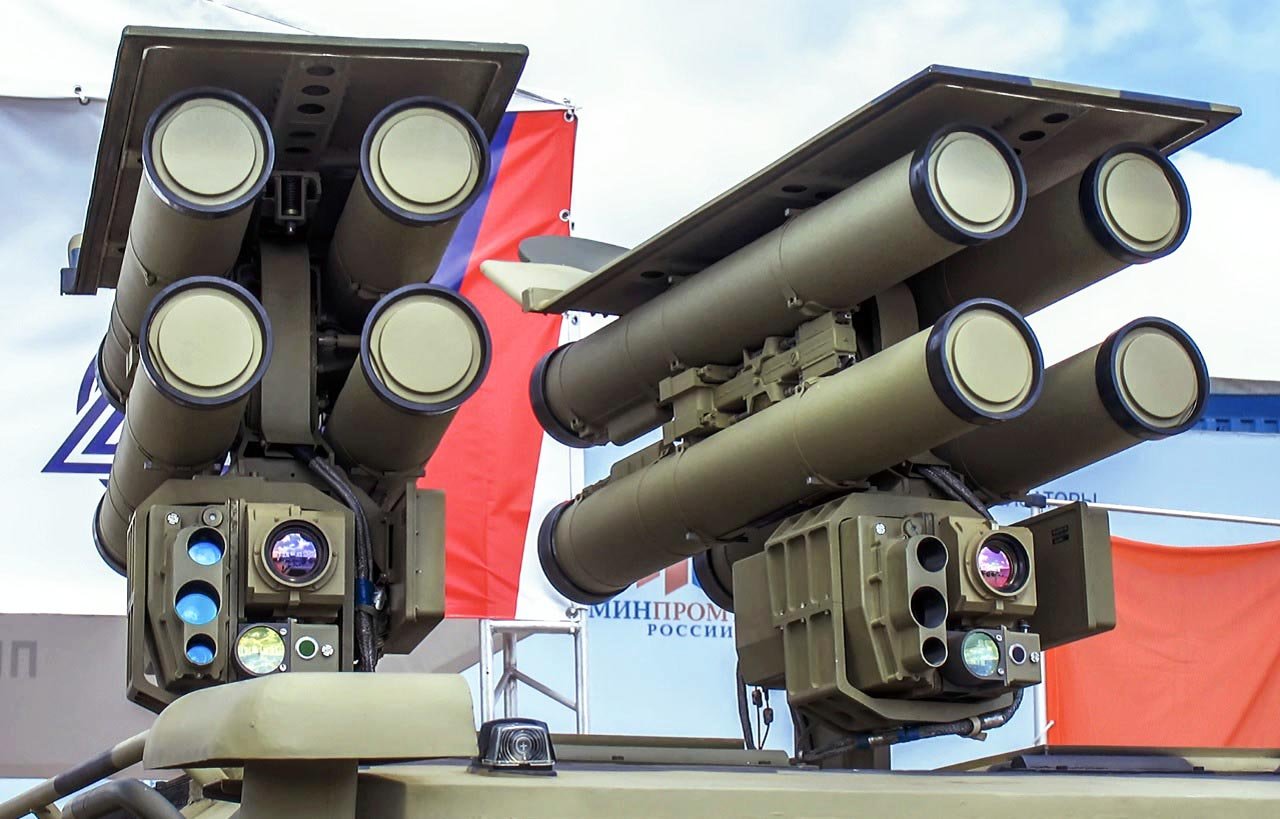
(Kvartet turret image). The manufacturer also offers a turret designated Kvartet, capable of carrying four missiles, which is easily installed on light ground vehicles and boats. Of course, the 480 kg turret includes the vision and guidance systems necessary for firing. There is also another turret designated “Berezhok” designed for installation on the BMP-2 IFV vehicle which consists of an automatic 30mm gun and two pairs of missiles mounted one on each side of the turret.
9m134bulat1
Recently, a new variant of the Kornet family was presented at the Army-2024 exhibition. This is a small-sized missile manufactured by JSC KBP and designated the “9M134 Bulat” (on the image). Its development began in 2018 and its trials finished in February 2025, and has been specifically designed to engage medium-armored vehicles. It features the same laser beam guidance system as the rest of the Kornet family although more resistant to countermeasures. It also features a tandem HEAT anti-tank warhead composed of two shaped hollow charges capable of penetrating up to 250 mm of armor behind the ERA and has a range of approximately 3,500 meters.
9m134bulat2
The 9M134 Bulat missile (on the image) can be fired from any 9M133 Kornet family launcher and is packaged in a two-unit package weighing 26.5 kg. The missile has a caliber of 82 mm and is housed in a container weighing only 6.5 kg and measuring 831 mm in length. The warhead is estimated to weigh around 1.6 kg, and the manufacturer provides a 15-year service life.
kornetirak
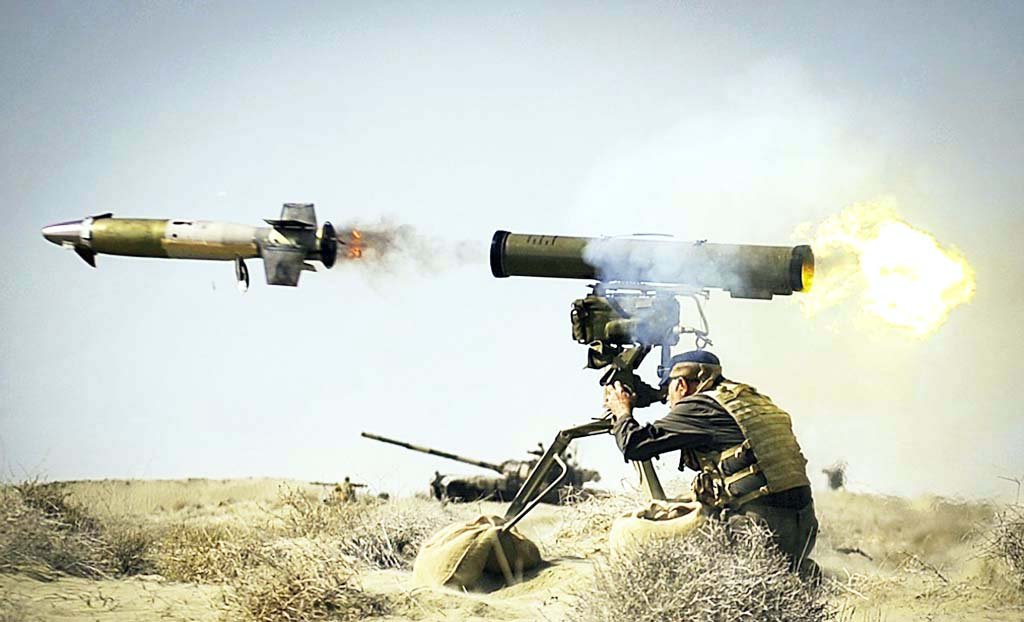
(Iraqi Kornet missile image). The 9M133 Kornet missile family has been a commercial success since its introduction, with some 35,000 manufactured until 2009, a figure that is much higher today. This missile can be considered as effective as the American Javelin, the French Akeron MP, or the Chinese HJ-12. It is in service with the armies of some 30 countries and with more than a dozen armed groups that have captured them in combat or obtained them indirectly from other countries. Its baptism of fire came during the 2003 Iraq War, when Iraqi special forces destroyed at least two M-1 Abrams MBTs and a Bradley IFV.
kornetarmen
(Armenian Kornet missile image). Subsequently, in 2006, the use of this missile by Hezbollah guerrillas against Israeli tanks was confirmed, with excellent results. However, Russian authorities deny that these missiles were manufactured in their factories, but rather that they were manufactured in other countries. In short, it can be said that Kornet missiles have been used in every war and combat conducted in the Middle East for the past 20 years.
kornet13
Of course, the Kornet system has been used by Russian and separatist forces during the conflict with Ukraine that began in 2014. This missile also achieved notable successes against Turkish Leopard 2 MBTs during their campaign in Syria in 2017, when ISIL fighters destroyed at least six of them. Finally, it should be noted that this missile is being widely used by the Russian Army during the invasion of Ukraine that began in 2022. During this conflict, there is confirmation that this missile has destroyed several Leopard 2 MBTs, at least one Swedish Strv-122 MBT, and a British Challenger 2 MBT.

Related posts