Photogaleries

Nora B-52 155mm wheeled self-propelled howitzer gallery
protonora3
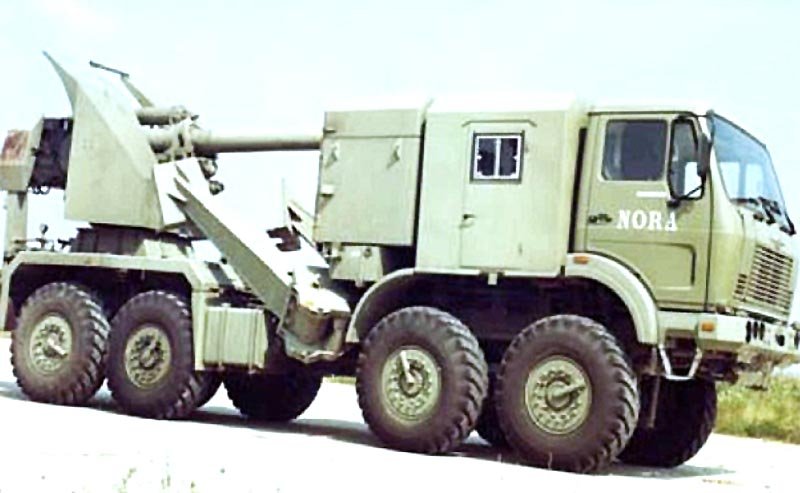
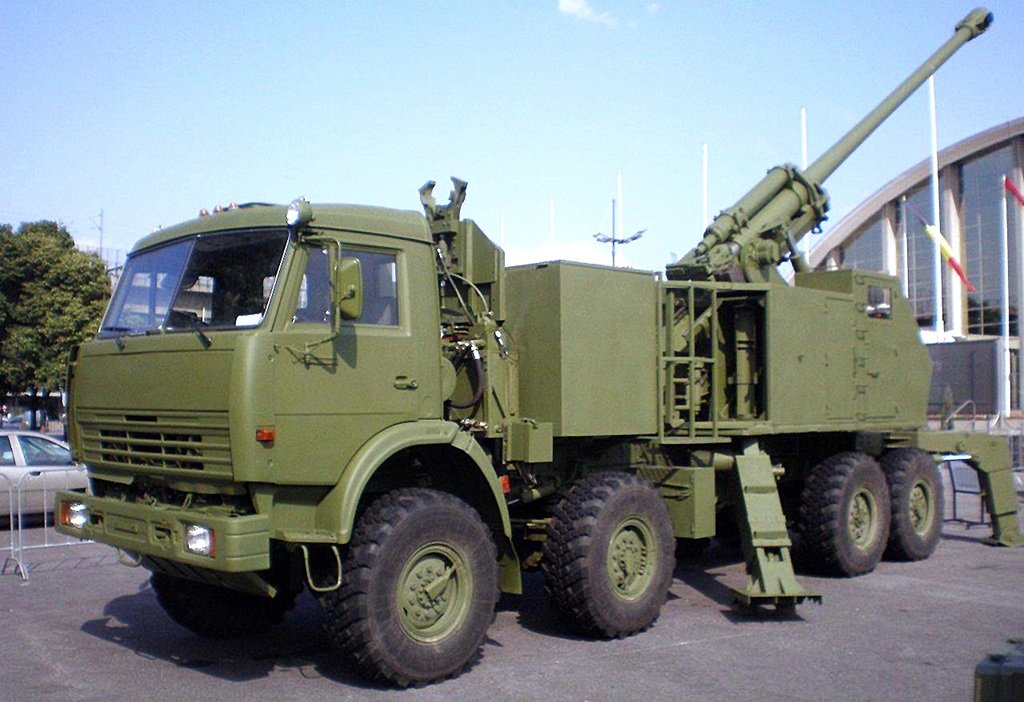
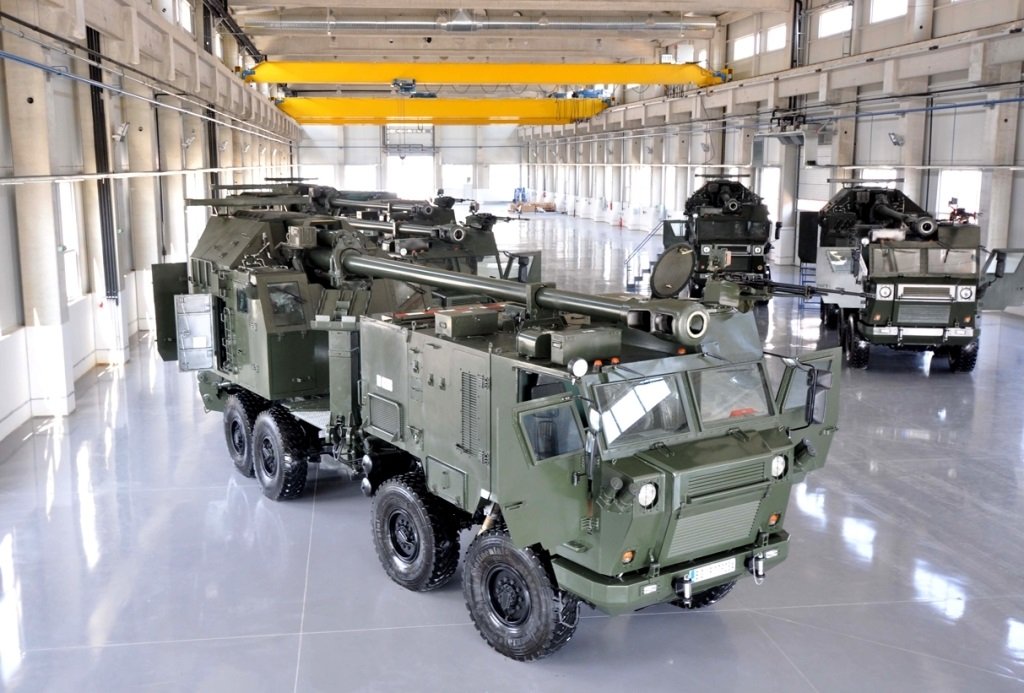
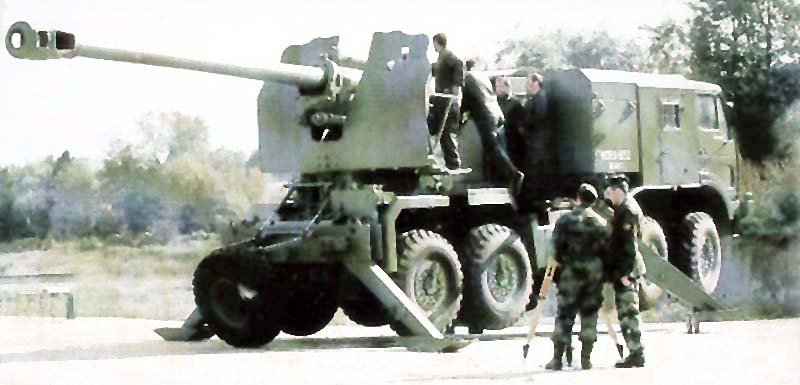
(Nora B-52 prototype image). In 1984, the Military Technical Institute of Yugoslavia began work on mounting a modified 152/45mm Nora-C howitzer on a truck chassis to create a new self-propelled howitzer that prioritized rapid deployment and could use the large existing 152mm ammunition stockpile under designation “Nora-B”. For this purpose, they used an 8×8 FAP 2832 all-terrain modified commercial truck built in Yugoslavia. In addition, an aerodynamically optimized base-bleed projectile was developed with a maximum range of 39 km, a significant technical achievement for the Yugoslav industry at the time and at the same time, a program was underway to convert the Soviet-made 130mm M-48 towed gun into a modern 155mm artillery system with a barrel length of 45 calibers. Unfortunately, these works were almost completely stopped in 1991 due to the collapse of Yugoslavia and the subsequent wars that lasted until August 2001.

protonora4
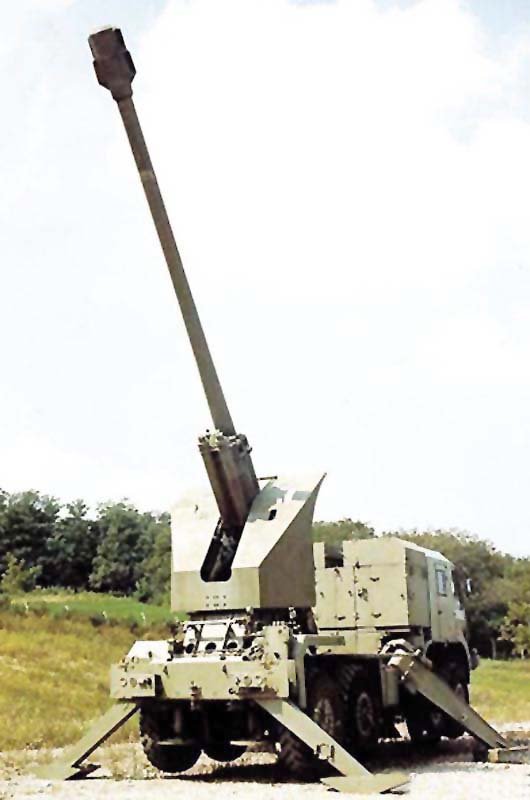
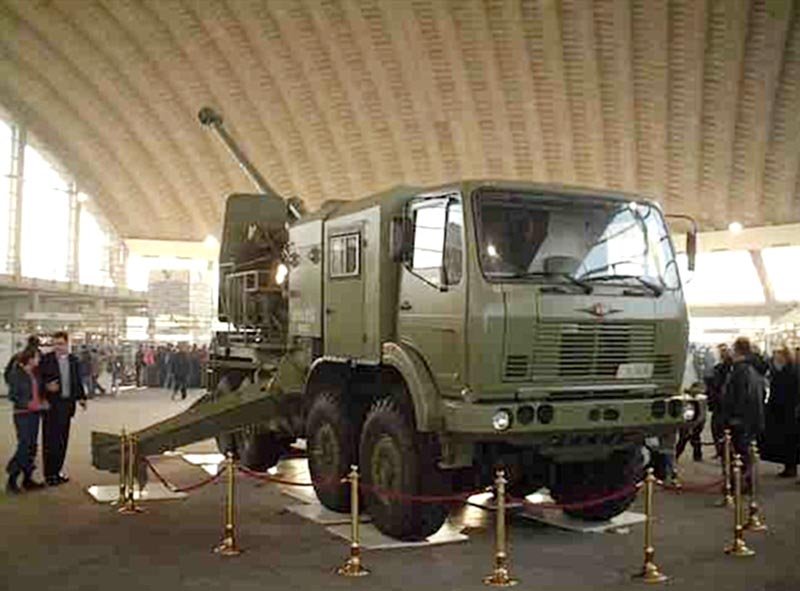
(Nora B-52 prototype image). However, in the late 1990s, some turret designs were completed despite financial and technical difficulties, and the Serbian company Yugoimport SDPR decided to resume production of the self-propelled howitzer, based on the suspended Soviet 130mm M-48 gun conversion project. To achieve this, they decided to use as many components as possible from the Nora M-84 howitzer in order to save costs and facilitate manufacturing. Finally, in 2003, the prototype of the 155mm “Nora B-52” self-propelled howitzer was presented.
protonora5
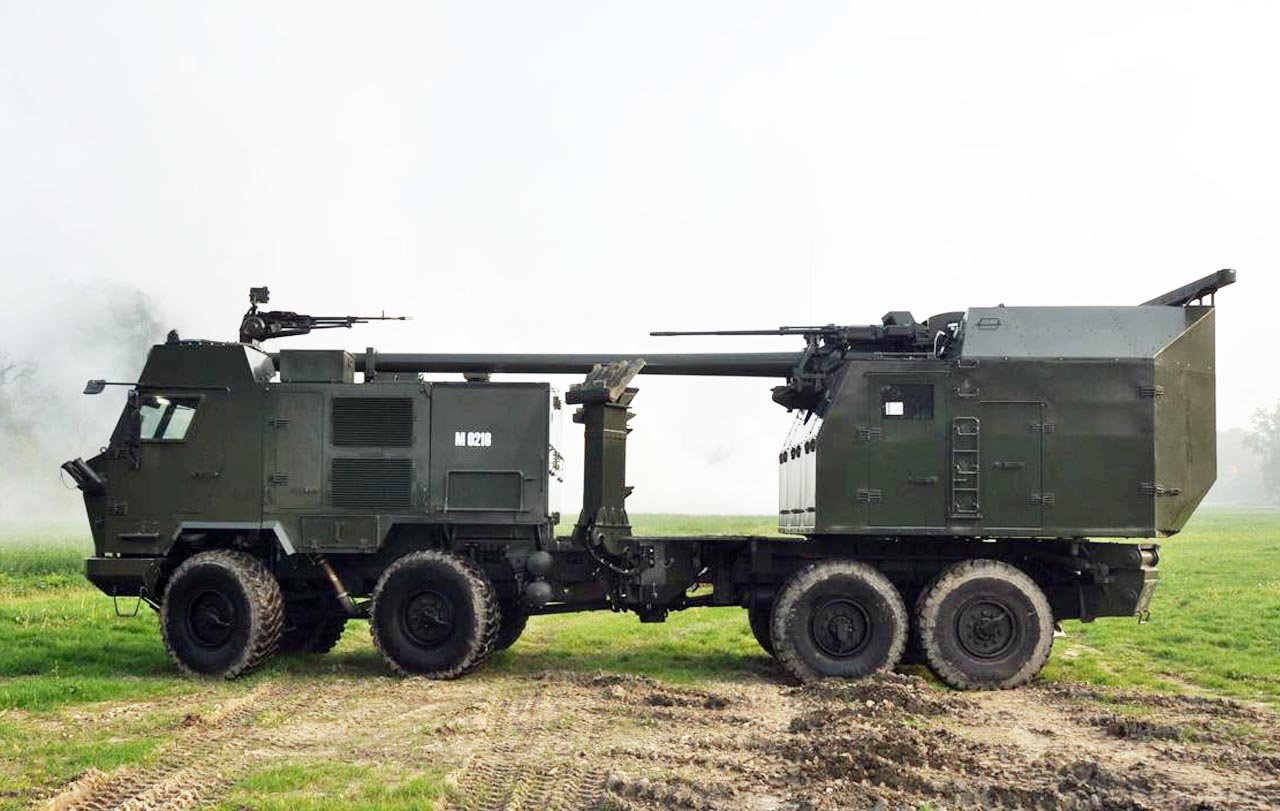
The chosen platform for the prototype was a Serbian 8×8 FAP 2832 truck (on the image) equipped with differential locks that allowed it to climb gradients of up to 60%. The Nora B-52 prototype self-propelled howitzer weighed about 28 tons and was powered by a 360 hp Mercedes-Benz OM 501 LA V8 turbodiesel engine, for a maximum speed of 90 km/h on road. It had a range of 1,000 km on road and could ford watercourses up to 1.20 meters deep without preparation. In addition, it was equipped with a central tire inflation system that allowed it to adjust its running conditions to different types of terrain. The crew consisted of five members: driver, commander, gunner, loader, and ammunition handler.
protonora2
Nora B-52 prototype (on the image) mounted a new 155/52mm howitzer with a 23-liter powder chamber instead of the planned 152/45mm. The main reason for this change was to be able to use the wide range of NATO standard 155mm ammunition. For this reason, and with export in mind, a wide range of 155mm ammunition had also been developed. The barrel had been manufactured for a long service life of 1,000 rounds at maximum charge, that can be extended to 2,000 rounds with the use of an autofrettaged barrel. The maximum rate of fire was 4 to 6 rpm and its range was about 25 km with standard HE rounds, up to 41 km with base-bleed rounds and up to 52 km with rocket assisted rounds. Designers created an automatic rotary reloading system (revolver-type) with a hydraulically powered rammer and a 12-round ready-to-fire magazine. They also added a modern digital fire control system that significantly improved the rate of fire and reduced the crew’s workload.
norab521
(Nora B-52 K0 image). Despite the similarity of all Nora B-52 variants, there are differences in armor, turret, chassis, and loading system between some of them. However, standard equipment includes an inertial land navigation system and a computerized fire control system. Also included are a laser rangefinder, an electronic transponder, an integrated GPS receiver, and a VHF radio station. A special computer simulator is also available for training and simulation tasks, and is capable to train up to three batteries (18 vehicles), including target designator crews. The weight and dimensions of this vehicle allow it to be loaded onto military transport aircraft such as the Il-76 Candid or the A-400M Atlas, as well as easily transported by rail and ship.
norak1m154
(Nora B-52 K1(S) image). In general, all Nora B-52 variants featured STANAG 4569 Level 2 ballistic protection in the cab and rear, and STANAG 4569 Levels 2A and 2B mine protection on the floor, although there may be differences between different variants. This level of protection is effective against small arms fire and shell splinters. It also had an NBC protection system using overpressure and air filtration. The crew consists of 5 members, but in variants equipped with semi-automatic loading systems it is reduced to 4. The vehicle features a climate control system in the cabin to allow operation in temperatures ranging from -25°C to +55°C.
norab523
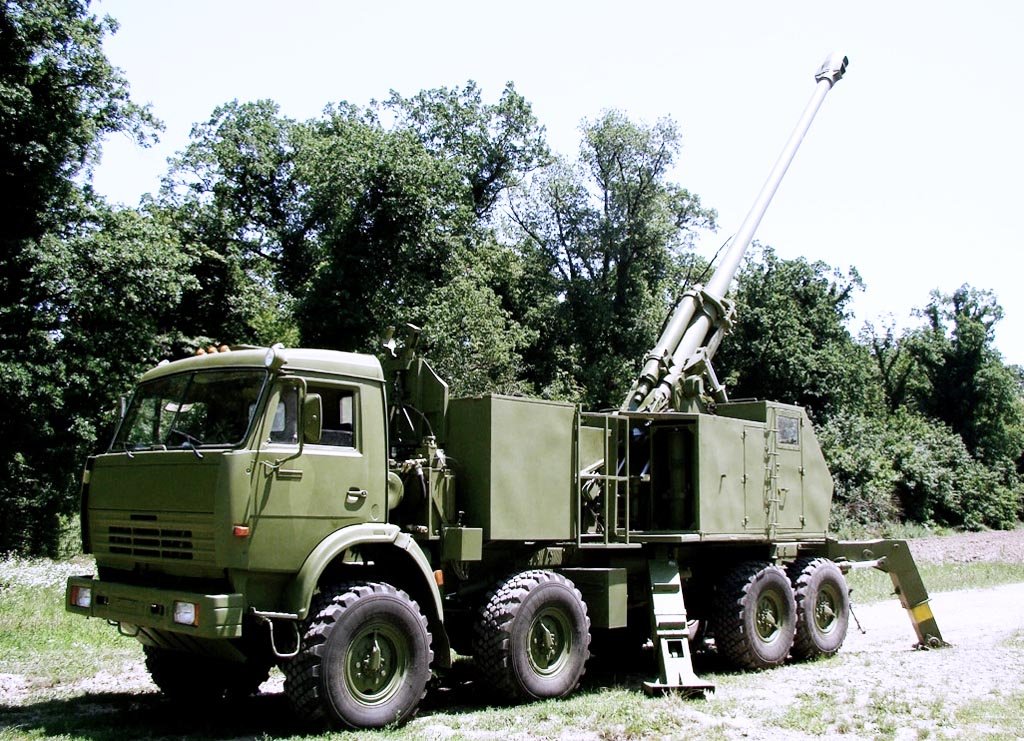
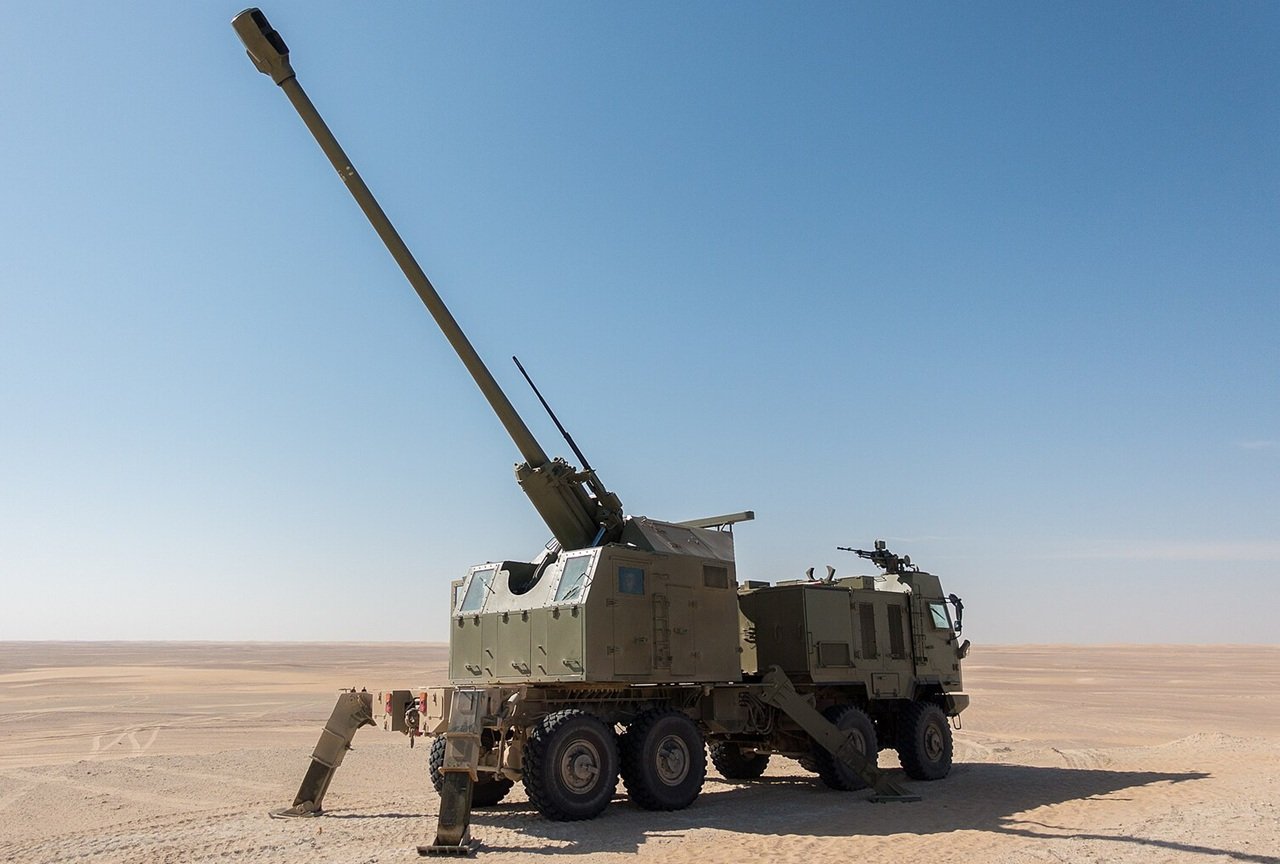
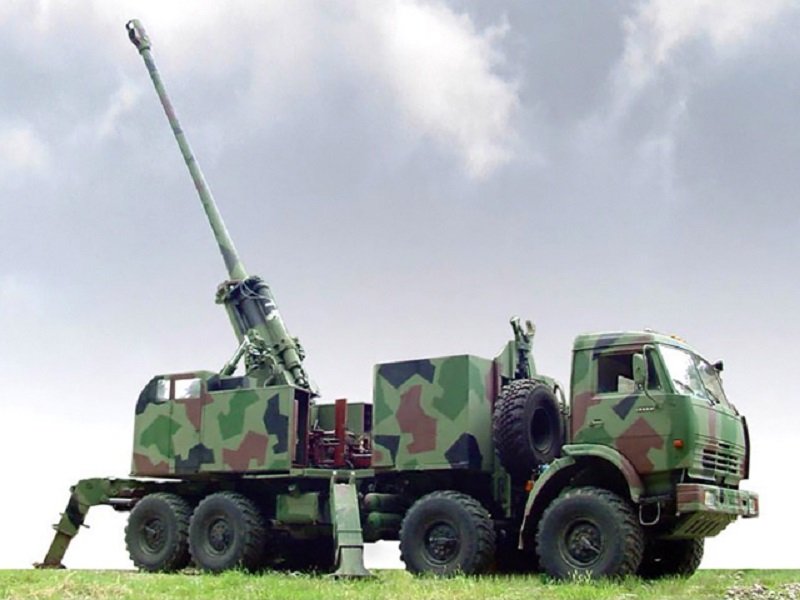
Since the first variant, the Nora B-52 K0 (on the image), the main platform has been the Russian 8×8 Kamaz 63501 truck although in recent variants the turret can be installed on an 8×8 MAN TGS or other chassis. Kamaz chassis had a semi-elliptical spring suspension and a central tire inflation system. This vehicle is equipped with a 410 hp water-cooled V8 turbodiesel engine, allowing it to reach top speeds of 90 km/h on roads, 25 km/h on unpaved roads, and 15 km/h off-road. The range is about 1,000 km at an average speed of 80 km/h, and the engine consumes 53 liters of fuel per 100 km at 60 km/h. This vehicle has an auxiliary power unit (APU) that allows operations to continue if the main engine fails, and the chassis is equipped with four retractable hydraulic stabilizers that keep the vehicle stable while firing.
norak1m153
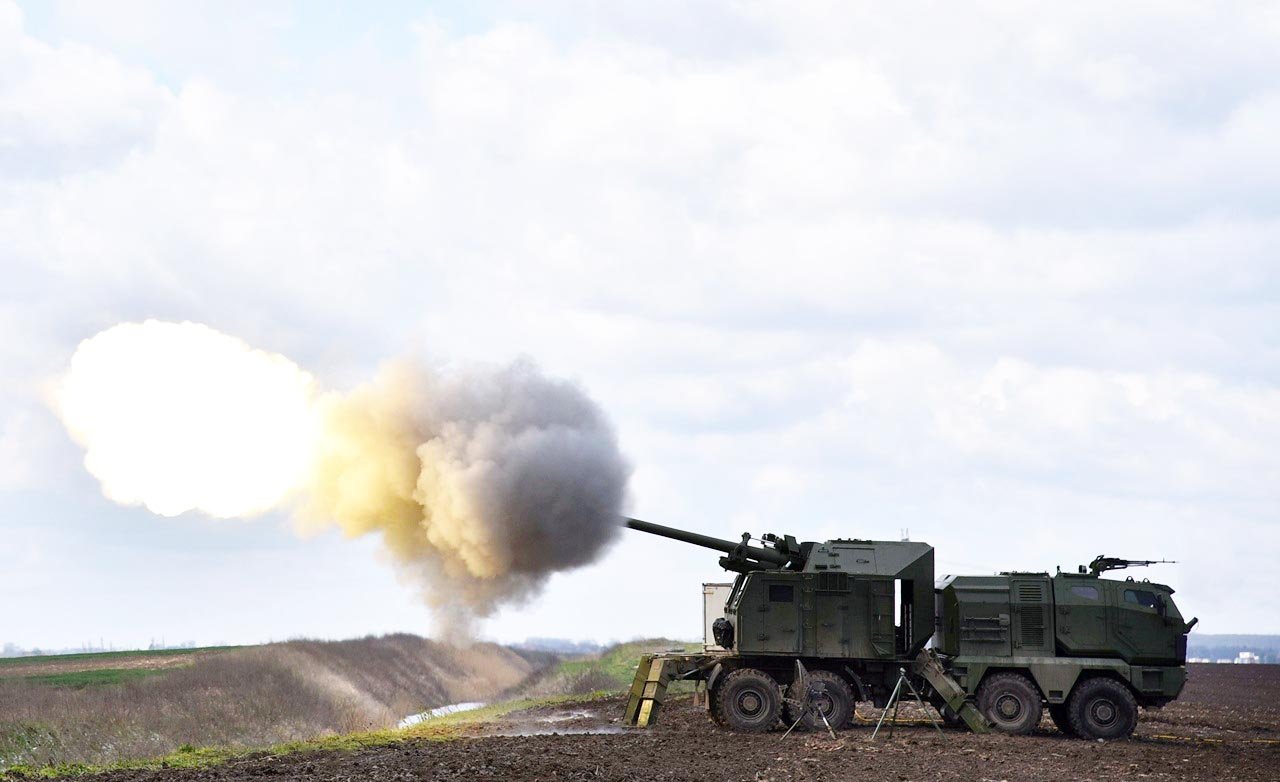
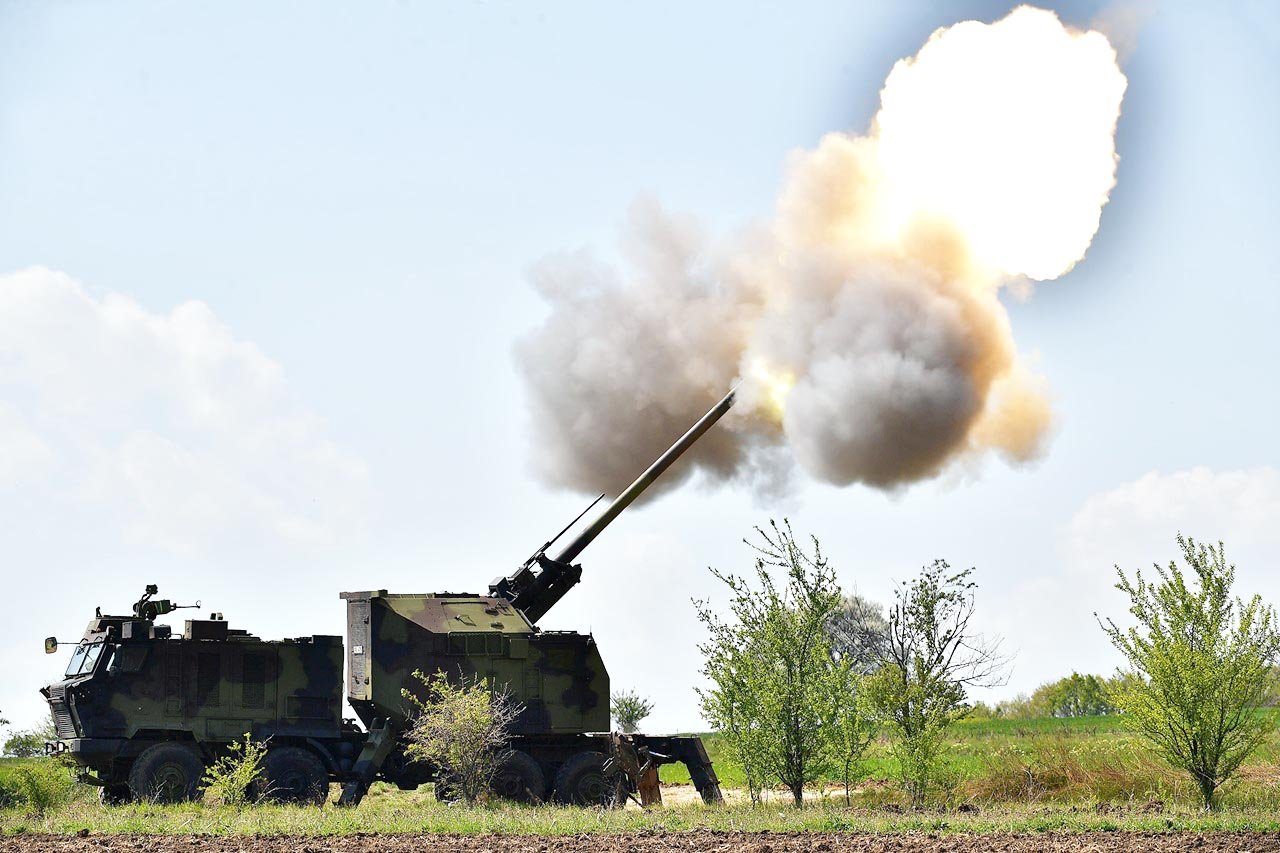
(Nora B-52 M15 image). The armament is the same in all variants, consisting of a 155/52mm howitzer mounted on a turntable turret. The howitzer points forward during movement, but is normally positioned facing rearward when firing. The barrel is equipped with a muzzle brake and moves hydraulically in azimuth and elevation at a maximum of 6 or 8 degrees per second, although a manual emergency system is available. The azimuth range is 30 degrees to the left and right, and the elevation range is -3° to +51° in the earlier variants and -5° to +65° in the later ones (when facing rearward). The muzzle velocity achieved is up to 925 m/s, improving range, and in the more modern variants, a 25-liter powder chamber can be installed instead of the standard 23-liter one.
noram213
(Nora B-52 M21 image).Early variants of the Nora B-52 took approximately 90 seconds to enter and exit firing position, a figure that has been reduced to 60 seconds in current versions. The maximum rate of fire is 6 rpm, although the normal sustained rate is 4 rpm. More modern variants can perform different firing missions thanks to their computerized fire control system, similar to the Swedish Archer self-propelled howitzer. This allows them to fire 3 rounds in 20 seconds or 12 rounds in less than 4 minutes if the situation demands it.
norak1m156
(Nora B-52 M15 image). The ammunition load for most variants is 36 rounds. In the older variants the autoloader contains two carousel-type automatic ammunition feeders, one on each side of the howitzer, holding 12 rounds (right magazine) and 12 charges (left magazine) ready for use. The remaining 24 rounds and charges are stored in a modular magazine located behind the cab. The recent variants of Nora B-52 has an MRSI (multiple rounds simultaneous impact) capability of 3 rounds on target. The secondary armament consists of 7.62mm or 12.7mm machine guns, and different remotely controlled weapon stations (RCWS) can be installed. In addition, two 82mm smoke grenade dischargers can be mounted in the front corners of the cabin.
noram033
(Nora B-52 M03(S) image). Nora B-52 howitzers are equipped with a wide range of domestic and foreign 155mm ammunition, including: the M-107 HE round with a range of 32 km, the M-04 Extended Range Full-Bore (HE ERFB) round with a range of 34 km, the M-02 Extended Range Base-Bleed (HE ERFB/BB) round with a range of 41.85 km, and the M-15 Extended Range Rocket Assisted/Base-Bleed (HE ERFB RA/BB) round with a range of 41.10 km, all from the Serbian manufacturer Slobodan. These will soon be joined by an HE Very Low Angle Projectile (VLAP) round from the Serbian manufacturer Yugoimport SDPR with an impressive range of 67 km.
norang28
(Nora B-52 NG image). Regarding foreign ammunition, Nora B-52 self-propelled howitzer can use all types of standard 155mm NATO ammunition and some guided rounds. Among them stand out the Russian Krasnopol-155M and the American M-982 Excalibur guided rounds. The first one is manufactured by KBP and has a maximum range of 30 km, while the second one is built by Raytheon and have a maximum range of 40 km.
noram15vs12
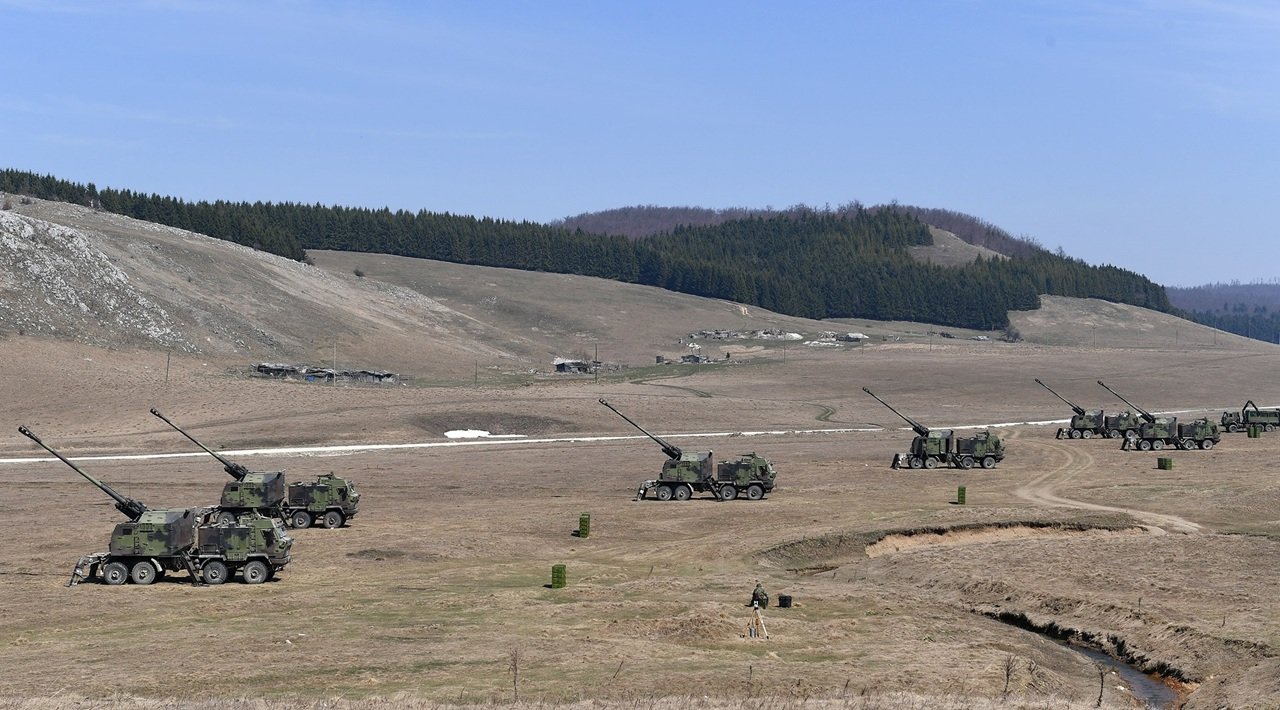
(Nora B-52 M15 image). Nora B-52 self-propelled howitzers are typically deployed and operated in batteries. Each battery usually consists of 6 self-propelled howitzers, 3 BOV M10 or BOV M16 Milos command vehicles, 3 ammunition trucks, 1 communication vehicle, 1 or 2 fire direction and gunfire locator vehicles, 1 BOV M11 or BOV M16 Milos reconnaissance vehicle, 1 workshop vehicle, and 2 or 3 general supply trucks.
norab522
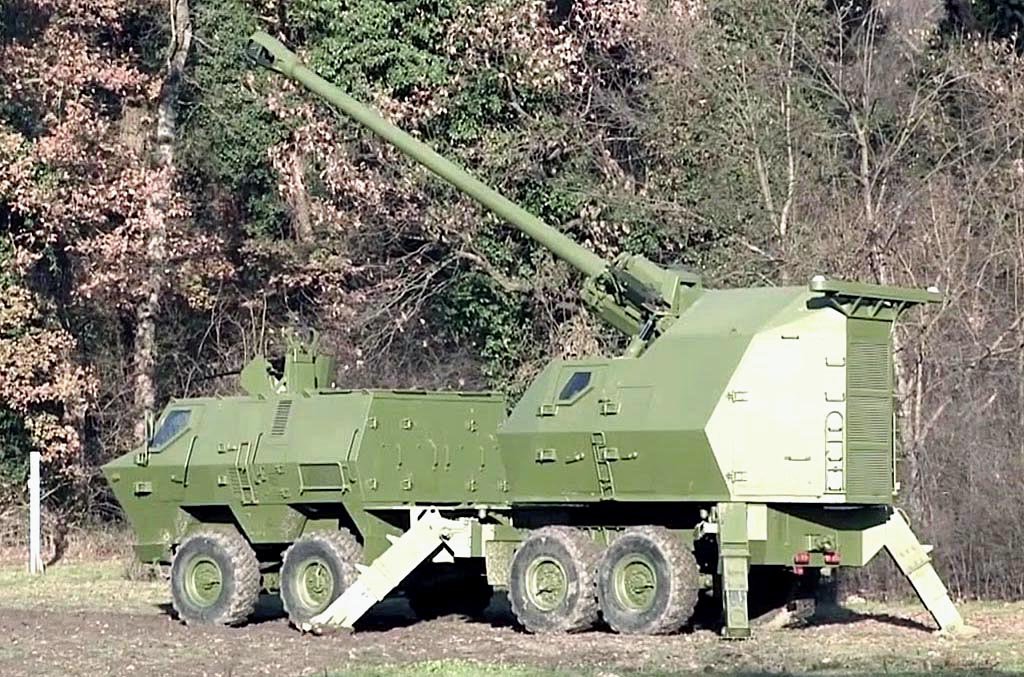
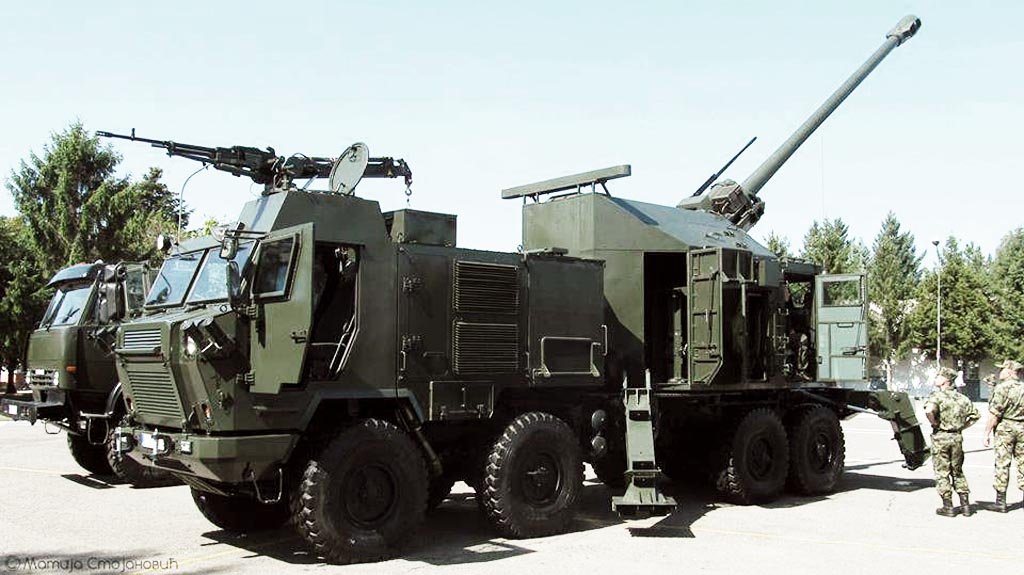
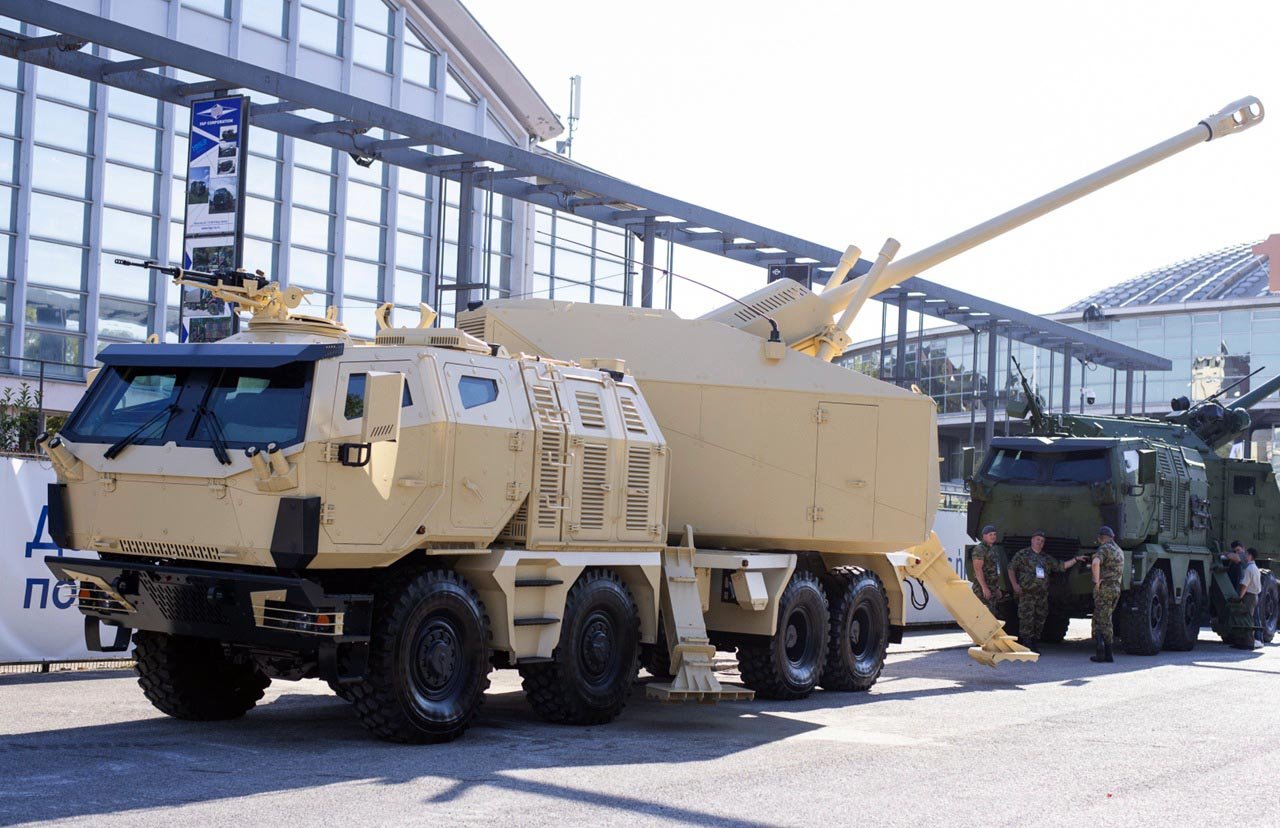
Following the prototype, serial production began in 2006, resulting in the “Nora B-52 K0” variant (on the image), with an open turret and limited artillery capabilities. This vehicle lacked the digital fire control system and its loading system was manual, so its sustained rate of fire was only 2 rounds per minute. The first 12 vehicles were delivered to the Serbian Army in 2007, and were used primarily for testing and evaluation. The first public presentation of this vehicle was at the 2009 Partner Defence Exhibition held in Belgrade.
norak1m151
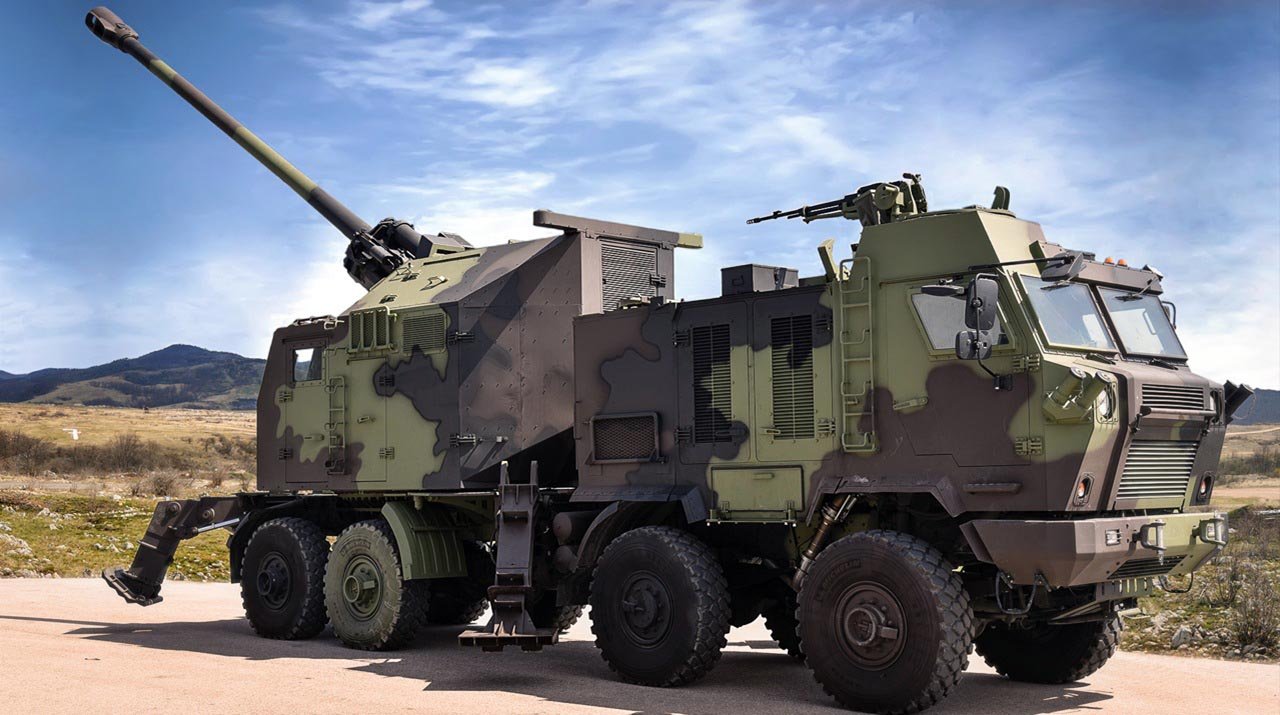
(Nora B-52 M15 image). The next variant to enter service with the Serbian Army in the early 2010s was the “Nora B-52 K1(S)”. This howitzer had a semi-open turret configuration and a new semi-automatic loading system that allowed for a sustained rate of fire of 4 rpm. It also featured a higher degree of automation and the installation of a new fire control system enabling automatic targeting and positioning for rapid deployment. The crew was reduced from 5 to 4 members thanks to the level of automation achieved.
noram031
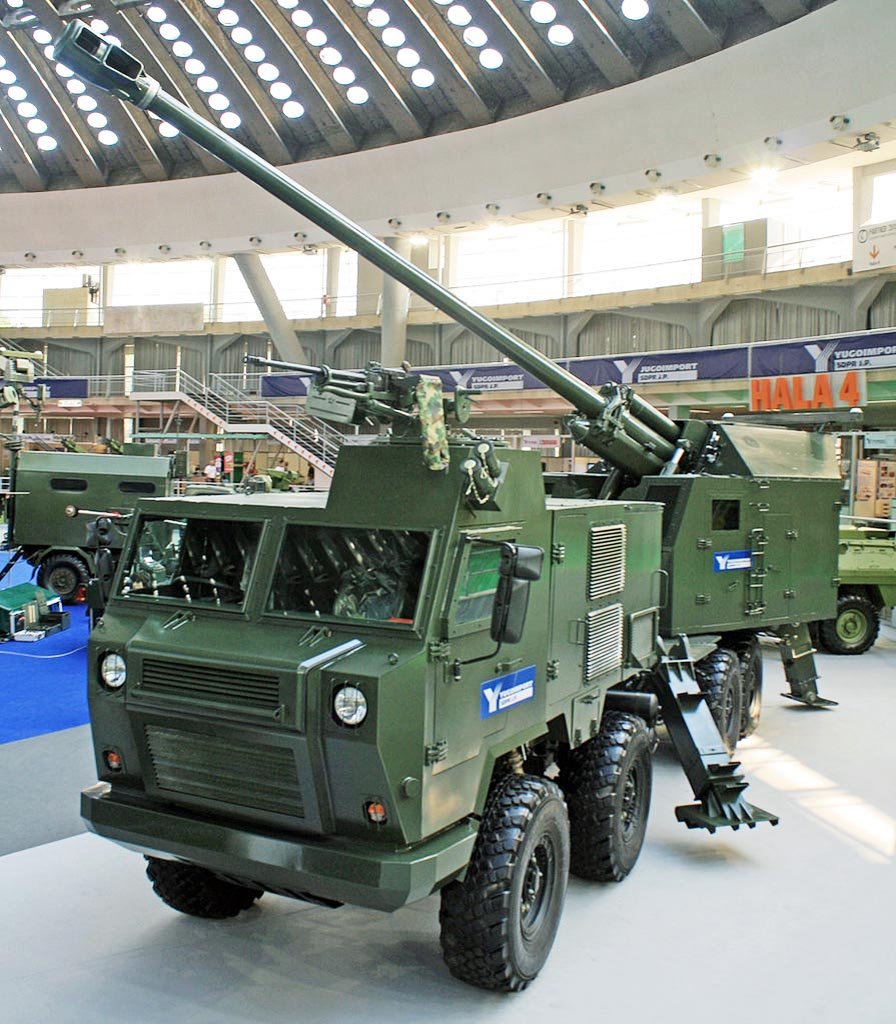
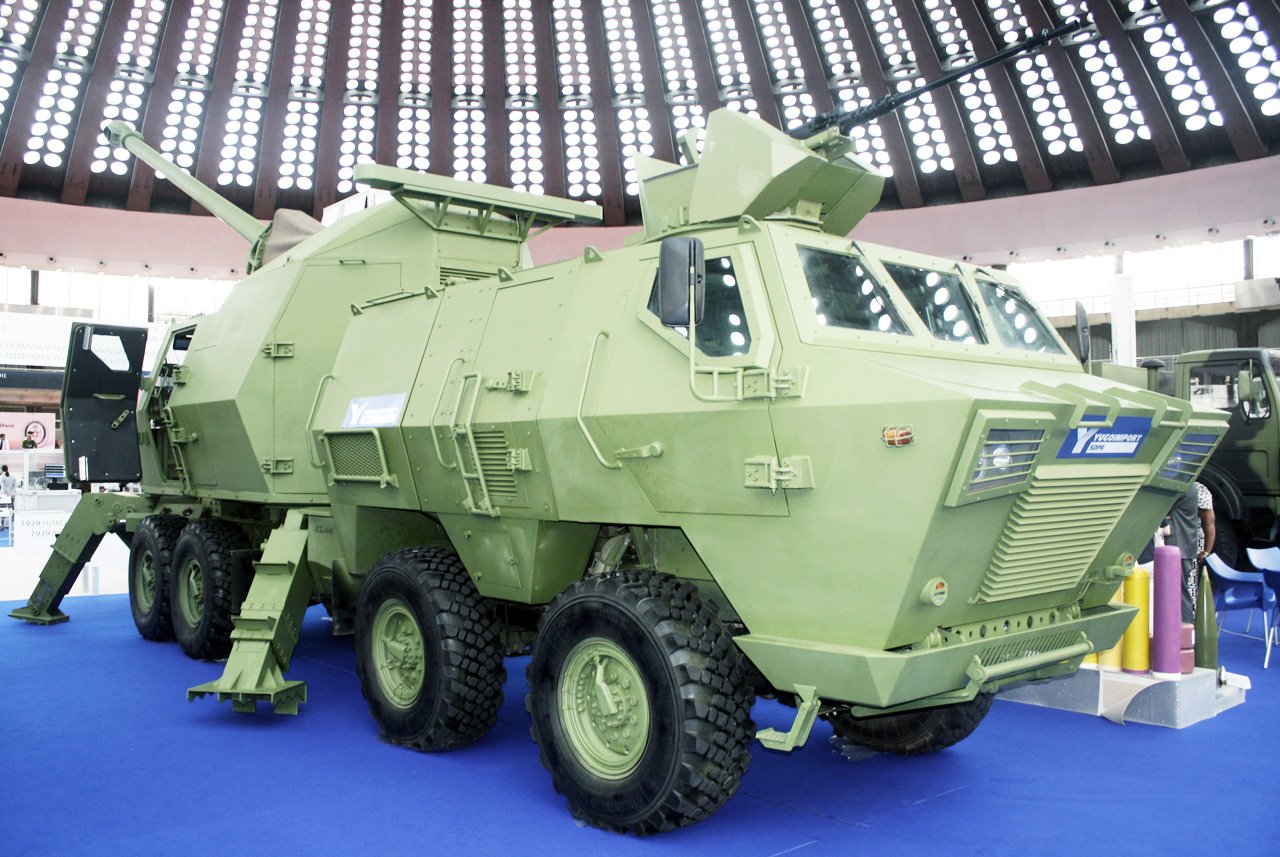
The “Nora B-52 M03(S)”  variant (on the image) followed, developed from the K0 and K1(S) variants. It also featured a semi-open turret configuration, and the automatic loading system was further improved. The cabin was completely different from the earlier K1(S), being more angular and having a bulletproof windshield divided into three sections instead of two. The “S” suffix in the K1 and M03 variants indicated their service with the Serbian Army, and by 2010, 48 vehicles of the K1(S) and M03(S) were in service.
norak1bangla5
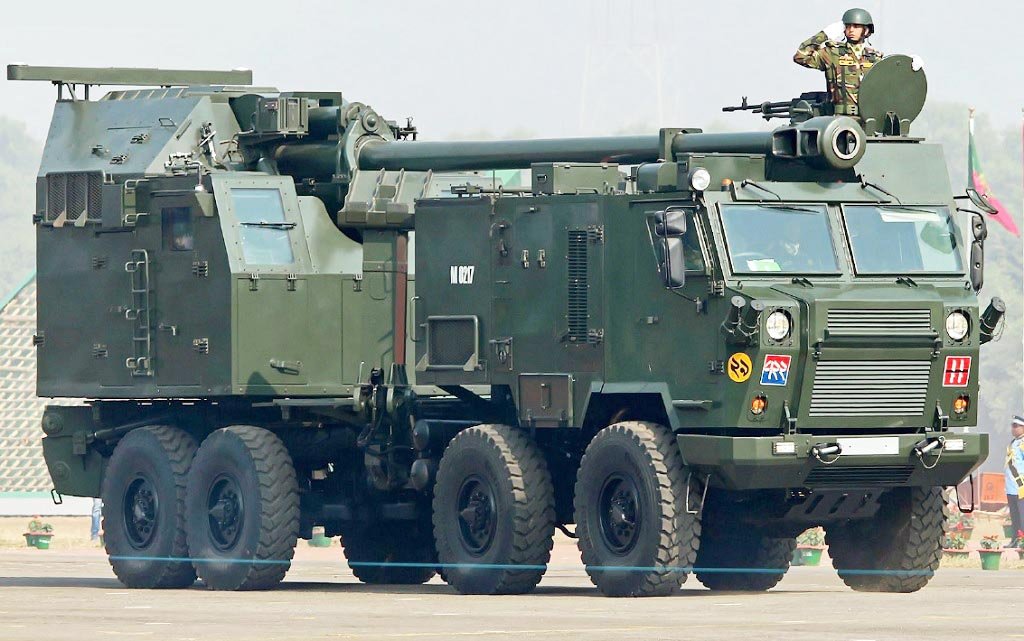
(Bangladeshi Nora B-52 KE image). The next variant was specifically designed for export and was designated the “Nora B-52 KE”. It featured the same semi-open turret as the previous variants and a different semi-automatic loading system, compliant with international standards. Furthermore, it offered customizable ergonomics to suit the customer’s preferences. These vehicles were somewhat lighter than the Serbian versions, weighing approximately 27.4 tons. Around this time, the manufacturer began to improve the modularity of some systems, allowing for the interchangeability of different 8×8 chassis with different turret configurations to enhance ballistic protection.
norak1bangla4
(Bangladeshi Nora B-52 KE image). In 2007, Myanmar became the first foreign customer to place an order for 30 Nora B-52 KE self-propelled howitzers. These vehicles were delivered around 2010, and all remain in service. In 2013, Bangladesh placed an order for 18 Nora B-52 KE, designated K2 according to some sources. These vehicles were equipped with the SAGEM Sigma 30 inertial navigation platform system, which enhanced their gunnery capabilities. By 2024, the number of vehicles in service had risen to 36.
norak1bangla1
(Bangladeshi Nora B-52 KE image). In 2014, Kenya ordered 30 Nora B-52 K1 self-propelled howitzers mounted on Russian Kamaz 63501 chassis. By 2024, only 18 were in service, with the remainder pending delivery. Although the order, according to all sources consulted, was for K1 variant howitzers, there are photographs showing Kenyan Nora B-52 K0 howitzers in maneuvers, indicating that vehicles of both variants has been delivered.
noram15vs6
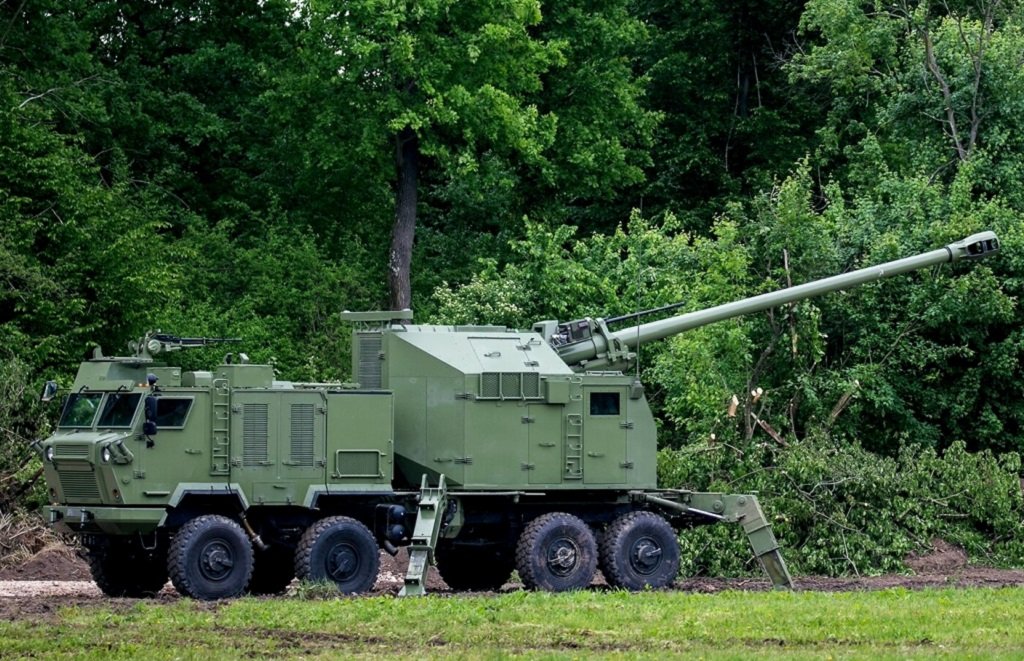
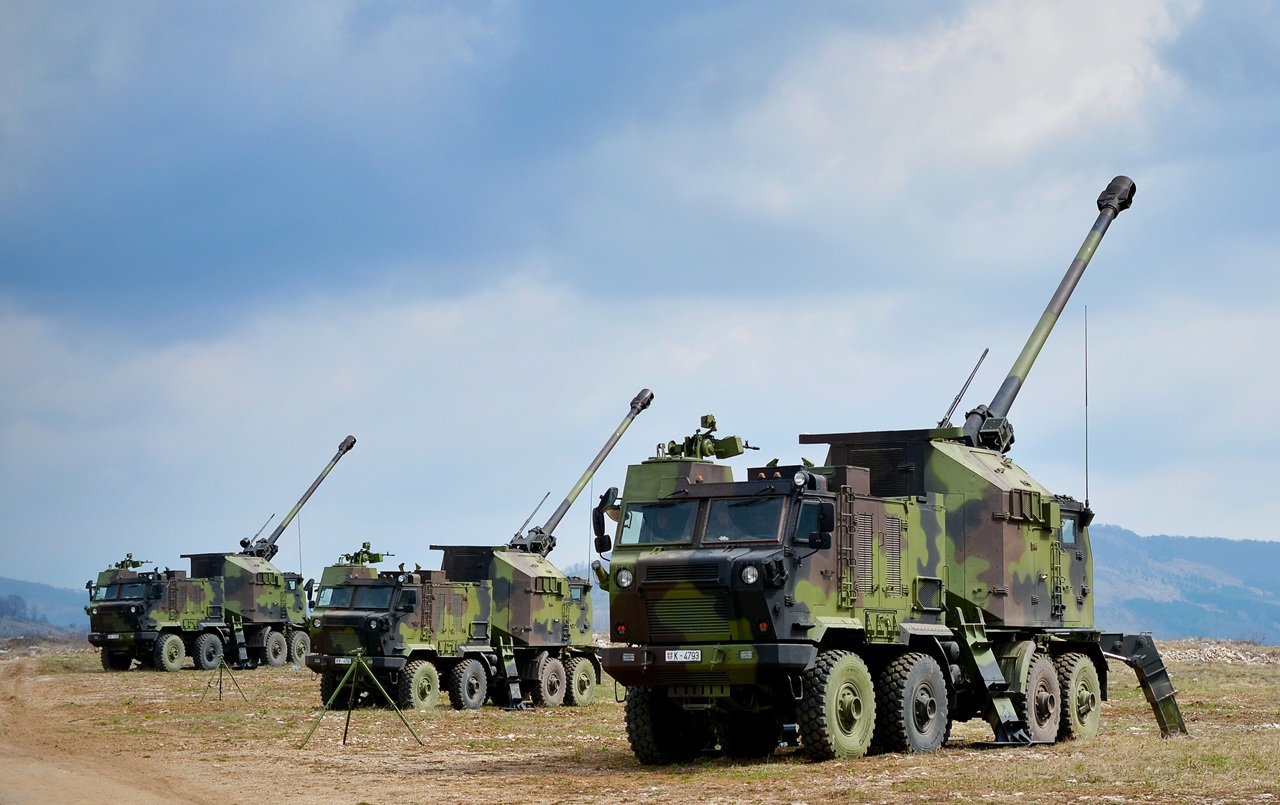
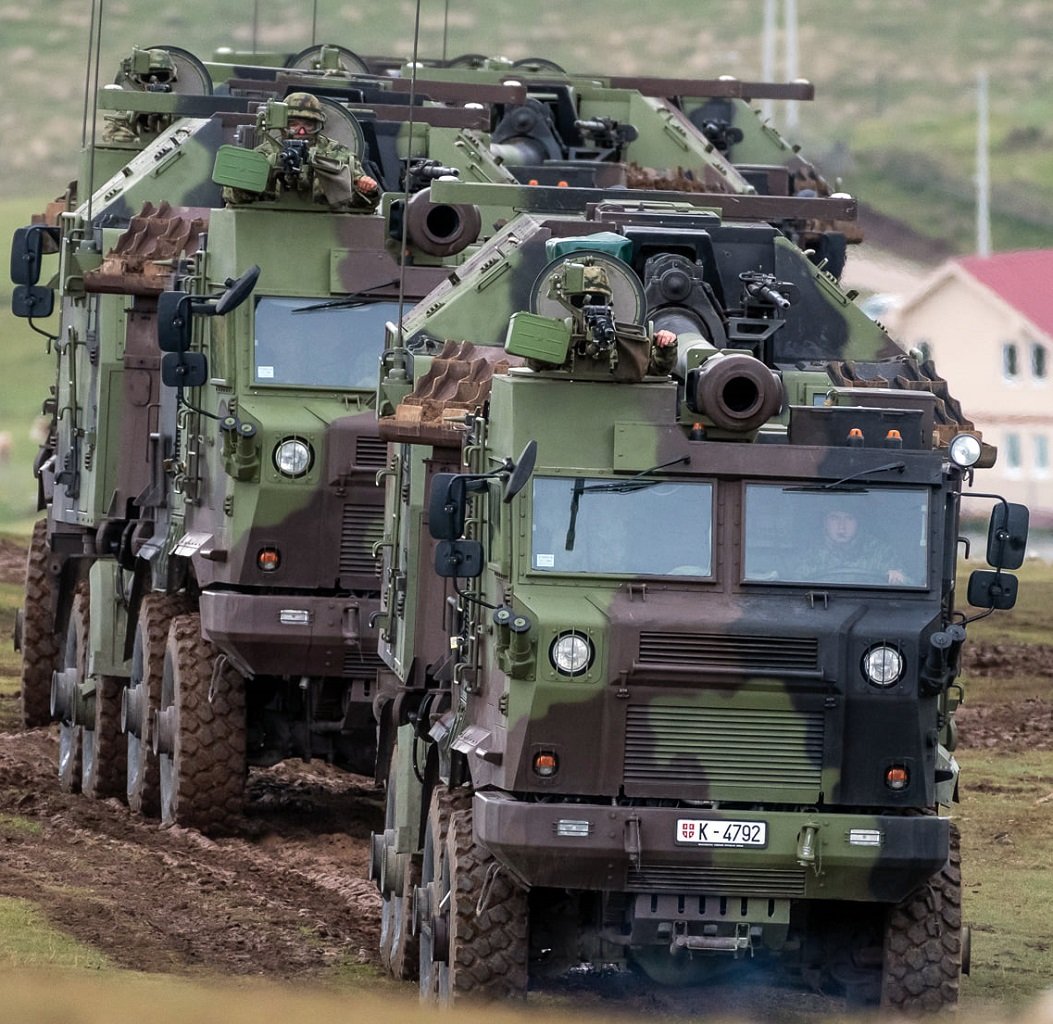
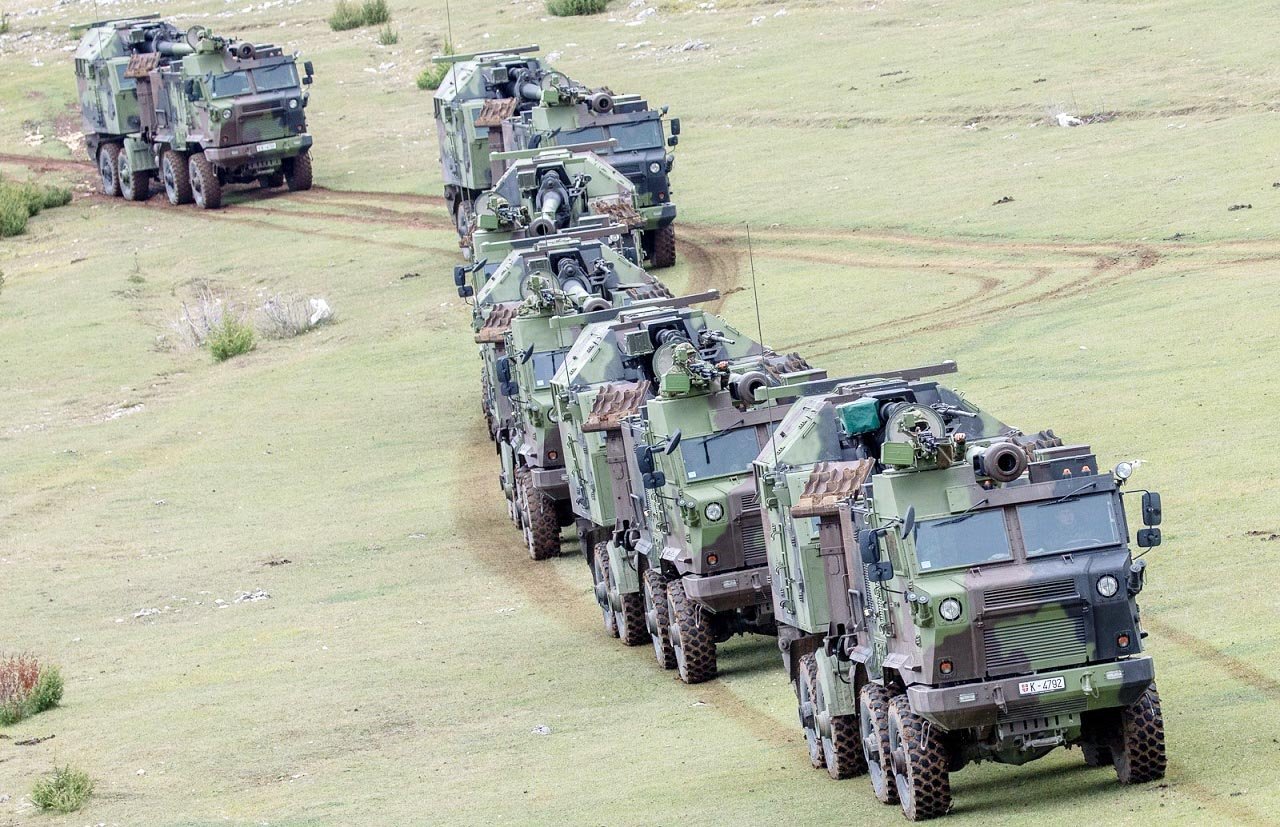
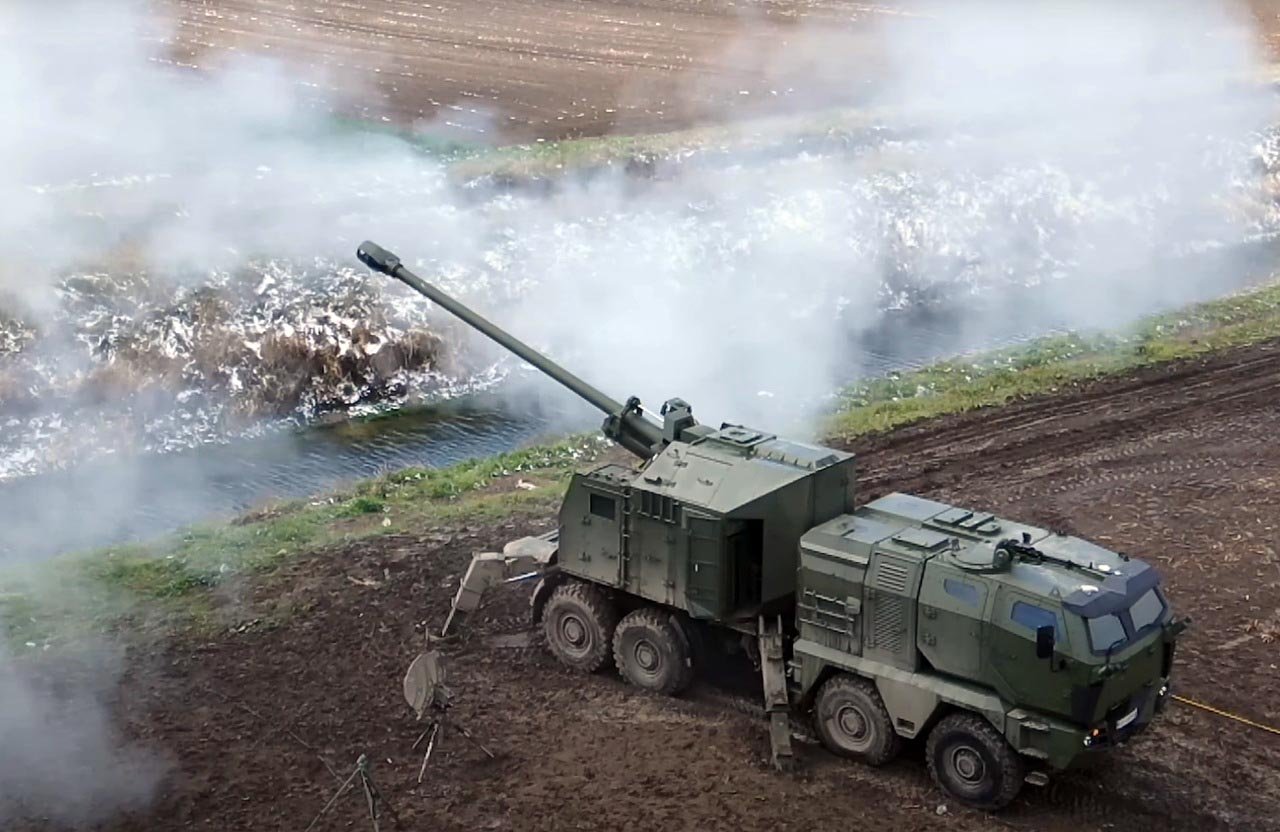
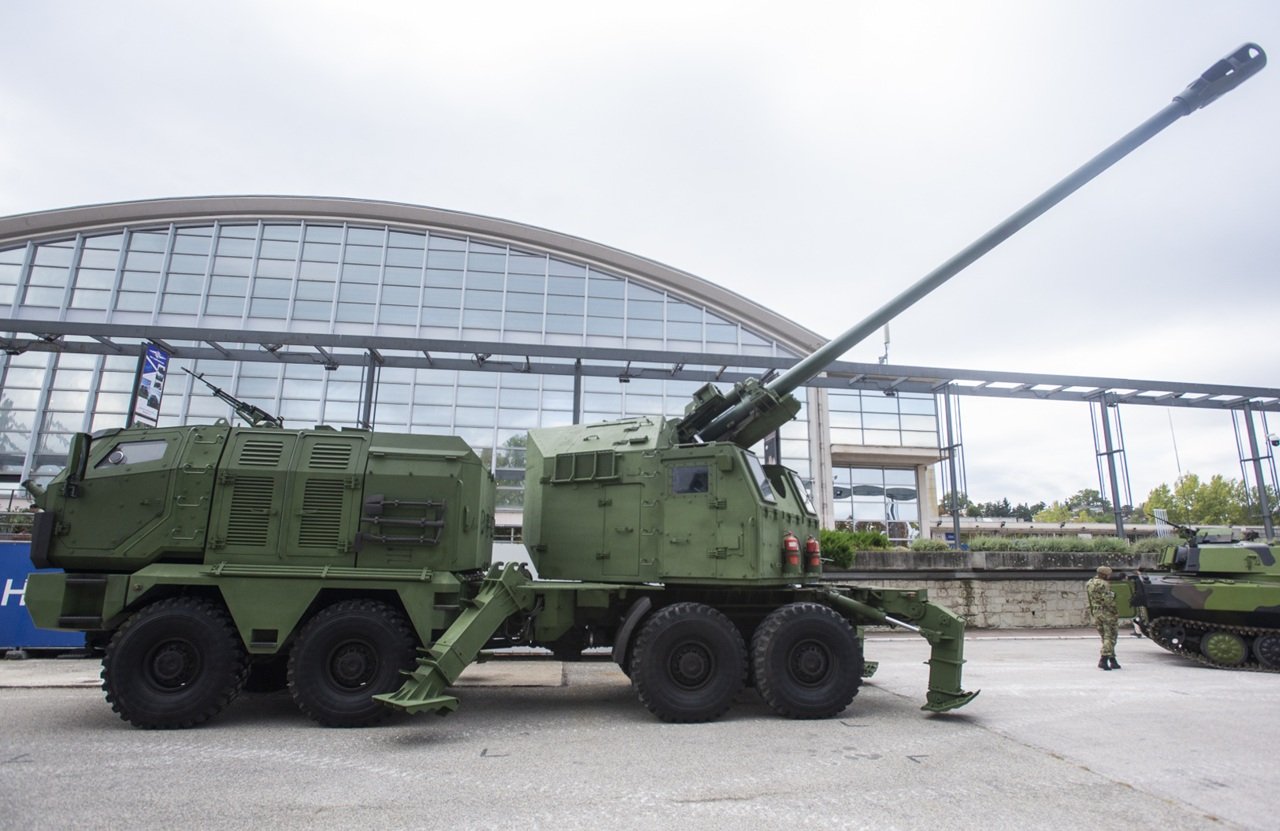
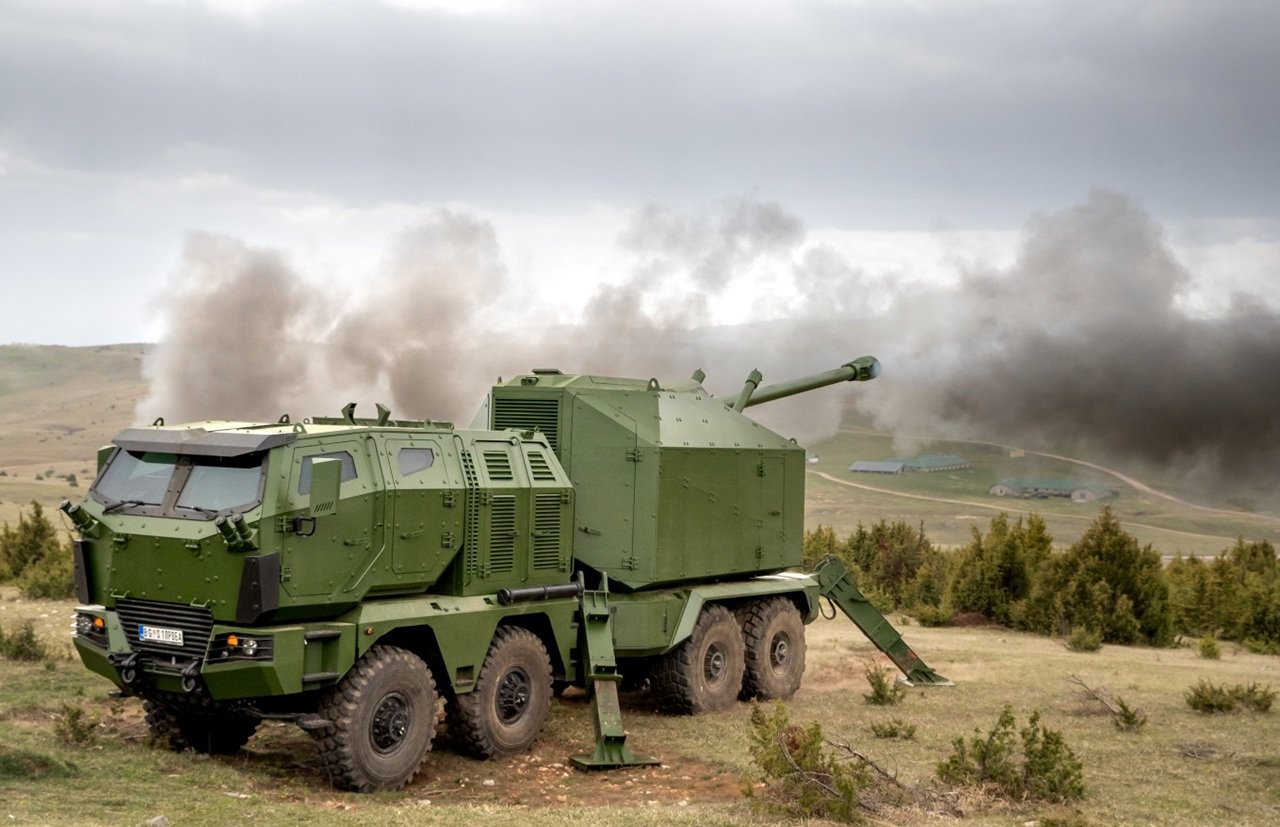
(Nora B-52 M15 image). In 2015, a new variant designated Nora B-52 K-I or M15 within the Serbian Army was introduced, representing a significant improvement over its predecessors. This version features a fully enclosed turret mounted on a reinforced chassis and an uparmored crew cabin capable of withstanding explosions equivalent to 6 kg of TNT. The NBC protection has been improved and an automatic fire suppression system has been installed. It also has a radar installed in the barrel to measure the speed and trajectory of the rounds, new intercoms for the crew, 82mm smoke grenade dischargers and it is possible to mount a 20mm M-55 gun coaxially to the 155mm howitzer for use in training and as a defensive weapon.
noram15vs8
(Nora B-52 M15 image). Nora B-52 K-I (M15) weighs 34 tons due to its upgraded protection system. The turret is modular, allowing it to be mounted on different 8×8 chassis such as the Kamaz 63501 and MAN TGS, as well as other chassis depending on the user’s needs. In the event of a main engine and power supply failure, the vehicle has an emergency system that allows it to withdraw from the firing position. This variant has an automatic loader with 24 rounds ready for use and another 12 rounds for reloading and the howitzer can be operated by the crew from the cabin without having to go outside.
noram15vs1
(Nora B-52 M15 image). The dynamic capabilities of Nora B-52 K-I (M15) are quite similar to previous variants. The top speed on roads is 80 km/h, it can cross trenches up to 1.60 meters wide, overcome vertical obstacles up to 50cm high, and ford watercourses up to 1 meter deep without preparation. The range has been reduced to about 500 km, and it can travel about 50 km with several damaged tires.
noram15vs2
(Nora B-52 M15 image). Optionally, Yugoimport offers an enhanced navigation system equipped with an electro-optical laser sensor and a night vision system integrated into the fire control system, improving the combat capabilities of the Nora B-52 K-I (M15). Direct fire is also possible thanks to a sighting system integrated into the fire control system, which offers three operating modes: automatic, semi-automatic, and manual.
noram15vs15
(Nora B-52 M15 image). The Serbian army placed an order for 36 Nora B-52 K-I (M15) vehicles, which began to be delivered in early 2019. These vehicles carried STANAG 4569 Level I ballistic protection against small arms fire and shell splinters, which could be upgraded to the STANAG 4569 Level II standard if necessary. Six of these vehicles were deployed in December 2022 on the administrative border with Kosovo during the North Kosovo crisis but did not see action.
norakichipre1
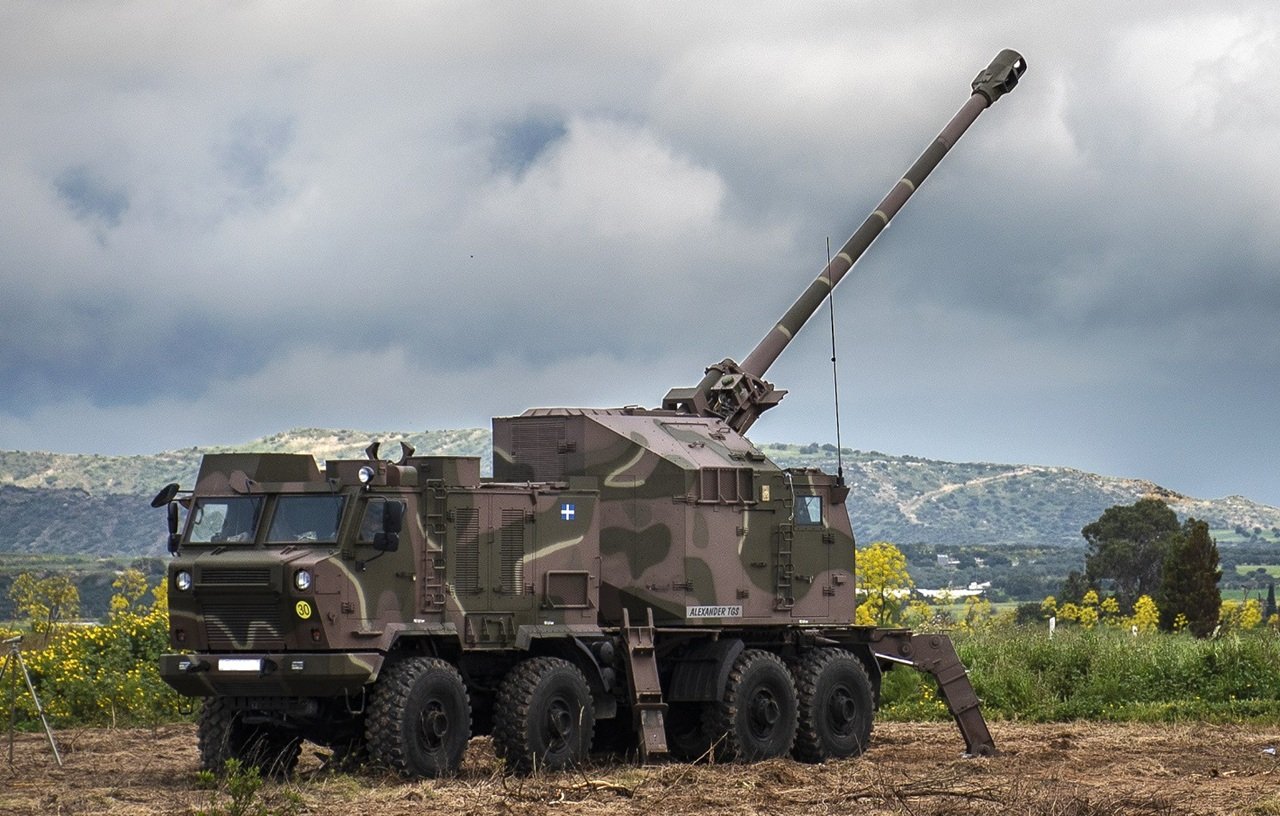
(Cypriot Nora B-52 K-I image). In 2017, the Cypriot National Guard placed an order for 24 Nora B-52 K-I self-propelled howitzers. These vehicles were delivered in 2020, along with eight Milos vehicles to serve as fire control centers. All these vehicles form two artillery battalions, each with three batteries of four howitzers, and all remain in service today.
noram219
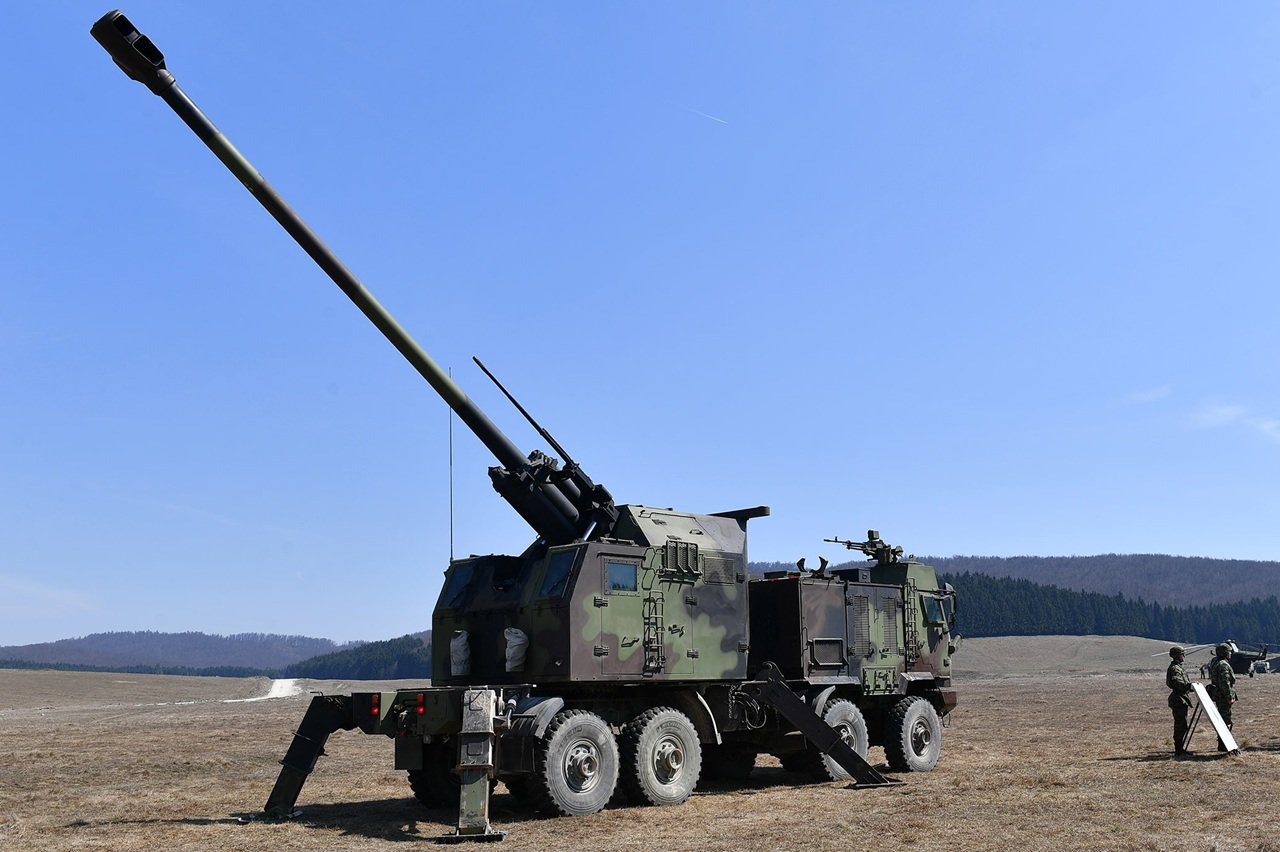
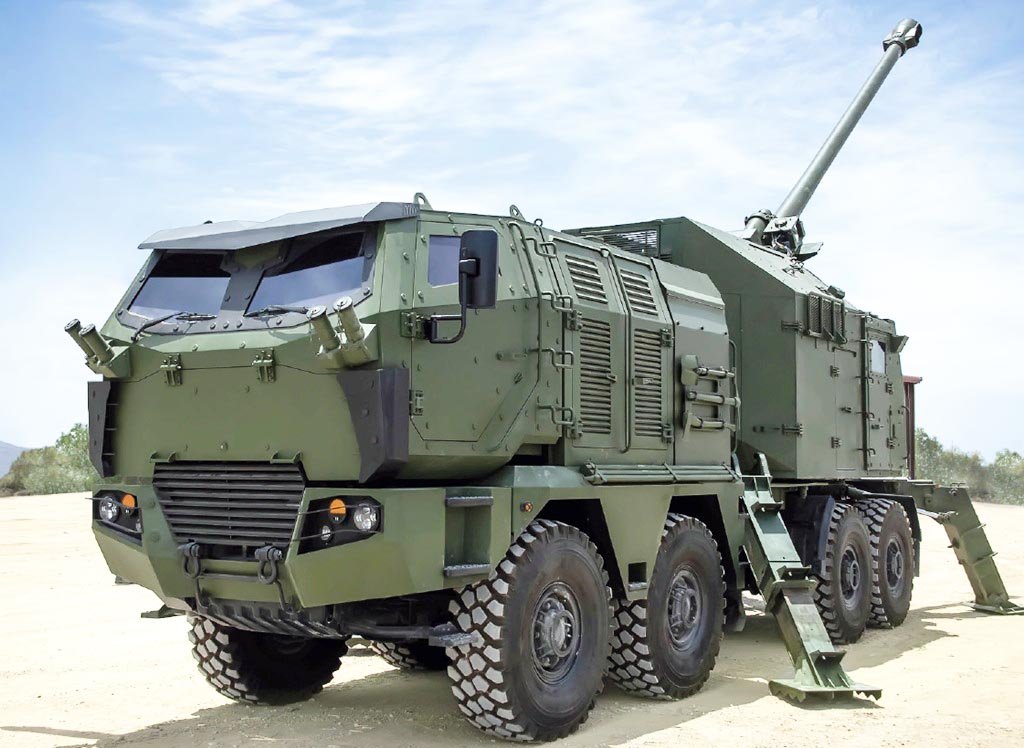
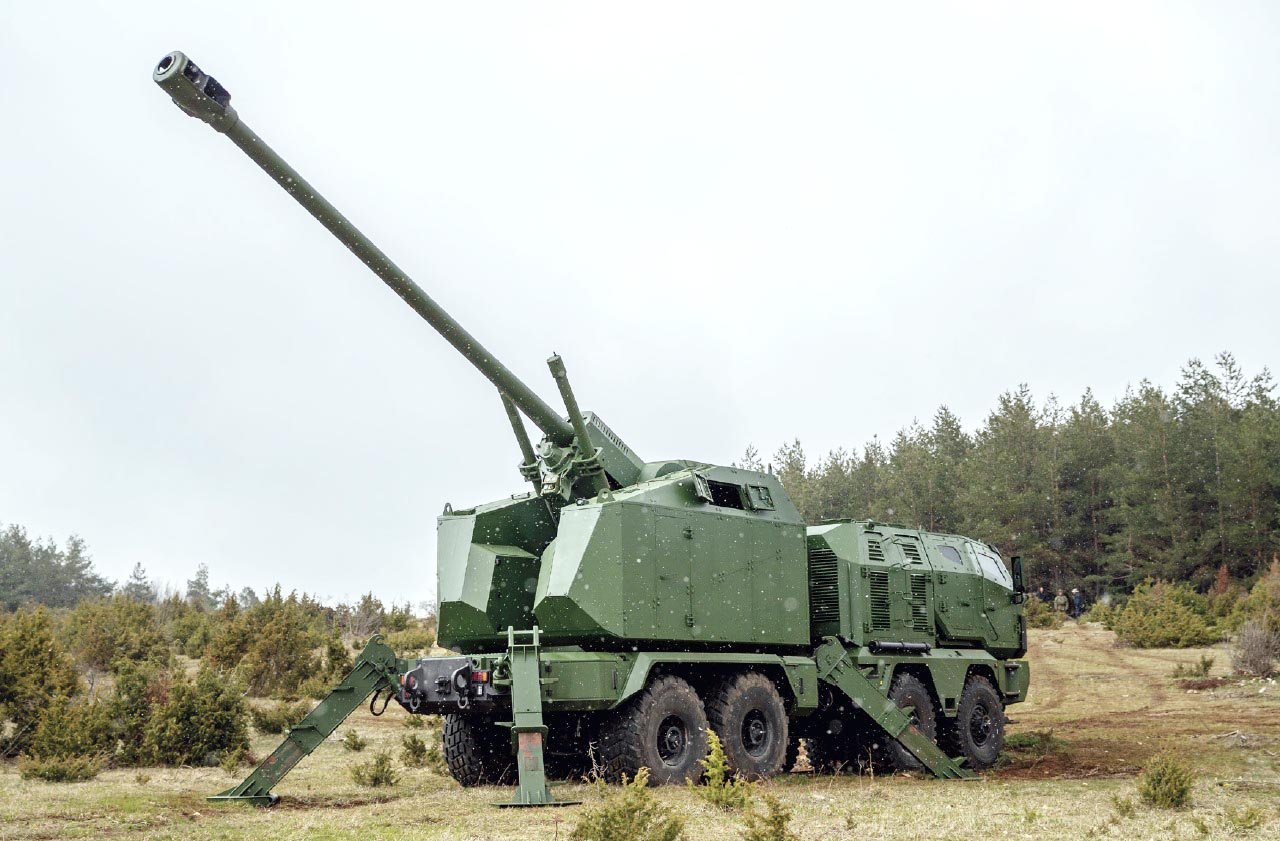
In 2021, Yugoimport and the US firm Global Ordnance unveiled a new variant designated “Nora B-52 M21” (on the image) in fulfillment of a US Army program requirement to equip the light mobile infantry units (Stryker Brigades) with a new system to replace their towed howitzers. This variant uses an 8×8 MAN TGS chassis, and its automatic loading system has been adapted for full compatibility with US Army MACS propellant charges. Protection has been improved to STANAG 4569 Level 2 in sensitive areas, bringing its service weight to 39 tons. However, its profile is more compact than previous variants thanks to the new 8×8 platform used.
noram214
The primary mission of the Nora B-52 M21 (on the image) is to support maneuver units, thus requiring high mobility. This variant retains the automatic loading system, allowing a maximum rate of fire of 4 rounds per minute (rpm), although a sustained rate of 3 rpm is the norm. The vehicle carries 36 rounds of ammunition, 12 of which are in the automatic loader. It can be in firing position within 90 seconds and disengage in just 60. Its mobility has also improved, reaching 95 km/h on roads and achieving a range of 650 km.
noram2110
(Nora B-52 M21 image). The main armament is the same 155/52mm howitzer installed on the other variants, and the secondary armament consists of a 12.7mm heavy machine gun. It also mounts four 82mm smoke grenade dischargers, two at each front corner of the vehicle. The communications system is similar to previous variants, with intercoms (UMK) for the crew, and it has an auxiliary power unit (APU) along with a manual emergency hydraulic system. In March 2023, it was leaked on social media that Algeria had placed an order for 54 Nora B-52 M21s, becoming the first user of this variant.
norang1
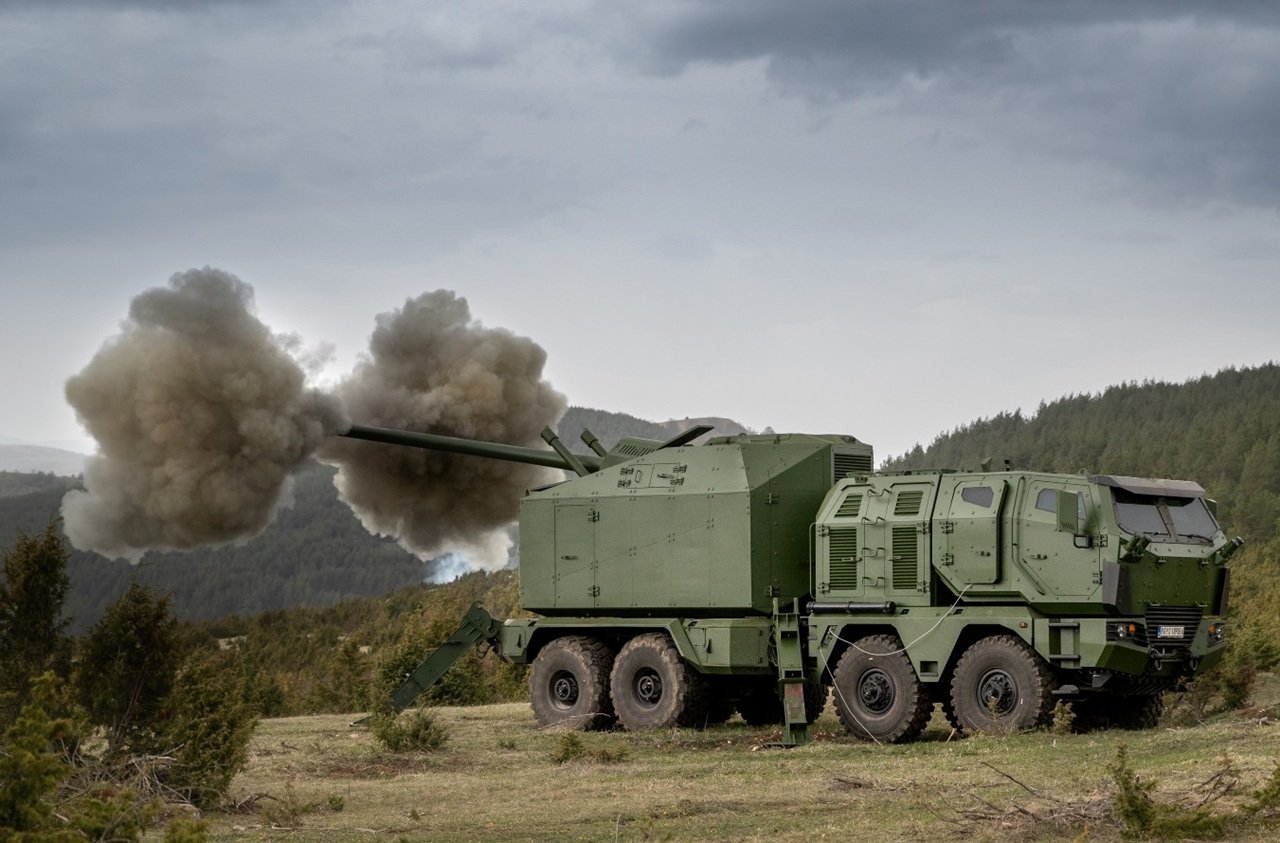
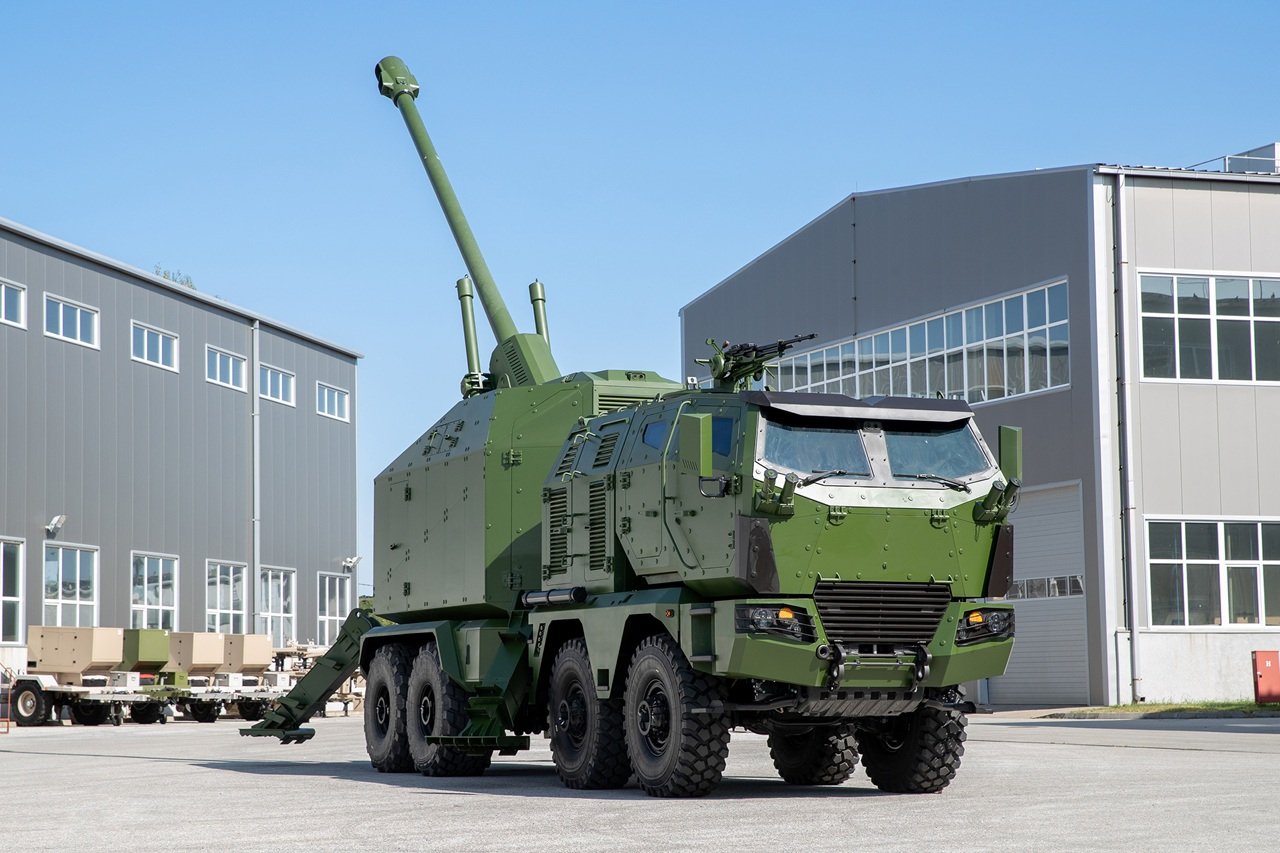
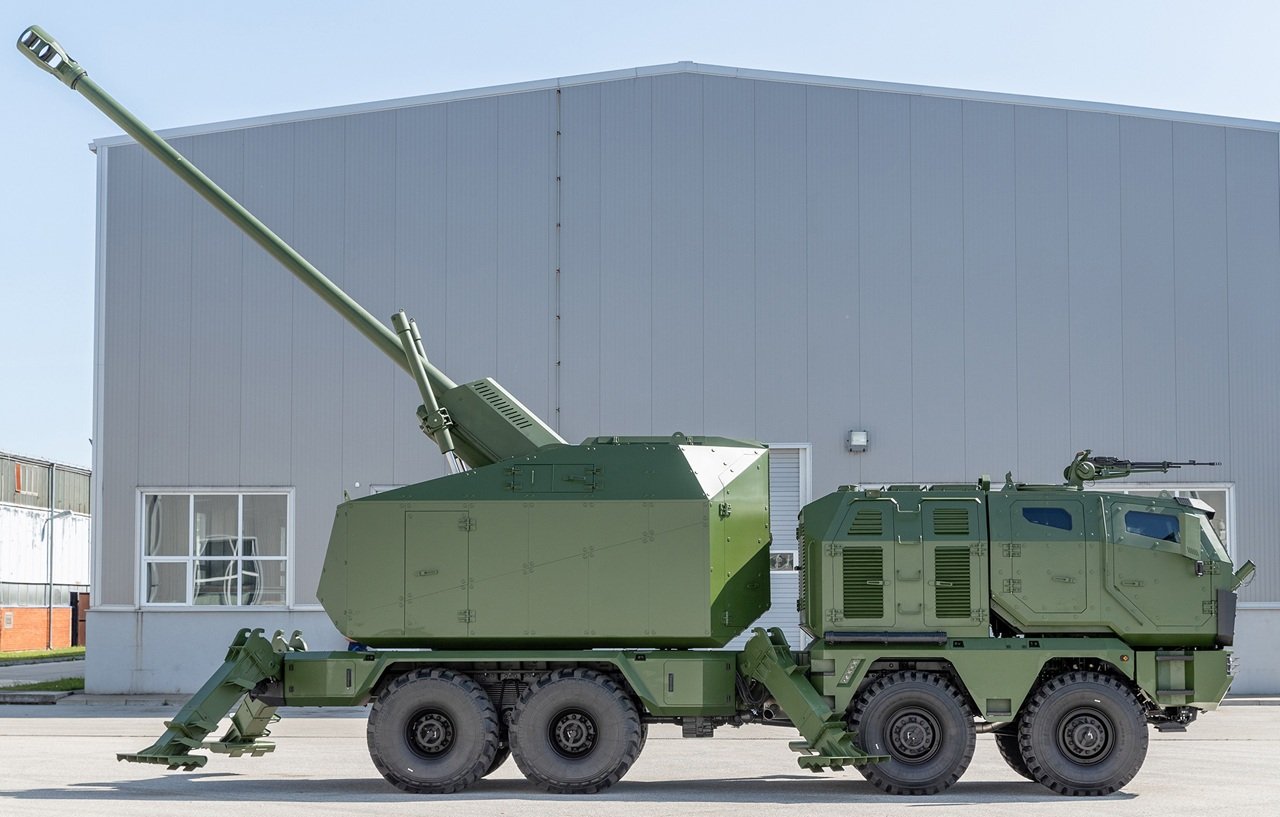
At the 2023 Partner Defense Exhibition, Yugoimport presented its latest variant to date, the “Nora B-52 NG” (on the image). This vehicle is a development of the Nora B-52 M21 and features a higher degree of automation and operational autonomy thanks to its improved electronics. It also incorporates an inertial navigation system supported by multi-constellation satellite positioning (GPS, Galileo, GLONASS) for precise targeting and positioning.
norang5
Nora B-52 NG (on the image) integrates a modular design on an 8×8 MAN TGS chassis with a fully automated fire control system that gives it a multiple rounds simultaneous impact (MRSI) capability of 3 rounds at 30 km. The maximum rate of fire is 4 rpm thanks to the automatic loader, which in this variant holds 30 shells with their corresponding charges instead of the 12 or 24 of previous variants. This improvement represents a significant advantage over earlier Nora B-52s, greatly enhancing its operational flexibility. In addition, it carries 6 more rounds, bringing the total to the standard 36 of previous versions.
norang30
The main armament is the same 155/52mm howitzer equipped with a 23-liter powder chamber. The barrel is of the “autofrettaged” type for increased service life and can fire all types of 155mm ammunition. The howitzer is ready to fire just 60 seconds after reaching the firing position, and takes another 60 seconds to leave that position after completing its final round.
norangazerb3
In February 2024, Azerbaijan placed an order for 48 Nora B-52 NG self-propelled howitzers (on the image) worth $340 million, becoming the first operator of this variant. These vehicles are built on an 8×8 Tatra Force chassis. The choice of this chassis is likely related to the fact that the Azerbaijani Army already has 152mm Dana M1M self-propelled howitzers built on Tatra chassis in service, which would facilitate and reduce the cost of maintenance. Deliveries of the vehicles began in 2025, and in October, Azerbaijani military personnel conducted joint exercises with Serbian Nora B-52 M15s as training prior to the arrival of the acquired vehicles.
norang32
According to some sources, the Serbian Army began training and deploying Nora B-52 NG self-propelled howitzers (on the image) in 2025, although their number is unknown. It is believed that the total number of Nora B-52s in service in Serbia is around 100, of different variants, deployed in mechanized and mixed artillery brigades.
noram15vs10
(Nora B-52 M15 image). The Nora B-52 artillery system can be considered a significant achievement for the industry of a small country like Serbia, and a sales success when compared to similar models such as the Swedish 6×6 Archer, the Czech 8×8 Dana, or the South African 6×6 G-6 Rhino. The constant updating of electronic equipment, an efficient automatic loader, a wide range of long-range ammunition, and a competitive price are the hallmarks of this system and make it a very interesting option within the current range of wheeled self-propelled howitzers. Currently (December 2025), approximately 200 units of all variants are in service, with confirmed orders for another 102 vehicles.

Related posts