Photogaleries

G6 RHINO 155mm self-propelled howitzer gallery 2
g6oman1
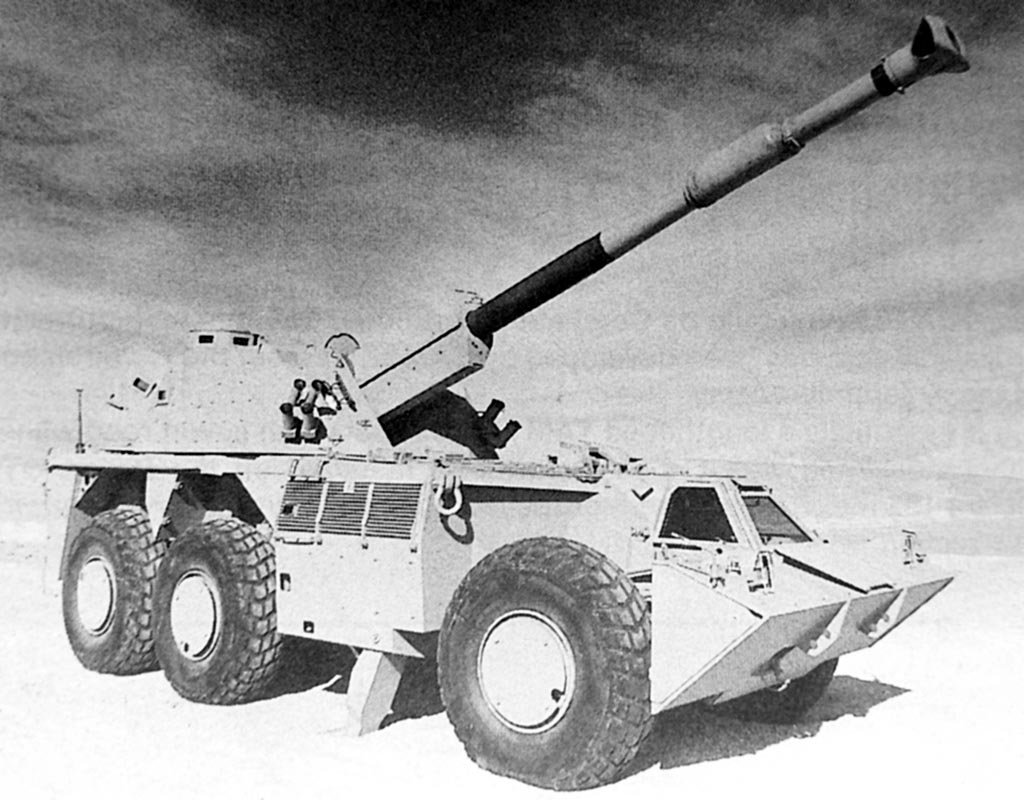
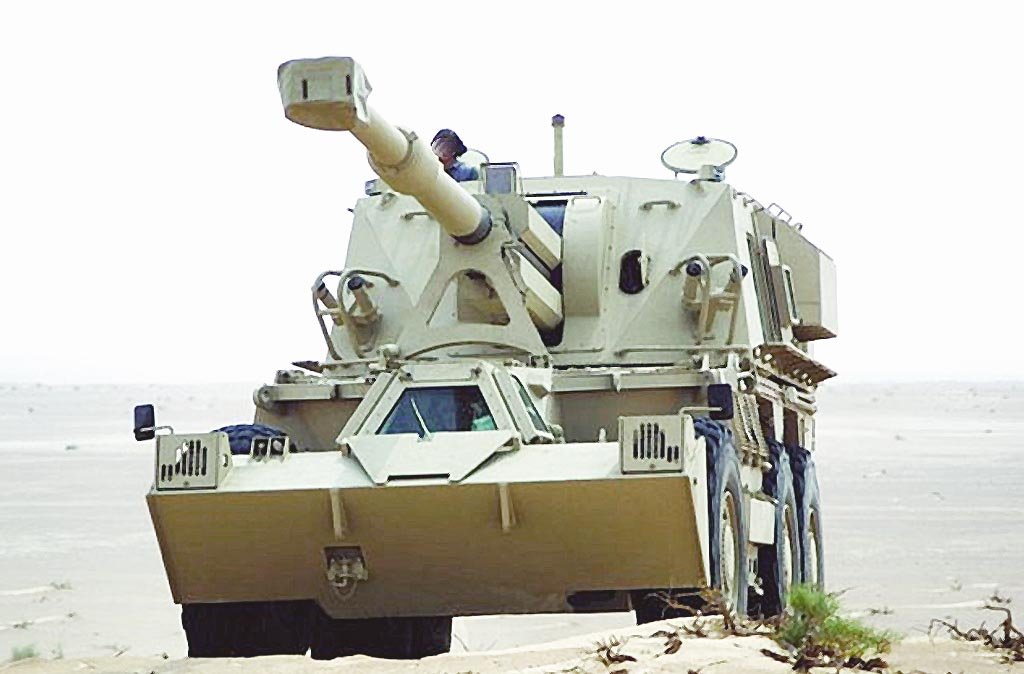
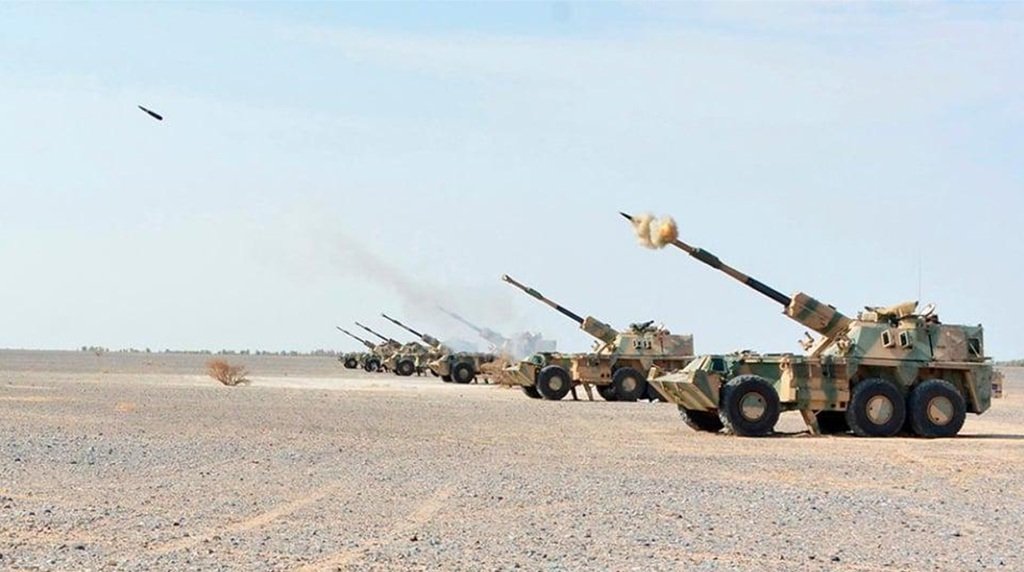
(Omani G6-45 image). Although the G6-45 Rhino was offered for export, the political situation in South Africa at the time did nothing to help its sales, and only the United Arab Emirates (UAE) and Oman acquired this vehicle. The UAE purchased 78 in the early 1990s, and the Sultanate of Oman acquired 24 G6-45 self-propelled howitzers along with training and support packages, which were delivered between 1994 and 1999. The G6s from Oman remain in service today and have never been deployed in combat operations.
g6uae4
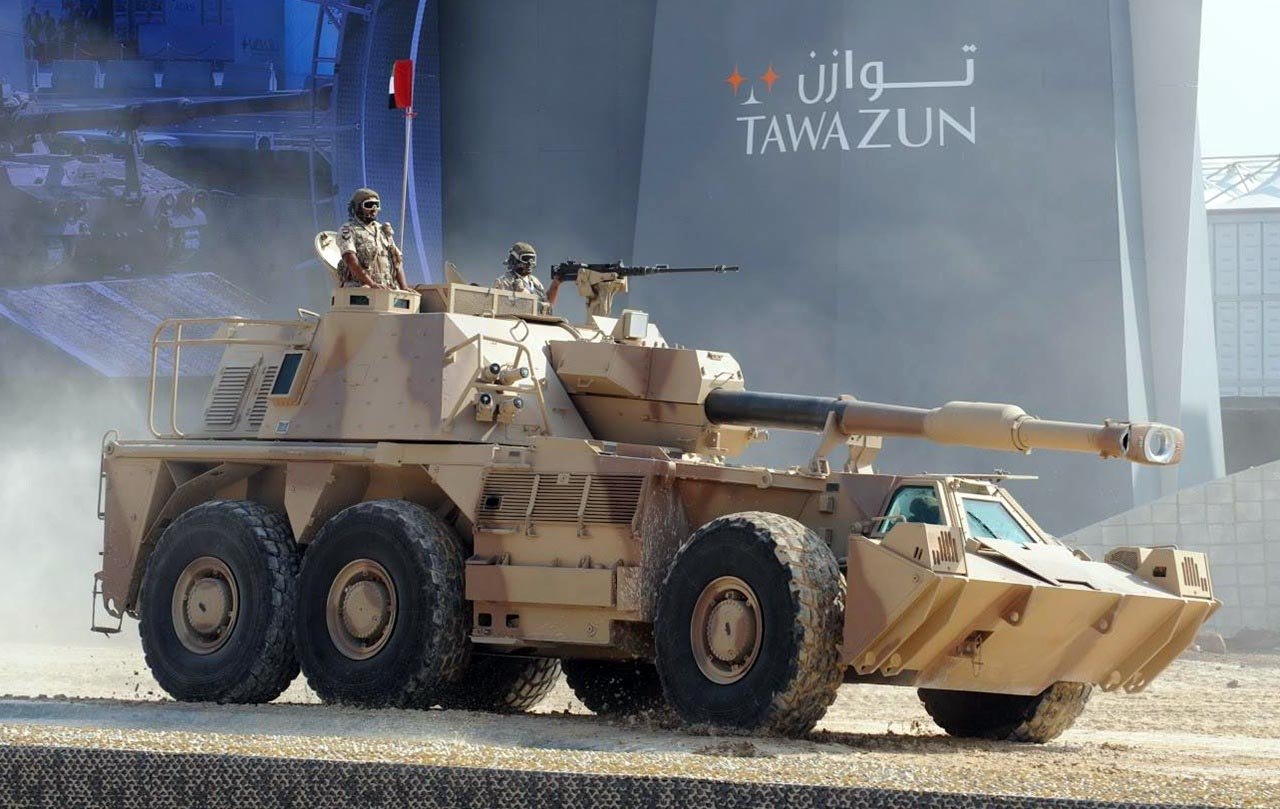
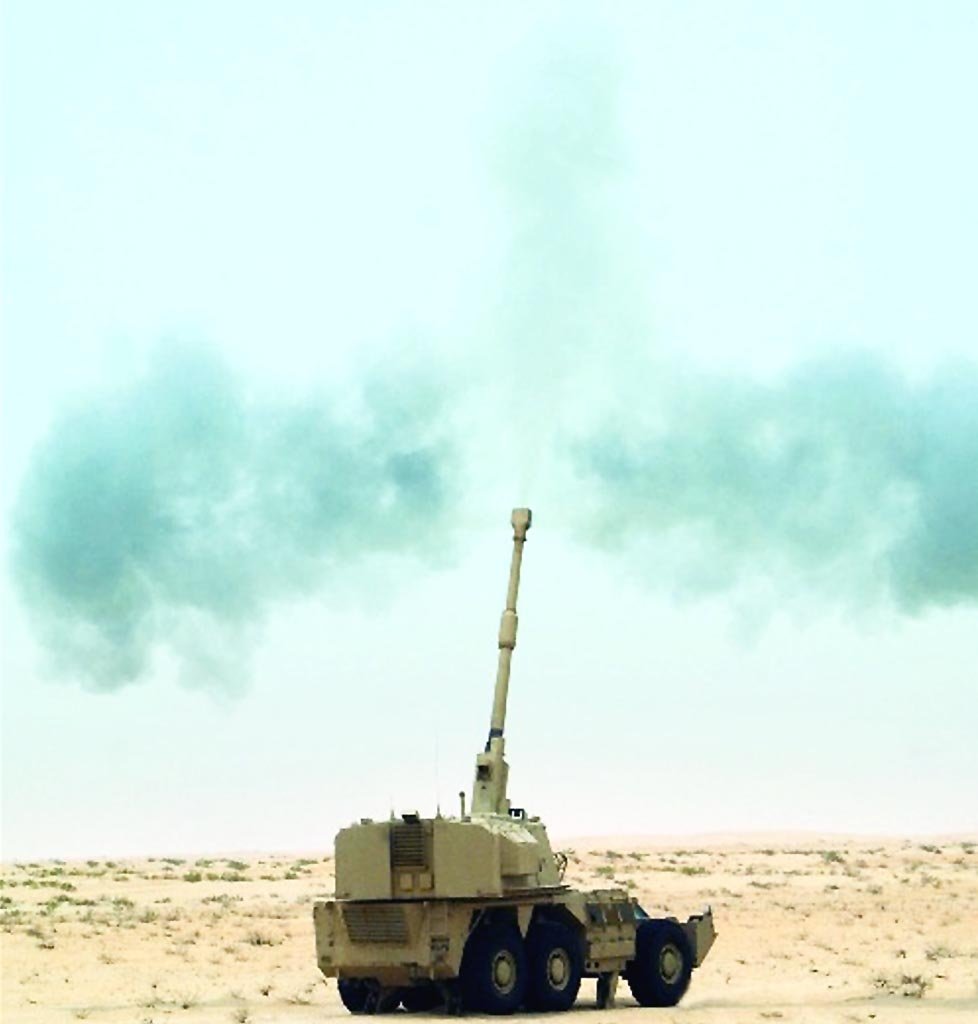
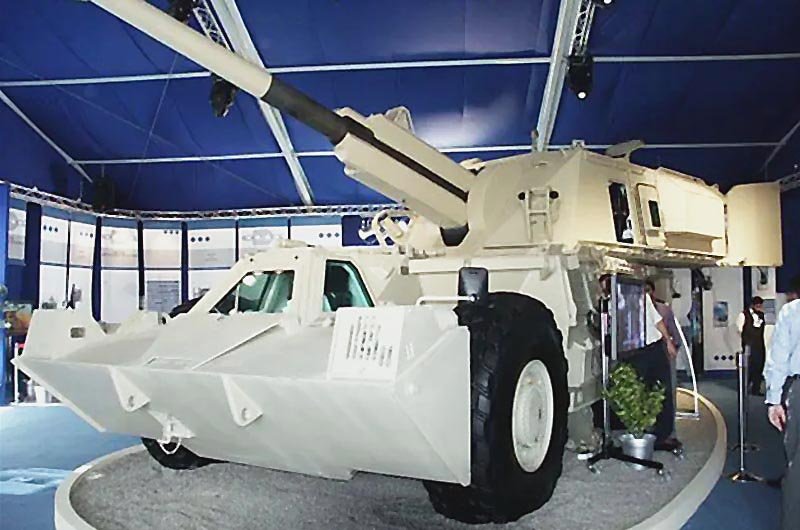
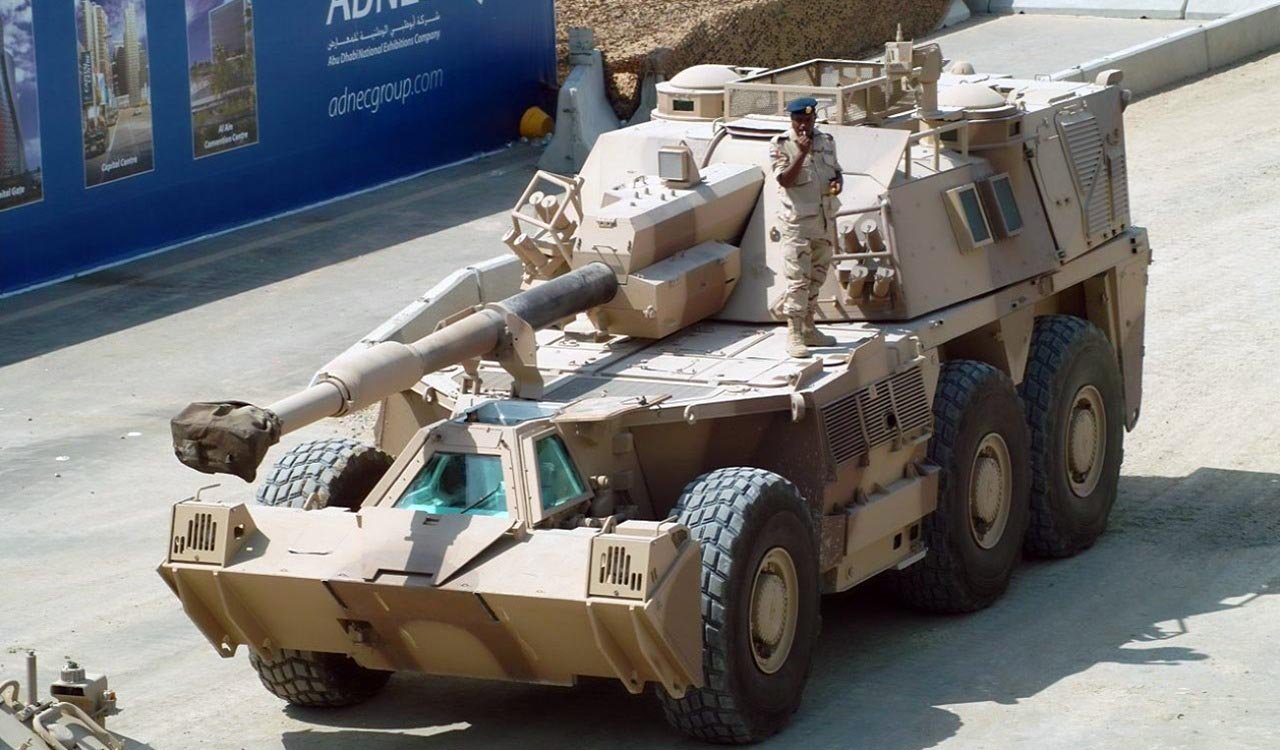
The G6-45s destined for the United Arab Emirates were designated “G6 M1A3” (on the image) and received a number of modifications to improve their reliability in extreme climates and their artillery capabilities. Modifications include a new fume extractor, additional safety interlocks, an AS2000 fire-control system, a new digital hand controller and a new rammer. The installation of this new equipment improves the UAE G6‘s rate of fire to 5 rpm and gives them an MRSI capacity of 4 rounds. A backup laying system, a barrel cooling fan located on the cradle, and a new barrel temperature measurement device were also installed.
g6uae7
(UAE’s G6 M1A3 image). The vehicle has also received several upgrades, including a new three-level central tire inflation system and a new, more powerful APU. Onboard comfort has also been improved with better compartment insulation, a chilled water supply, and an upgraded air conditioning system. Although some sources commented that the UAE had contracted an upgrade package designated as “G6/M109L47” from Denel Land System and RDM in the early 2000s, it is unknown whether this package was ever implemented since RDM ceased operations in 2004.
g6uae12
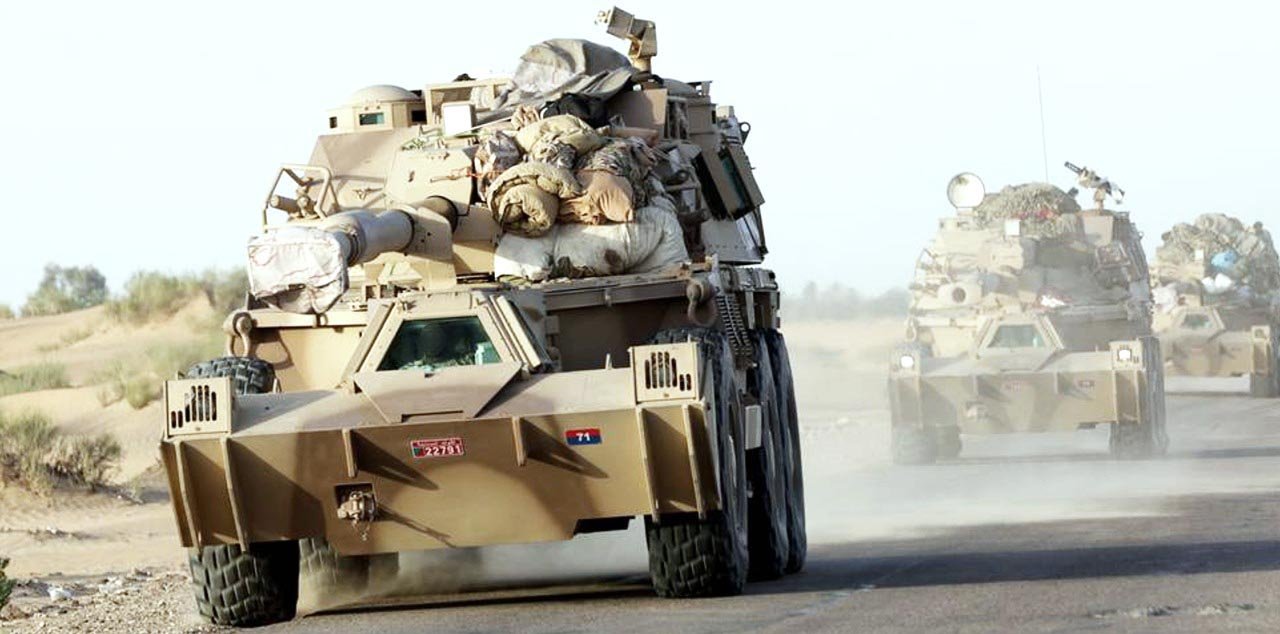
(UAE’s G6 M1A3 image). These vehicles have seen combat on several occasions since 2015, when they were deployed in Yemen to fight the AQAP (Al-Qaeda in the Arabian Peninsula) and IS-YP (Islamic State – Yemen Province) guerrillas alongside an international coalition of 9 Arab countries. The intervention of the United Arab Emirates forces falls within the framework of the assistance requested by the legitimate government of Yemen during the civil war that began in September 2014 when Houthi forces seized control of the capital and the government. The UAE’s G6 self-propelled howitzers have primarily fought in the vicinity of the city of Taiz, supporting various offensives launched by the Yemeni army and its allies. As far as is known, all the vehicles remain in service.
g6ccsp451
In 1987, Denel Land Systems signed an agreement with the Chilean firm Cardoen for the manufacture of the G6-45 in Chile. This was the first attempt to export their vehicle, and in 1989 the agreement was made public while a prototype, already built under the designation “CC-SP-45” (on the image), was being tested. According to the agreement, this vehicle would be manufactured in Chile using components produced there and others shipped from South Africa and by 1990, 6 units had already been built. However, in 1990, the concern of some Chilean politicians about Chile’s international image due to the agreement signed with South Africa, which was under an international embargo due to apartheid, brought this program to an end.
majnoon&alfao
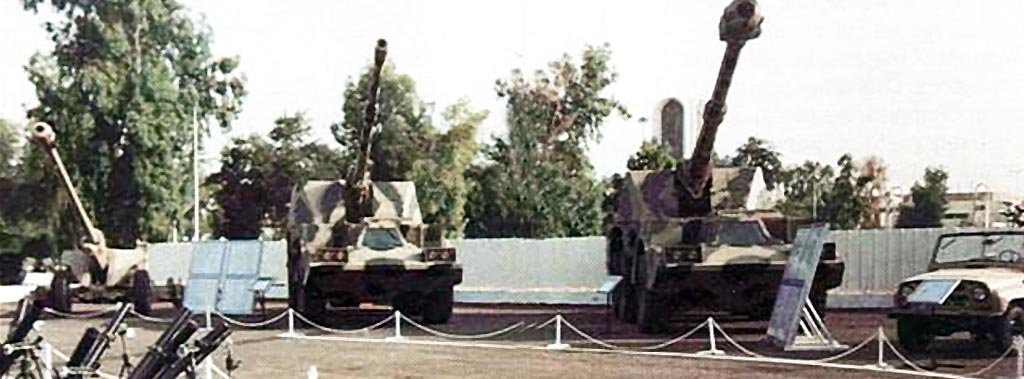
In 1988, Denel was trying to sell the G6-45 to Iraq, but negotiations fell through. Instead, Iraq commissioned Canadian engineer Gerald Bull to design two similar systems to the South African model. In 1989, two incomplete prototypes, named “Majnoon” and “Al-Fao” (on the image), armed with 155mm and 210mm howitzers respectively, were presented, but these systems never progressed beyond the prototype stage.
t6t72m11
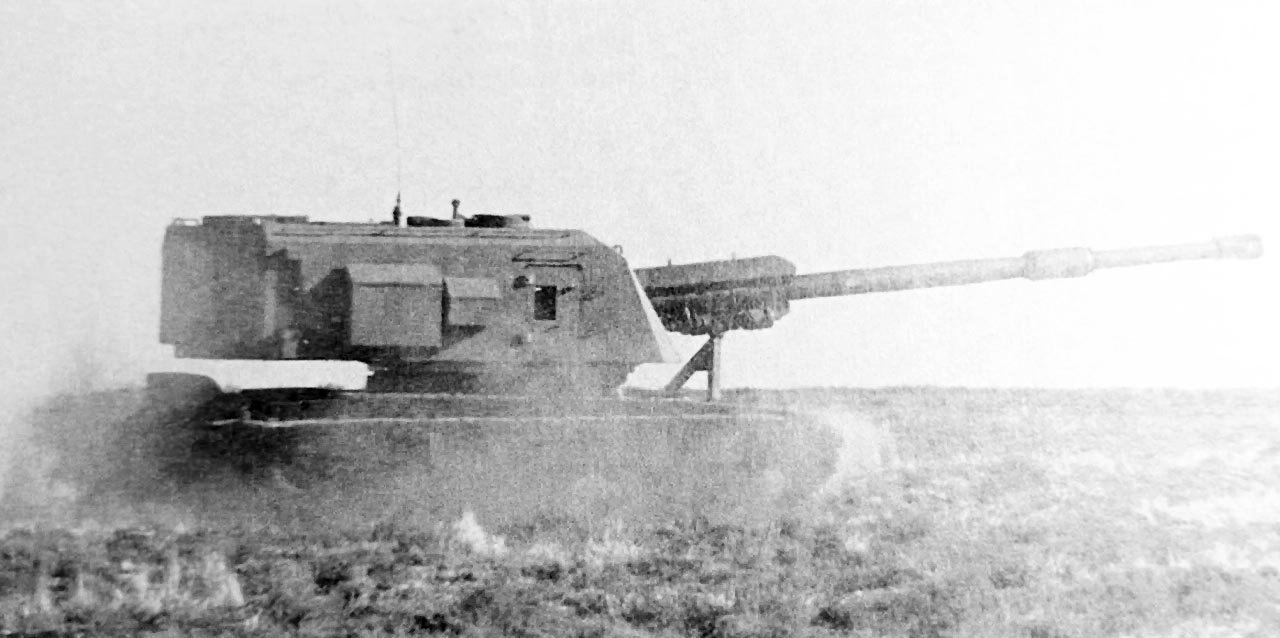
In late 1992, Denel Land System announced it was building a prototype armed with a 155/52mm howitzer, with a view to future upgrades of the G5 and G6 howitzers in service. However, it was decided to modify a G6 turret for installation on a T-72M1 tank chassis in response to an Indian Army requirement for a new self-propelled howitzer that would utilize the chassis of these tanks, which were being manufactured there at the time. This program was designated “T-6”.
t6arjun1
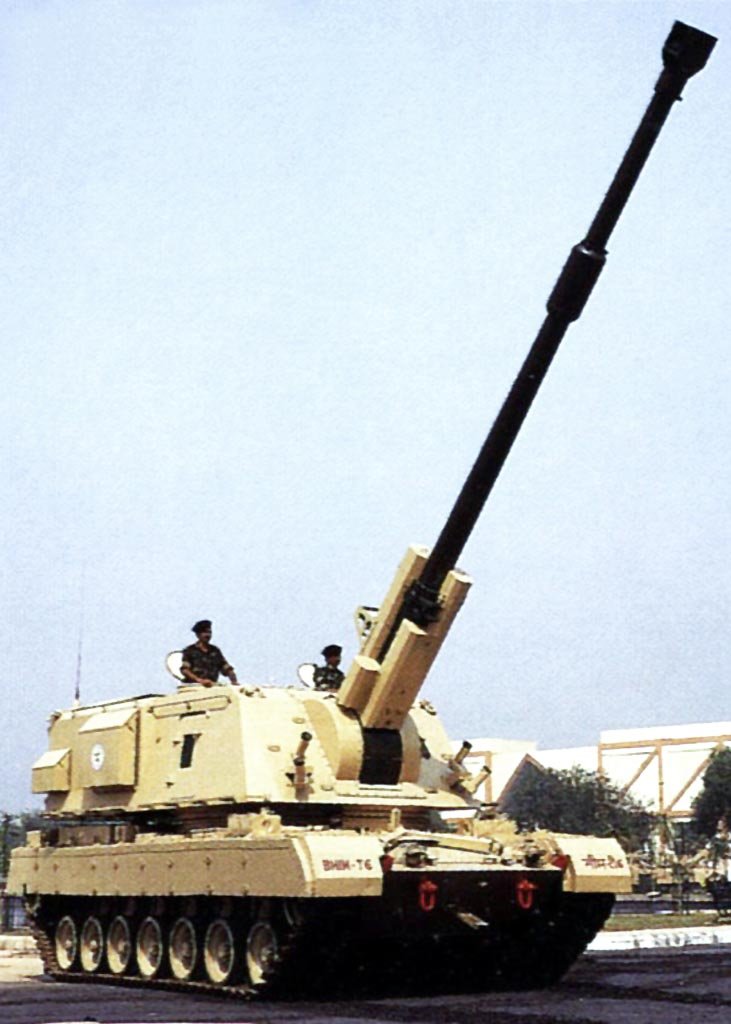
In 1995 a completed and adapted turret for installation on a T-72M1 tank chassis was shipped to India for trials, and later, this same turret was adapted for installation on a chassis of the indigenous Arjun main battle tank (on the image). However, by 2000, no decision had been made regarding its acquisition, and India opted instead for the interim acquisition of Russian 2S19 Msta-S self-propelled howitzers.
g6marksman4
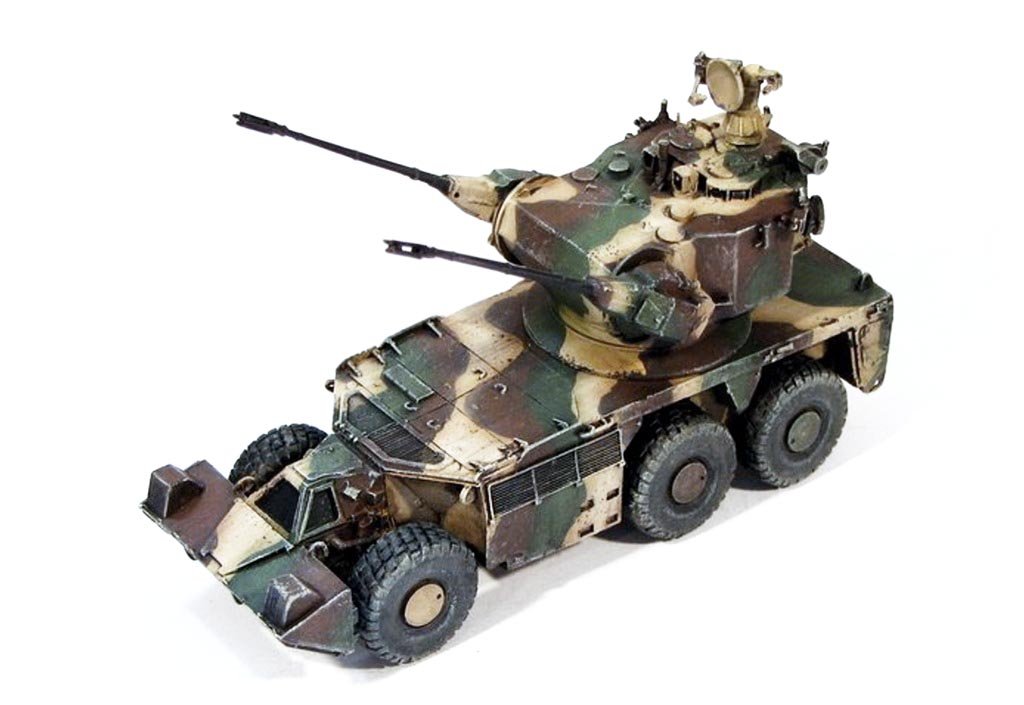
In 1994, the G6-45 chassis was modified to accommodate the British Marksman short-range air defense turret (on the image). This system consists of two 35mm Oerlikon anti-aircraft automatic guns, similar to those installed on the German Gepard self-propelled anti-aircraft gun (SPAAG), and a Marconi Series 400 radar. Unfortunately for Denel, this combination also failed to attract any orders, and no units have been manufactured.
g6527
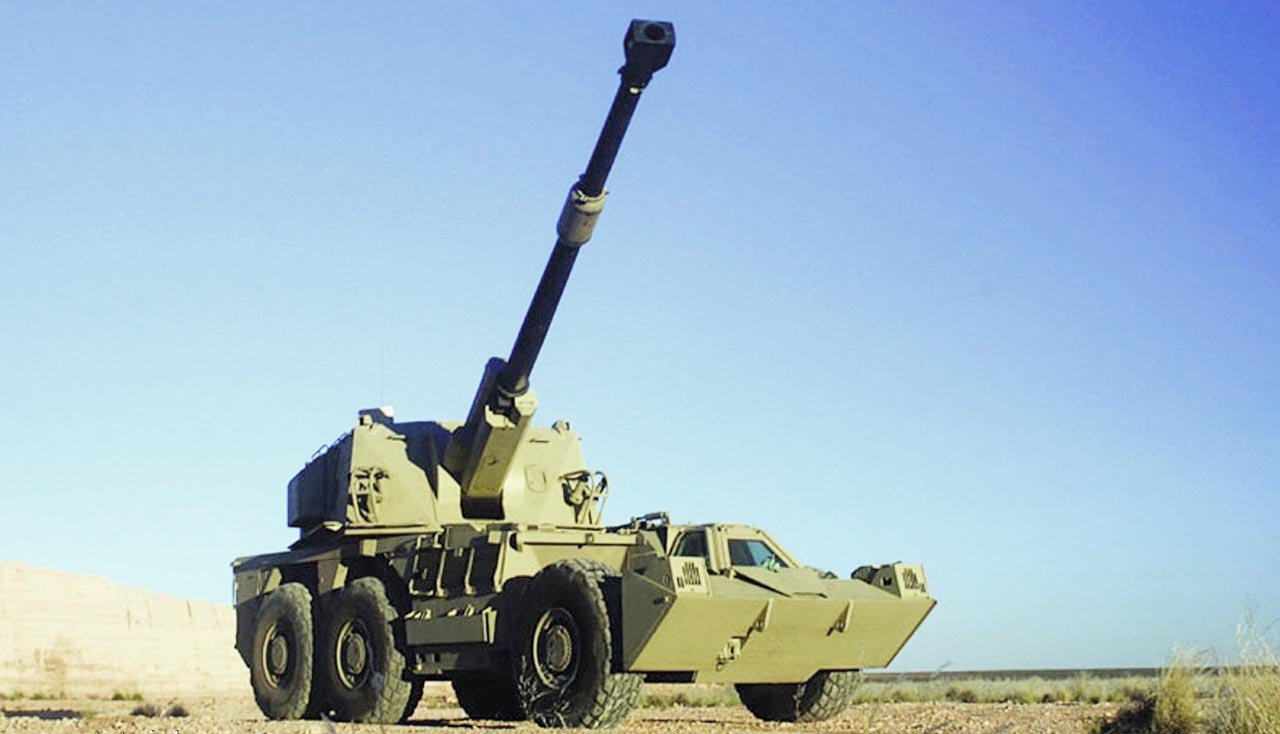
In March 2003, a modernized variant designated “G6-52” (on the image) was introduced. It is armed with a 155mm howitzer lengthened to 52 calibers, and this longer barrel allows it to fire standard rounds up to 33 km, HE base bleed (ERFB-BB) rounds up to 43.5 km and VLAP rounds up to 58 km with muzzle velocity increased to 985 m/s. The combat weight has increased to 49 tons and its overall length has also been increased to 11.40 meters, but its mobility and range are similar to those of the G6-45 variant. This upgrade pack can be installed on the G6-45 and in addition to the artillery upgrades it also includes crew comfort improvements similar to those included in the G6 M1A3 upgrade pack installed on the UAE’s G6s.
g6526
G6-52 (on the image) incorporates a new breech mechanism, new recoil system and fully automated loading and ammunition handling systems, increasing its maximum rate of fire to 8 rpm and reducing the crew to 5 members. The magazine is a carousel type and holds 40 rounds and 40 charges. The G6-52 is offered with two optional powder chambers of 23 and 25 liters, the 23-liter chamber complying with the NATO Joint Ballistic Memorandum of Understanding, making it fully compatible with NATO 155mm ammunition. It also utilizes the Somchem M64 Bi-Modular Charge System (MCS) and the new M90 Bi-Modular Charge System (MCS), which provides increased muzzle velocity.
g6522
G6-52 (on the image) is equipped with a new AS-2000 fire control system (FCS) which, among other improvements, allows for automatic direct fire thanks to its new FIN 3110 RLG automatic gun-laying system. This vehicle incorporates a new Launcher Management System (LMS) that integrates the FCS, GPS, and inertial navigation system with a touchscreen. All these elements give the G6-52 artillery system a MRSI (multiple rounds simultaneous impact) capability of 5 rounds against targets located between 25 km and 50 km away. In addition, the entry and exit into shooting position has been improved, reducing it to about 30 seconds in both cases.
g65211
The G6-52 self-propelled howitzer, like the Swedish Archer or the Serbian Nora B-52, has incorporated guided munitions such as the Russian Krasnopol-M, the American M982 Excalibur and the French-Swedish BONUS rounds. With this type of rounds, the G6-52 is capable of a circular error probability (CEP) of only 10 meters against targets located at maximum range. In addition, alongside this new variant, new ammunition has been developed, such as the 155 mm HE Extended-Range Full-Bore-Base Bleed (ERFB-BB) shell, which contains 8.4 kg of high explosive and has a maximum range of 43.5 km, and the Velocity-Enhanced Long-Range Artillery Projectile (VLAP) with a maximum range of 58 km. The new M90 Bi-Modular Charge System (MCS) has also been incorporated.
g652lrecord1
The latest variant presented in 2019 by Denel Land Systems is known as the “G6-52 Extended Range (ER)” or “G6-52L” (on the image), ​​which further improves range thanks to its 25-liter powder chamber. With these improvements, the G6-52ER howitzer is capable of firing HE base bleed (ERFB-BB) rounds up to 50 km and M9703A1 VLAP rounds up to 67.45 km with muzzle velocity increased to 1,050 m/s. Thanks to this increased range, the G6-52ER system has an MRSI (multiple rounds simultaneous impact) capability of 6 rounds against targets located between 25 km and 50 km away.
g652lrecord2
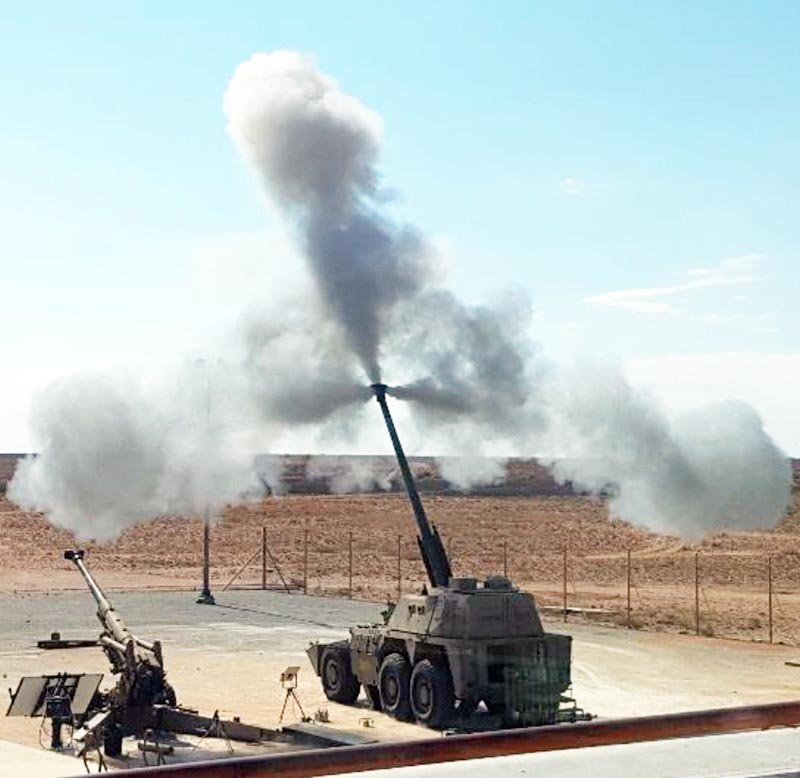
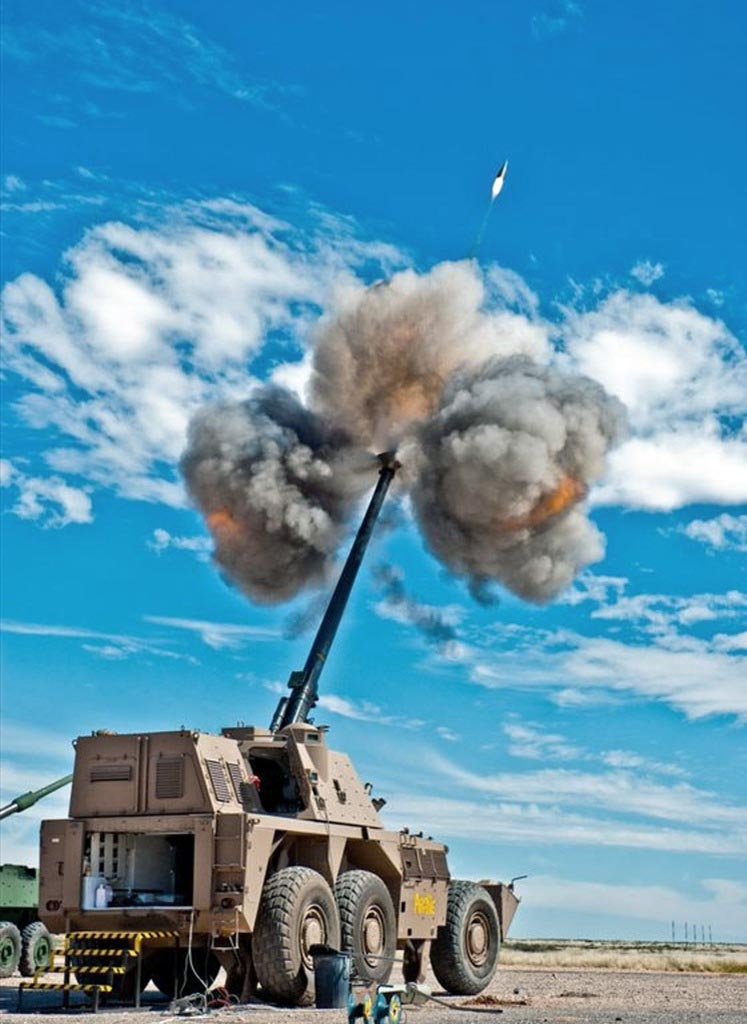
On November 6, 2019, at the Alkantpan Test Range in South Africa, Rheinmetall conducted a demonstration of its modern 155mm artillery ammunition, including the acclaimed Assegai round. During the demonstration, an experimental Denel G6-52ER self-propelled howitzer (on the image), equipped with a 155/52mm howitzer with a 25-liter powder chamber, set a new world record for a 155mm howitzer by firing a “M9703 Prac Inert V-LAP” round to a distance of 76,280 meters.

Related posts