Photogaleries

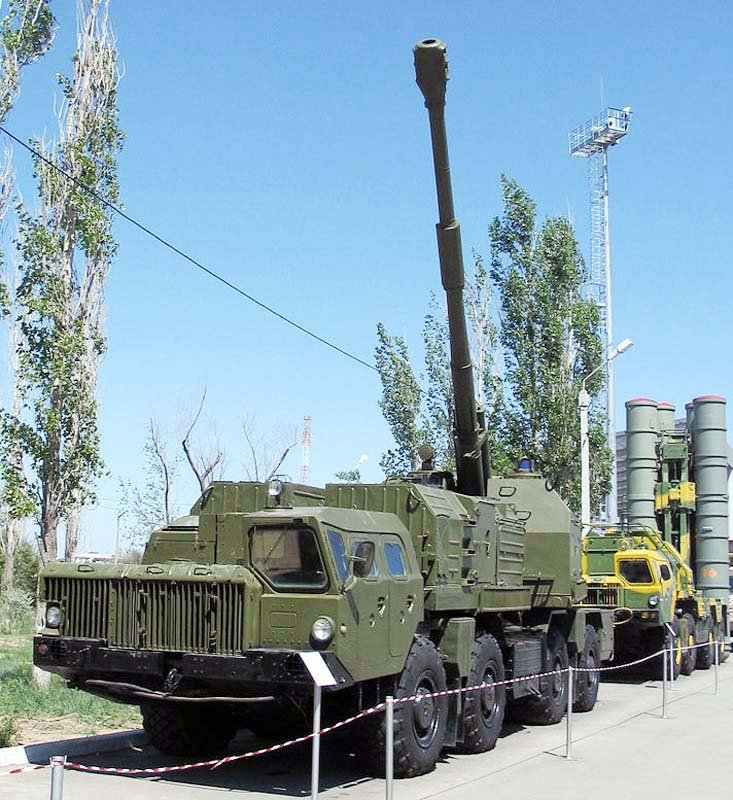
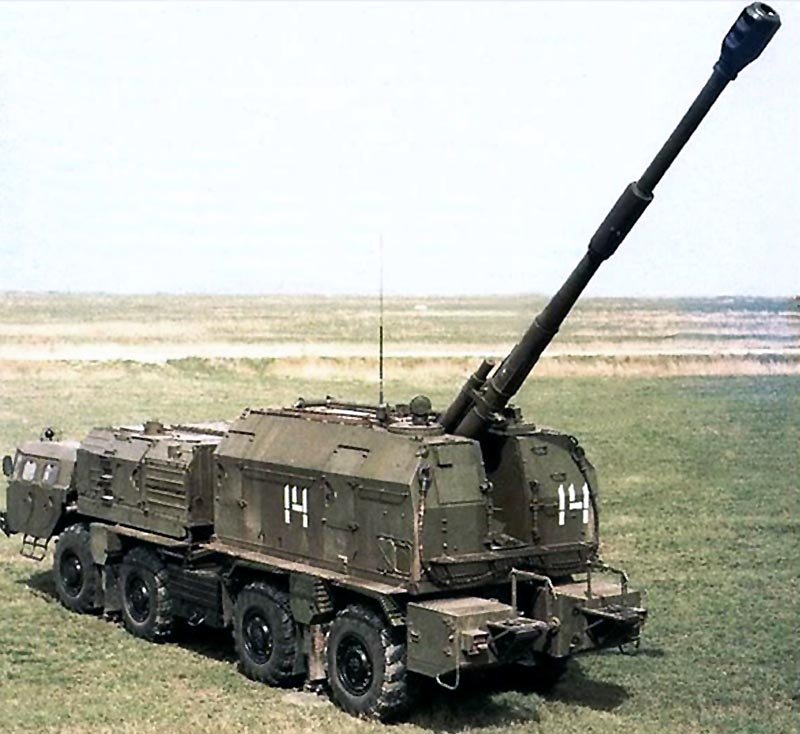
A-222 BEREG 130mm mobile coastal defence gun gallery
bereg1
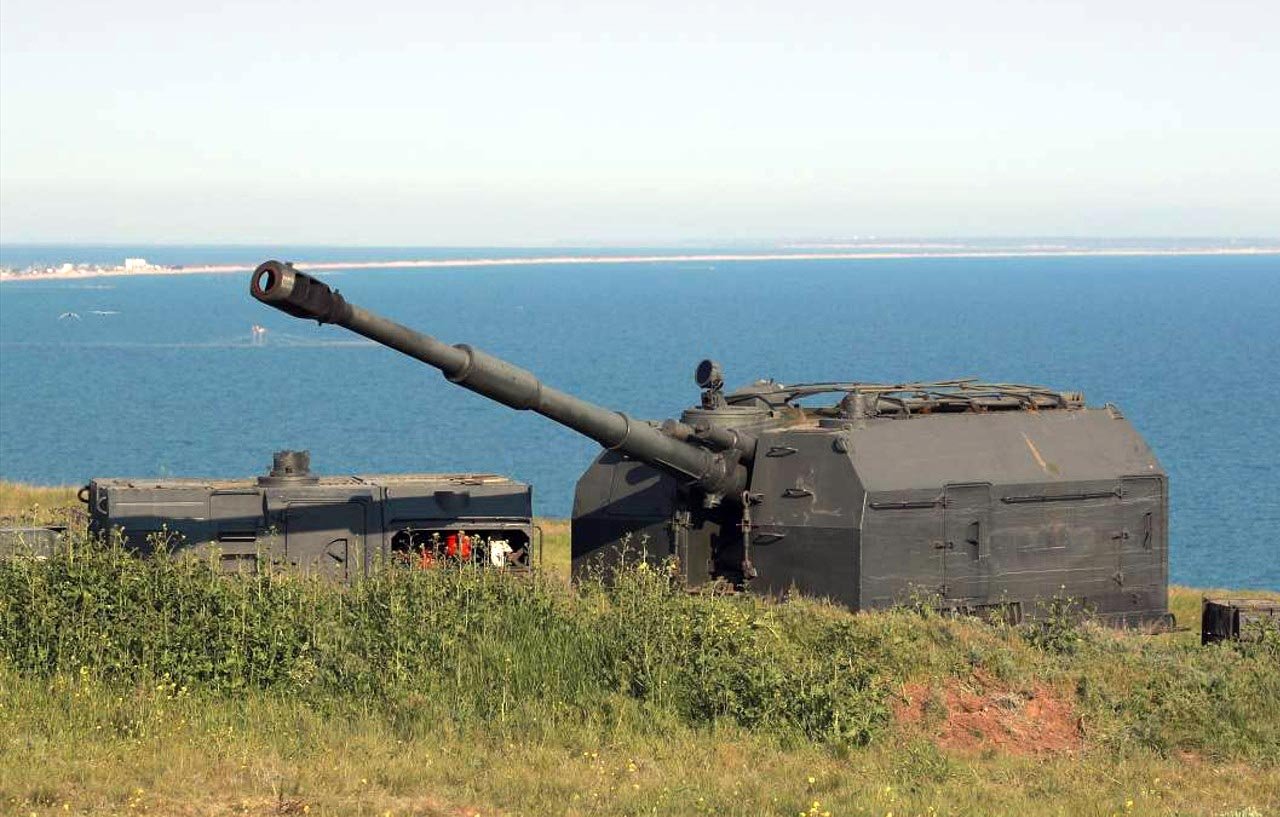
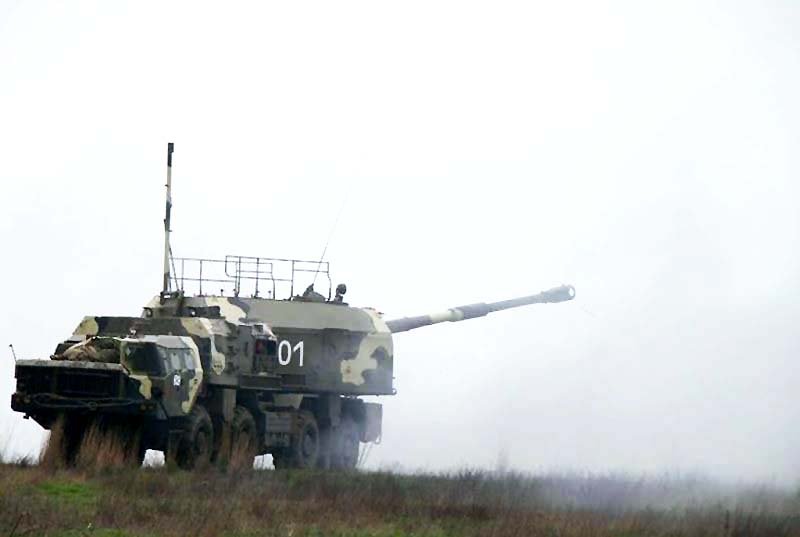
In 1976, engineer Viktor Aleksandrovich Shurygin of the Titan Design Bureau in Volgograd began designing a new artillery system for coastal defense. It was decided to use a 130mm AK-130 naval gun and an all-terrain chassis as the basis for the project. The technical design was completed in 1980, but due to the heavy workload of the Barrikady company in missile production, the prototype’s development was delayed for several years, and the first prototype, designated “A-222 Bereg” (Coast), was not presented until 1988.
bereg3
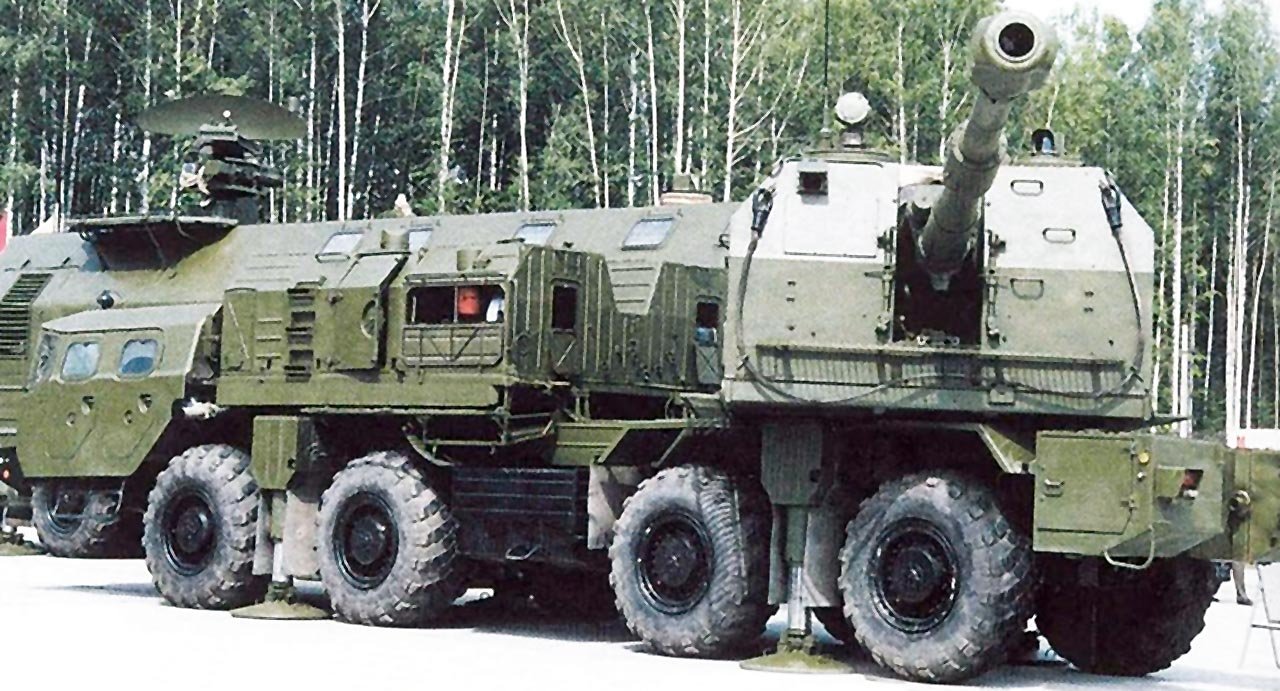
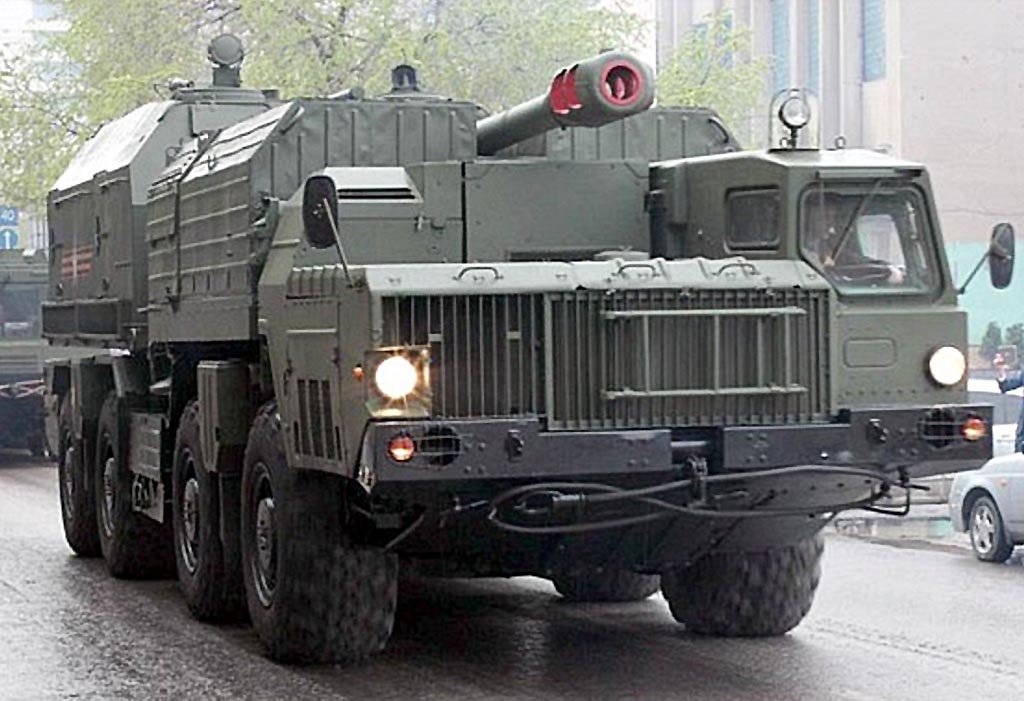
The A-222 Bereg´s gun was developed using parts from the AK-130 naval artillery mount and the 152mm 2S-19 Msta-S self-propelled howitzer. The barrel was fitted with a mid-mounted fume extractor and an enlarged muzzle brake. The chassis was developed from the highly mobile 8×8 MAZ-543M all-terrain truck, ensuring good operational flexibility. This artillery system was designed to complement coastal defense missile systems, which, despite their capabilities, have certain disadvantages such as their price, vulnerability to electronic countermeasures, and short-range dead zones that can range from 2 km to several tens of kilometers. Furthermore, their use against small vessels can be counterproductive, as the value of these targets may be less than that of the missile itself.
bereg4
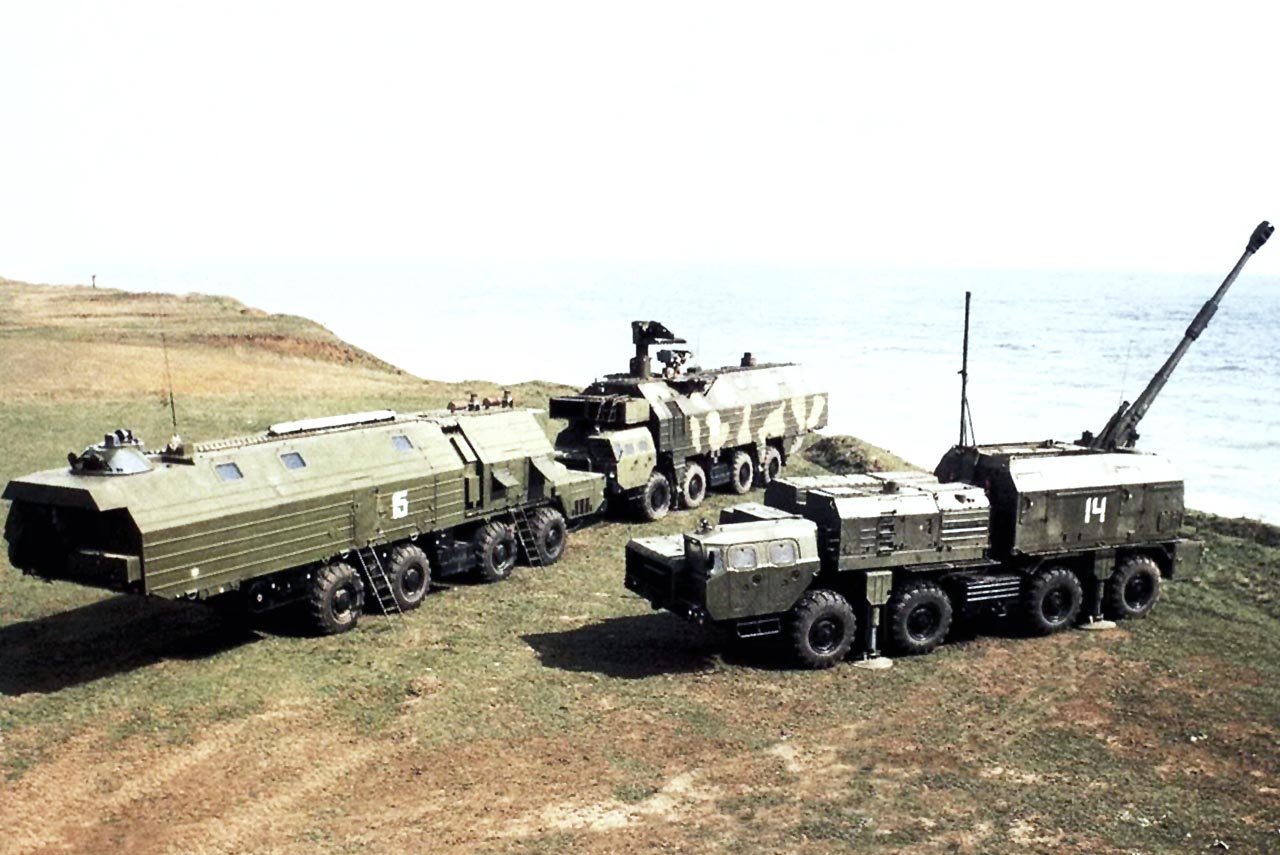
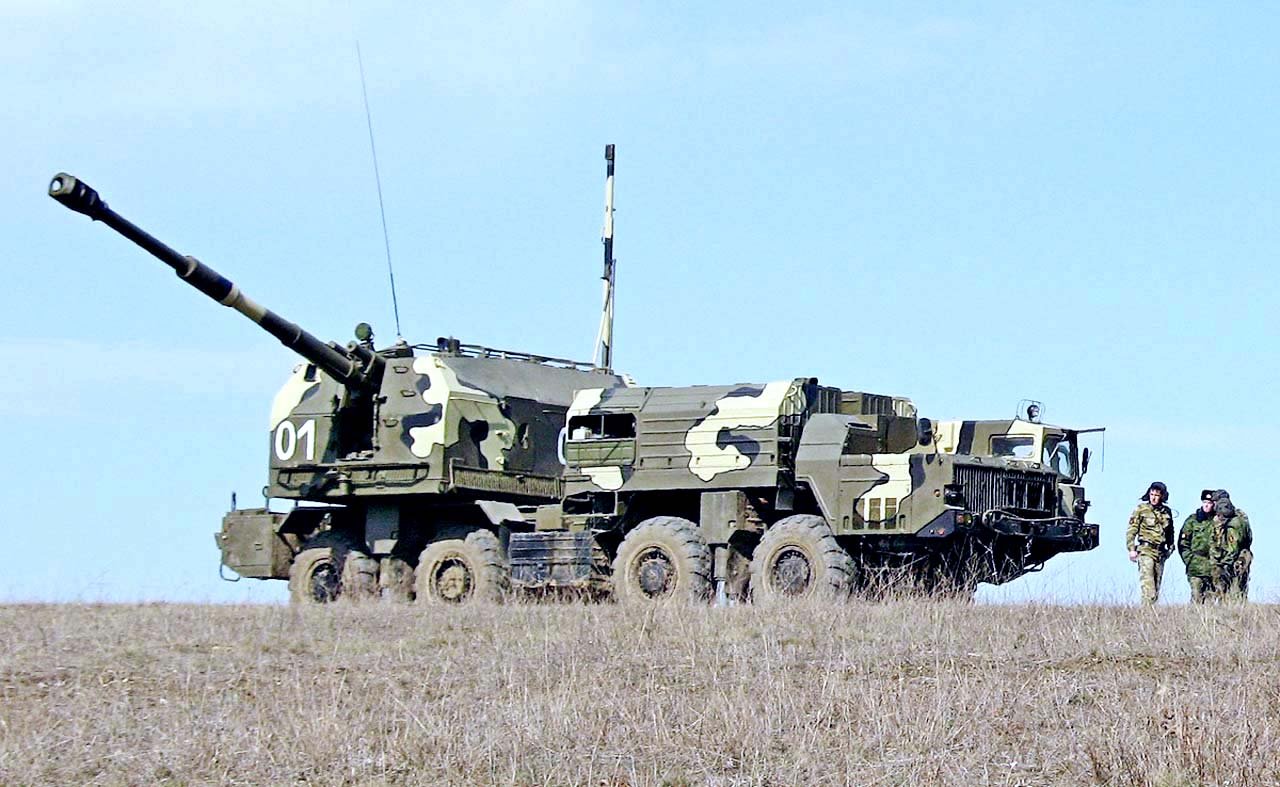
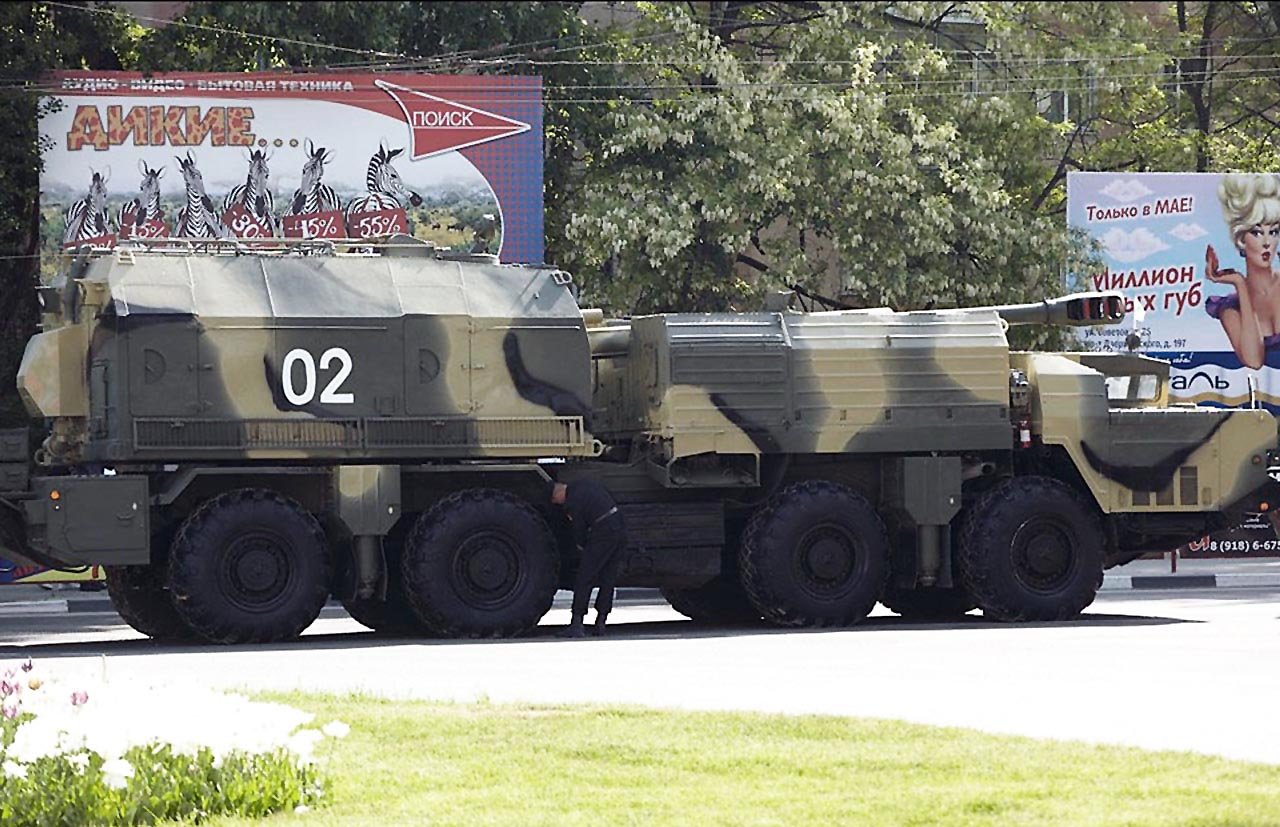
A-222 Bereg battery consists of 6 self-propelled guns (ACS/SAU/SDZ), a mobile central station (CS/CPU/CVS) with an MP-195 command and control system and one or two combat alert support vehicles (MOBD/VZBP) equipped with power generators, a mess hall and auxiliary equipment. All these vehicles use the same 8×8 MAZ-543M chassis and none of them are armored. The primary mission of these batteries is to engage small amphibious targets used for naval landings, as well as ships and aircraft traveling at speeds of up to 200 knots (370 km/h). Of course, they can also operate as conventional artillery if required. It is usual for the battery vehicles to be separated from each other for operational and survival reasons, although this distance is limited to 1 km and a height between them not exceeding 300 meters.
bereg16
These batteries are capable of detecting, tracking, and engaging sea and ground targets both day and night and in any weather conditions. The guns are directed by the central station’s fire control system, an observation post, or a fire adjustment helicopter. In addition, the guns can also operate independently using their commander’s vision and designation devices, ballistic computers, laser rangefinders, and optical/electromechanical sights. All vehicles in the battery have self-contained power supplies that allow them to continue operations should any vehicle be damaged or disabled.
beregcs1
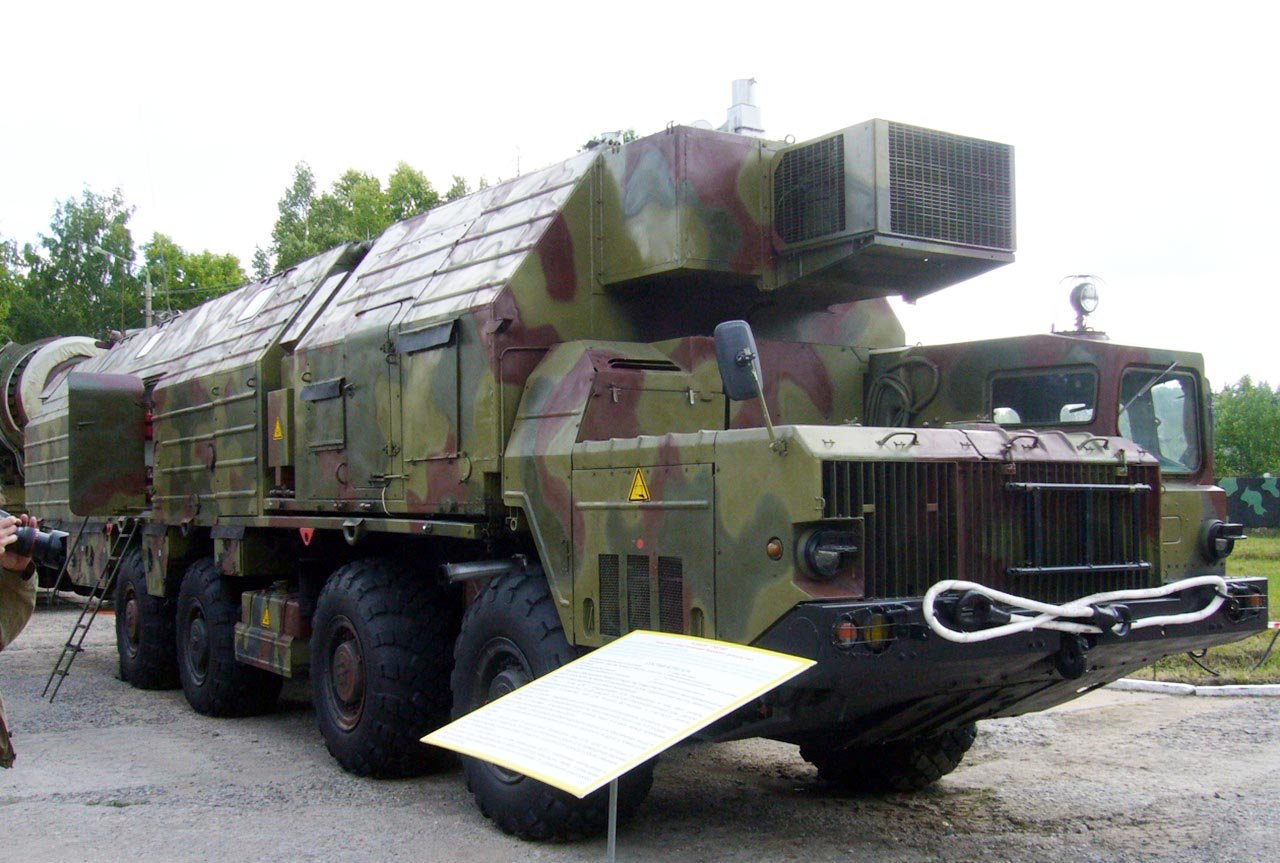
The Central Station (CS) of the A-222 Bereg artillery system has a crew of seven and is composed of the BR-136 jamming-proof fire control system (FCS) with radar and optoelectronic acquisition and target-tracking channels. It also has communications equipment that ensures continuous 360° sea-surface surveillance and target acquisition, TV-optical surveillance of sea and coast in a sector of ±135°, automatic tracking of up to 4 targets, fire control and fire correction against 2 targets simultaneously, generation of angles of elevation and traverse for 6 guns with pointing correction and independent fire of each gun. In addition, the fire control system has a training mode for the operators. The vehicle is equipped with four hydraulic stabilizers for stability on rough terrain during operations and two air conditioning systems, one for the electronic systems and another for the crew.
beregcs2
Each of the 2 tracking channels has 3 manual modes: manual laying, aided tracking and coasting and 2 automatic moddes: programmed target lock-on and automatic tracking. In addition, one of the channels can show the TV/laser tracking of any detected targets and the fire control system has modes to operate against sea or coastal targets. The system enables the guns to fire both in succession and at rates of 4, 6, 8, 10 and 12 rounds per minute and including automatic adjustment of fire, using radar-observed shell splashes. This vehicle is usually positioned away from the guns, at a maximum distance of 1 km. The radar is capable of detecting and tracking targets up to 35 km away, although the range of the guns is 23 km.
beregcsdrawing
The Central Station is divided into five compartments: engine, antenna station, high-frequency, radio operator and operator. The engine compartment houses a diesel-electric set for self-supply of energy, the antenna station compartment houses the receiving and transmitting devices of the FCS: a circular-scan radar antenna and an optoelectronic target detection/tracking channel range-finding and sighting device, mounted on an extensible base. The high frequency compartment includes the transmitter, polarization controller and waveguide pressure controller of the FCS. The radio operator’s compartment houses a microwave receiver, a digital computer, a primary processor and the equipment of the radiotelegraph operator. The operator’s compartment houses stations for the commander of the Bereg system’s guns, central station commander, fire control man, artillery electrician and radiometer operator.
beregsupport3
The Combat Alert Support Vehicle (MOBD) has a crew of four and is primarily responsible for providing power to all components of the Bereg system. It is equipped with a removable power supply unit consisting of two diesel-electric generators. Each generator is rated at 380/220V 50Hz and 30 kW. The MOBD can power the battery for seven days thanks to its fuel supply. The vehicle features compartments with two or four bunks for the battery’s operators to rest, and includes various cabinets for: drying clothes and footwear with electric heaters, personal equipment, ammunition, personal weapons, and drinking and service water tanks. The MOBD also has a kitchen and a small dining area where four people can eat at the same time. With the provisions carried on board, it can sustain ten people for one week. This vehicle is equipped with a 7.62mm RPK machine gun for self-defense and features an inertial navigation system.
bereg10
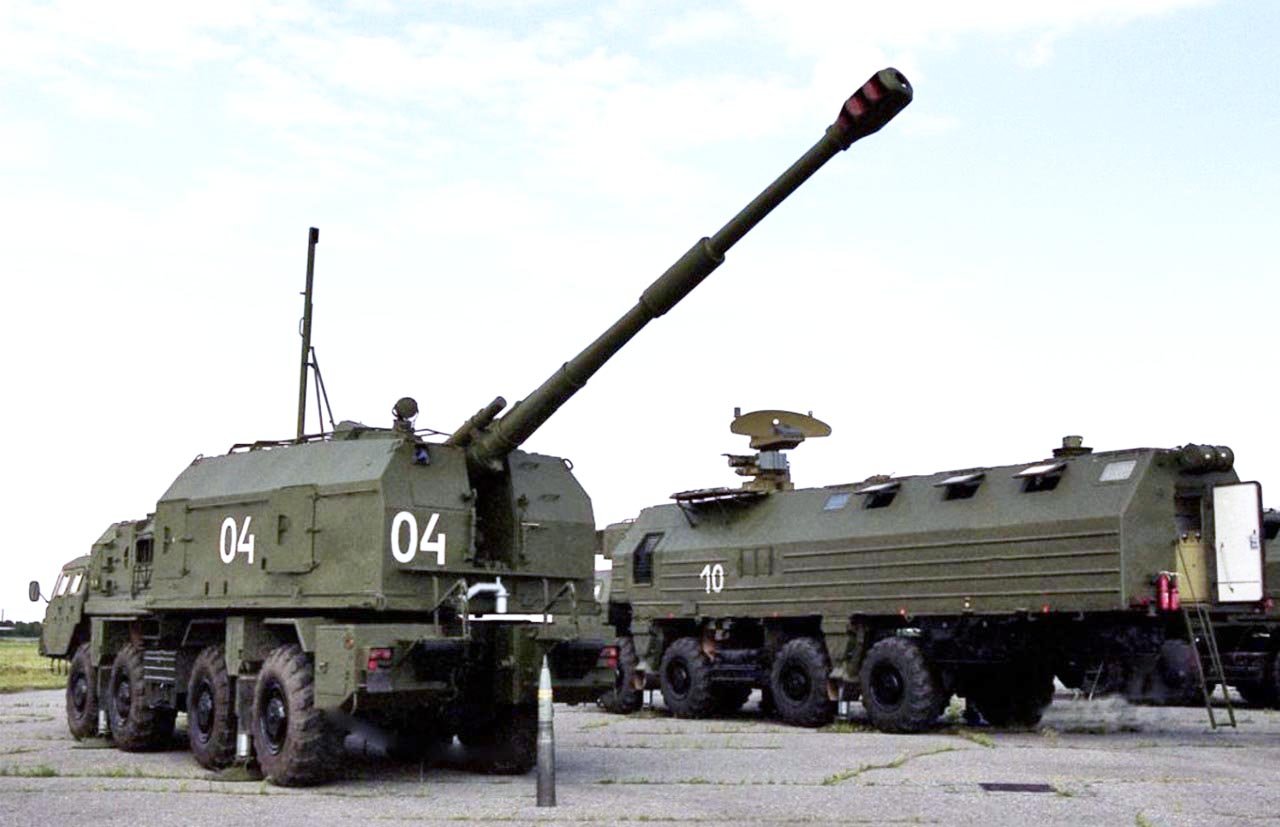
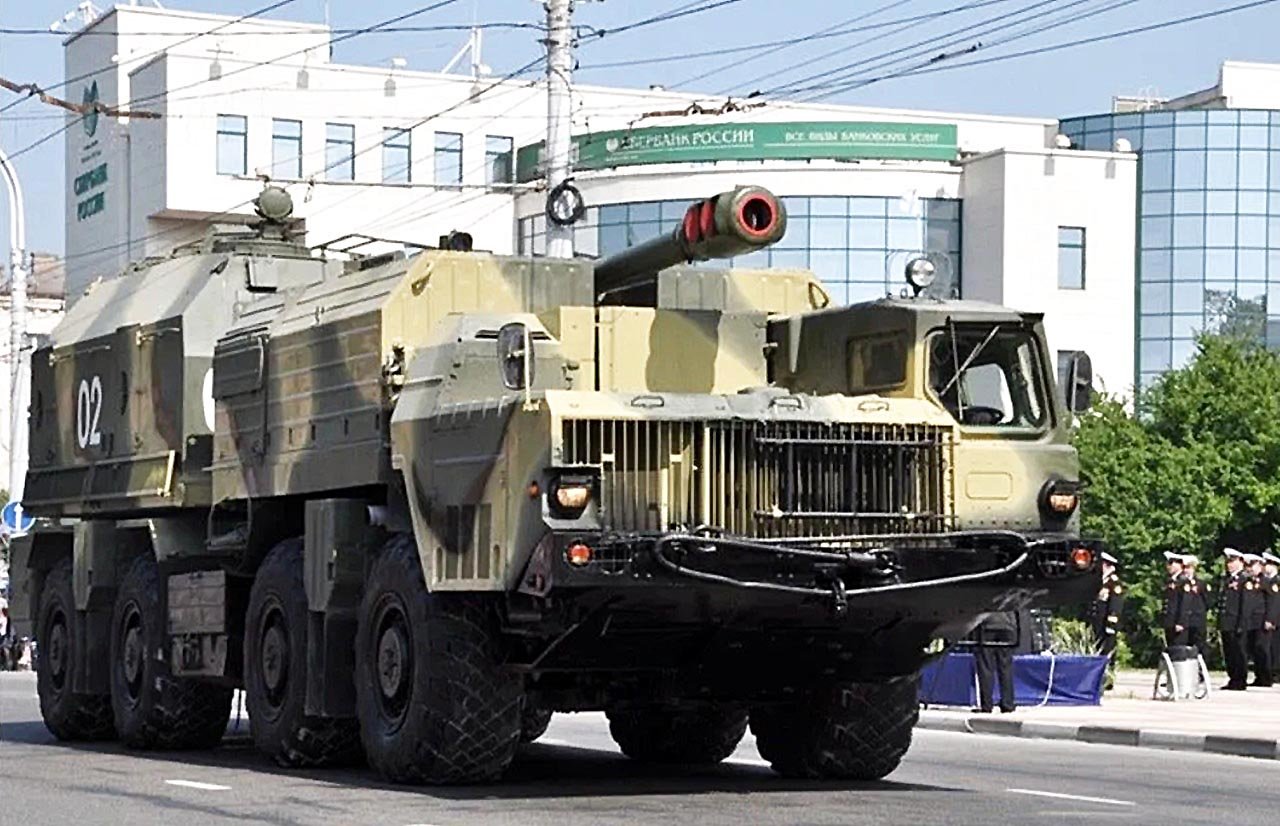
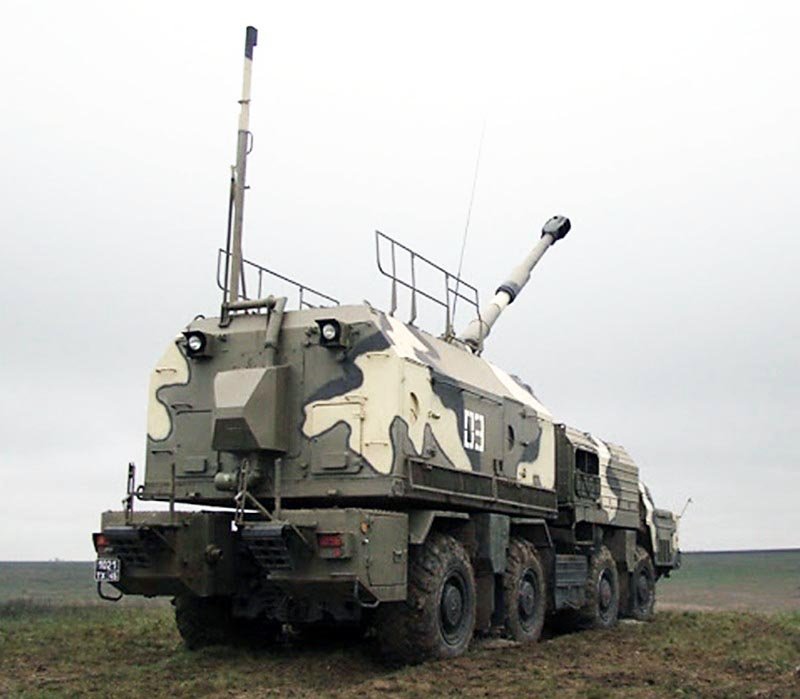
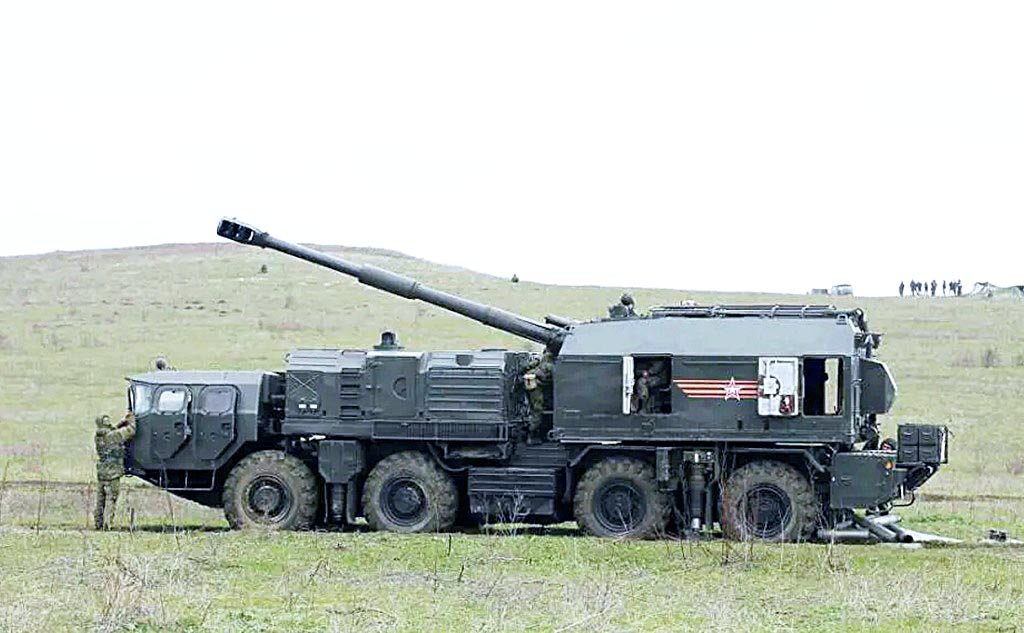
The firing unit is armed with a rifled 130/55mm naval gun mounted in a rotating turret on the rear of the 8×8 MAZ-543M chassis. This huge vehicle, nearly 13 meters long and weighing 43.7 tons, carries a crew of eight. It is powered by a 525 hp D12A-525A V12 diesel engine, giving it a top speed of 60 km/h and a road range of 650 km. The drive configuration is selectable between 8×8 and 8×4, with the first two axles being driven, and the vehicle can ford water up to 1.20 meters deep without preparation. The chassis is equipped with four retractable hydraulic stabilizers, two on each side between axes 1 and 2 and axes 3 and 4, which provide stability during firing. At the front left is a small cab where the driver-mechanic and the commander sit during travel. To the right of the cab are the engine and transmission.
bereg23
The massive turret has six combat positions for the commander, gun layer, and four loaders. It has an internal insulating lining and is equipped with life support and fire-extinguishing systems, but it is not armored. It also has an NBC threat warning system, like the other battery components, and a fan to vent the gases generated by firing. Inside, it houses two stowage racks with a total of 40 solid rounds for immediate use. The commander’s station has a control unit that manages all the gun’s systems and includes an optoelectronic vision device with a night vision channel, a ballistic data computer, and a quantum rangefinder. It also has a radio set, an internal and external line voice communication system, and lighting, heating, and ventilation systems.
bereg15
The gunner’s station is equipped with an optical sight, an intercom system, a light signal unit, and a lighting system. The stations for two front loaders are arranged symmetrically near the round feed trays around the gun bore axis. The stations for the rear loaders are arranged near ammunition storage racks and their loading gear. In front of the turret and behind the cabin is a compartment with a generator that powers the turret’s traverse and gun´s elevation systems and another generator that powers the stabilizers and other vehicle´s systems.
bereg19
The 130/55mm gun is directly derived from the AK-130 naval gun installed on destroyers and cruisers such as the Kirov class nuclear-powered cruisers. This gun has a semi-automatic loading system that allows a maximum rate of fire of 12 rounds per minute. The gun is stowed facing forwards but fires over the rear arc, and has a traverse of -120° to +120° relative to the longitudinal axis of the vehicle and an elevation of -5° to +50°. The gun can be aimed automatically using coordinates sent by the Central Station or independently using the sights and vision elements mounted on the vehicle, including a laser range-finder. The maximum range is 23 km, although the effective range is 20 km. It takes 1 to 2 minutes to reach firing position, but a full battery takes a minimum of 3 minutes to be ready to fire its first shot.
bereg8
The A-222 Bereg artillery system is equipped with several types of high-explosive (HE) ammunition, as well as training and specialized rounds. There are two anti-aircraft HE rounds, designated “A3-UZS-44” and “A3-UZS-44R,” which carry a 3.56 kg warhead and have a muzzle velocity of 850 m/s. For naval and land targets, it uses the “A3-UF-44” HE round, which carries a 3.55 kg warhead and also has a muzzle velocity of 850 m/s. These three rounds weigh 52.8 kg and are the only ones with destructive or combat capabilities.
bereg9
In addition, it has three types of training rounds designated “A3-UCH-44,” “A3-UPS-44,” and “UC-44,” and two other rather curious types of special rounds. These are a “discharge” round designated “A3-UZhR-44,” weighing 19.2 kg, whose purpose is to unclog the barrel if a projectile becomes stuck inside, and a “warm-up” round designated “A3-UZhP-44,” weighing 14.1 kg, whose purpose is to remove any remaining preservatives from inside the barrel, warm it up before firing, and prevent ice formation at sub-zero temperatures.
bereg13
Although the design of the A-222 Bereg system dates back to 1976, its development was prolonged until 1992, when testing of the prototype built in 1988 was completed. The first Bereg systems enter service in 1996, although the first unit was not ready for combat until 2003. Despite being offered for export, only 36 self-propelled guns and an unknown number of Control Stations and MOBD support vehicles have been manufactured for the Russian Navy. All Bereg systems are integrated into the 11th Independent Coastal Missile-Artillery Brigade, based in Anapa, Krasnodar Krai, belonging to the Black Sea Fleet.
bereg14
No variants of the A-222 Bereg system have been built, although in recent years some media outlets have reported that Russia has begun modernizing it under designation “A-222M Bereg”. The main upgrade involves replacing the 130mm gun with a 152mm gun. The primary reasons for the modernization are the 130mm gun’s limited range compared to modern standards and the shortage of ammunition for this caliber, as the Russian armed forces are currently reactivating older 130mm M-46 guns that were in storage due to the needs arising from the war in Ukraine. According to some Russian media outlets, with the installation of the 152mm gun, the new A-222M Bereg can use precision-guided munitions such as the Krasnopol round and engage targets at a range of 50 km.
bereg22
In March 2024, there were rumors that some A-222 Beregs were going to be transferred to a new unit called “Dnieper River Flotilla”, created in the wake of the 2022 Ukrainian War, but it seems that these vehicles were ultimately not transferred. Again in May 2025, it was reported that modernized A-222M Bereg systems were to be transferred to the Pacific Fleet, without further details. The report clarified, however, that this did not mean these vehicles would be deployed to the Far East, and that Pacific Fleet units had already seen combat in the Ukrainian conflict. It also indicated the possibility that these artillery systems could be used against the increasing number of Ukrainian naval drone attacks in coastal areas.

Related posts