Photogaleries

BISMARCK class gallery 4
bismarck-hmsmaoriin1939
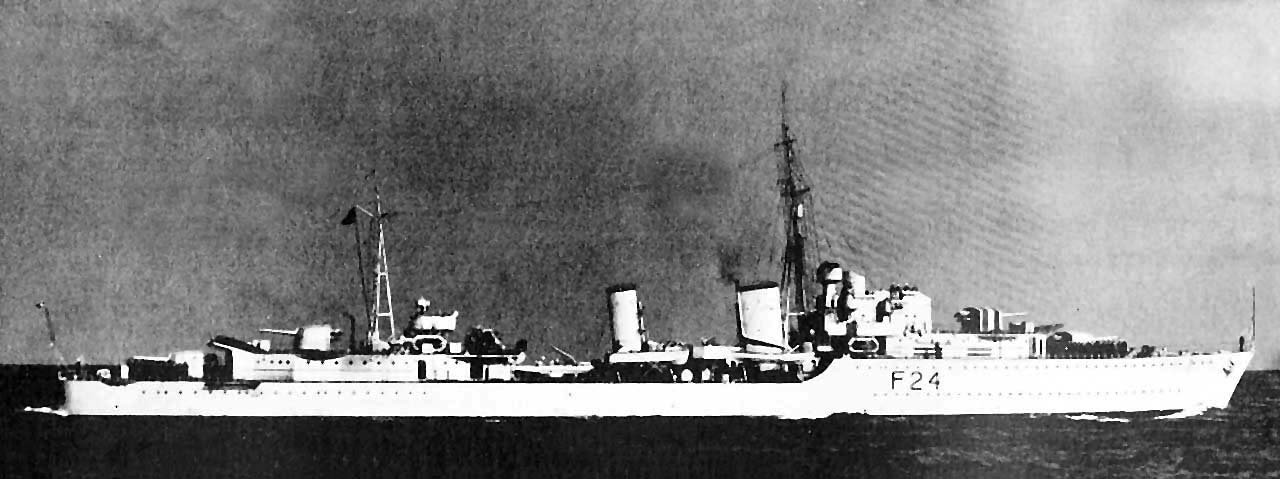
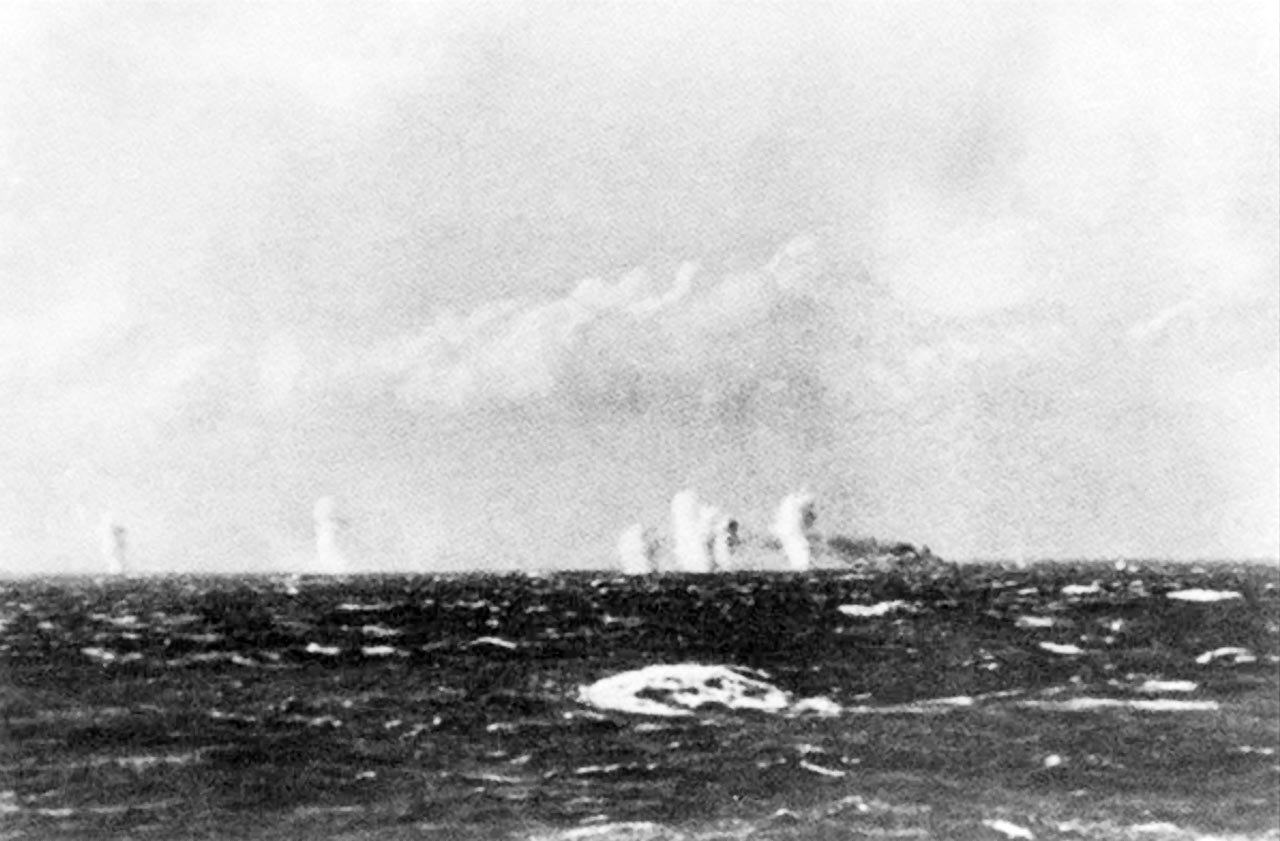
(HMS Maori destroyer image). At 22:38, a flotilla of five destroyers, (HMS Cossack, HMS Maori, HMS Sikh, HMS Zulu and Piorun), under Admiral Vian approached the Bismarck to within approximately 13,000 meters, but were attacked with 380mm gun fire, forcing them to withdraw. The Polish destroyer Piorun closed to within 12,000 meters before a near miss forced it to retreat. The Bismarck was sailing at a speed of between 6 and 10 knots, using its propellers for steering in an attempt to escape. During the early morning of May 27, Vian’s destroyers launched attacks in pairs or individually, firing 16 torpedoes at ranges of 3,000 to 8,000 meters under accurate defensive fire from the Bismarck, which caused some damage to a few destroyers. The attacks were unsuccessful, but contact was maintained throughout the night and the destroyers periodically fired star shells to mark the German position and prevent the battleships HMS King George V and HMS Rodney from inadvertently contacting the Bismarck during the night.
bismarckunderfire27541
(Bismarck under British fire image). At 07:53, Bismarck was sailing erratically at 12 knots when it was spotted from 15,000 meters by the cruiser HMS Norfolk, which reported its position to Admiral Tovey. Shortly before 08:30, the battleships HMS Rodney and HMS King George V were within sight of the Bismarck off its port bow, and battle stations were sounded on board. The engagement began at 08:47 when HMS Rodney fired the first salvo, followed at 08:48 by HMS King George V from a distance of between 18,000 and 20,000 meters. The Bismarck chose HMS Rodney as its target and opened fire at 08:49, achieving a straddle on the third salvo. However, the British battleships continued to approach, firing a hail of shells at the Bismarck, which, although they did not manage to sink her, left her completely defenseless.
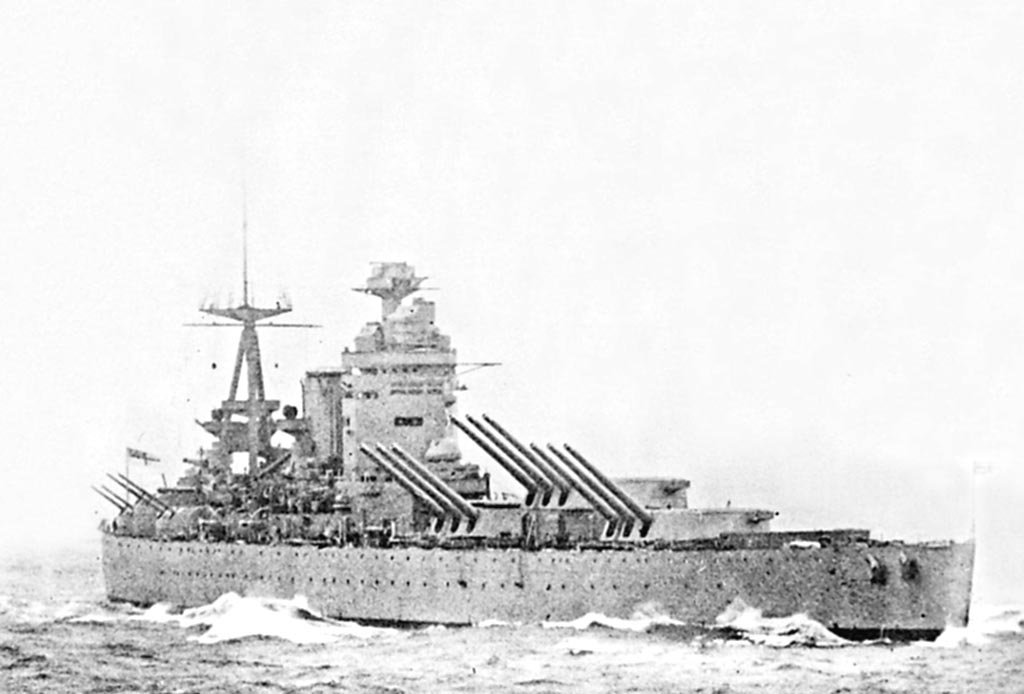
bismarck-hmsrodney6
(HMS Rodney battleship image). The Bismarck’s main armor belt was not penetrated by the British battleships’ main battery fire, even at ranges closer than 2,400 meters. Perhaps the reason was the close range of the engagement; however, the upper citadel belt was pierced many times by 203mm, 356mm, and 406mm shells. HMS Rodney fired almost the entire engagement at ranges between 2,400 and 9,000 meters, having to aim its guns at maximum depression. The prolonged fire at low angles caused several of its guns to jump from their cradles, and many shells hit the water’s surface and ricocheted, losing much speed and energy before impact. The Bismarck continued fighting fiercely until 09:31, when its main battery fell silent. At 10:14 HMS Rodney fired her last salvo and HMS King George V did the same at 10:22, ceasing gunfire upon realizing that it was impossible to sink the Bismarck with guns. Shortly after the cruiser HMS Dorsetshire was ordered to sink her with torpedoes, and although it achieved two confirmed hits, this did not result in the sinking of the German colossus either.
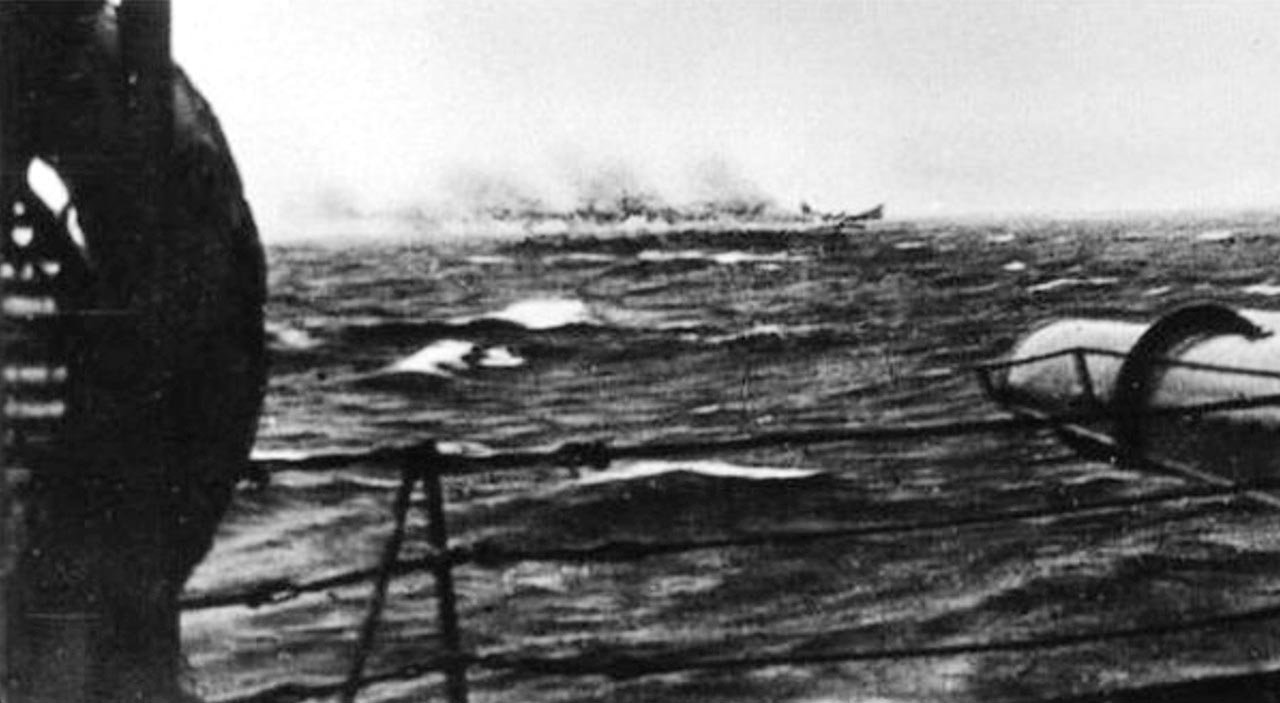
bismarcksinking
(Bismarck sinking image). The entire gunnery engagement lasted one hour and 35 minutes. HMS Rodney fired 380 406mm and 716 152mm shells, HMS King George V fired 339 356mm and 660 134mm shells, HMS Norfolk fired 527 203mm shells, and HMS Dorsetshire fired 254 203mm shells. The total amounted to 2,876 shells, of which between 300 and 400 impacted, and transformed the Bismarck into a gigantic wreck and forced Commander Hans Öels, the executive officer, to assume command and order at 10:00 that charges be placed to scuttle the ship (Measure V), since at that time the main and secondary batteries had been silenced by the British warships. The charges were placed in the condenser intakes and sea chests in the engine room, the starboard engine room and boiler rooms, and all the watertight doors in these spaces were opened, including the one to the shaft alley. The charges detonated around 10:20, she capsized slowly and sank by the stern, with her bow dissapearing around 10:40.
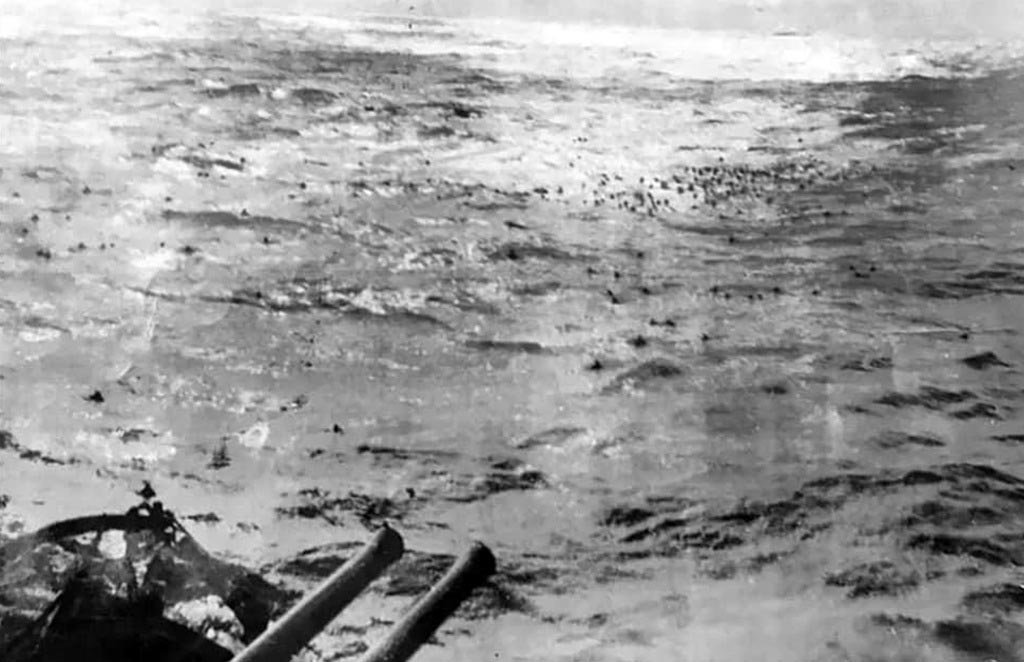
bismarckaftermath
(Bismarck’s survivors at sea image). After the sinking, between 500 and 600 crew members were left in the water, but British ships did not immediately approach to rescue them after detecting a submarine in the area. Ultimately, only 115 crew members of the Bismarck were rescued: 25 by the destroyer HMS Maori, 85 by the cruiser HMS Dorsetshire, 2 by a German trawler, and 3 by a German U-boat. One of those rescued by HMS Dorsetshire died from his injuries on May 28, bringing the death toll to 2,211. The Spanish cruiser Canarias searched for survivors the day after the battle but found no one. The loss of the Bismarck was the biggest blow suffered by the Kriegsmarine until that date, and worst of all, it changed Hitler’s attitude toward German naval strategy. From this moment on, the Kriegsmarine played a minimal role in Germany’s strategy and its use was practically insubstantial in the course of the war.
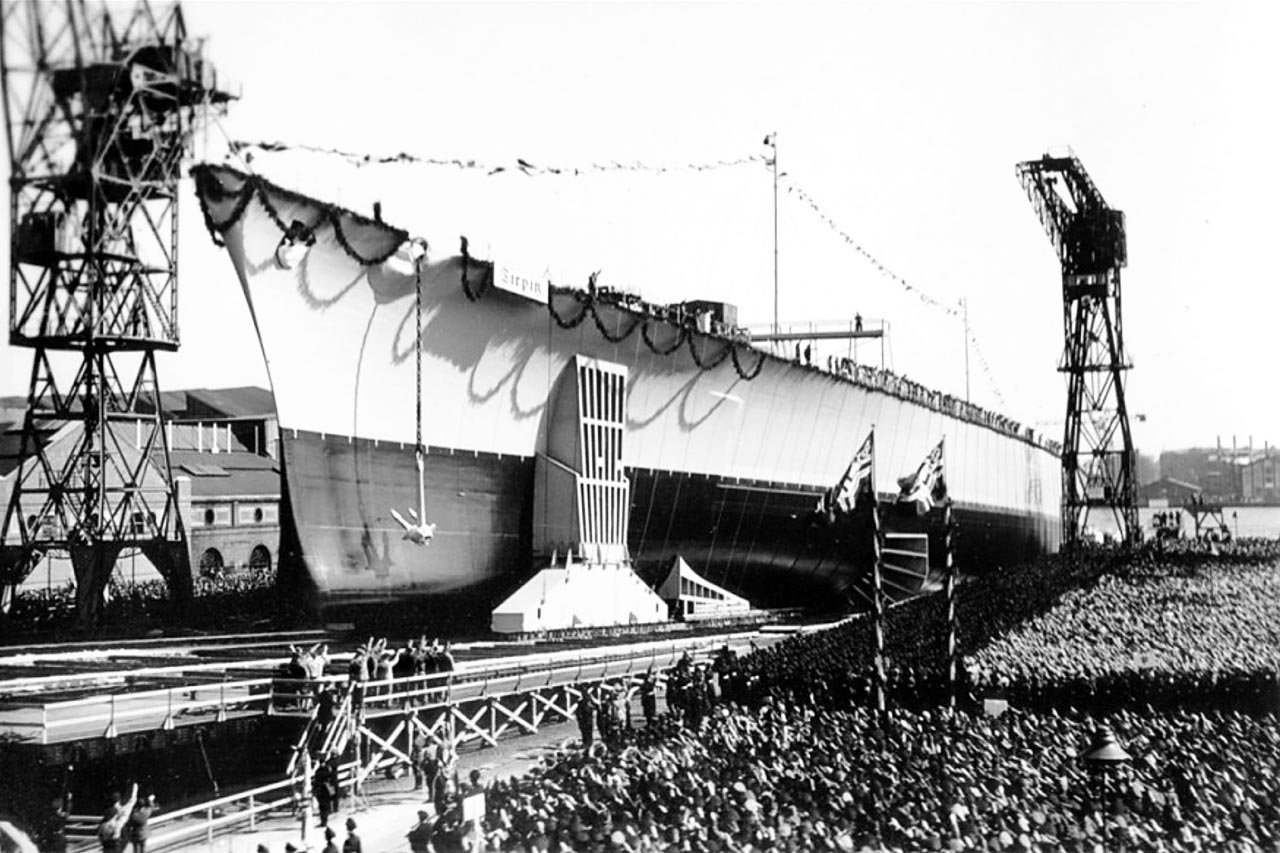
tirpitz66
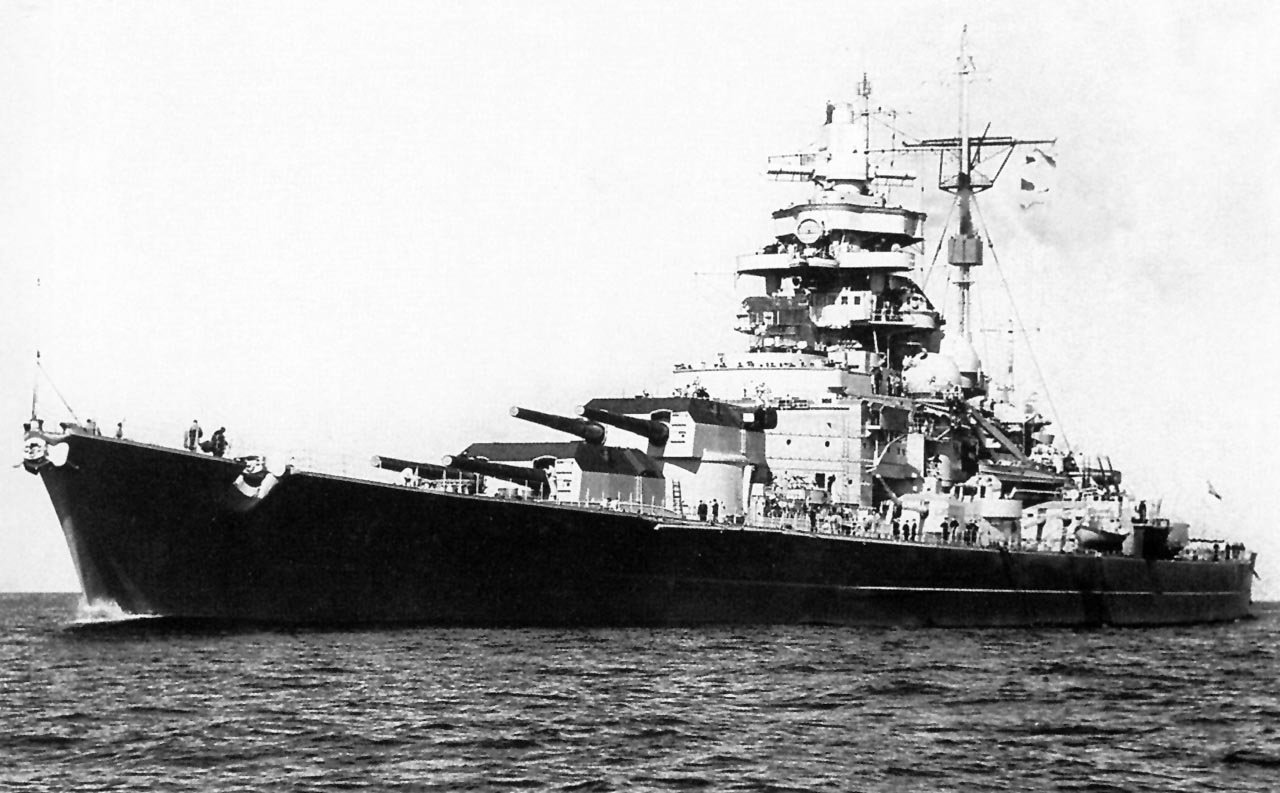
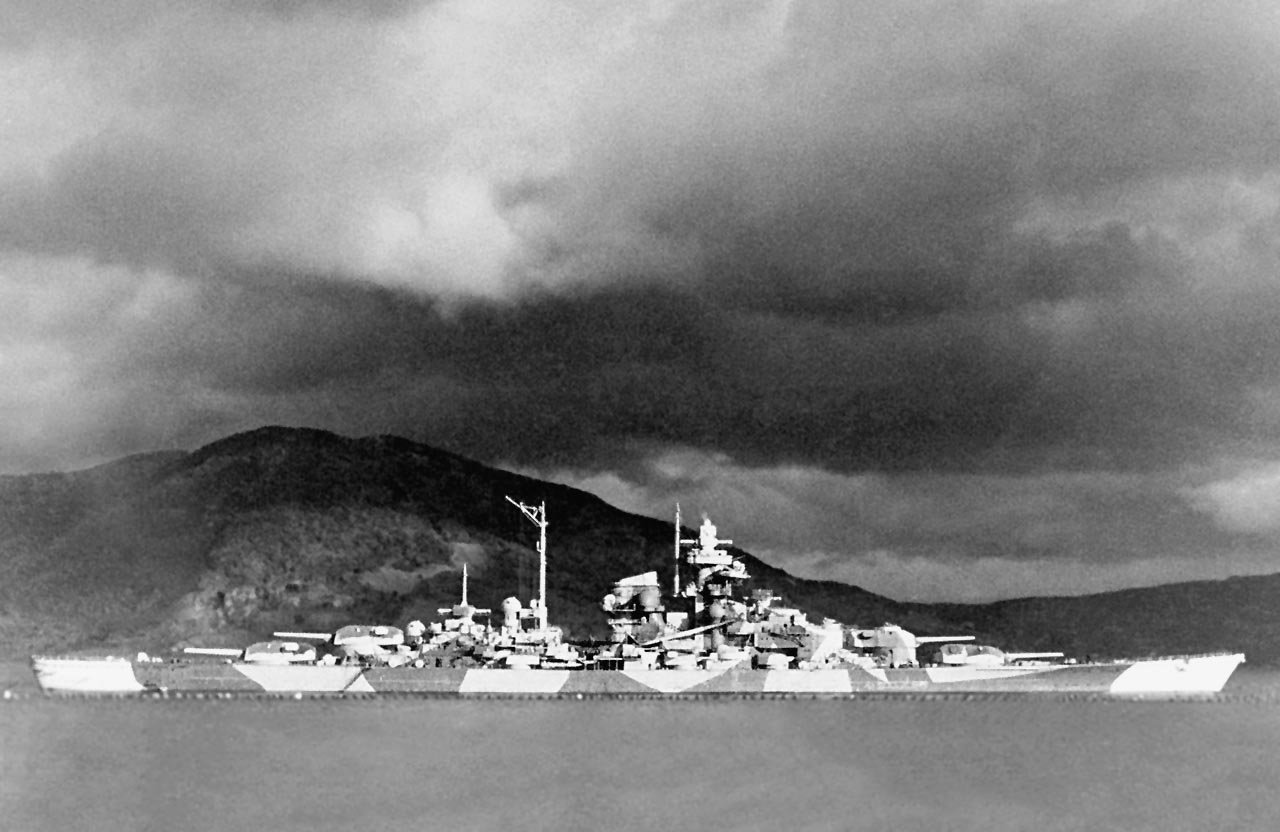
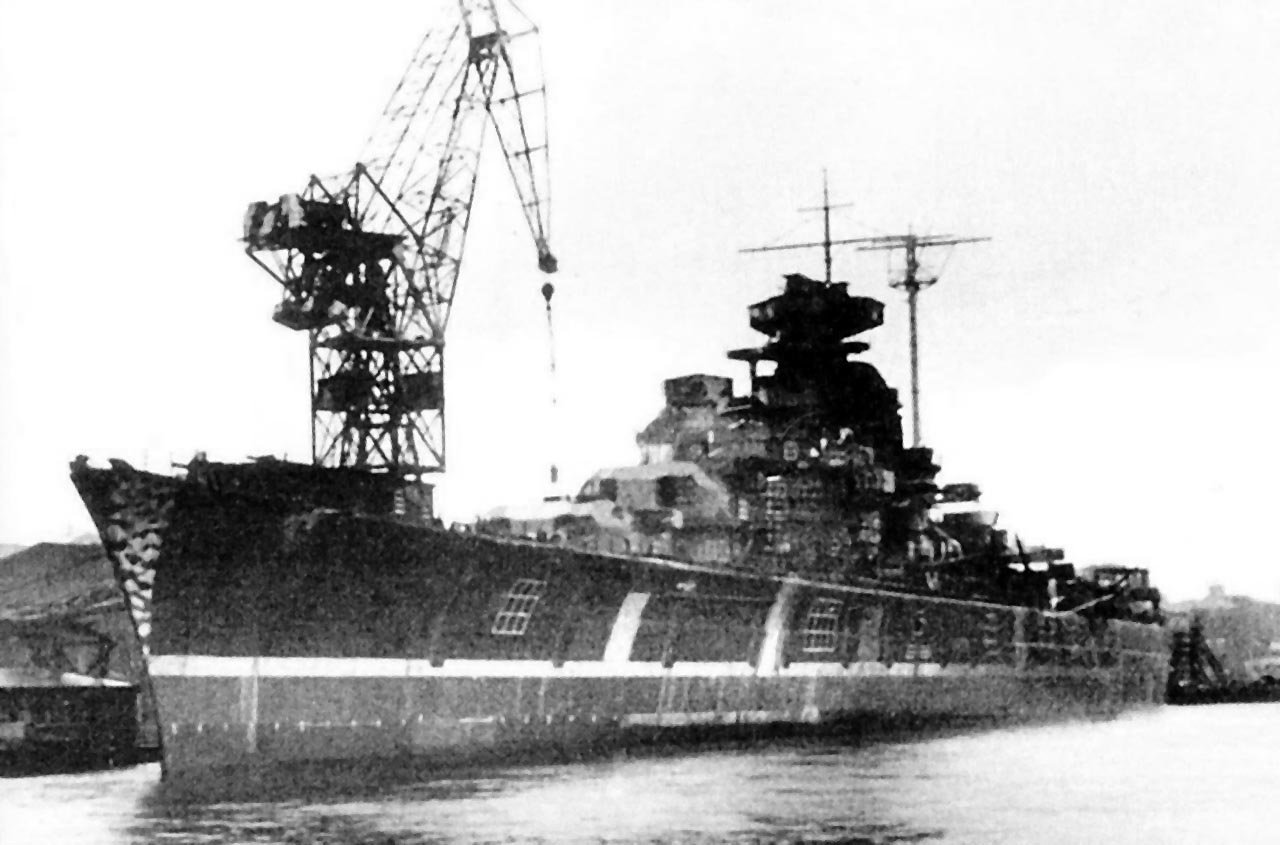
(Tirpitz image). The battleship Tirpitz was built at the Kriegsmarinewerft shipyard in Wilhelmshaven, laid down on November 2, 1936, and launched on April 1, 1939. Twenty two months later, on February 25, 1941, it was commissioned into the Kriegsmarine. During construction in Wilhelmshaven, the Tirpitz was bombed on several occasions by a total of 1,042 British bombers that dropped about 670 tons of bombs, which, although they did not hit the ship, delayed its completion. On March 9, 1941, the Tirpitz sailed for Kiel, and on March 16, it began its sea trials in Danzig Bay and the Baltic Sea. The training and testing period lasted until July 20, with much of it taking place at the Kiel naval dockyard, safe from air raids.
tirpitz2
(Tirpitz image). The Tirpitz’s first mission was to serve as the flagship of the German Baltic Fleet during Operation Barbarossa (the invasion of the Soviet Union) and to establish a blockade to prevent Soviet Navy ships from entering neutral Swedish ports. This mission took place from September 23 to 26, 1941, after which she continued its training in the Baltic. The Tirpitz was unable to participate in Operation Rheinübung in May 1941 alongside her sister ship, the Bismarck, because she had just been commissioned into the Kriegsmarine and was not prepared for a mission of that magnitude. Unfortunately for Tirpitz, the sinking of the Bismarck led Hitler to prohibit all voyages to the Atlantic, and its area of ​​operations was restricted to the calmer waters of Norway and the Baltic.
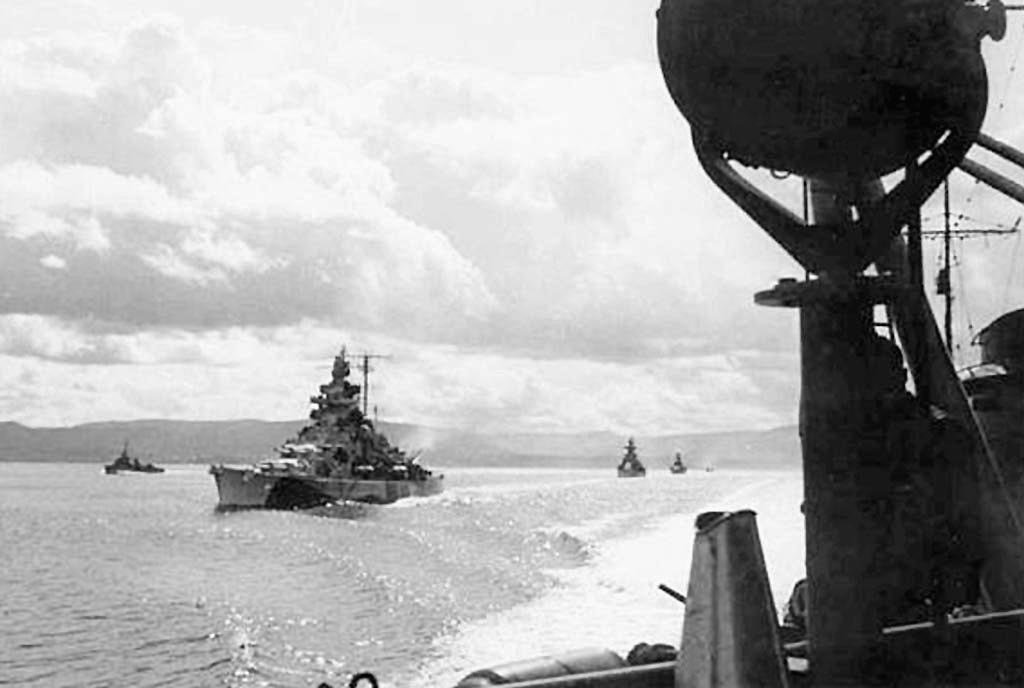
tirpitz32
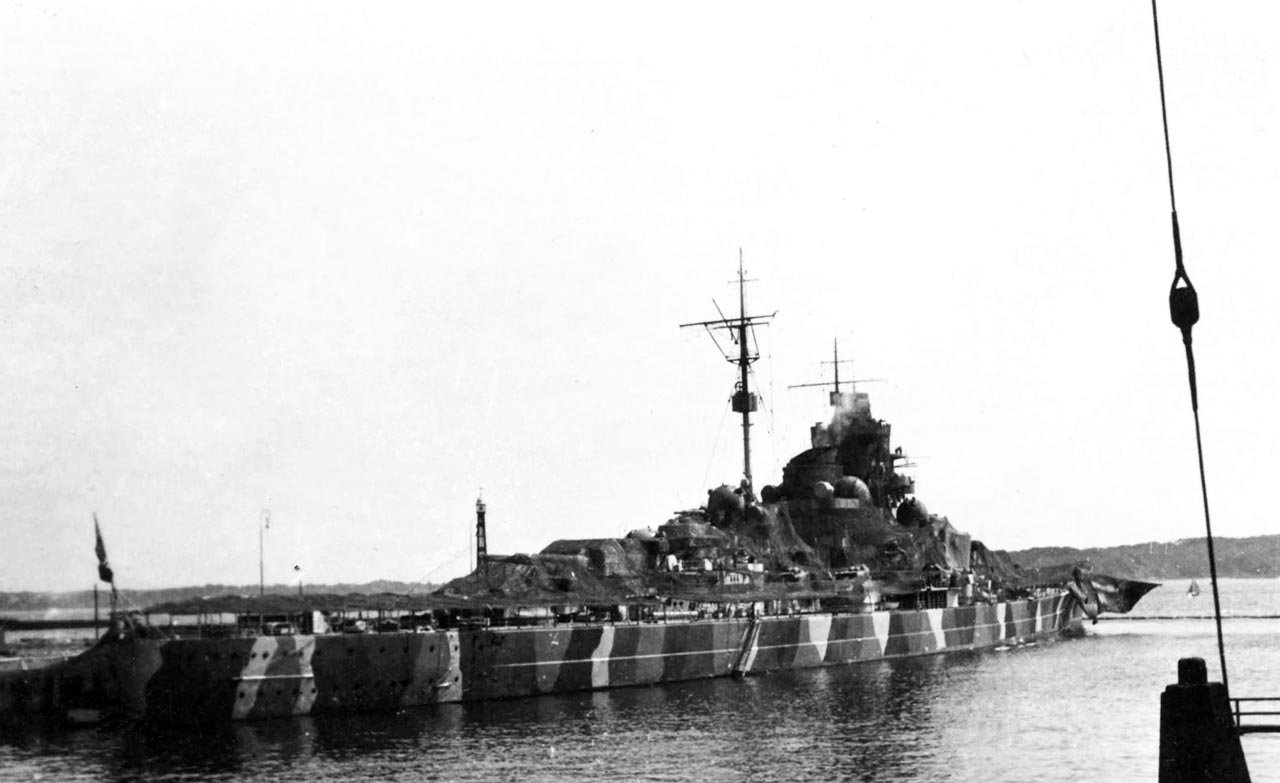
(Tirpitz image). On November 13, 1941, the battleship Tirpitz was sent to the Gdynia dockyard to prepare for a sortie to Norway, from where it could attack convoys bound for Russia. Its 20mm anti-aircraft armament was increased to 61 guns, and two quadruple 533mm torpedo tubes were installed to attack merchant ships. Two of the twin 105mm gun mounts were also moved to improve their firing arcs, and the aircraft cranes were relocated inboard. On January 11, 1942, it “officially” sailed for Wilhelmshaven, but this was a ruse to conceal its true destination, which was Trondheim in Norway. Actually, Hitler feared a possible Allied invasion of Norway and believed that having the Tirpitz there would dissuade raids by the Royal Navy. In addition, he used it as “fleet-in-being,” a concept that means that the mere presence of a ship in port forces its enemies to maintain a force always ready in case the ship puts to sea.
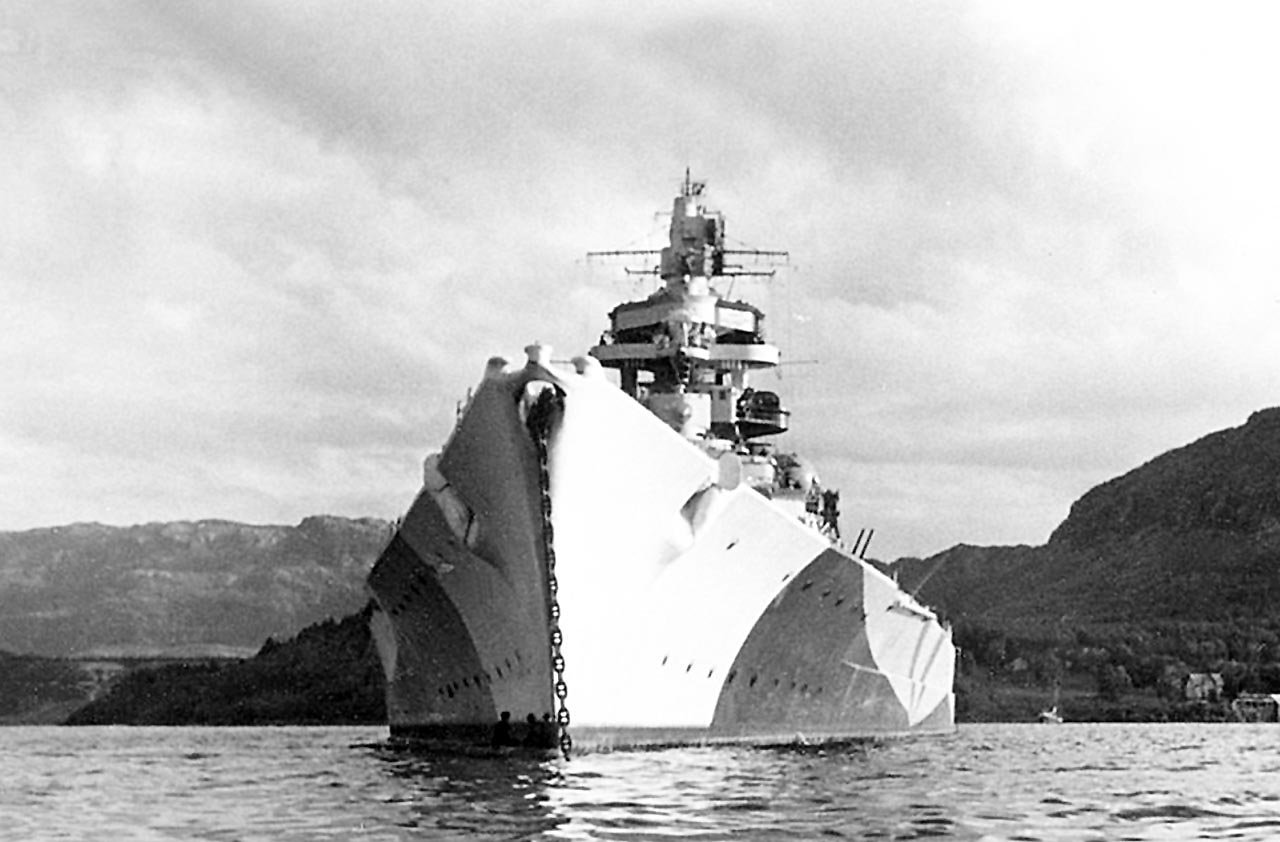
tirpitz53
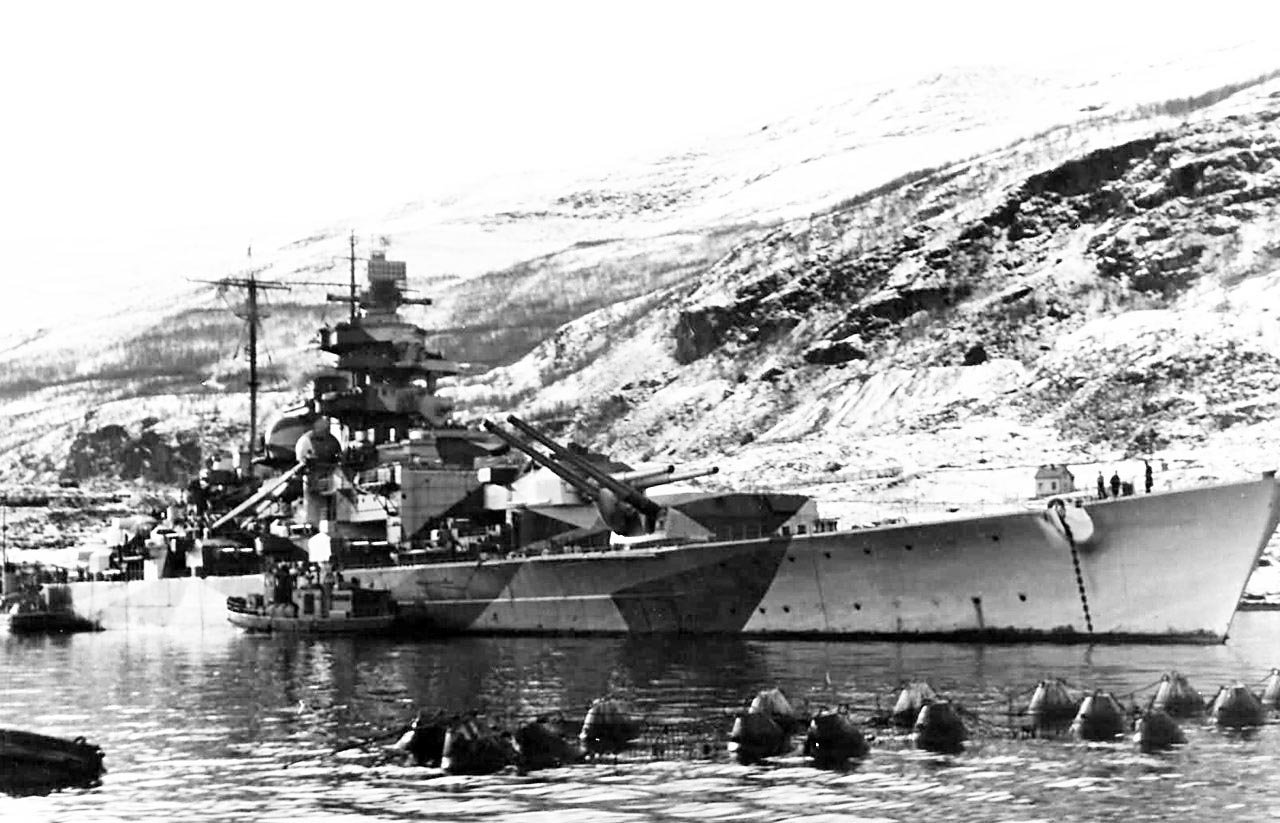
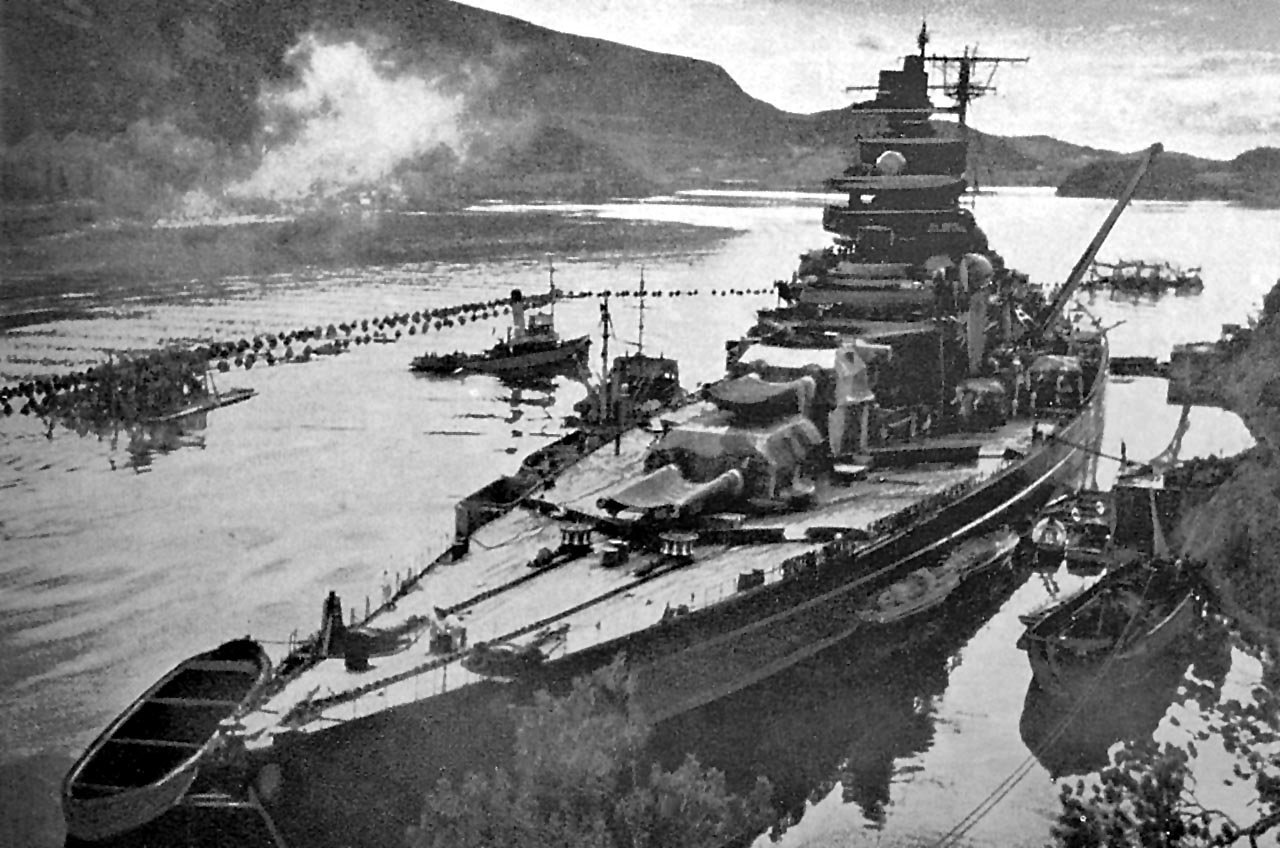
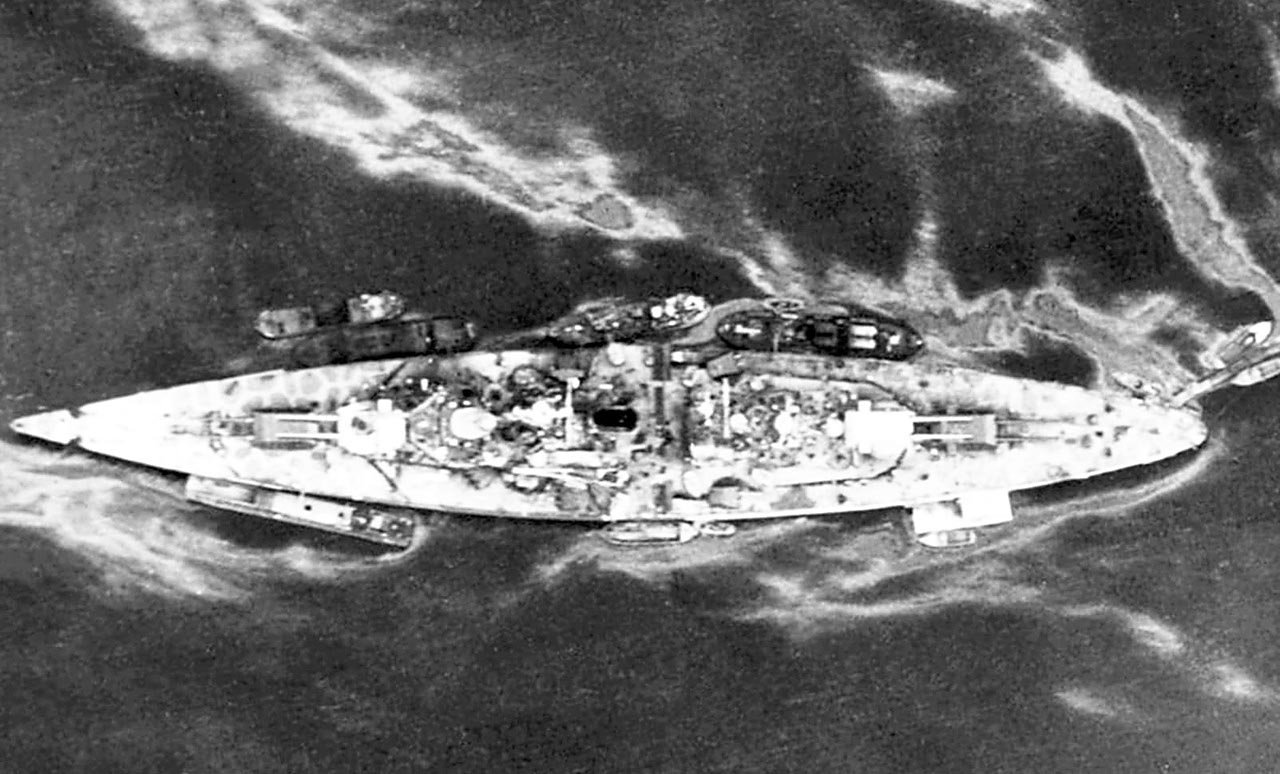
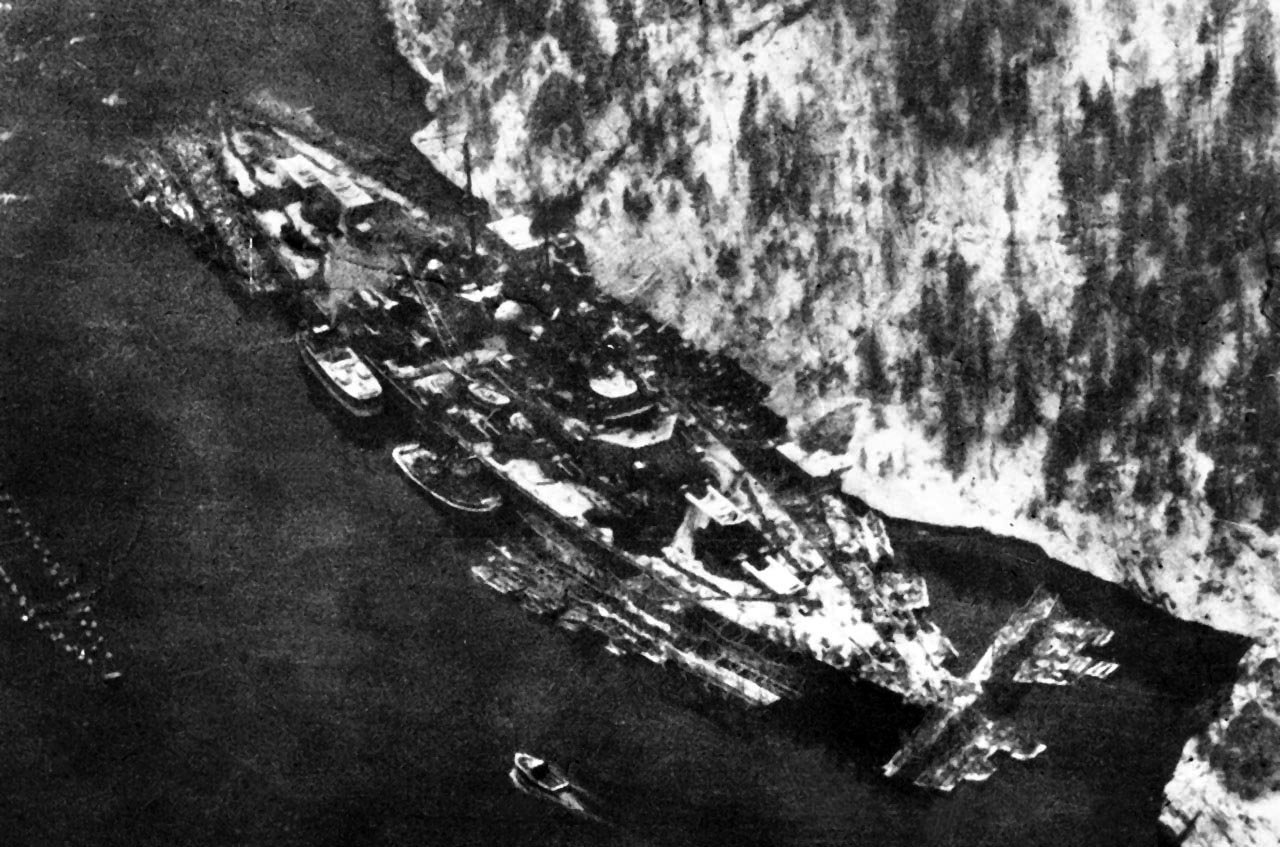
(Tirpitz at Fottenfjord image). On January 16, Tirpitz was discovered by reconnaissance aircraft anchored in Trondheim, although it was soon located in Fottenfjord, a fjord north of Trondheim. This new location was nestled among cliffs that protected the ship from bombing raids from the southwest. Furthermore, the cliffs were overgrown with trees, some of which were cut down and used to camouflage the ship itself. During her stay here, from January 16 to March 5, Tirpitz was overflown three times by Spitfire reconnaissance aircraft, but it was not attacked.
bismarck-admiralscheer18
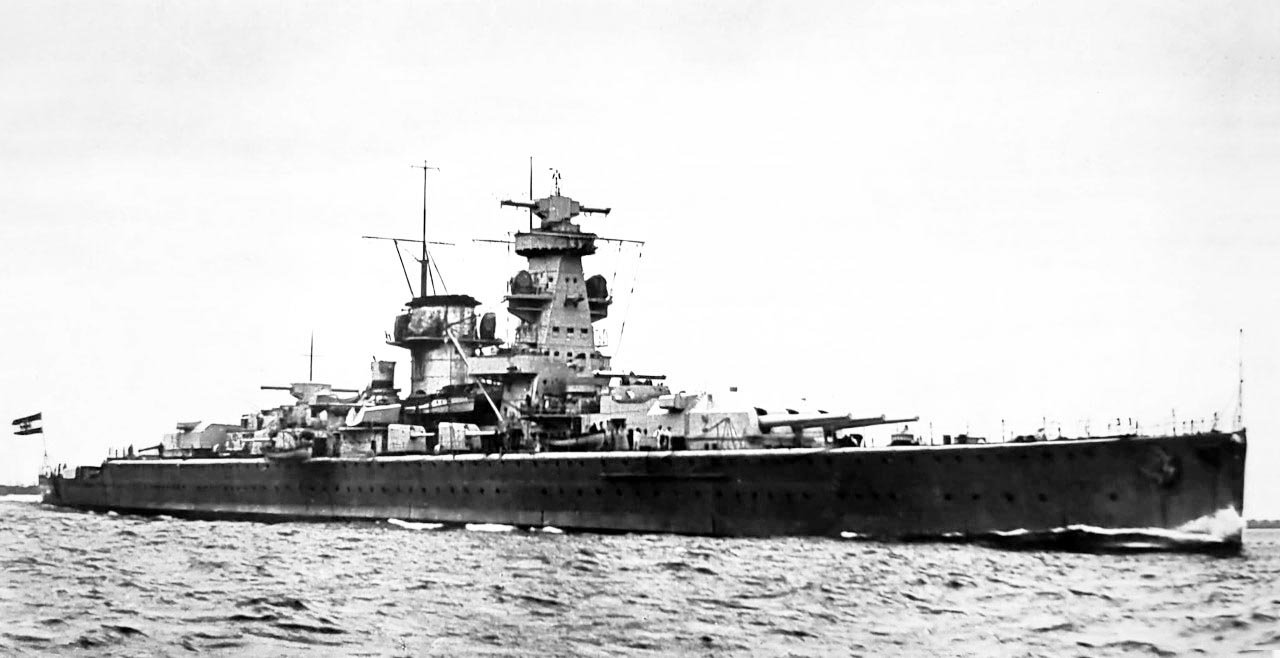
(Admiral Scheer battleship image). On March 4, Group North requested that the Tirpitz, along with the pocket battleship Admiral Scheer and three destroyers, attack convoys QP-8 and PQ-12. Ultimately, only the Tirpitz and three destroyers proceeded with the mission, and on March 5, a German aircraft detected convoy PQ-12 near Jan Mayen Island. This convoy was closely escorted by the battleship HMS Duke of York, the battlecruiser HMS Renown, and six destroyers, while another force consisting of the battleship HMS King George V, the heavy cruiser HMS Berwick, the aircraft carrier HMS Victorious, and six destroyers followed the convoy approximately 100 miles behind. On March 6, the German ships were detected by the submarine HMS Seawolf, which radioed their position to the Admiralty. The two convoys were moved away from the area because the British knew the operational orders of the Tirpitz thanks to Ultra (British military intelligence) being able to decrypt German messages.
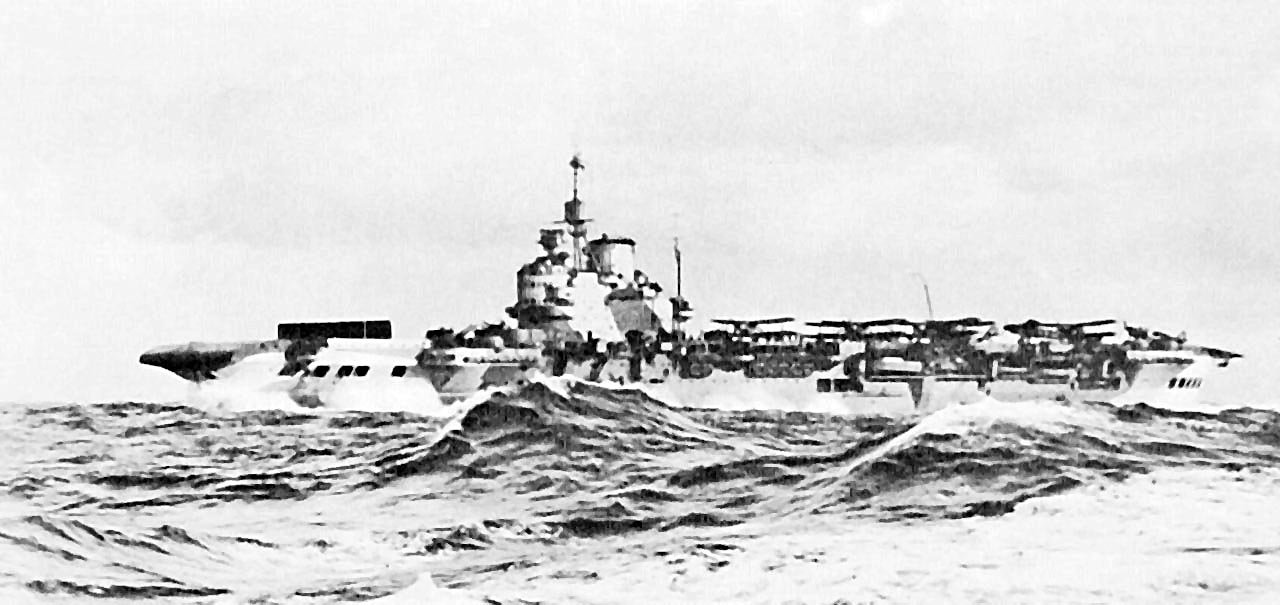
bismarck-hmsvictorious3
(HMS Victorious image). On March 7 at 16:32, the German destroyer Z-25 sank the Russian merchant ship Ijora, which had fallen behind convoy QP-8. Before sinking, the merchant ship sent an SOS, and British Admiral Tovey dispatched his six escort destroyers to the area to intercept the Tirpitz, though without success. On March 8 at 17:30, Admiral Tovey ordered an air attack to be prepared from HMS Victorious for March 9 after Ultra alerted authorities that Tirpitz was still sailing within range of British torpedo bombers. Meanwhile, aboard the Tirpitz, German Admiral Ciliax decided to return to base and at 02:40 on March 9 was heading south for Trondheim. At 06:40 reconnaissance aircraft took off from HMS Victorious and at 07:30 12 Albacore torpedo bombers took off to attack the Tirpitz, which was discovered by a reconnaissance aircraft at 08:02 about 75 miles west of the Lofoten Islands.
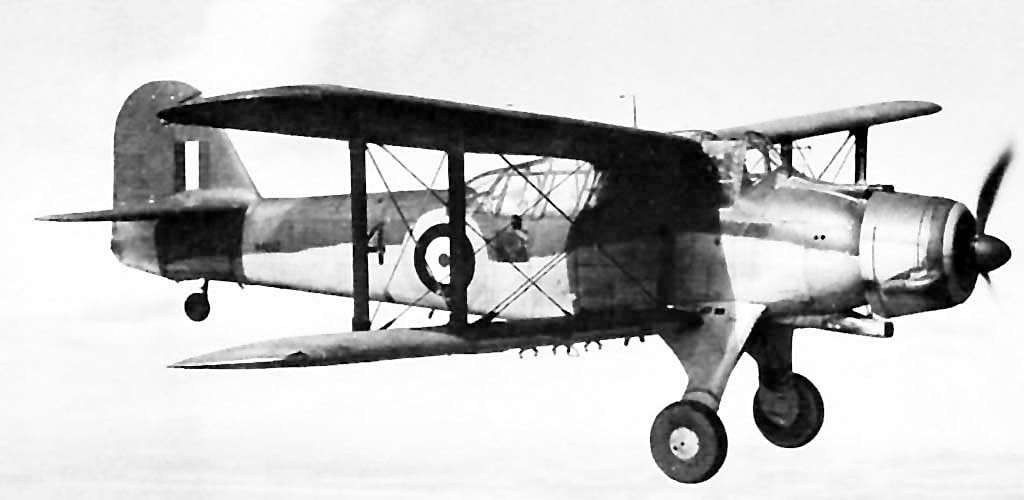
bismarck-albacore7
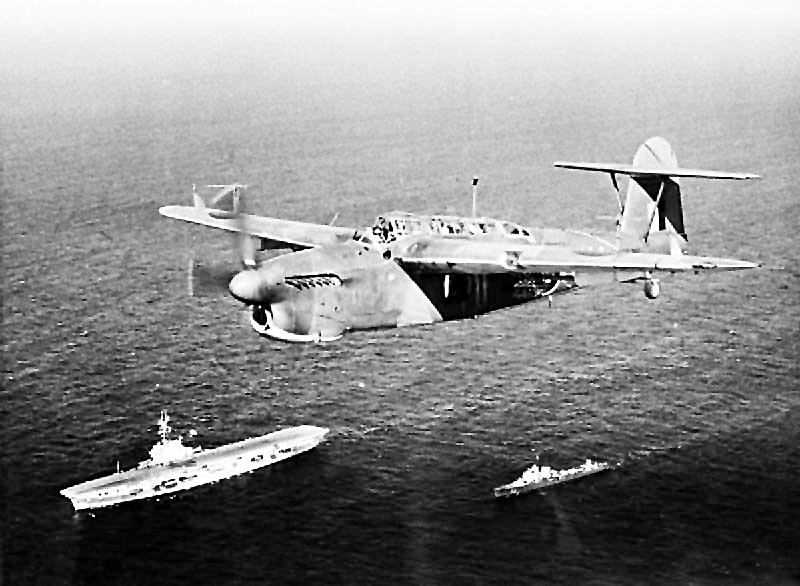
(Albacore torpedo bomber image). At 08:10 on March 9th, the Tirpitz located a British reconnaissance aircraft, and Admiral Ciliax headed for Vestfjord to seek safety. The torpedo bombers divided into three groups: two groups of three aircraft and one group of six, and began their attack. The torpedoes carried a 211 kg warhead, reached a speed of 40 knots, and had a depth setting of 7.60 meters. At 09:20, the first group launched its three torpedoes, and at 09:21, the second group launched its three torpedoes, none of which hit the Tirpitz. At 09:23, the last group of six Albacore torpedo bombers arrived on the starboard side and were met with intense fire from all of the Tirpitz’s guns except the 380mm. The torpedo bombers attacked in groups of two, flying about 80 meters above the sea, and two of them were shot down before they could launch their torpedoes. The other four Albacores launched their torpedoes, which missed their target by distances of between 10 and 20 meters. During their retreat, the Albacores strafed the deck of the Tirpitz, wounding three.
tirpitz42
(Tirpitz image). Tirpitz escaped unscathed from this attack and reached Vestfjord on the afternoon of March 9th, departing for Trondheim, where it arrived on March 13th at 21:00. The RAF attacked Tirpitz on March 30th and 31st, as well as on April 27th, 28th, and 29th, though unsuccessfully. In these attacks, they lost 12 Halifax bombers and one Lancaster bomber, and during these raids, air-dropped mines were dropped, landing in the trees and hills adjacent to Tirpitz’s anchorage. Fearing that these mines might land on the seabed and explode, the ship was fitted with seabed safety nets to prevent this possibility. The attack on March 9th meant that the Tirpitz would not be used in the future against any convoy escorted by aircraft carriers. In addition, during that failed mission, more than 8,000 tons of fuel were consumed, in a period of fuel restriction that prevented another new mission from being carried out at least until June.
tirpitaattackpq17
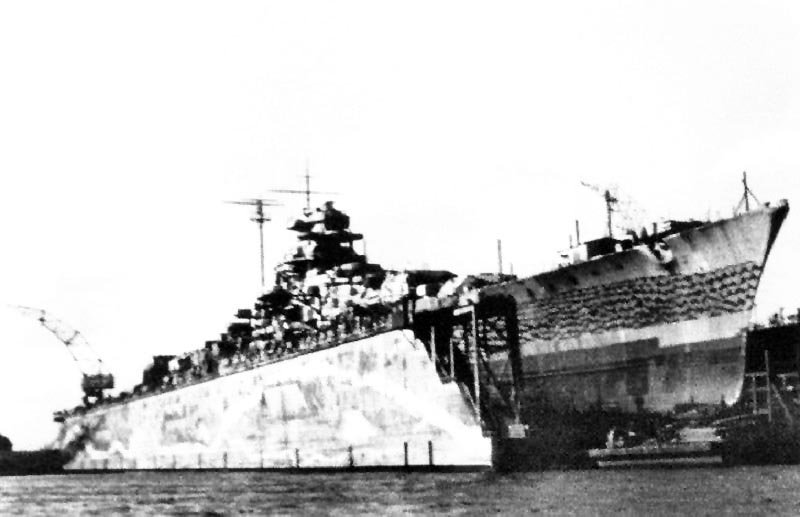
(Tirpitz to intercept convoy PQ-17 image). On June 27, 1942, the Tirpitz sailed from Trondheim along with the heavy cruiser Admiral Hipper and six destroyers to attack Convoy PQ-17, which had departed Iceland bound for Russia. However, on July 5, the German Admiralty canceled the mission due to suspicions that the German squadron had been spotted by the British. Convoy PQ-17 was attacked by the Luftwaffe and U-boats, which managed to sink 21 of the 34 defenseless merchant ships, as the convoy was dispersed by the British Admiralty shortly after the German ships set sail. During the summer, the Tirpitz was moved to Bogenfjord, near Narvik, and a refit was arranged in Norway, as Hitler forbade its return to Germany. On October 23, the ship returned to Foettenfjord, Trondheim, to carry out work in several phases that would not immobilize the Tirpitz for extended periods. Additional anti-aircraft defenses were installed in the harbor, along with smokepots and a double torpedo net around the ship. The main work consisted of replacing the boiler tubes and constructing a caisson to allow for the removal of the rudders.
tirpitz49
(Tirpitz image). The overhaul was completed in early January 1943, and gunnery trials began on January 4. The period of inactivity lasted until September 6, when, along with the battlecruiser Scharnhorst and 10 destroyers, it proceeded to bombard port facilities and coal mines located in Spitsbergen. On September 8, the Tirpitz was able to fire its 380mm guns for the first time against enemy targets, destroying all the intended targets. In August 1942, the British Admiralty decided to initiate a series of attacks to neutralise the main German warships using X-class midget submarines under the codename “Operation Source”. Each midget submarine carried two demolition charges consisting of 2 tons of Amatol explosive that were activated by a time fuse usually set to 60 minutes. On September 22,1943 at 05:00, three midget submarines (X-5, X-6, and X-7) attacked the Tirpitz, which was anchored in Kafjord, Alta. The X-6 managed to position itself below the Tirpitz at the level of the Bruno turret and deployed its two demolition charges under the keel, one under Turret Bruno, and the other forward of turret Caesar. The alarm sounded on the Tirpitz and all watertight doors closed at the same time as the X-6 went out of control and surfaced, where its crew decided to scuttle after been damaged by german grenades and small-arms fire.
bismarck-xmidget5
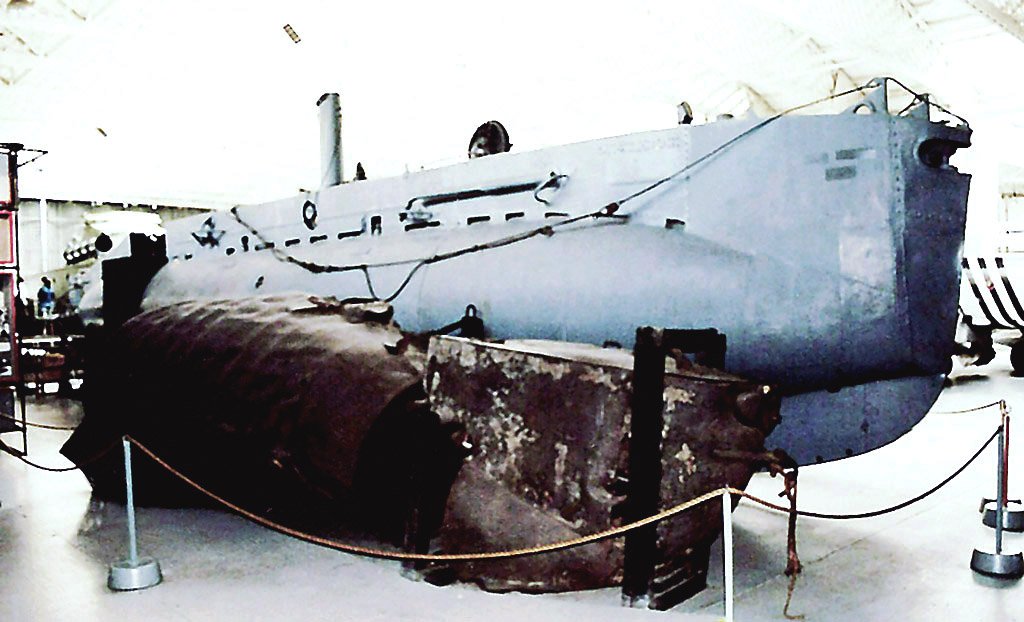
(X-7 midget submarine wreck (foreground) image). At 07:10, the midget submarine X-7 positioned itself beneath the Tirpitz from the port side and placed one of its demolition charges near Bruno turret and the other charge approximately 55-60 meters further back. Around 07:30, three demolition charges were in place beneath the Bruno turret at a depth of 30 meters, and a fourth charge was near the Caesar turret at a depth of 25 meters. Confusion reigned aboard the Tirpitz, and although Captain Hans Meyer desperately tried to move the ship away from the torpedo nets, the vessel’s boilers were shut down to conserve fuel, and restarting them would take at least 20 minutes, so there was little he could do to avert the impending disaster. At 07:40, the X-7 was spotted by the Germans as it attempted to escape and was attacked and sunk. The Germans were preparing divers to inspect the hull for limpet mines when, at 08:12, two simultaneous explosions in port caused the ship to vibrate violently vertically and sway slightly between the anchors. At 08:43, the midget submarine X-5 arrived in the area and surfaced about 200 meters from the torpedo nets. It was spotted and attacked by a destroyer with depth charges, and subsequently sunk due to the severe damage it sustained.
tirpitzataasfjord
(Tirpitz image). The explosions were of such magnitude that the bow and stern vibrated violently, producing a phenomenon technically known as “transient whipping”. The damage was equally enormous: anchor shackles were broken, mainmast plating was buckled, watertight doors jammed, a fuel oil tank ruptured, producing oil slicks, a large indentation (35 x 12 meters) in the underbottom, flooding in the fuel tanks, voids in the underwater protection system, and buckled inner bottom floors. Spaces such as the port rudder compartment, turbo generator room 2, and the after-machinery operating station were underwater, and others, such as the port engine room, the middle engine room, and the electrical switchboard room 2, were taking on water. The flooding was contained around 15:00 when the ship was listing to port one or two degrees and had taken on more than 1,400 tons of water. Most of the radar, radio, fire control, gunnery circuits, fire control computer for rangefinding and electrical equipment were damaged and required almost complete replacement, and most of the bolts in the machinery foundations were severed.
tirpitz27
(Tirpitz image). The Tirpitz’s armament was also severely damaged. The Dora turret, weighing approximately 2,000 tons, was lifted from its roller tracks and, upon falling, damaged its bearings, rendering it unable to rotate. This would prove a serious problem, as there were no cranes in Norway with sufficient capacity to lift it. The Bruno and Caesar turrets were also temporarily out of service. Several 105mm guns could only be operated manually due to the loss of their electric drives, and two Arado Ar-196 floatplanes were completely destroyed when they were thrown against the ship’s structure because they were not securely attached. The propulsion system was also damaged, with the bolts in the line bearings of all three shafts sheared, shafting cracked in several places, distortion of the turbine rotors and some fuel oil service piping and steam connections severed, making it impossible for the Tirpitz to navigate under its own power. Furthermore, the steering gear was also damaged, the shell plating of the port rudder trunk was ruptured, the rudder shaft bent, and the port rudder structure damaged. It can be said that the British midget submarines did an excellent job, as the Tirpitz would remain in dry dock for the next 6 months.
bismarck-neumark2
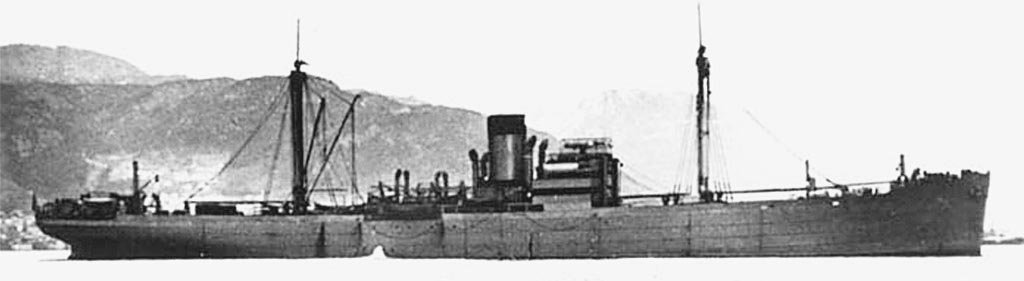
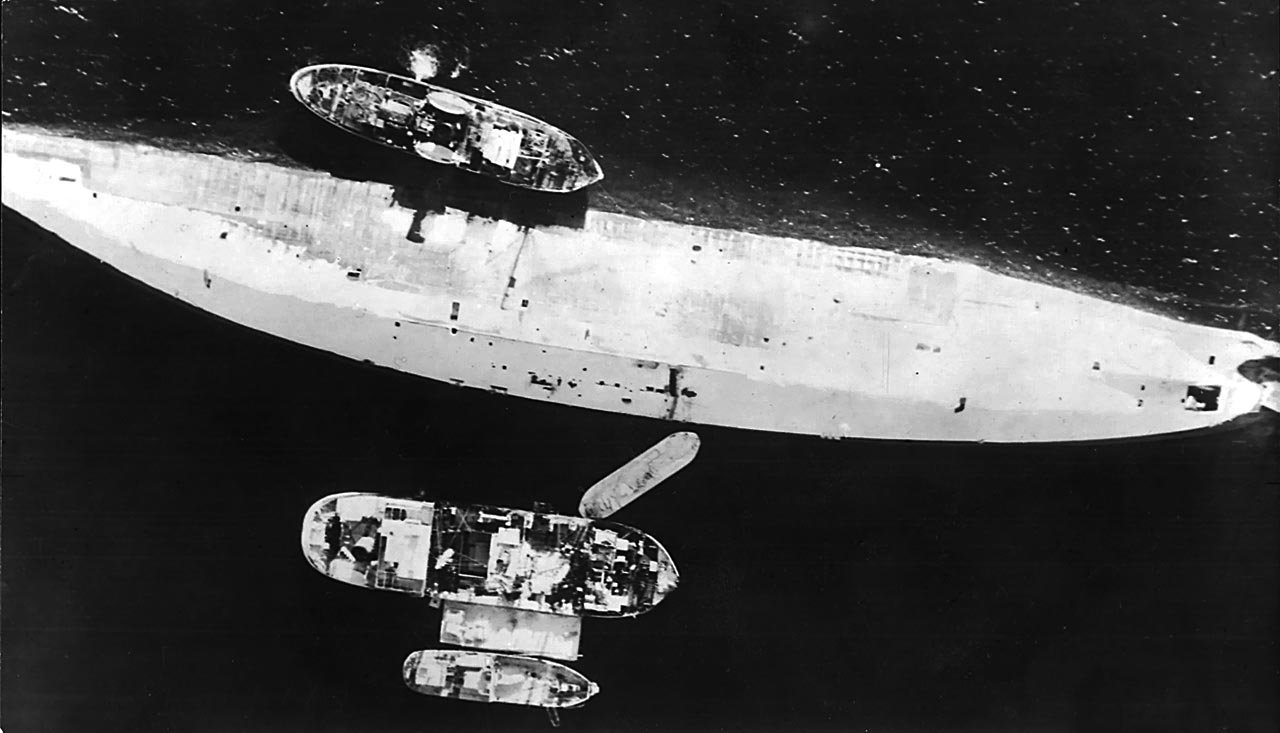
(Neumark repair ship image). The long periods of inactivity of the Tirpitz in Norway led the Norwegian Resistance to nickname it the “Lonely Queen of the North”. The repairs were to be carried out in Kaafjord, Norway, and presented an enormous engineering challenge, as the available facilities were quite limited. A large number of technical personnel and specialists were sent from Germany, along with the repair ship Neumark and the accommodation ship SS New York, which housed the workers and the additional personnel. Working conditions were particularly harsh due to the weather and the lack of suitable facilities, which, according to some historians, constitutes “one of the most remarkable feats of naval engineering during the Second World War”. The greatest complications arose during the repair of the propulsion plant and the alignment of the shafts. The repairs proceeded without Allied attacks from November 1943 to February 1944, but on the night of February 11-12, Soviet heavy bombers attacked the Tirpitz with 1,000 kg bombs. Only four aircraft managed to locate the Tirpitz, and they only achieved one near miss, which did not damage the ship or delay the repair schedule.
tirpitzataltafjord
(Tirpitz image). In mid-March, trials began on the repaired propulsion plant, along with the port rudder and the overhauled shafts. However, the vibrations of the dashboard cruising turbine were so great that they prevented the ship from reaching maximum speed, and the turbine had to be corrected. By April 2nd, everything had been resolved, and full-power trials were prepared for the following day in Alta Fjord. The British were alerted to the Tirpitz’s imminent departure to sea, as the repair ships had left the area in March, and an air attack was planned for April 4th, 1944 under codenam “Operation Tungsten”. However, the attack was brought forward by 24 hours when a German message was intercepted indicating that Tirpitz would leave her anchorage at 05:29 to conduct sea trials. And indeed, that’s what happened. On April 3rd at 05:29, the Tirpitz was leaving the dock with the help of several tugboats when the air alert sounded.
bismarck-barracudaII5
(Barracuda II dive bomber image). The British attack was carried out by 40 Barracuda dive bombers and 40 fighters in two waves. They launched from the aircraft carriers HMS Furious, HMS Victorious, HMS Emperor, HMS Fencer, HMS Pursuer, and HMS Searcher. The first wave attacked at 05:29, when the first British fighters began strafing the deck of the Tirpitz to reduce its anti-aircraft defenses and facilitate the dive bombers’ work. The Barracudas of the first wave were armed with twenty-four 227 kg semi-armor-piercing (SAP) bombs, twelve 227 kg general-purpose bombs, four 227 kg anti-submarine bombs, and seven 726 kg armor-piercing (AP) bombs. They caught the German battleship by surprise, which usually took about 10 minutes to have all its anti-aircraft batteries operational, and received little fire, losing only one aircraft. The Barracudas of the second wave attacked at 06:35 and were armed with thirty-nine 227 kg semi-armor-piercing (SAP) bombs, nine 227 kg general-purpose bombs, two 227 kg anti-submarine bombs, and two 726 kg armor-piercing (AP) bombs. These aircraft encountered greater resistance, although they only lost one aircraft in the attack.
tirpitzunderattackapril1944
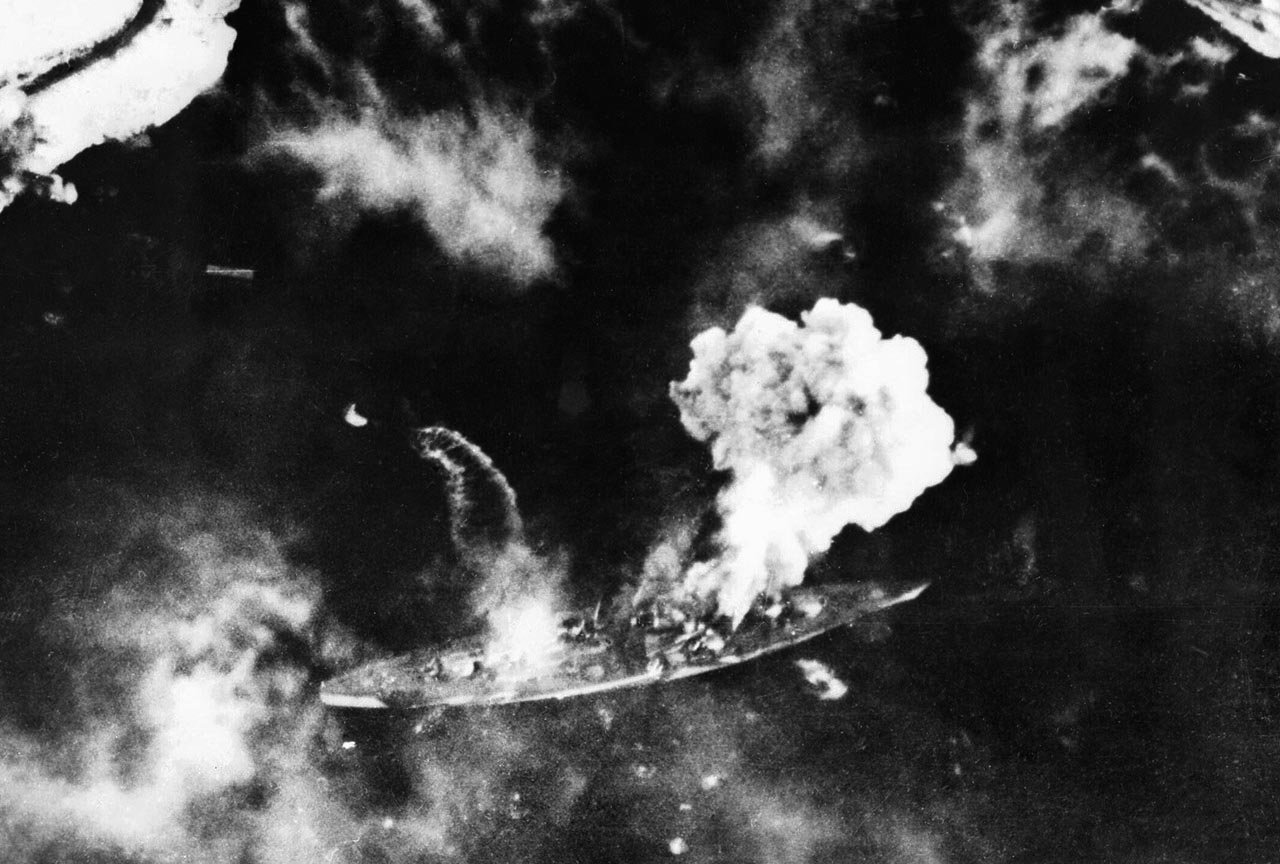
(Tirpitz under attack image). The Barracuda bombers carried out their attacks from altitudes of 430 to 900 meters, achieving 14 direct hits (eight 227 kg bombs, one 272 kg bomb, and five 726 kg bombs) and two near misses, which had a devastating effect on the Tirpitz. Paradoxically, the damage was less than it could have been, as the bombs were designed to be dropped from 1,000 meters to penetrate the ship more deeply. Nevertheless, the damage to the superstructure and areas between the armor decks and midships was enormous, although the ship was never in danger of sinking. One 150mm turret was destroyed and another damaged, the starboard catapult and crane were destroyed, two Arado Ar-196 floatplanes were destroyed, the starboard turbine was disabled, and the ship took on approximately 2,000 tons of salt water through two holes in the side shell created by shell splinters from nearby misses, plus an additional amount from the water used to extinguish the numerous fires. The two attacks resulted in 122 crew members killed and 316 wounded.
bismarck-hmsfuriousmod2
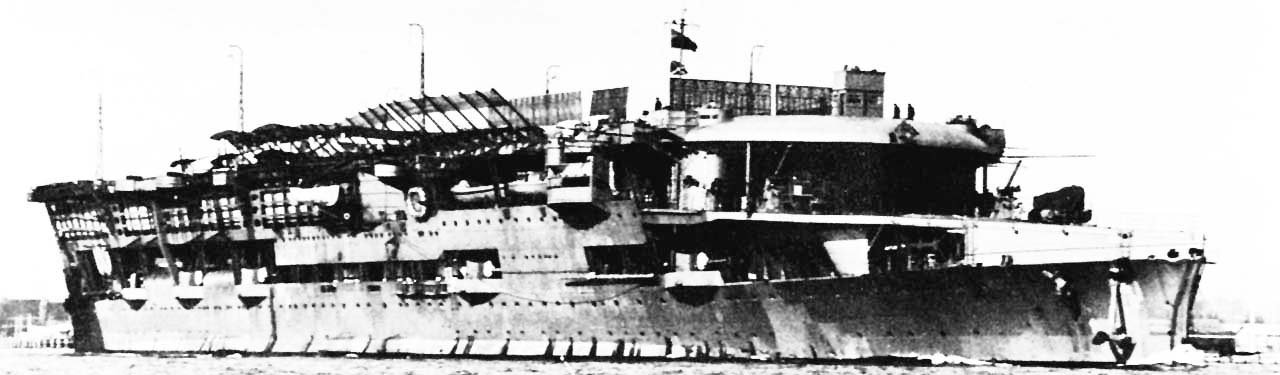
(HMS Furious image). Admiral Dönitz ordered the Tirpitz repaired at all costs, demonstrating the same determination the British were showing in sinking it. Of course, by this point the German admiral was already aware that the Tirpitz could not be used in surface operations due to insufficient air support. Repairs began in early May, with numerous materials and personnel being transferred from Kiel to Alta on destroyers, and by June 2nd the ship was able to sail under its own power. Its 20mm guns were increased to 78, the 150mm guns were modified for anti-aircraft use, and the 380mm shells were fitted with special fuses that allowed them to be used for barrage anti-aircraft fire. By mid-July all the work had been satisfactorily completed, although the starboard shaft was limited to forward operation only. On July 17, the British launched another air attack (Operation Mascot) consisting of 45 Barracuda dive bombers escorted by 50 fighters, launched from the aircraft carriers HMS Formidable, HMS Furious, and HMS Indefatigable. This time the attack was repelled, with two aircraft shot down and only one bomb fell close without causing damage.
bismarck-hmsindefatigable3
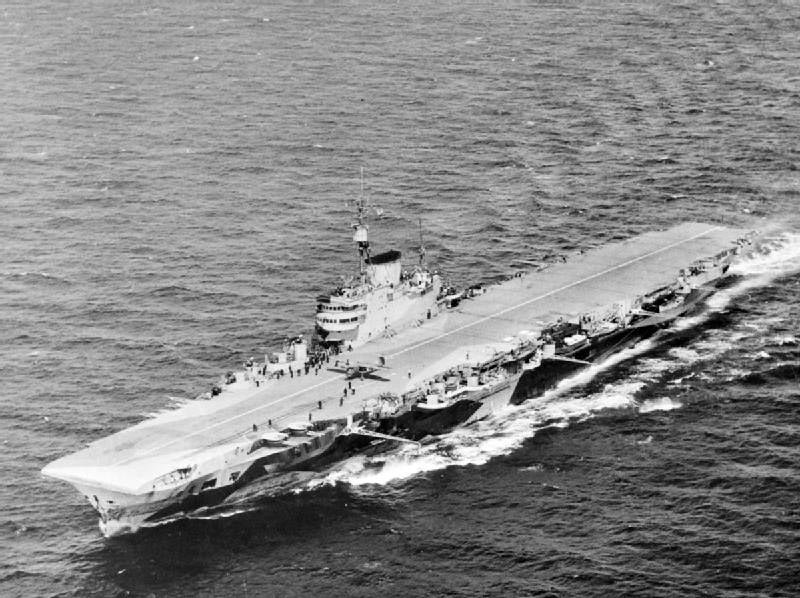
(HMS Indefatigable image). The Tirpitz sailed for the last time on July 31 and August 1, 1944. The sortie took place in the Norwegian Sea to carry out maintenance alongside the Fourth Destroyer Flotilla. The British persisted in their attempt to sink the Tirpitz and launched a campaign called “Operation Goodwood,” consisting of four air attacks on August 22 (Goodwood I & II), 24 (Goodwood III), and 29 (Goodwood IV). These attacks were carried out by the Fleet Air Arm using the fleet carriers HMS Formidable, HMS Indefatigable, and HMS Furious, and the escort carriers HMS Nabob and HMS Trumpeter. Only the attack on the 24th (Goodwood III) achieved any significant results, when a 227 kg bomb exploded, causing minor damage, and a 726 kg bomb penetrated the upper and lower armor decks, lodging unexploded in the No. 4 switchboard room. In return, the British lost 6 aircraft during this raid.
bismarck-tallboy7
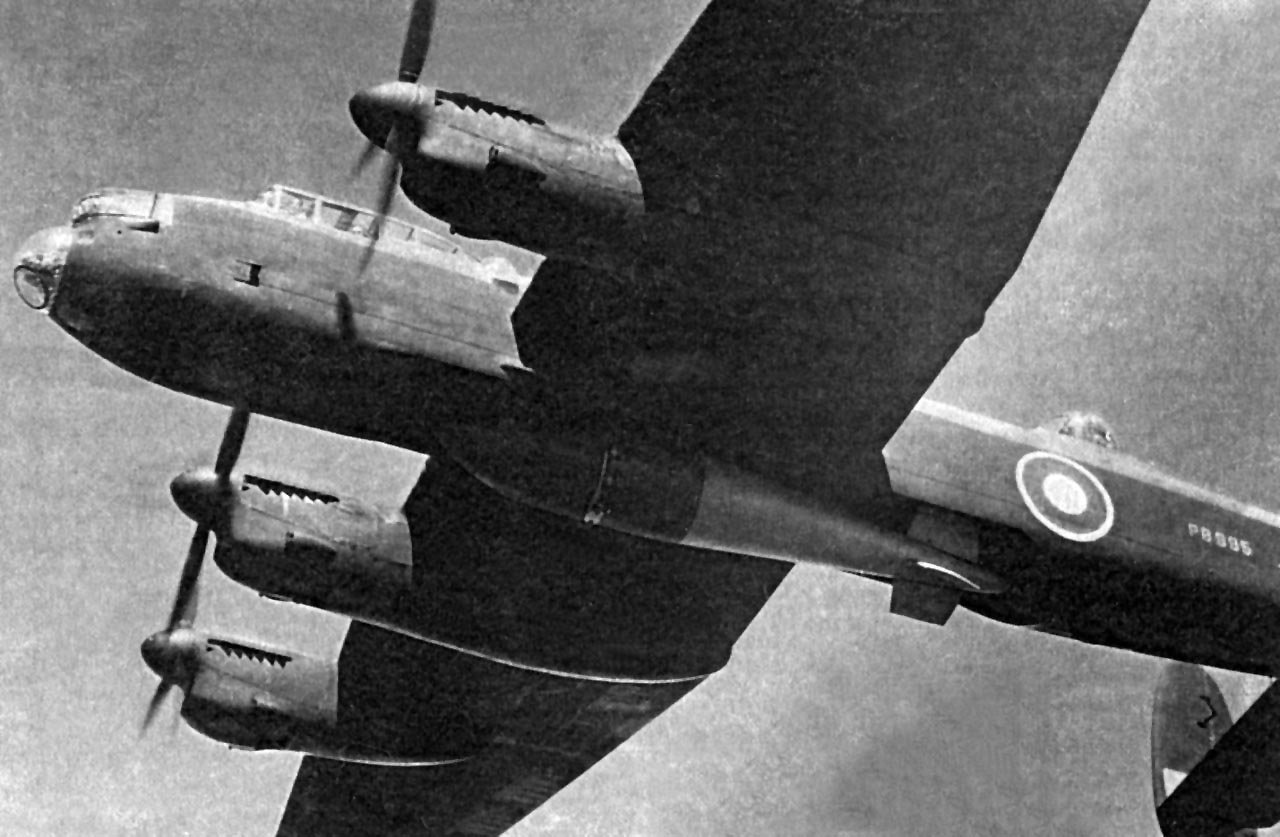
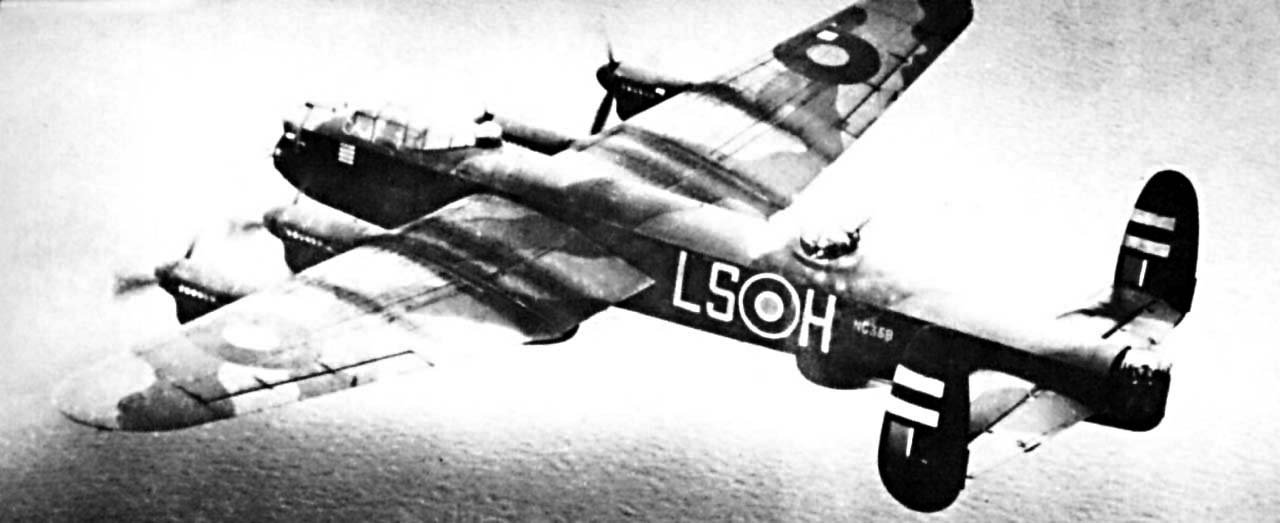
(Lancaster bomber with Tallboy bomb image). The ineffectiveness of the Fleet Air Arm’s attacks from mid-1944 onwards led to the decision to relieve them of the task of sinking the Tirpitz and transfer it to RAF’s No. 5 Group. This unit would use Lancaster heavy bombers armed with new 5.4-ton bombs called Tallboys. These new bombs contained 1,724 kg of TNT and were designated “earthquake bombs.” They had been designed by the British aeronautical engineer Barnes Wallis. They could only be dropped by Lancaster bombers, which had to be modified to carry them. The first attack (Operation Paravane) took place on September 15, 1944, when 23 Lancasters took off from a forward base at Yagodnik in Russia. Seventeen bombers carried one Tallboy bomb each, and the other six carried 12 Johnny Walker (JW) mines each. Only one of the Tallboy bombs hit the Tirpitz’s forecastle, destroying 30 meters of the bow section, and the bottom plating was ruptured and buckled over a distance of about 15 meters. Cracks were also detected in the longitudinal bulkhead forward, and the bulkhead connections to the shell were severed. The bow was flooded from the stem to an area about 36 meters aft, the main turbine foundations were damaged, lubricating and fuel oil tanks were also damaged, and fire-control instrumentation was badly damaged. It was estimated that the vessel would not be able to sail at more than 8 or 10 knots, and it was therefore declared unseaworthy.
tirpitz61
(Tirpitz image). On September 23, it was decided in Berlin that the Tirpitz would not be repaired and would henceforth be used as a floating battery. The damage to her bow could be repaired in a few weeks, so it was decided to move the Tirpitz to a new location in Tromsø Fjord, where she departed on October 15th. This sea voyage of approximately 200 miles would be the last she undertook under her own power. The new location allowed the Tirpitz to be attacked by Lancaster bombers from the RAF’s 617 “Dam Buster” Squadron, which occurred at 08:50 on October 29th (Operation Obviate) while the ship was moored off Håkøya Island outside Tromsø. On this occasion, the 27 Lancaster bombers carried a Tallboy bomb filled with 2,541 kg of Torpex (an explosive twice as powerful as TNT), instead of the normal charge of 1,724 kg of TNT. The bombers only managed one near miss, which damaged the rudder and port shaft, causing minor flooding in that area. The Tirpitz used 380mm shells fitted with the new anti-aircraft fuses, capable of exploding at a range of over 20 km, to repel the attack, but they were unable to prevent the British raid.
tirpitz29
(Tirpitz image). The Tirpitz’s location was improved by constructing a sandbank under and around the vessel to reduce the possibility of her capsizing. The ship was moored in shallow waters and was surrounded with torpedo nets, and the onboard personnel were limited to gun crews and machinery personnel, leaving only 1,600 crew members out of the 2,300 who had embarked in 1941. Only 3,000 tons of fuel oil and fresh water were left on board because the ship was only to serve as a floating battery to defend northern Norway, according to Admiral Dönitz’s final orders. At 07:38 on November 12, 1944, 18 Lancaster bombers were detected south of the Tirpitz, and shortly afterward, at 08:00, radar detected another 12 Lancasters flying at an altitude of between 3,500 and 4,900 meters. Operation Catechism had begun. At 08:40, the air raid alert sounded at Tirpitz, and Bardufoss airfield was activated to provide air defense. At 08:55, the fighter alert sounded in Tromsø because a German coastal defense unit located 50 km to the northeast reported sighting seven aircraft, a claim that turned out to be false but kept German fighters grounded, preventing them from providing vital support to the defense of Tirpitz.
bismarck-lancaster21
(Lancaster bomber image). At 09:02, battle stations sounded onboard the Tirpitz, and by 09:05, the Lancasters were 120 km to the south. The captain requested urgent air cover, but at 09:15, he was informed that he would not receive it because the Lancasters were currently flying over Bardufoss airfield. At 09:35, the Tirpitz opened fire with its 380mm guns on a formation of bombers located 11,200 meters away, scattering them momentarily. However, at 09:42, the bombers began an 8-minute attack, dropping 29 Tallboy bombs filled with 2,541 kg of Torpex each. This time, the aircraft achieved two direct hits, one probable hit, and seven near misses, two or three of which came very close to the Tirpitz, landing inside the port torpedo nets. The near misses that did not fall on the shore created huge craters in the seabed, allowing the ship to capsize.
tirpitzafterattack1
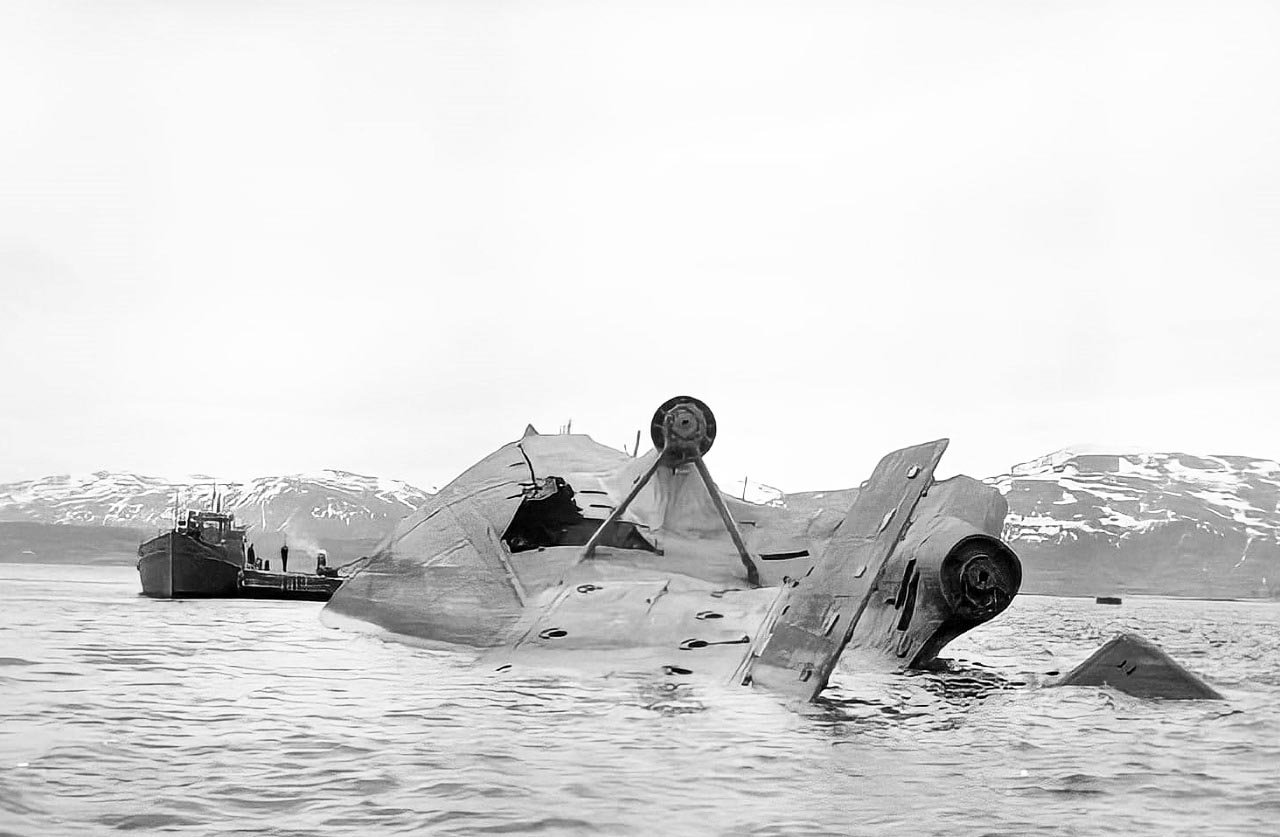
(Tirpitz image). The three direct hits were on the port side of the ship’s centerline. One penetrated both armor decks between the Anton and Bruno turrets but did not explode; another was between the catapult and the funnel; and the probable third was behind the Caesar turret, potentially creating a fire near its powder or shell magazine. The damage caused by this attack was immense, and the Tirpitz quickly listed about 20 degrees to port as a large amount of water flooded the vessel, which by 09:45 was listing about 40 degrees. At this time, the ship’s watertight integrity was compromised, and the crew was rapidly abandoning ship. By 09:50, the list had reached 60 degrees, with part of the port side of the superstructure underwater, but the worst came at 09:58 when a tremendous explosion rocked the Tirpitz. The roof and part of the rotating structure of Caesar’s turret were blown some 25 meters into the air, landing on a group of crewmen swimming toward the shore, killing them all instantly. This terrible explosion may have been caused by a fire that reached the powder magazine, but the true cause will never be discovered, and was the final nail in the coffin for the German battleship, which ultimately ended up capsized.
tirpitz35
(Tirpitz image). Approximately 950 officers and crew members died, and about 680 survived. Rescue teams were able to save 87 crew members from the capsized ship during the 12 hours following the attack by cutting torches and blasting holes in the bottom structure. Finally, the British managed to destroy the feared vessel that had consumed so much effort and immobilized so many forces. The Tirpitz was defeated by gigantic aerial bombs against which there was no possible defense; however, its crew, who could easily have succumbed to demoralization due to the dark course the war had held for them for several years, fought courageously and behaved with discipline at all times, even when the ship was beyond saving. On the other hand, the story of the Tirpitz was very well summarized by the Scottish journalist, broadcaster and author Sir Ludovic Kennedy, who wrote in his 1979 book “Death of the Tirpitz”, also called “Menace: The Life and Death of the Tirpitz”: “She lived an invalid’s life and died a cripple’s death”.


Related posts