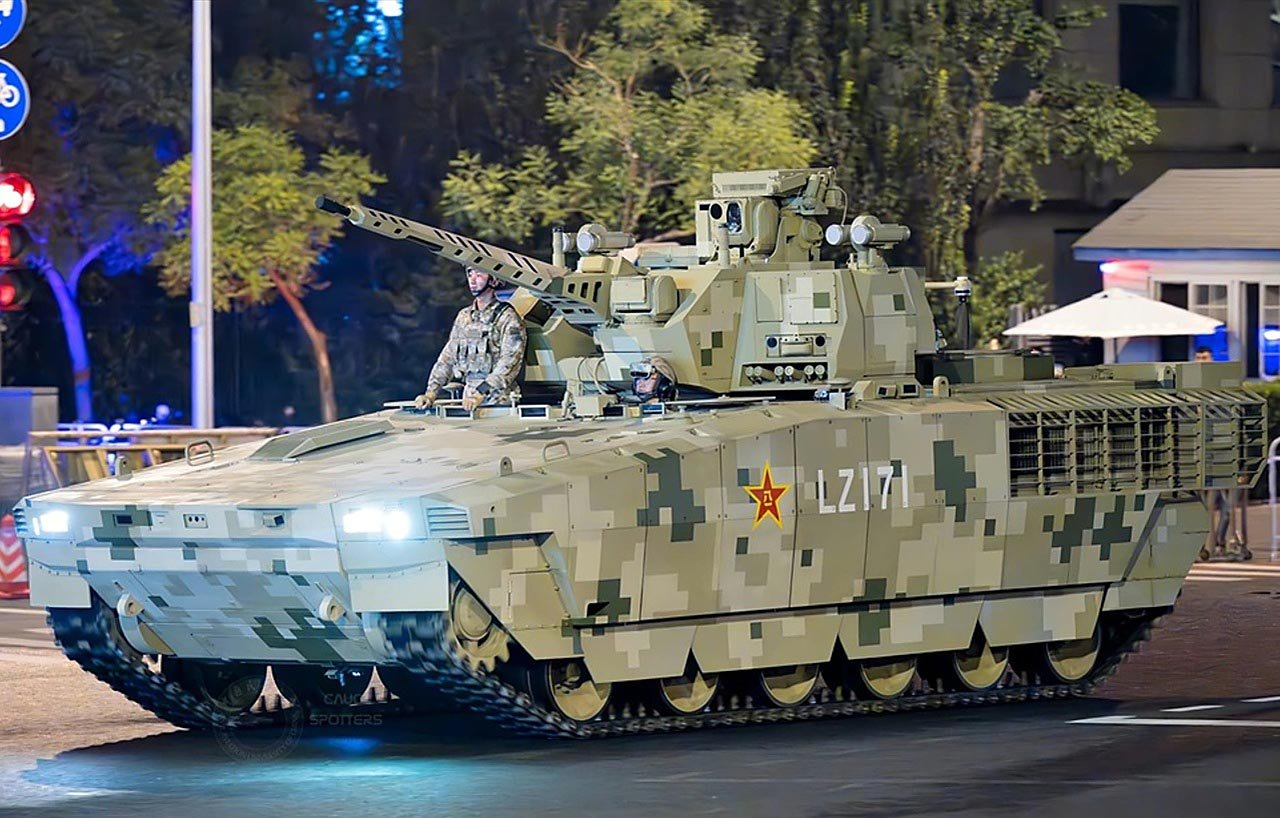
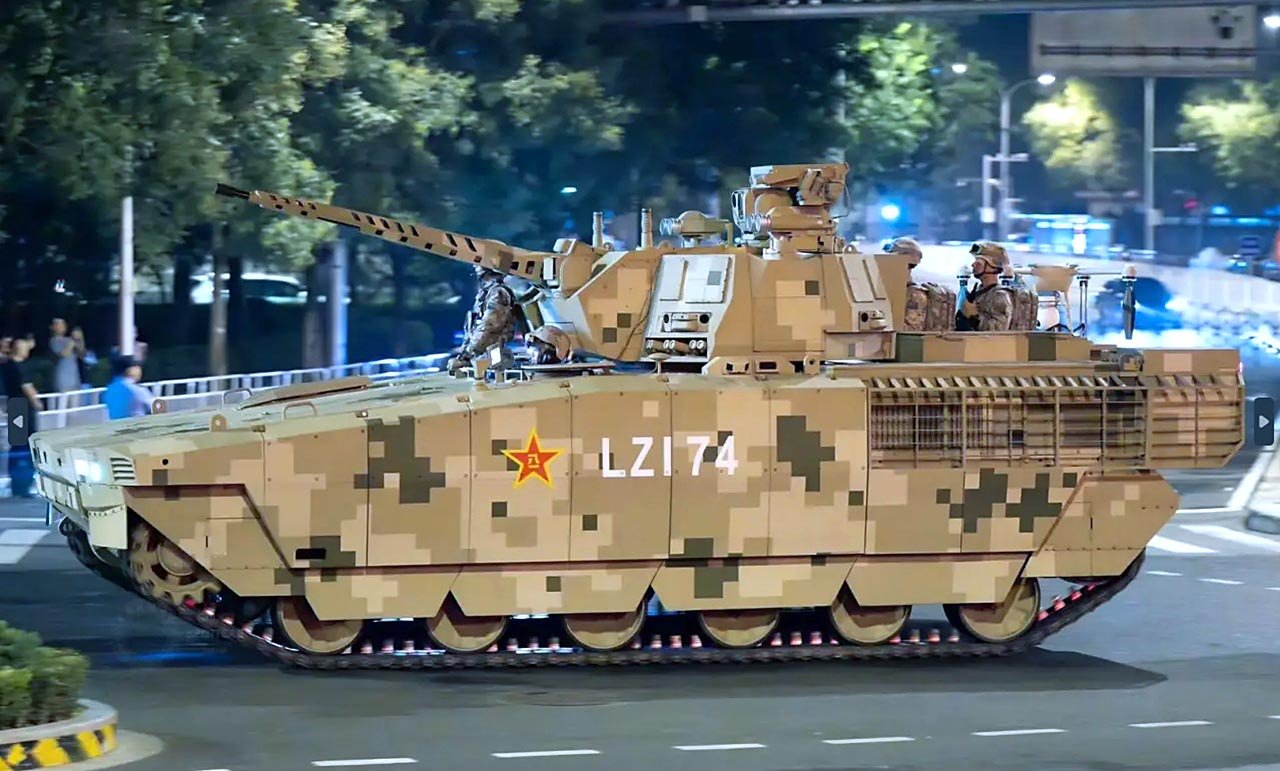
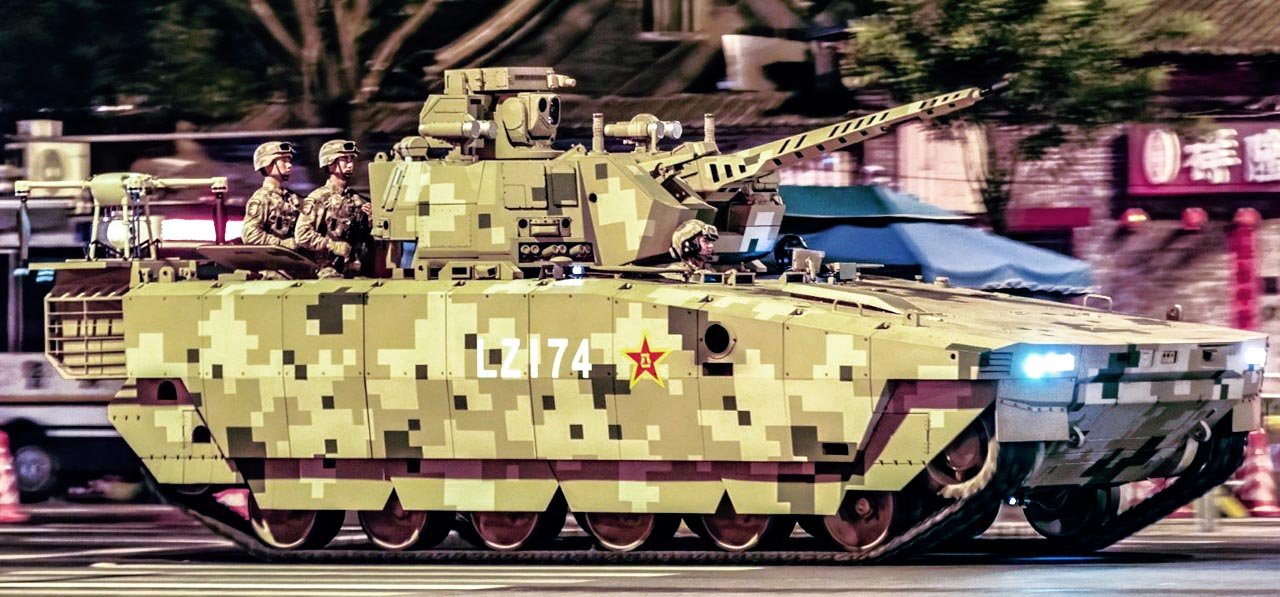
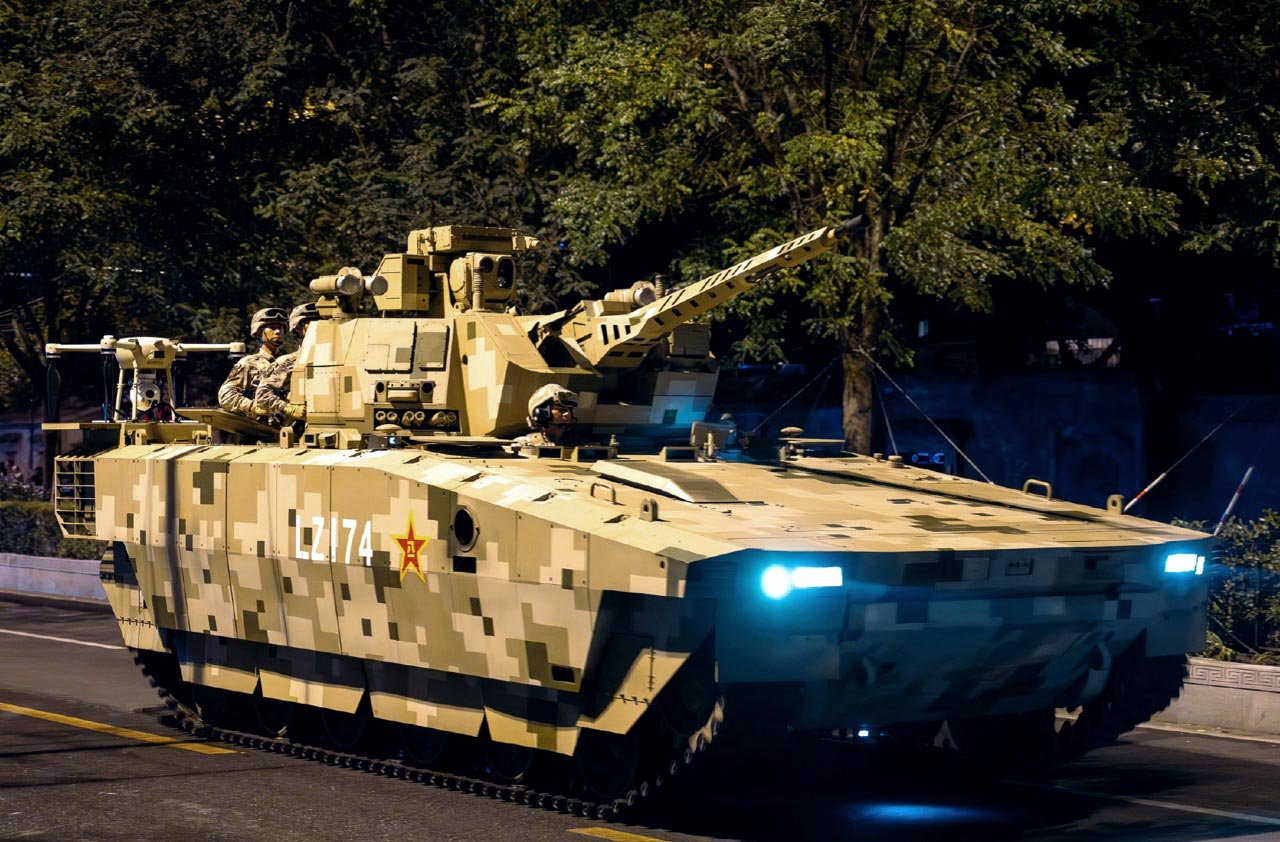
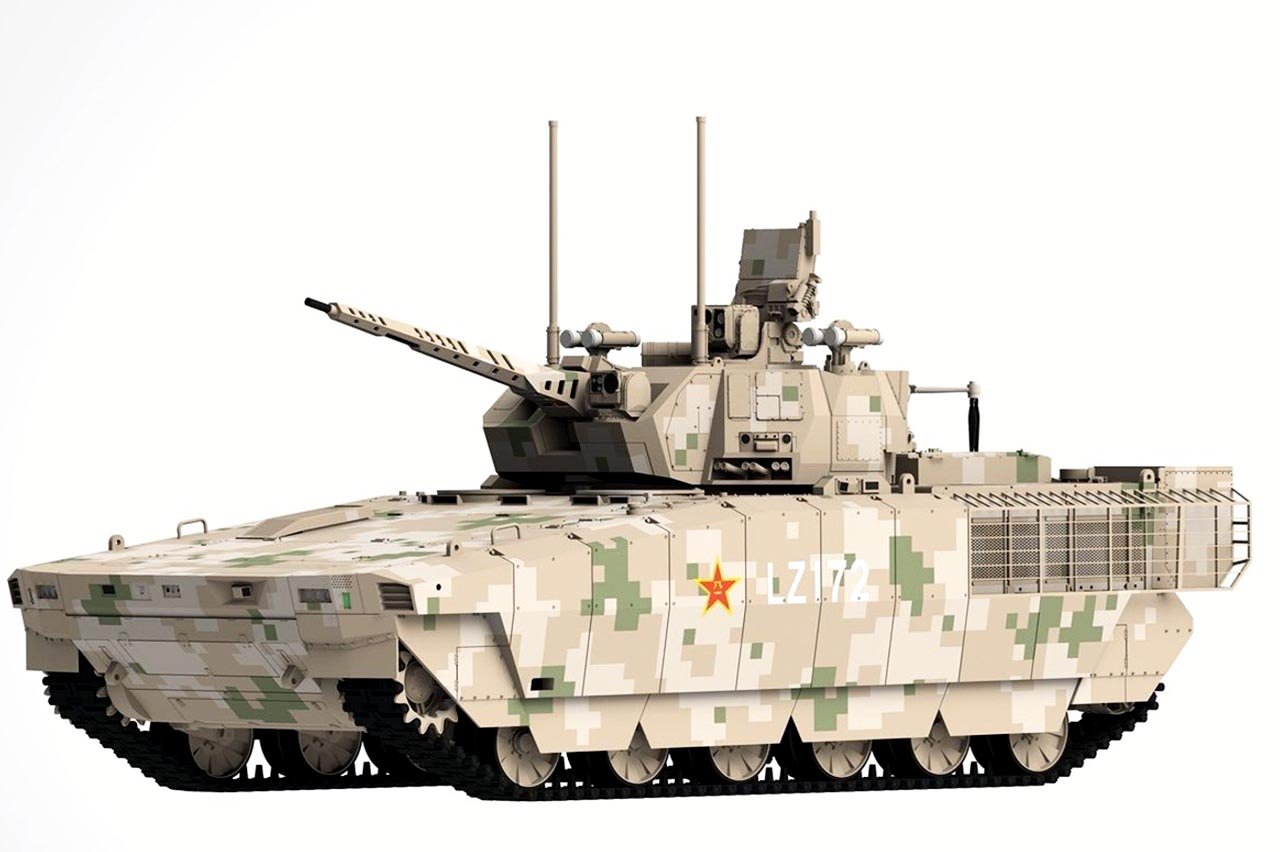
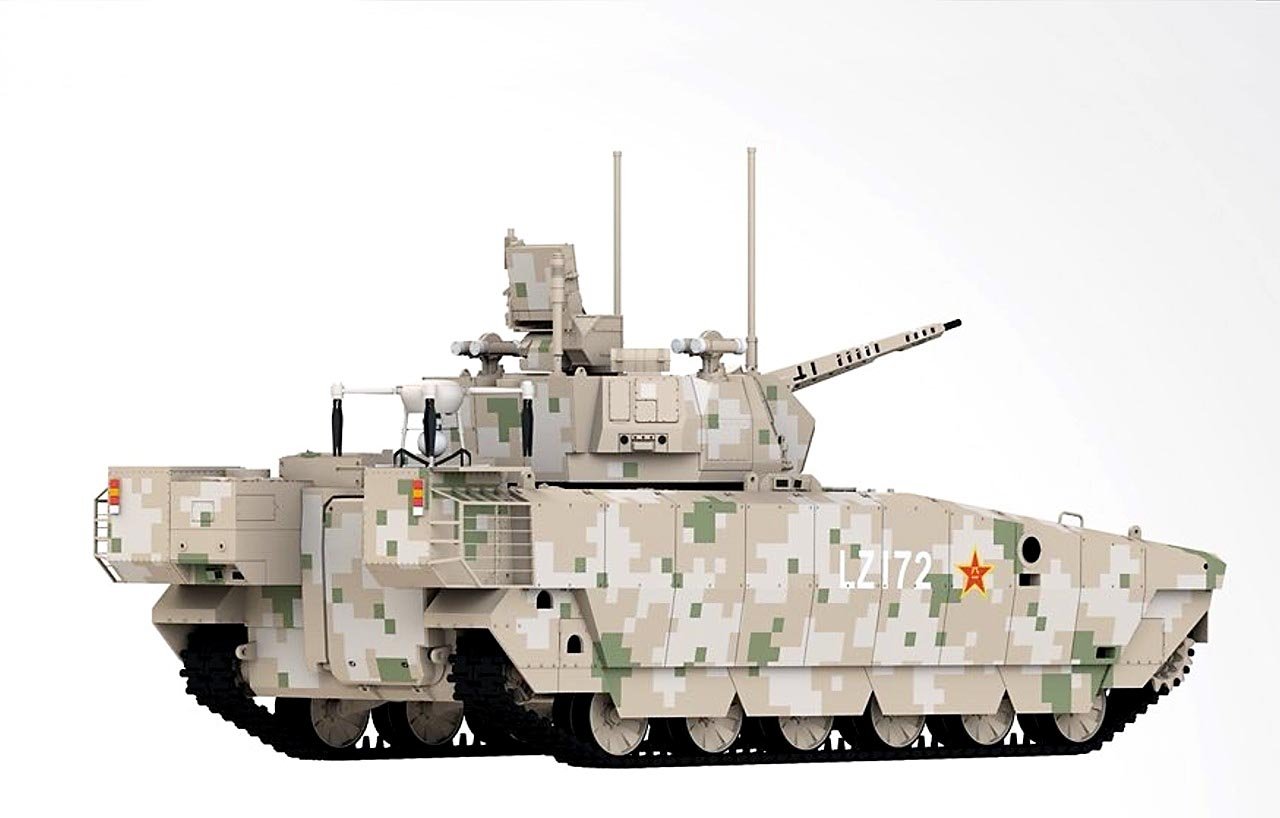
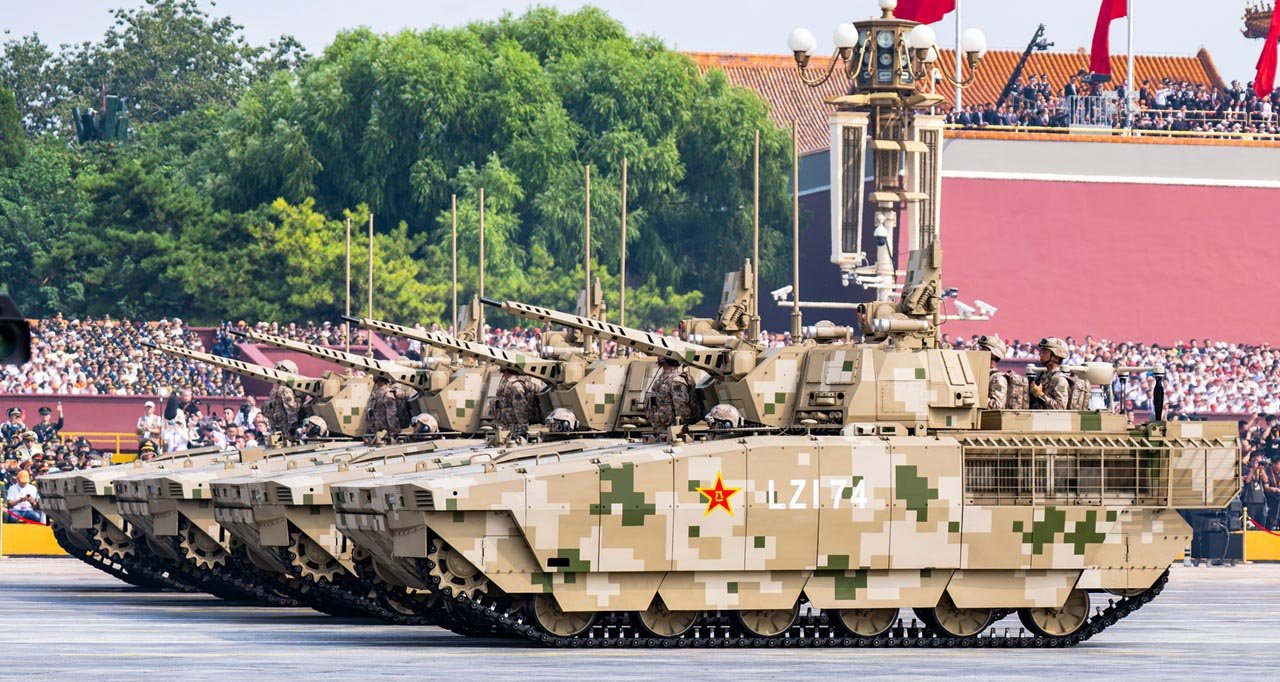
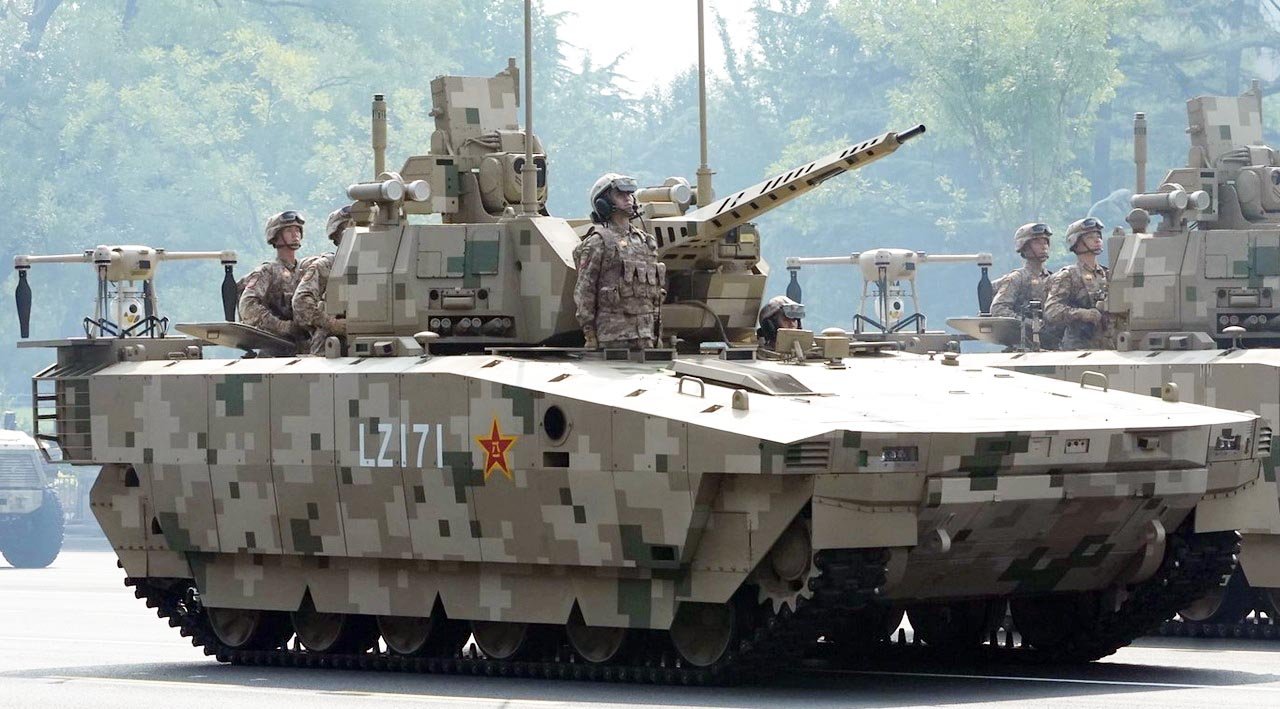
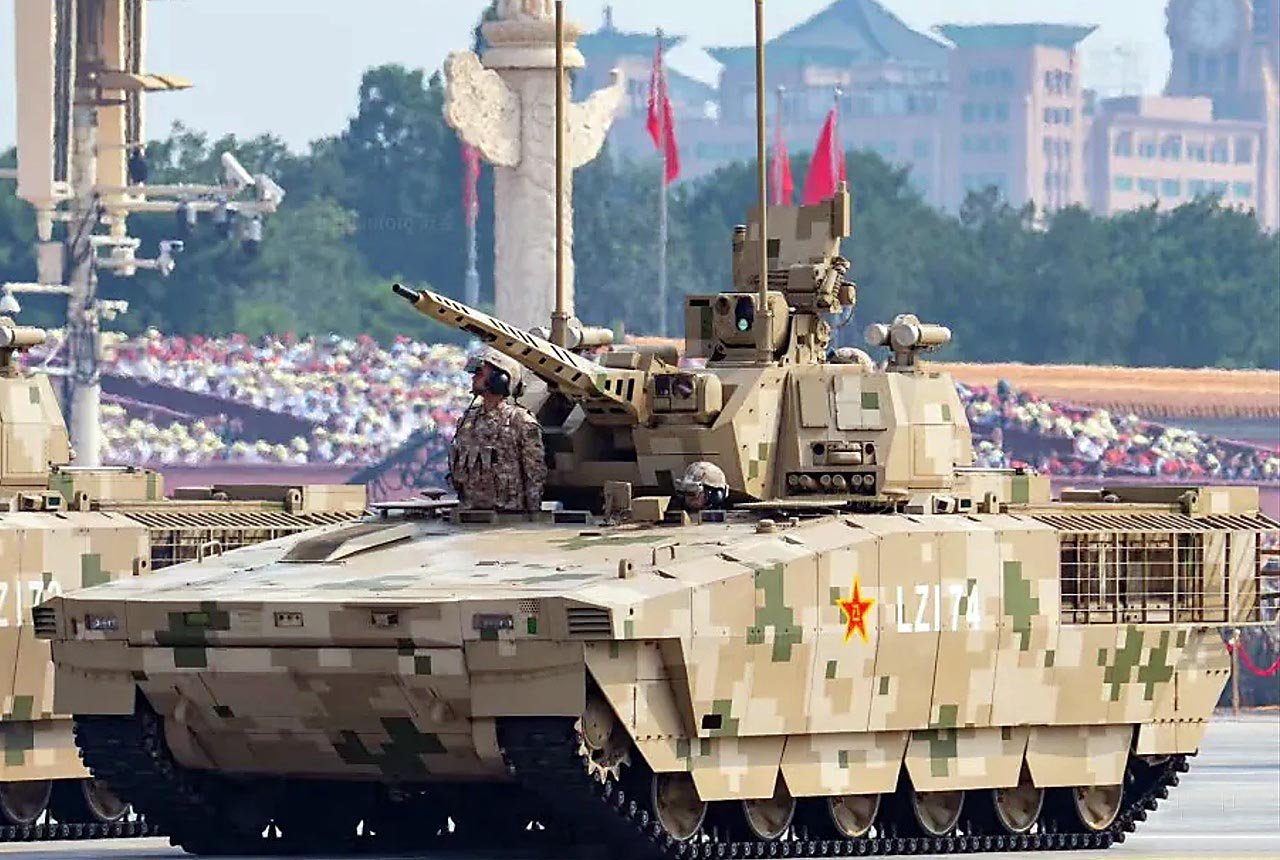
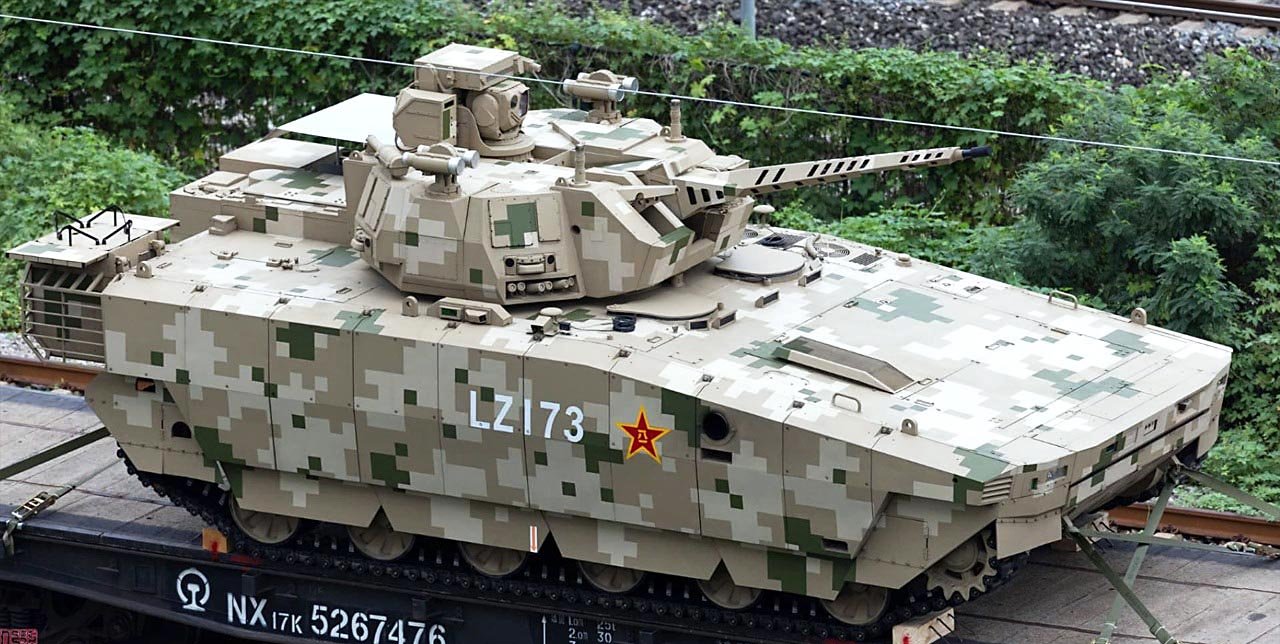
In mid-August 2025, a new, previously unknown vehicle was spotted on the streets of Beijing during rehearsals for the 80th annual Victory Day Parade, attracting considerable attention from military experts and analysts. This new vehicle was formally unveiled on September 3rd during the parade, alongside a tank built on the same chassis. It was later revealed that the two vehicles were intended for joint missions under a new armored warfare concept. The tank has the official designation Type 100 MBT (ZTZ-100), while the IFV (Infantry Fighting Vehicle) has the official designation Type 100 Combat Support Vehicle. Military media also refer to it as the “Type 100 Support Tank”, “Type 100 Support Combat Vehicle”, and “ZBD-100”, although the latter designation appears to be incorrect and may refer to a new smaller airborne IFV.The exact start date for the Type 100 CSV‘s development is unknown, but it is reasonable to assume it began in 2016, concurrently with the Type 100 medium tank, with which it shares the hull/chassis known as the “Type 100 platform”. The Type 100 CSV‘s primary mission is to escort and defend the Type 100 tank by destroying threats, including UAVs and suicide drones, as well as enhancing situational awareness by constantly sharing all data acquired by its sensors and information transmitted by the drone it carries, which is deployed ahead of the two vehicles. Information exchange between the vehicles is displayed in real time via a shared data network, which can then be transmitted to other friendly weapons systems, such as artillery, electronic warfare units, or UAVs. Additionally, the Type 100 CSV can control and operate different types of unmanned vehicles if necessary.Type 100 CSV is a modularly constructed vehicle equipped with an unmanned turret armed with a 30 or 35mm autocannon, a launch platform for quadcopter drones, and a vertical launch system (VLS) that fires loitering munitions and airburst rounds. Its combat weight is approximately 35 tons, and it carries a crew of three. This vehicle is powered by a hybrid diesel-electric powerpack and is equipped with two GL-6 active protection systems (APS). The electronic suite is spectacular, featuring state-of-the-art communications and enhanced digital intelligence, including augmented reality (AR) goggles. This AR system not only displays images captured by its own sensors but can also show images captured by other vehicles in the unit or any element connected to the shared data network. This method of transmitting augmented reality images is called “transparent armor” because it gives the crew the sensation of being outside the vehicle. Both the powerpack, the active protection system, and the electronic systems are the same ones installed in the Type100 medium tank.The internal layout is conventional, with the three crew members, (driver, commander and gunner/drone operator), located in the front of the hull, sit side by side in a sealed heavily armored capsule, with the driver on the left. The crew enters the vehicle through two access hatches on the roof of the hull and has five vision blocks, two in front of each hatch and one between them. The engine is also located at the front of the hull, unlike the Type 100 medium tank. The fully automated combat chamber with the unmanned turret in the middle and behind it is a compartment for 3 or 4 infantrymen along with the vertical-launch loitering ammunition system and the launch platform for quadcopter drones. Soldiers enter via an electrically operated ramp located in the center of the rear of the hull. The personnel compartment has space for up to four infantrymen and also includes a station for operating drones or electronic warfare systems. The running gear consists of six dual-tired rubber road wheels on each side, with the drive sprocket at the front and the idler wheel at the rear. Modular composite armor skirts protect the sides up to just above the road wheels, incorporating a small rubber skirt underneath that extends halfway up the road wheels.(Type 100 CSV model image). The Type 100 CSV is powered by a hybrid diesel-electric powerpack consisting of a diesel engine, electric motors, a generator set and rechargeable batteries. The total available power is around 1,500 hp, (500 hp from electric motors and 1,000 hp from diesel engines). The maximum speed is about 85 km/h on the road and about 50 km/h off-road. The vehicle can operate its systems without the diesel engine running (EV-powered Stealth-Watch-up capability) and it can operate entirely in electric mode for short periods or in the event of a diesel engine failure. The full electric (EV) mode is very quiet and offers tactical advantage in very close combat situations, at 200 meters or less. The range is between 500 and 600 km in diesel-electric hybrid mode, but in fully electric mode it is only a few tens of kilometers.(Type 100 CSV model image). Type 100 CSV carries an unmanned turret armed with a 30 or 35mm gun equipped with an automatic loader that uses armor-piercing and programmable airburst ammunition. It also has a coaxial 7.62mm QJY-201 machine gun, and the arsenal is completed by a vertical launcher for loitering munitions installed at the rear next to the entrance to the crew compartment. The fire control system is the same as that installed in the Type 100 medium tank and is based on an AI-supported algorithmic system capable of detecting, tracking, and selecting enemy targets beyond the field of vision, thanks to information shared by other vehicles or drones. The crew can direct the weapons and sensors to a specific area simply by moving their heads, thanks to a system integrated into the helmet, similar to that of the Type 100 tank. Furthermore, it is likely that the quadcopter drone and the onboard loitering ammunition can be controlled interchangeably from the crew compartment or from the station included in the rear personnel compartment.As in the Type 100 medium tank, the protection of the Type 100 CSV is based more on an active system than only on armor, although the vehicle is quite well protected. The front hull offers the same protection as 700mm of RHA against kinetic rounds or 800mm of RHA against HEAT rounds. The sides of the hull offer protection against 30mm rounds and the rear and upper hull withstand 12.7mm armor-piercing rounds. The turret roof is protected against small fire arms and artillery splinters and the vehicle’s floor resists the explosion of 8 kg of TNT. The vehicle also incorporates an automatic fire extinguishing system and an NBC protection system by air overpressure.The Type 100 CSV‘s active protection system (APS) is similar in concept to that of the Type 100 tank, although it has fewer components. The main component consists of two GL-6 active protection systems installed on either side of the turret roof, each equipped with a rotary launcher holding two rounds which fire automatically when the sensors detect an incoming threat. This system is the “hard kill” component that physically destroys incoming anti-tank missiles, RPG rockets, suicide drones, and top-attack and loitering munitions at ranges of 10 to 30 meters. Each GL-6 APS has two Active Electronically Scanned Array (AESA) radars installed in the turret that provide 360° coverage around the vehicle.The “soft kill” component of the active protection system includes laser warning receivers and an optical detection system capable of identifying laser beams, IR signatures of incoming threats, missile launches, gun muzzle flashes, and flares. It also features signal jamming systems to deceive and divert incoming missiles and suicide drones and the JD-4 electro-optical countermeasure system (EOCM) that blinds the optical guidance systems with a high-powered LSDW laser. The Type 100 CSV also features two groups of six 40mm smoke grenade dischargers, arranged in pairs, installed at the lower corners of the turret’s front. This system automatically fires the smoke grenade dischargers when it detects incoming threats, deploying a multispectral smoke screen that conceals the vehicle from optical and infrared systems. Complementing these systems, the Type 100 CSV mounts a retractable phased array radar at the top of the turret, intended for local airspace management and detection of suicide drones, UAVs, and aircraft.The Type 100 CSV entered service in September 2025, at the same time as the Type 100 medium tank, and it is assumed that production of both vehicles will proceed concurrently, although there is no information on the number of units to be built. The complexity of the installed systems leads Western analysts to suspect a situation similar to that of the Russian T-14 Armata MBT; that is, that these ultramodern vehicles could suffer frequent breakdowns that are very difficult, if not impossible, to repair on the front lines. Unfortunately, it is already known that the quality of Chinese production does not always meet the required standards and is a constant source of problems, undermining the slogan of “good, nice, and cheap”. But, as will happen with the Type 100 medium tank… only time will tell.