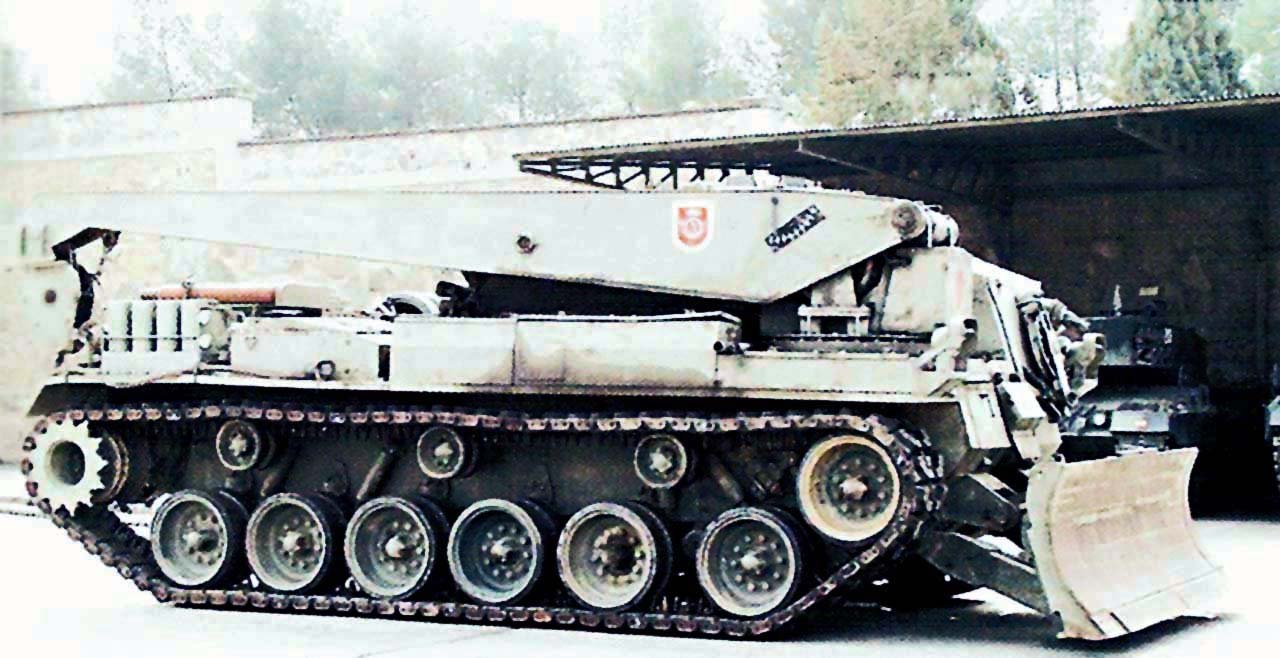
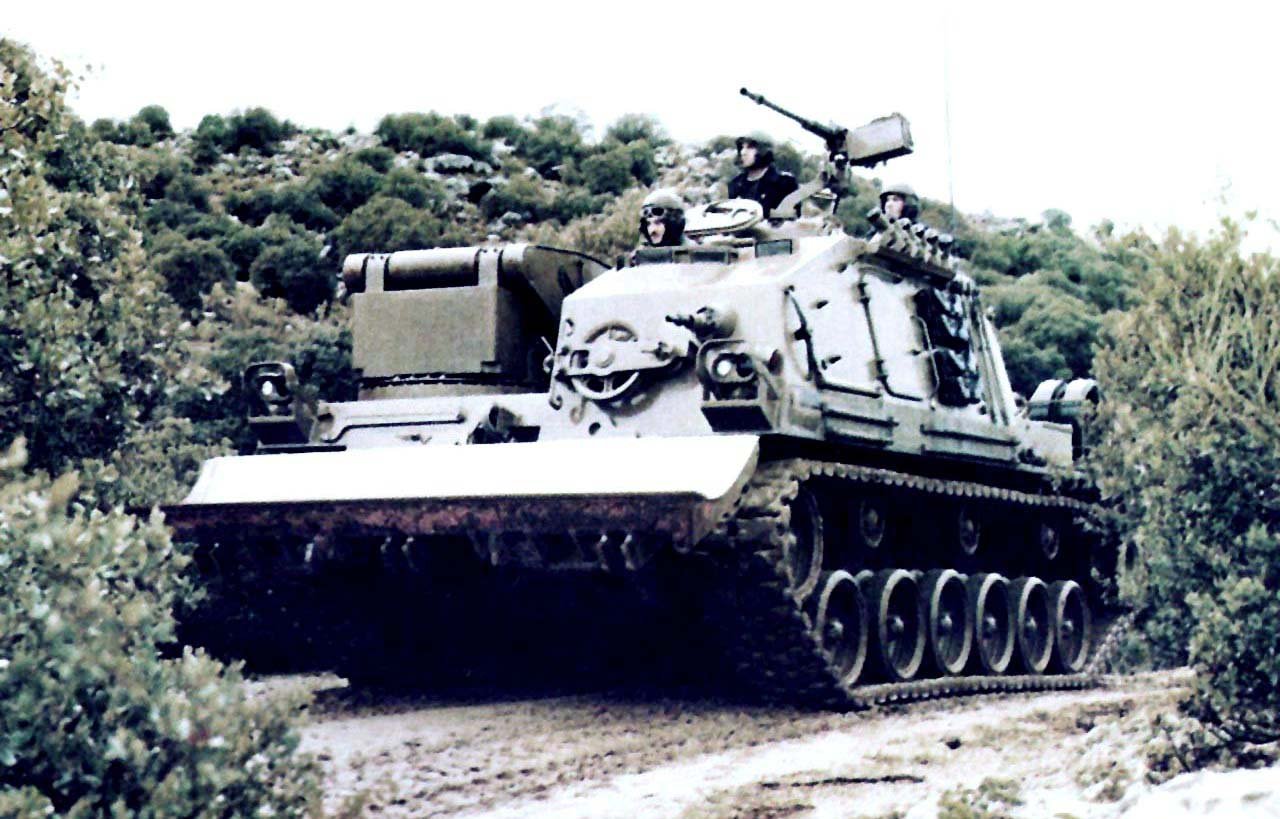
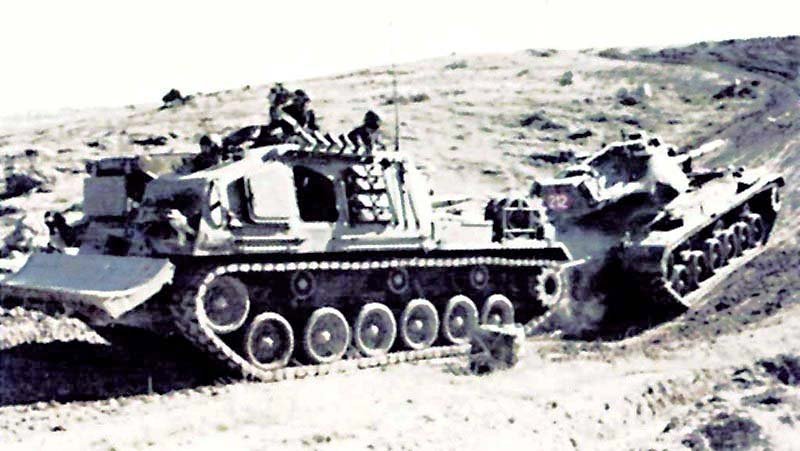
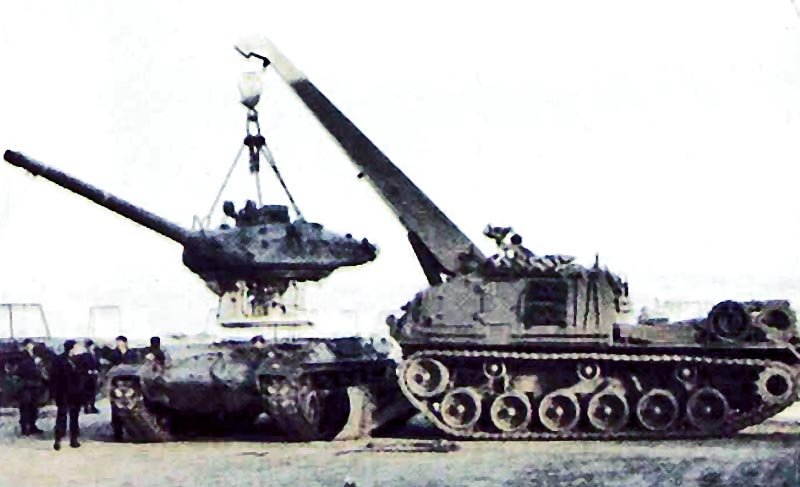
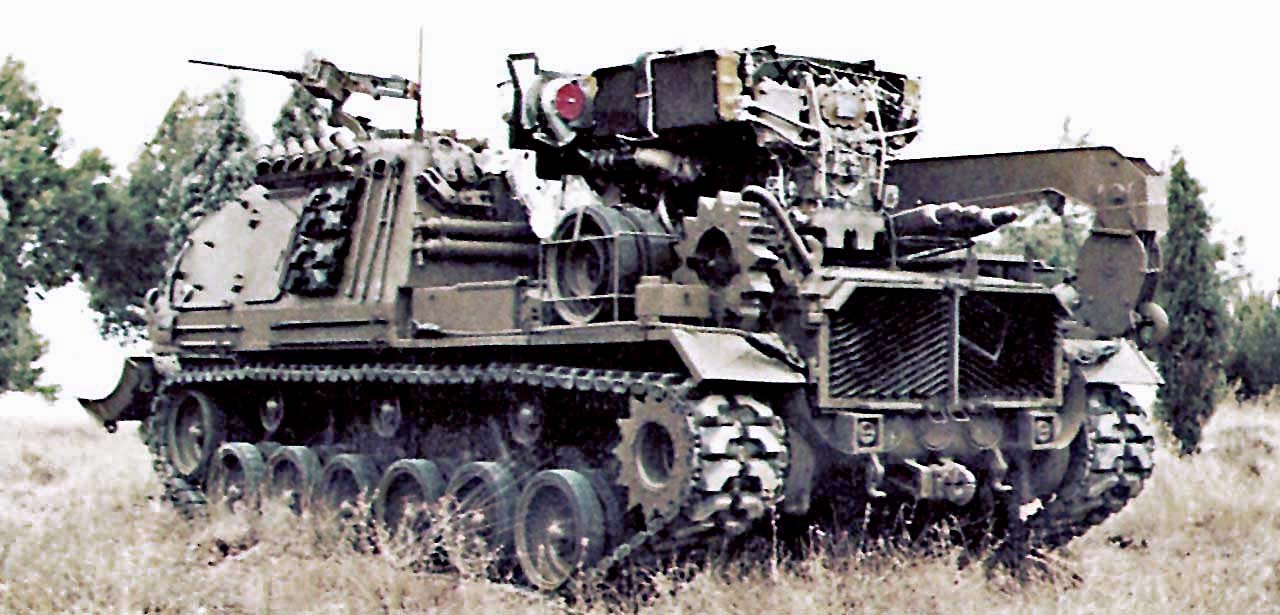
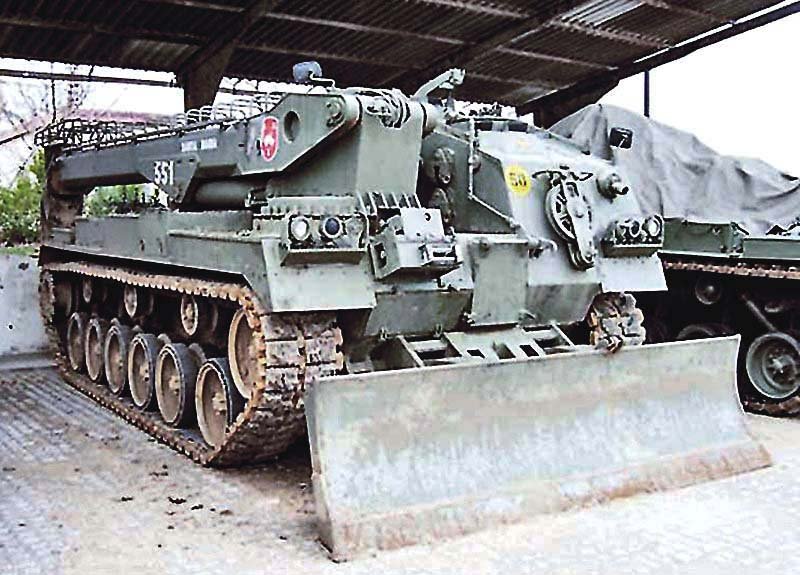
Talbot S.A. used the M-47E1 medium tank, which had been in service with the Spanish Army for quite some time, as the basis for its new vehicle. Around 330 of these medium tanks had already been modified and improved by Talbot S.A. itself between 1975 and 1980, receiving a new engine and a new transmission similar to that of the M-60 MBT. In the case of the M-47E2R ARV prototype, the turret was removed and an armored superstructure was built to house the four crew members and the necessary equipment. This superstructure occupied the front left half of the hull and consisted of angled walls with a door on the left side. The overall appearance of the vehicle was very similar to the German Leopard Bergepanzer. Around the same time, Talbot S.A. built a second prototype equipped with a different crane to participate in a competition organized by the Turkish Army to acquire a new recovery vehicle. Unfortunately, the Spanish vehicle was not selected, and the prototype returned to Spain; its fate remains unknown.The crew consisted of four members: commander, driver, and two assistants/mechanics. The driver sat in the front right position with the front machine gunner/mechanic to his left. Behind the driver, in a higher position, was the commander, and to the left of the commander was the second assistant/mechanic. The driver had three M-17 sight blocks and an AN/VVS-2 passive sight with a light intensifier, as did the commander, whose sights were mounted on a small cupola. Finally, the forward-firing machine gunner also had an M-17 sight. The running gear was the same as that of the M-47E1 tank and consisted of six double road wheels on each side and three double support rollers. The suspension consisted of torsion bars with hydraulic shock absorbers on the first, second, fifth, and sixth road wheels, with the idler wheel at the front and the drive wheel at the rear.The M-47E2R was equipped with the 760 hp Continental AVDS-1790-2D diesel engine and was coupled to an Allison CD 850-6A transverse transmission, the same as those installed on the M-60 MBT. Its maximum road speed was 56 km/h and the range was about 600 km. It could climb gradients of up to 60% and could cross trenches up to 2.60 meters wide. The maximum vertical obstacle that could be overcome was 0.91 meters and it could ford watercourses up to 1.20 meters deep without preparation. The M-47E2R‘s hull armor consisted of welded steel plates and was the same as that of the M-47E tanks, providing adequate protection for supporting front-line units. Its armament consisted of a 12.7mm M-2 machine gun mounted at the left of the commander’s cupola with 600 rounds and a 7.62mm MG-1A3S machine gun mounted on a ball mount at the front of the vehicle with 2,000 rounds. It also carried six smoke grenade dischargers located in the left side of the superestructure, right above the door. A TEESS concealment system was also included, which generated smoke by injecting fuel into the exhaust.For its specific tasks as a recovery vehicle, the M-47E2R was equipped with various hydraulically powered equipment driven by two pumps powered by the main engine. The vehicle carried a rotating boom located on the right side of the superstructure, at the front. This boom had a total length of 5.90 meters, was operated by two hydraulic cylinders, and could rotate 360°. The maximum lifting capacity was 50 tons, and the boom could operate between -6° and +61° of elevation. This boom could lift and move all types of light vehicles and perform partial lifting of heavy vehicles. It also had a front-mounted dozer blade powered by two hydraulic cylinders. This blade was used to anchor the vehicle to the ground during the operation of the winch and crane, or to push and move loads or level the terrain. This blade measured 3.65 meters wide by 0.88 meters high and had a pushing power of 35 tons. It was also equipped with three scarifying tines.M-47E2R ARV had a hydraulically driven, electronically controlled cassette-type TR-650 winch located in the center of the hull. This equipment had a horizontal drum with two operating speeds located below the floor. It had a 33mm diameter, 100-meter long braided steel cable that exited through the front of the hull via a hydraulic tensioner and a release valve. The maximum pulling force was 35 tons at slow speed and with direct pull, while with double pull and a shunt pulley it reached 70 tons. In addition to the hydraulic drive systems, the vehicle incorporated various tools and equipment for field repairs. These included a pump for draining and filling tanks, an electric shock starter, several jacks, lifting hooks, I-beams, spare road wheels, spare track shoes, three external power take-offs, a generator, and electric and acetylene welding equipment. Finally, the vehicle featured a platform at the rear (above the engine) for transporting a complete power unit with appropriate spare parts.Talbot S.A. transferred the prototype to the Infantry Academy in January 1982, where it remained for several years undergoing successful trials. These trials, however, did not lead to the vehicle’s production due to a lack of funding. Nevertheless, the design of this vehicle had a decisive influence on the development of the M-47ER3 armoured recovery vehicle (on the image). This vehicle was later manufactured by the Spanish firm Gamesa and finally entered service in 1996.