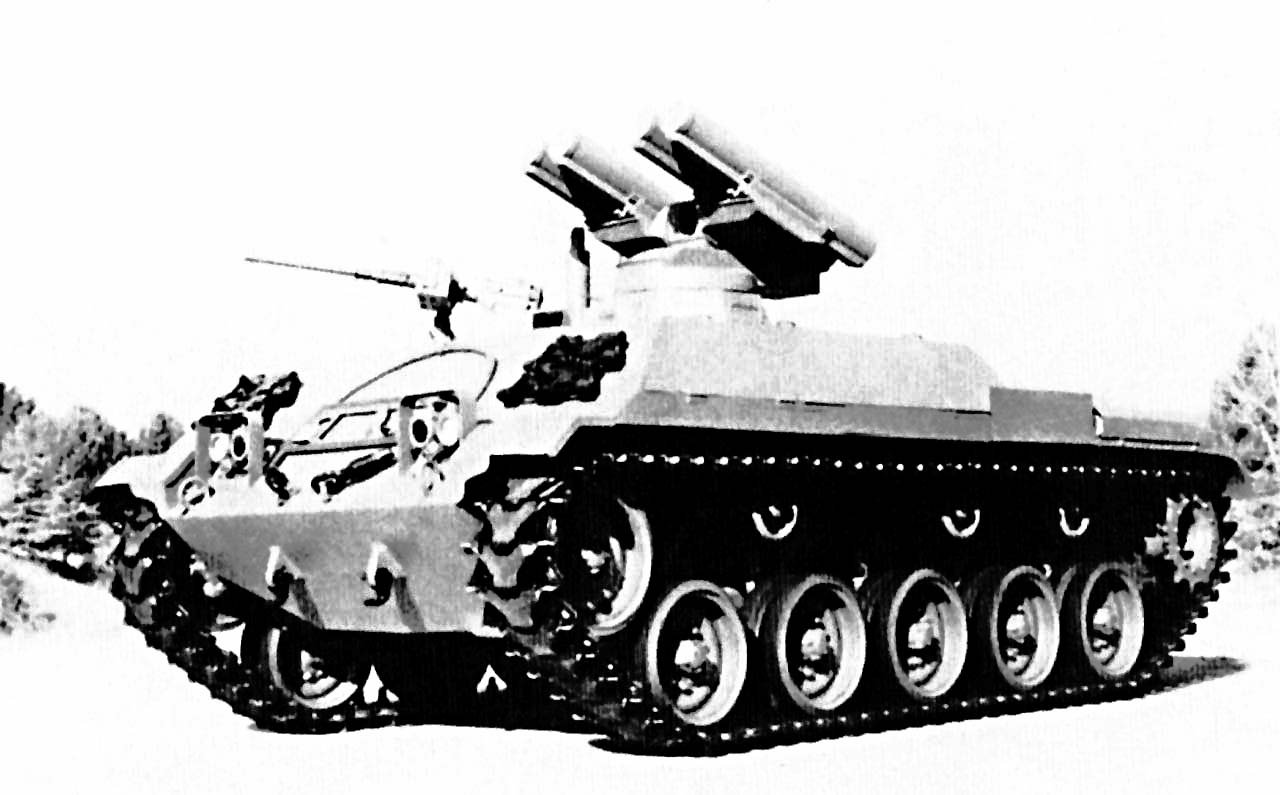
M-41E TUA CAZADOR tank destroyer prototype gallery
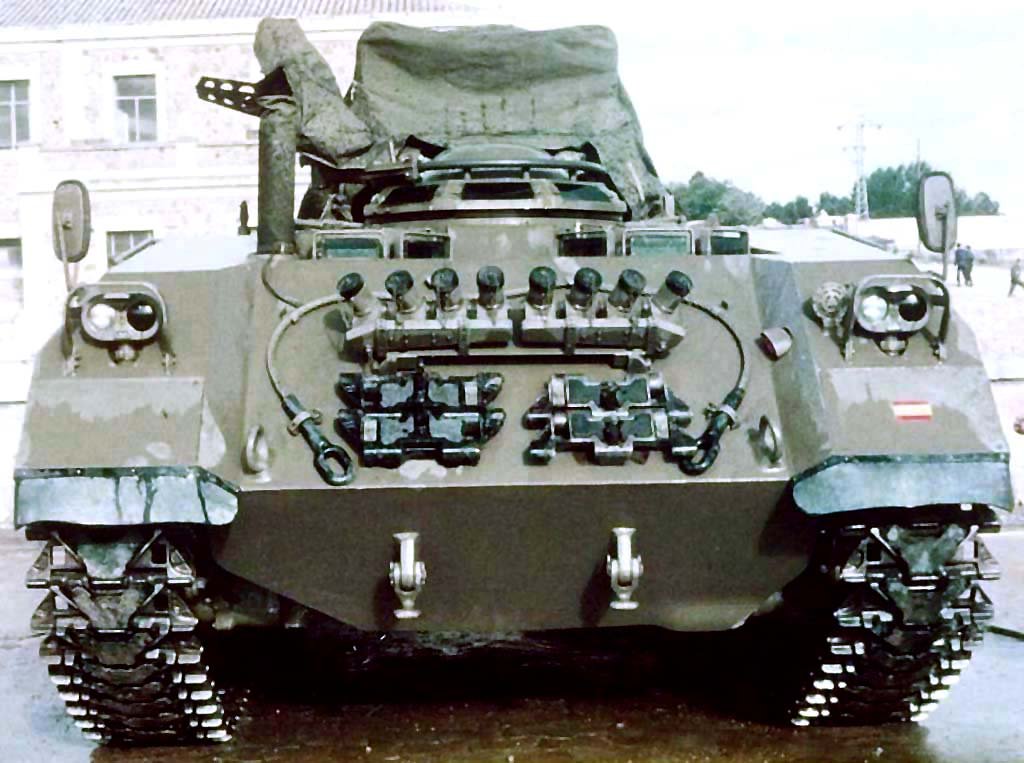
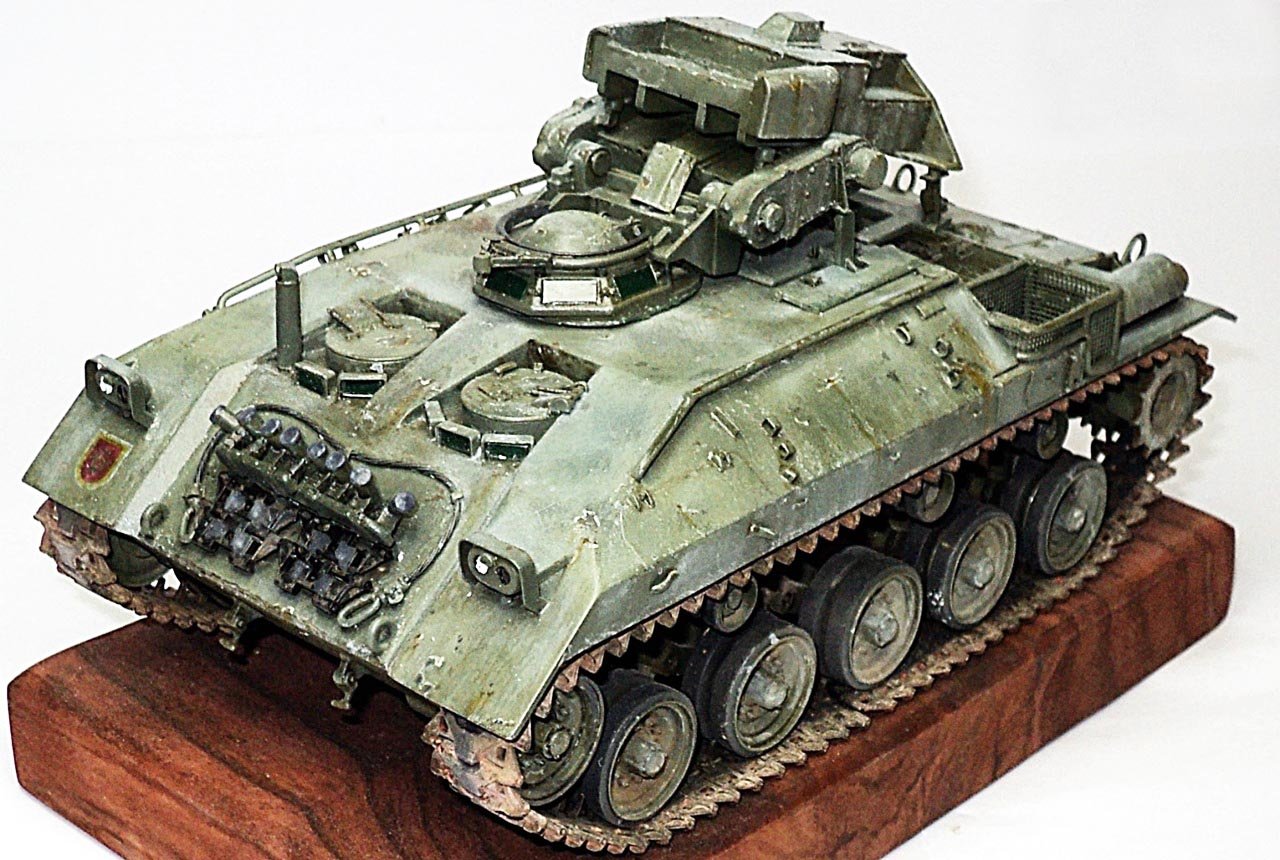
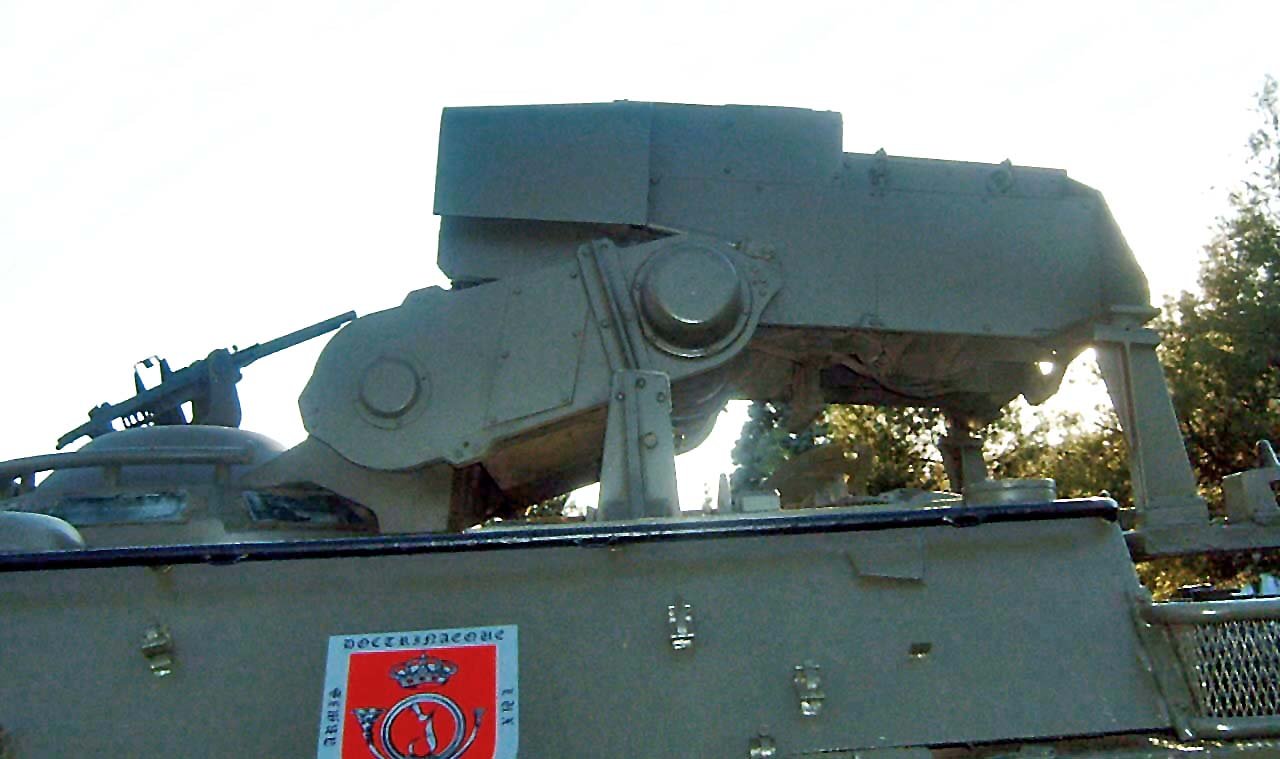
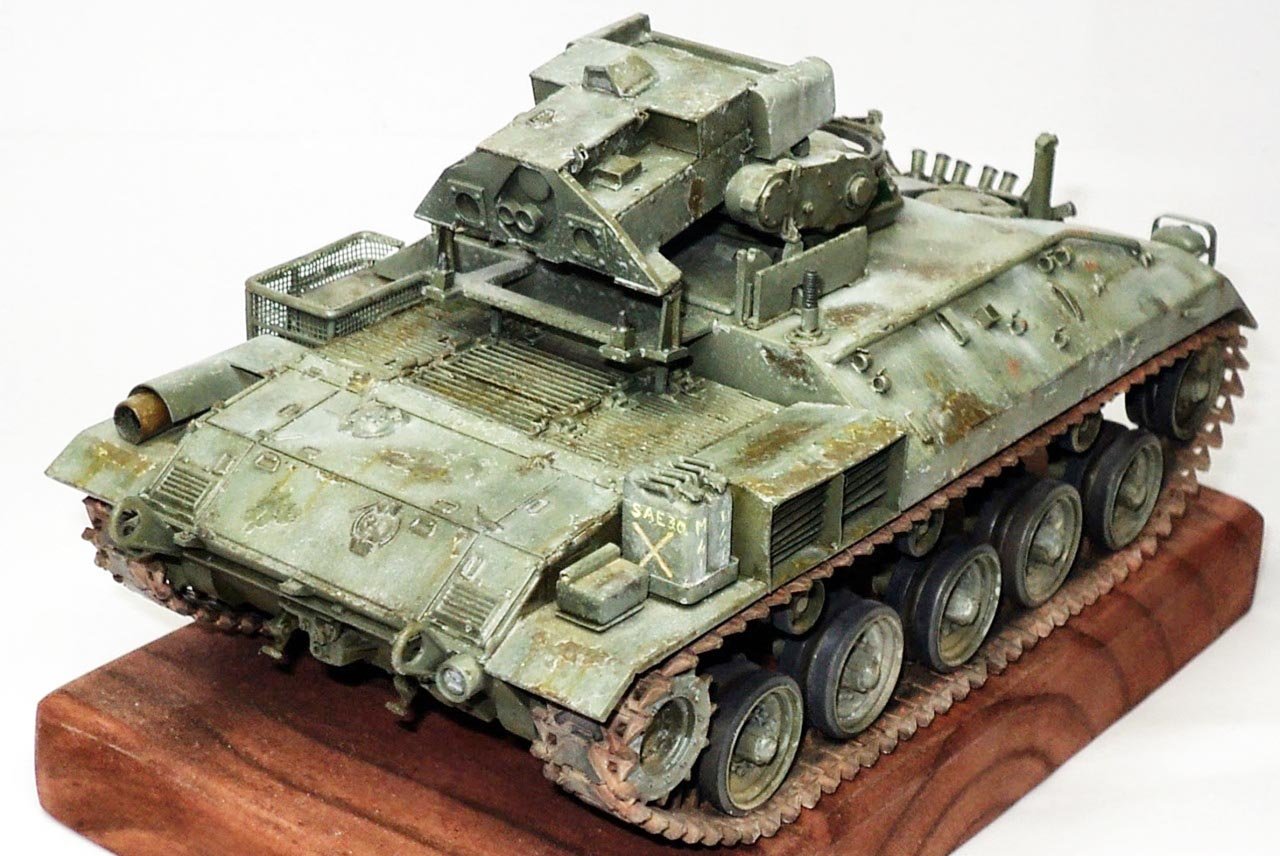
In the early 1980s, Talbot S.A. initiated a series of defense programs aimed at modernizing certain units of the Spanish Army quickly and economically, as all these programs were based on vehicles already in service. These vehicles were practically obsolete, but thanks to these conversions, they could continue providing valuable service for quite some time. Talbot S.A. focused on an anti-tank vehicle designated the M-41E TUA Cazador (Hunter), and on several support vehicles such as the M-47E2 LP and M-47E VLPD 26/70E bridge-laying vehicles, the M-47E2R recovery vehicle, and the M-47E2I engineer tank.The M-41E TUA Cazador project was initiated in the early 1980s and consists of two main elements: a modified M-41E light tank hull and a retractable armored turret armed with a twin TOW missile launcher, similar to that installed on the American M-901 ITV and LAV AT tank destroyers. The TUA (Turret Under Armor) concept was developed in 1976 by the American firm Emerson Electric Co. for the M-901 ITV program. This program aimed to convert M-113 armored personnel carriers (APCs) into powerful anti-tank vehicles using TOW missiles, capable of destroying any tank of the era at long range.M-41E TUA Cazador tank destroyer used the hull of the M-41E light tank, from which the turret was removed and replaced with an armored superstructure made of rolled homogeneous armor (RHA) manufactured by the Spanish firm Fábrica de Armas de Trubia. This superstructure encompassed the entire former crew quarters (driver’s and fighting compartments) and extended to the bulkhead separating it from the engine compartment, which retained its original configuration. The interior of the hull also underwent extensive modifications to accommodate the TUA missile turret, the gunner’s and loader’s stations, the 10 TOW missiles for reloading, and the addition of a portable M-220 TOW missile launcher.The crew consisted of four members: commander/observer, driver, gunner, and loader. The driver was positioned in the front left with the commander to his right. The driver had three M-17 periscopes and one AN/VVS-2 passive night vision periscope with a light intensifier. The commander/observer had two M-17 periscopes and one Kollmorgen M-957 target acquisition periscope. The latter had a 12.5° field of view with 4x magnification, covering a vertical sector from -20° to +10°. Behind these two crew members was the gunner’s M-27 cupola, which had eight viewing blocks and could rotate 360°. The cupola also had a rail for mounting a 7.62mm machine gun. Behind the gunner was the missile launcher loader’s station, which had an M-26 periscope facing the rear of the vehicle. The loader was protected during loading by two armored side shields and by the top cover of his compartment, which opened at a slight upward angle.The running gear was the same as that of the M-41E light tank and consisted of five double road wheels on each side and three double support rollers. The suspension consisted of torsion bars with hydraulic shock absorbers on the first, second and fifth road wheels, with the idler wheel at the front and the drive sprocket at the rear. This powertrain was completely redesigned by Talbot S.A. for this prototype, and also included a new steering and driving system. The braking system consisted of two multiple disc brakes. The tracks were 0.56 meters wide, giving the M-41E TUA Cazador a ground pressure of only 1.1 kg/cm2.The original Continental AOS-895-3 gasoline engine of the M-41E light tank was prone to breakdowns and had exorbitant fuel consumption, giving the vehicle a ridiculous maximum range of only 165 km. Talbot S.A. decided to replace this engine with a 450 hp GMC Detroit Diesel 8V-71T diesel engine coupled to an Allison CD-500-3 transmission with two forward gears and one reverse gear. This gave the M-41E TUA Cazador excellent mobility and facilitated logistics and maintenance, as it was the same power unit used in the American M-107, M-108 and M-109 self-propelled howitzers, which were also in service with the Spanish Army at that time. With the new engine, this vehicle was capable of reaching speeds of over 80 km/h on the road and achieved a maximum range of 560 km thanks to its 800-liter diesel fuel tank. It could climb gradients of up to 60%, overcome vertical obstacles of 0.71 meters, and cross trenches up to 1.83 meters wide.(TUA Cazador model image). The M-41E TUA Cazador’s protection was ensured by plates of rolled homogeneous armor (RHA) with a maximum thickness of 50 mm on the front of the superstructure, 31 mm at a 45º angle on the front of the hull, and 15 mm on the roof of the superstructure. This protection was far superior to that of other tank destroyers of the time, such as the American M-901 ITV or the Dutch DAF YP-408, partly because the vehicle was based on a light tank rather than a lighter personnel carrier. It also featured the TEESS smoke generation system, which injected diesel fuel into the exhaust, allowing the vehicle to quickly disappear. It also had an NBC protection system using internal overpressure.The main armament of the M-41E TUA Cazador consisted of a retractable missile turret called TUA (Turret Under Armor) (on the image) that fired TOW missiles. This system comprised three main elements: the armored launcher, an articulated support, and the missile guidance and control system. The launcher was a rectangular armored box made of steel and 7039 aluminum alloy, inside which two launch tubes for TOW missiles were mounted. Between the two launch tubes was the missile aiming system. During tactical movements, the turret was pointed rearward and folded to present a lower vehicle silhouette. The turret was electro-hydraulically operated and equipped with a manual emergency system. The launcher could fire between -30° and +35° of elevation, allowing firing from defilade, keeping the vehicle out of the enemy’s view.(TUA Cazador model image). The missile aiming system consisted of a 13x magnification daytime targeting and tracking sight coupled with a dual-field IR sensor and the AN/TAS-4 infrared sight for night firing. In addition to these standard TOW missile optical systems, Talbot S.A. installed a new device for the M-41E TUA Cazador, consisting of a 2.8x magnification acquisition telescope with a 25° field of view mounted on top of the launcher. These three optical sights were coupled to an image transfer system formed by a three-position prism that allowed the gunner to switch between them by pressing a single switch.The articulated missile turret mount was armored, being made of the same material as the turret itself, and was H-shaped. This mount also housed and protected the image transfer system, and its lower section was attached to the fixed support of the M-27 gunner’s cupola, allowing them to rotate together. The upper section of the mount secured the launcher itself. The missile control and guidance system was located inside the vehicle and consisted of a circular base plate anchored to the floor. The gunner’s seat, the system’s power batteries, and the missile guidance unit were mounted on this base. This base was attached to the M-27 cupola by a cylindrical column that housed the manual controls, the missile control panel, and the motor and hydraulic system that powered the entire assembly.The BGM-71 TOW (Tube-launched, Optically tracked, Wire-guided) missiles were manufactured by Hughes Aircraft and entered service in 1970. The BGM-71A/B/C variants weighed approximately 19 kg at launch, had a range of 3.75 km, a maximum speed of 1,000 km/h and could penetrate over 400mm (variants A & B) or 630mm (variant C) of rolled homogeneous armor (RHA) thanks to its HEAT (high-explosive anti-tank) warhead containing 2.4 kg of explosive. Upon launch, the projectile unwound two copper wires that kept it constantly connected to the launcher. The gunner corrected the missile’s flight using these wires, making the missile immune to enemy electronic countermeasures (jamming). The M-41E TUA Cazador carried a total of 12 missiles: two loaded and ready to fire, and 10 for reloading inside the vehicle. In the case of the Cazador tank destroyer, reloading was done manually through a loading hatch located in front of the engine. To make the loading process easier, the launcher had to be held at its maximum elevation of 35°.The armament of the M-41E TUA Cazador was completed with a 7.62mm MG-1A3S machine gun installed on a rail in the M-27 gunner’s cupola. This machine gun had 2,000 rounds of ammunition and it was used for vehicle self-defense. Additionally, it carried a portable M-220 TOW missile launcher, allowing the crew to operate the TOW missile from the ground if necessary. Finally, eight 76mm Wegmann smoke grenade dischargers were mounted on the front of the vehicle, giving the vehicle a very distinctive appearance.The M-41E TUA Cazador prototype was presented and delivered to the Spanish Army’s Infantry Academy in 1982, generating considerable interest both in Spain and within the international military community. In May 1983, during the 35th Paris Air Show at Le Bourget, Talbot S.A. gave the prototype its world premiere by displaying it in the Emerson Electric Corporation pavilion. At that time, there were real possibilities of selling the Cazador tank destroyer to countries that used the M-41 Walker Bulldog light tank, with an estimated 2,000 units in service. Unfortunately, as is often the case, the Spanish Army did not acquire the vehicle, despite the outstanding performance demonstrated during testing, and the entire project dissolved like a sugar cube in a glass of water. The importance of this project is reflected in the fact that the prototype has been preserved and is on display in the inner courtyard of the Infantry Academy.In 1982, Talbot S.A. presented another prototype (on the image) based on the same M-41E light tank chassis, but armed with a mock-up of the Euromissile HAKO/HCT (HOT Compact Turret) missile launcher turret. The HAKO turret featured a manual traverse system with electro-hydraulic fine-tuning for aiming. This rotating turret was armed with four Franco-German HOT anti-tank missiles mounted in pairs and offered the option of mounting various optical, thermal, and night vision sights. Unfortunately, this prototype also failed to receive the necessary support and impetus from the Spanish authorities, and the project was also canceled.