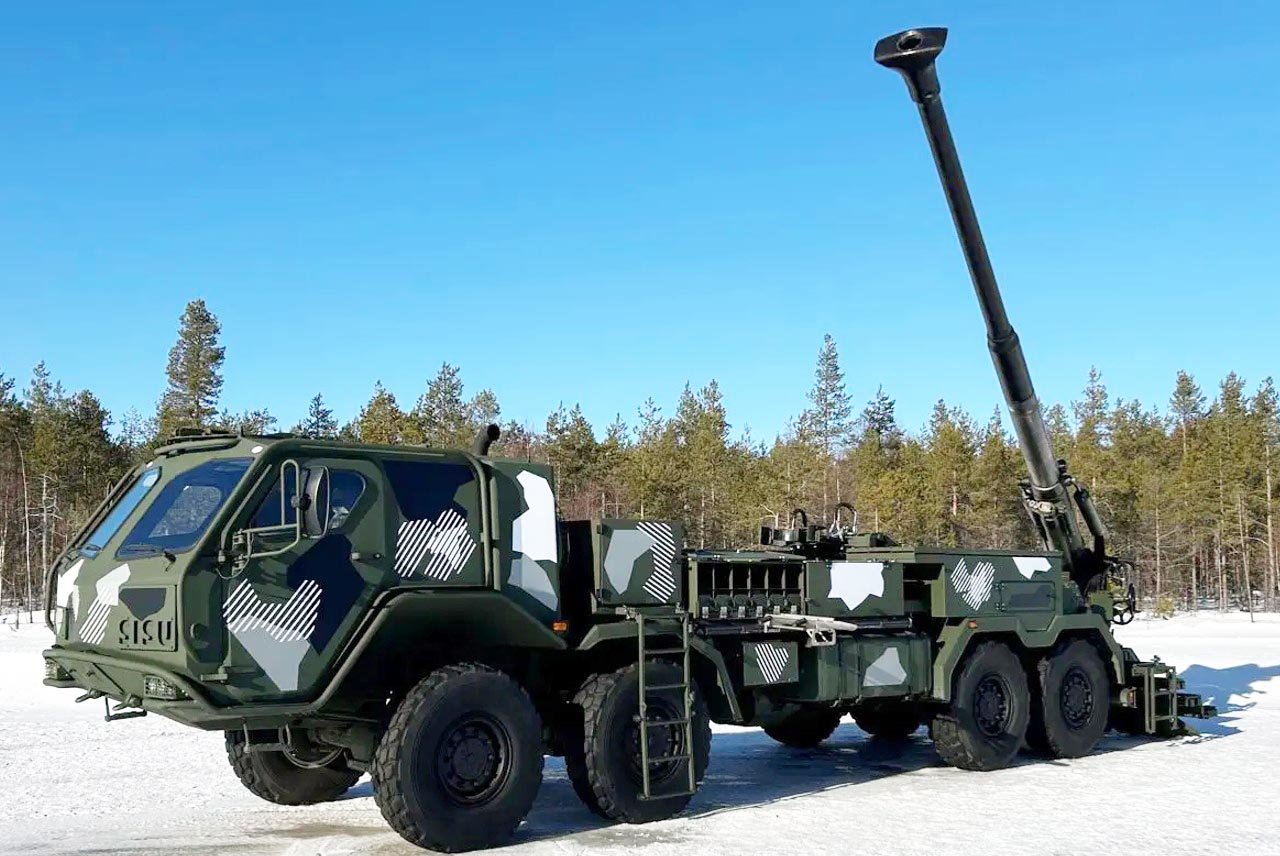
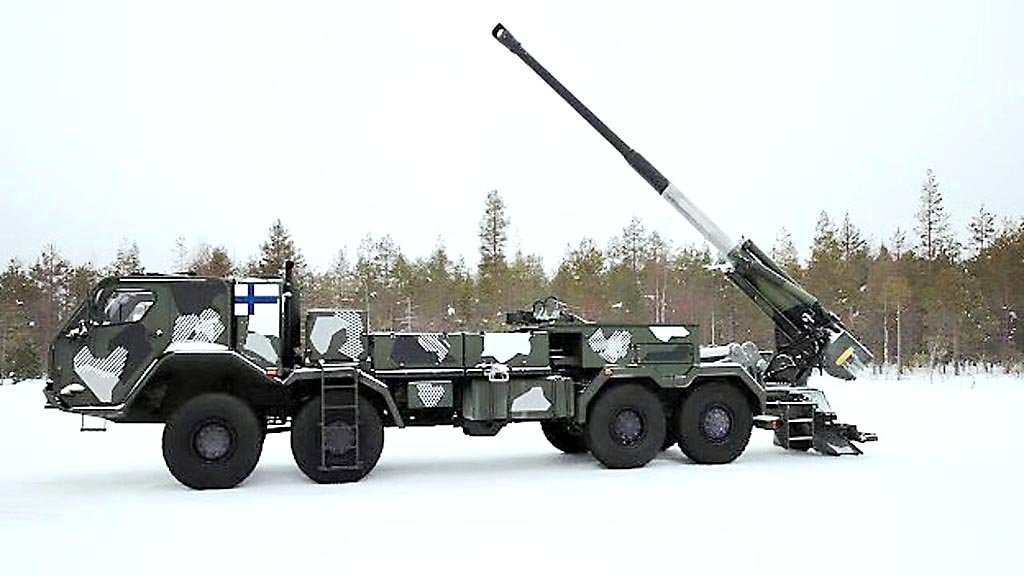
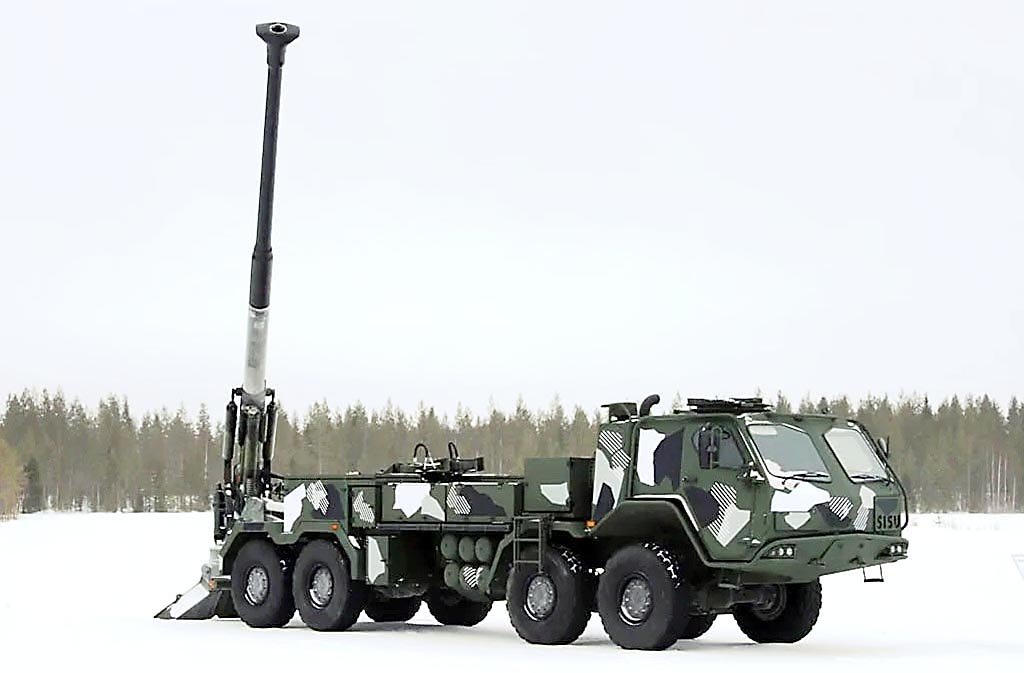
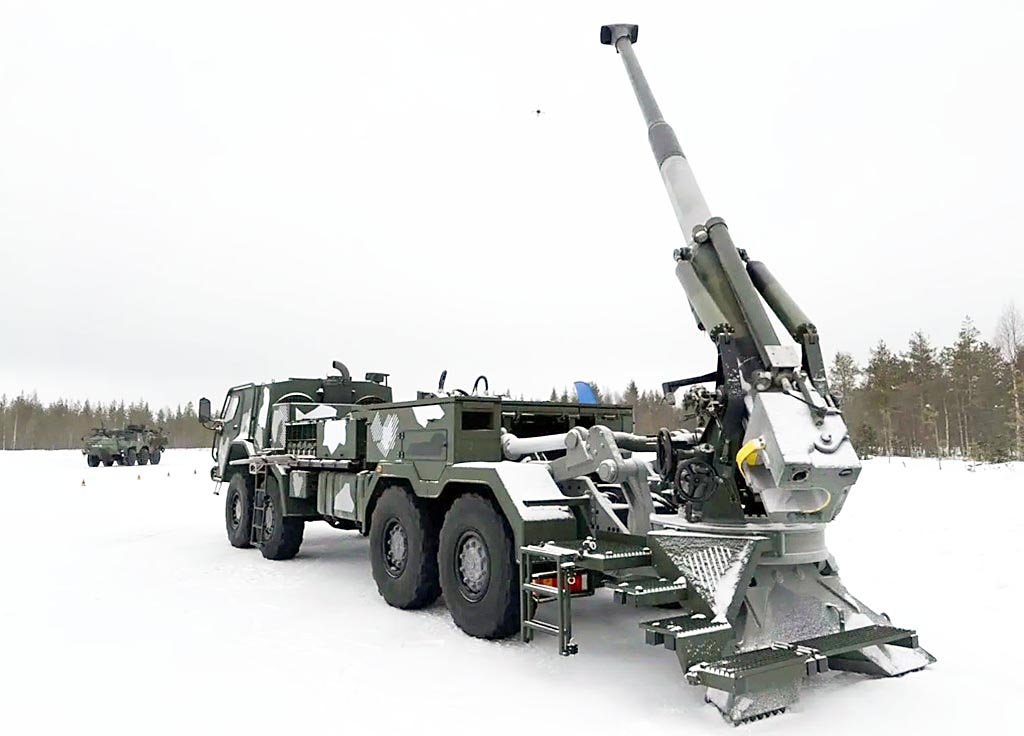
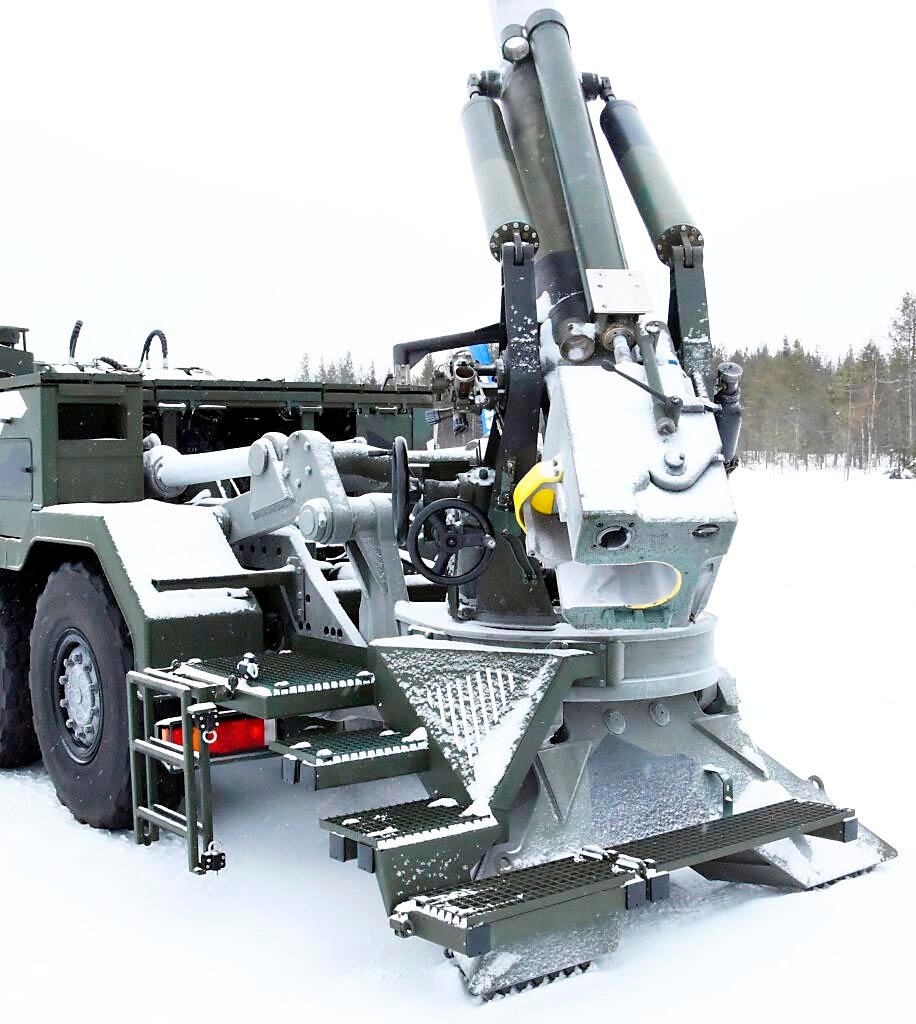
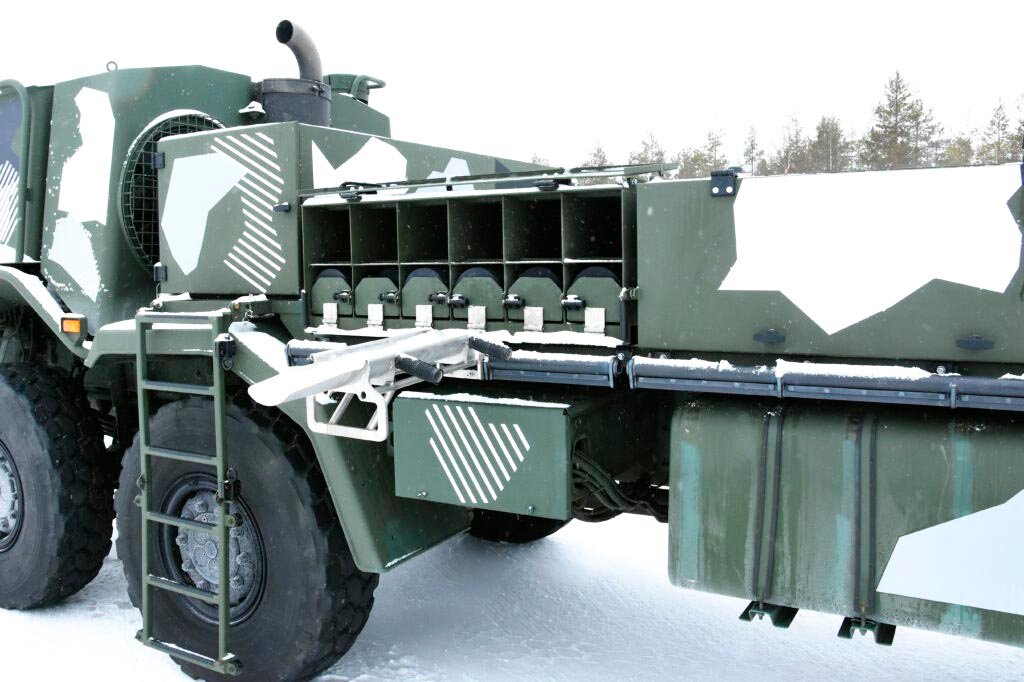
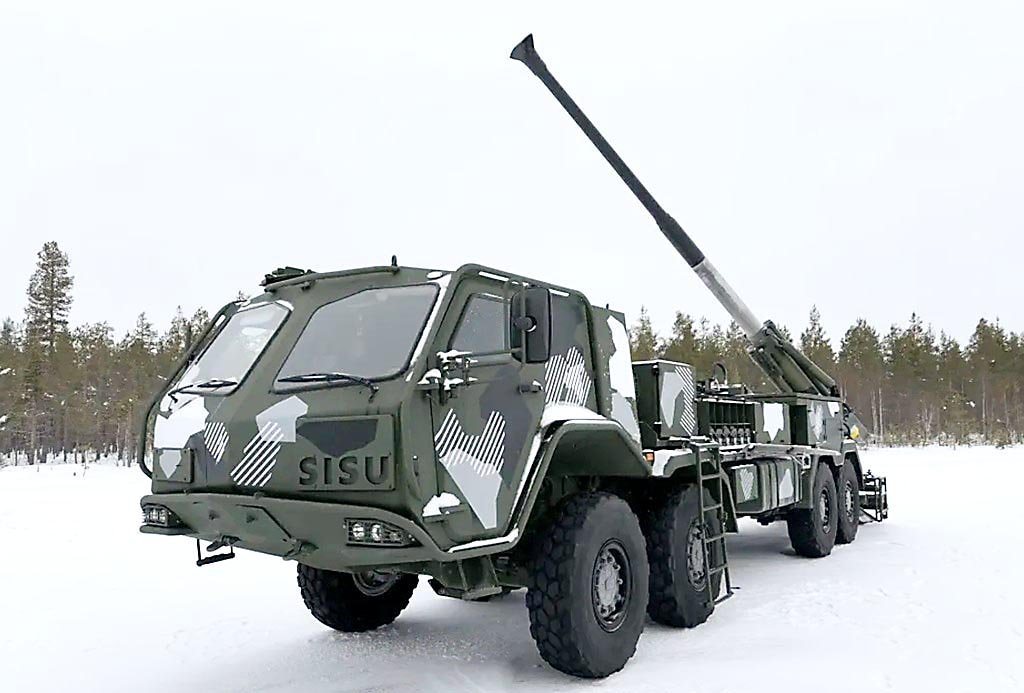
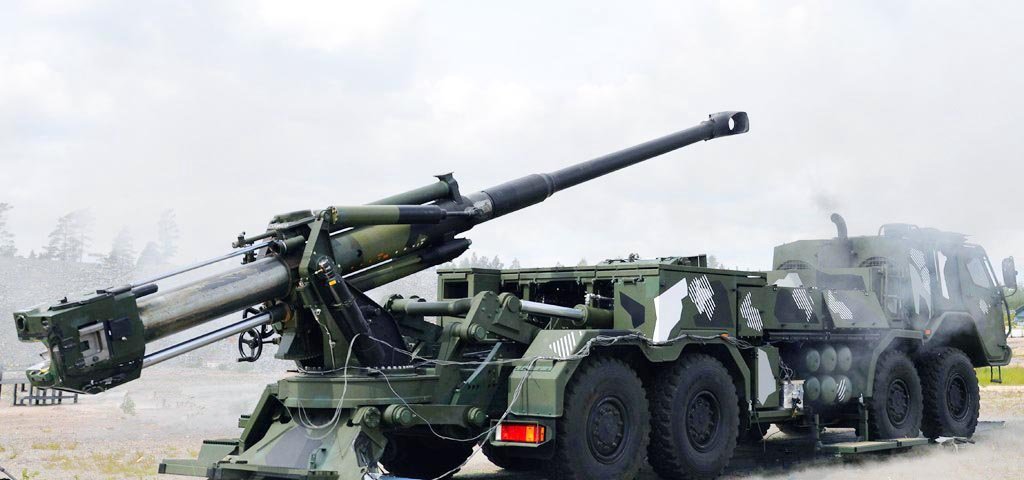
In 2005, the Patria company began developing a system to integrate a 155 K 98 howitzer onto the chassis of a T-55 tank, with the aim of exporting it to Egypt, a user of both systems. This vehicle was designated “155GH52-SP-T55”, but the system was ultimately rejected. Again in 2015, Patria began work on the construction of a new self-propelled howitzer for the Finnish Army. It wasn’t a vehicle designed from scratch, but rather the integration of the Patria 155 GH 52 APU towed howitzer (designated as the 155 K 98 within the Army) onto an 8×8 SISU E13TP platform. The program aimed to demonstrate Finland’s ability to develop a completely Finnish artillery system, without relying on foreign companies. A conceptual design was presented to Finland’s Defense Committee in 2015 as an alternative to acquiring a new self-propelled howitzer, but in 2017, the Finnish Army acquired a batch of 48 used South Korean K9 Thunder howitzers, halting the program initiated in 2015.The Russian attack on Ukraine in late February 2022 highlighted the need for robust defensive capabilities within Europe, particularly evident in Finland, a country bordering Russia. Work initiated by Patria was immediately resumed, and in 2024, an order was placed for a prototype, which was unveiled on March 20, 2025, during the Arctic Event at the Rovajärvi firing range in Rovaniemi, Finland. After a 20-year hiatus, Patria presented the prototype of a new artillery system, which is also the first self-propelled howitzer built in Finland, the 155/52mm Patria ARVE.The platform selected for the ARVE system prototype is the 8×8 SISU E13TP truck, used by the Finnish Army. This truck, which entered service in 2007, is used as a platform for mobile radar systems, bridge-laying vehicles, recovery vehicles, and others such as the NASAMS surface-to-air missile system. It is powered by a 445 hp Caterpillar C13 inline-six turbo-diesel engine, which allows for a top road speed of over 100 km/h. The vehicle has a range of 600 km thanks to its 400-liter diesel fuel tank and can ford water up to 1 meter deep without preparation.This artillery system weighs approximately 28 tons and has a crew of six, but the prototype only has a cabin for two crew members, although a larger cabin to accommodate the entire crew is planned. The cabin has ballistic protection according to NATO standard STANAG 4569 level 2 against small arms fire and shell splinters, as well as mine protection according to STANAG 4569 level 2a. In addition, it has an NBC protection system using air pressurization. A total of 24 complete rounds are carried, distributed on both sides of the chassis. To provide stability during firing, a hydraulic stabilizer (spade), very similar to that of the Swedish Archersystem, has been installed at the rear of the vehicle. This spade transmits most of the recoil force to the ground after firing.The ARVE system’s armament consists of the 155/52mm 155 K 98 howitzer, which entered service in 1998 and has a maximum range of 28 km with standard rounds and 40 km with base-bleed rounds. The barrel weighs approximately 13.5 tons, measures 8.06 meters, and is equipped with a single-chamber muzzle brake. This howitzer can fire all types of 155mm ammunition and features a telescopic direct-fire sight and an optical panoramic periscopic dial sight. It has a hydropneumatic recoil system and a semi-automatic sliding block horizontal breech mechanism.The howitzer is manually loaded and aimed, and its operation is exactly the same as the towed version. The maximum rate of fire is 8 shells per minute, although the maximum sustained rate is 2 rounds per minute, allowing for a burst of 3 rounds in 15 seconds. The elevation angle ranges from -3° to +60° and it has a small degree of traverse movement depending on the elevation. The ARVE self-propelled howitzer can fire its first shot 90 seconds after reaching firing position and disengagement from this position takes only 45 seconds, giving it a good shoot-and-scoot capability.The ARVE 8×8 prototype lacks any automatic loading or aiming system, but Patria can automate these functions upon request. An electric gun laying system and various other equipment can also be installed to enhance the system’s capabilities. Currently (January 2026), this system is not in service with any army, although the Finnish Navy is replacing its 130 fixed coastal guns mounted in 53 fortified turrets, which have been in service for at least 20 years. The ARVE is likely a good candidate to replace this equipment. Furthermore, it is also possible to install the Finnish 155/39mm 155 K 83 howitzer, older and with a shorter range than the 155 K 98, but manufactured in much larger numbers and with acceptable capabilities. Of course, the ARVE system cannot currently be compared to other wheeled self-propelled artillery systems like the Serbian Nora B-52 and Aleksandar or the Swedish Archer, but this doesn’t seem to have been Patria’s intention.This prototype offers a quick and cost-effective way to transform a towed howitzer into a much more efficient and survivable mobile system on a battlefield dominated by small, lethal drones, as has been evident during the 2022 Russian-Ukrainian War. This conflict is demonstrating that maintaining a firing position for more than a few minutes is impossible and this situation makes keeping towed artillery systems in service almost suicidal. Therefore, it’s easy to foresee that in the near future, most armies will opt for these types of inexpensive and rapid conversions that allow them to keep these indirect fire artillery systems, so necessary during operations. Perhaps the ARVE‘s success lies in its simplicity; only time will tell.