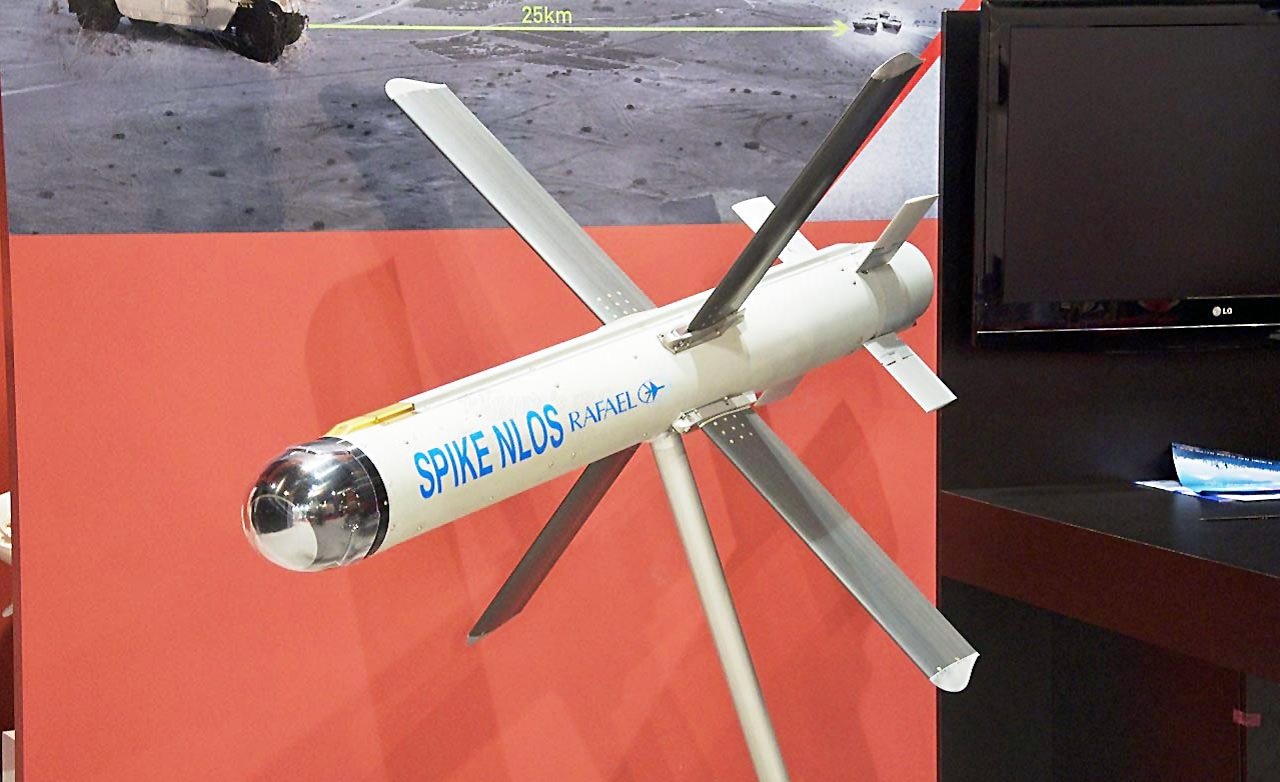
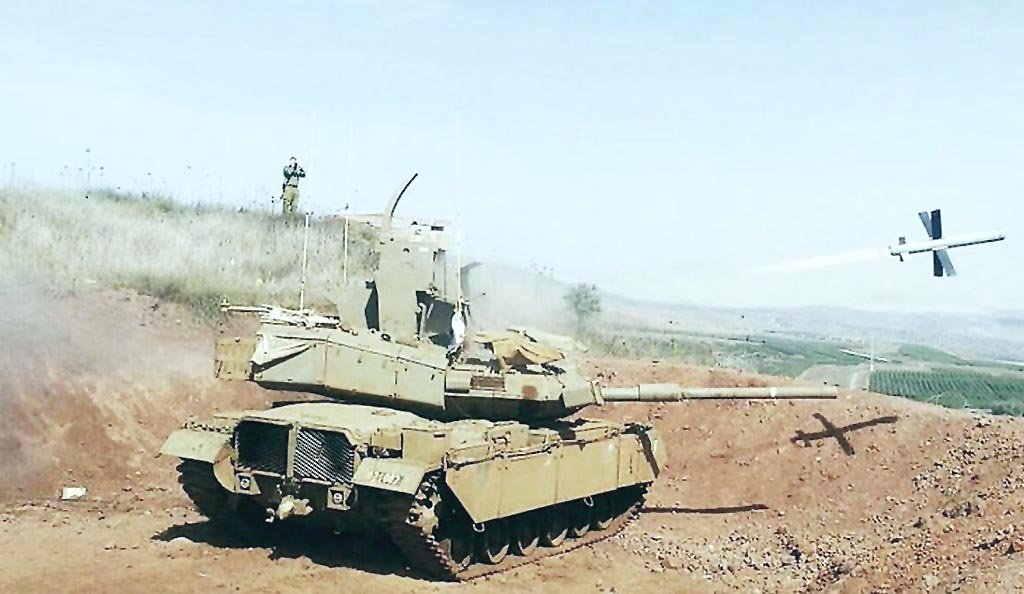
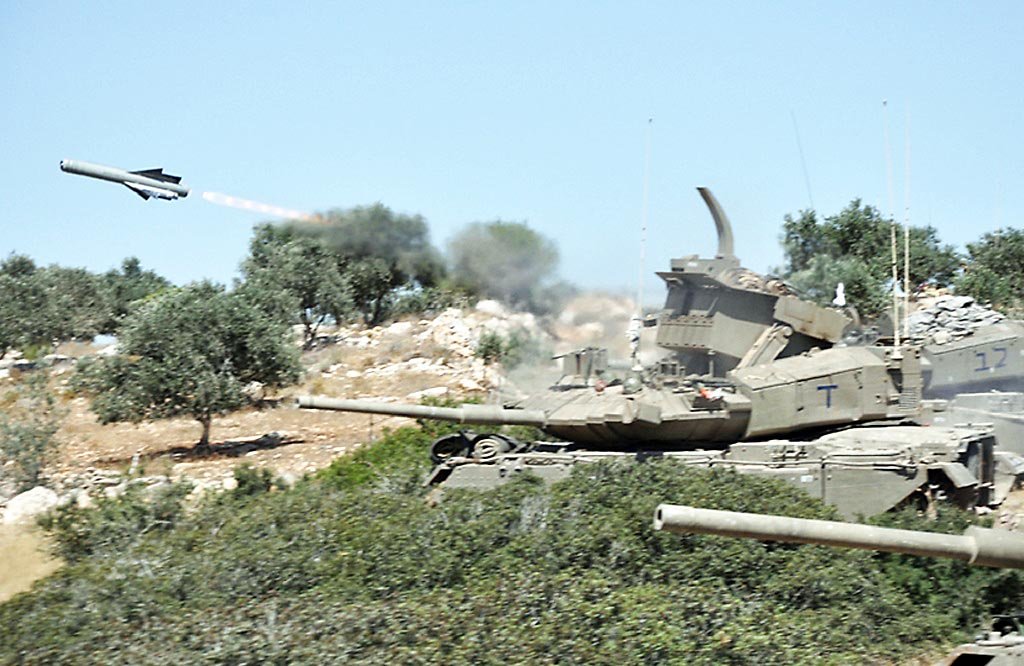
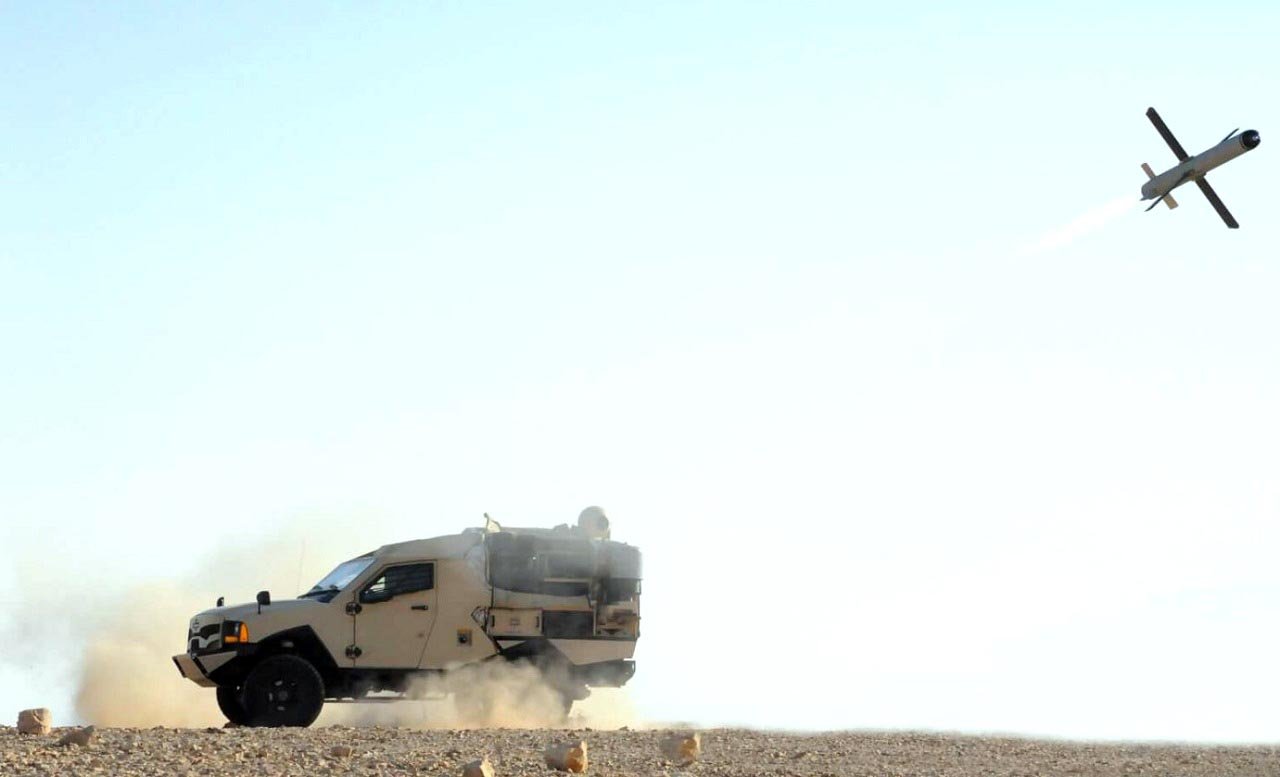
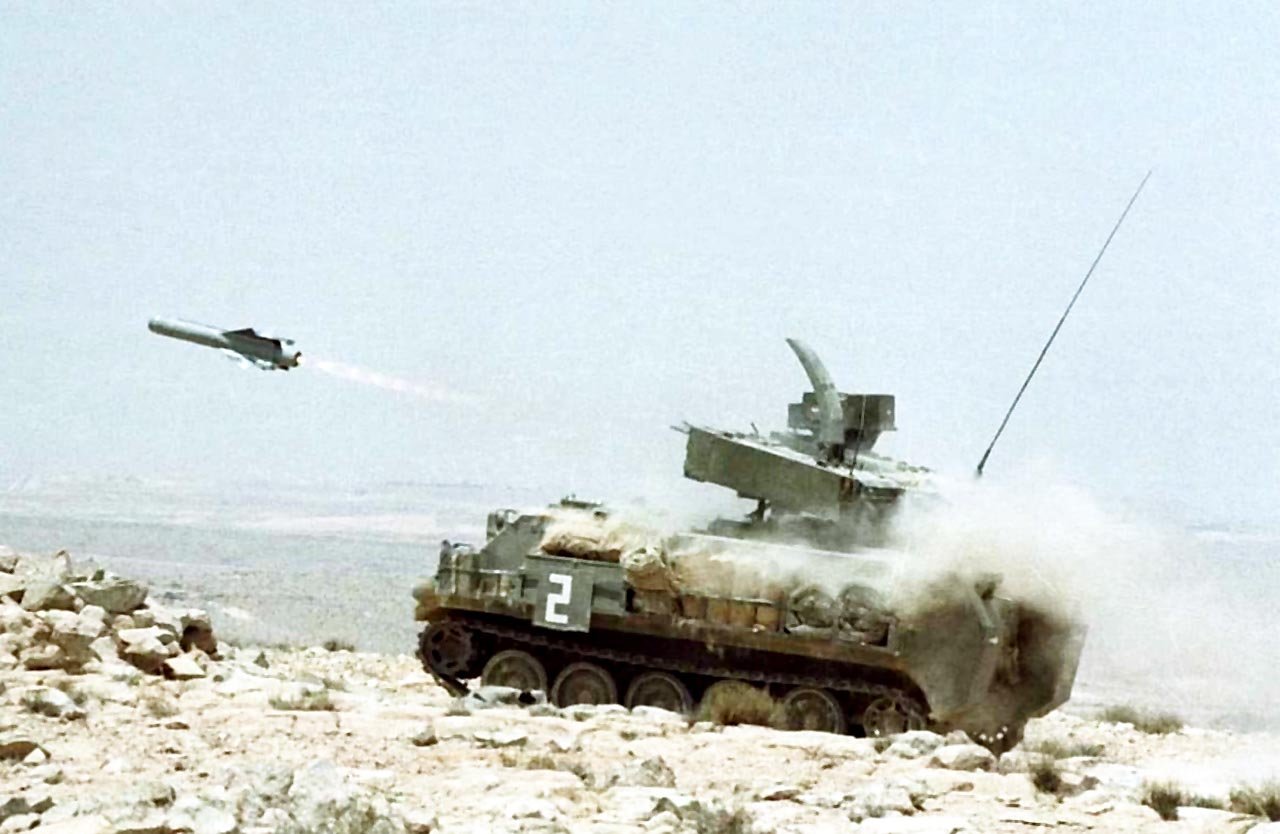
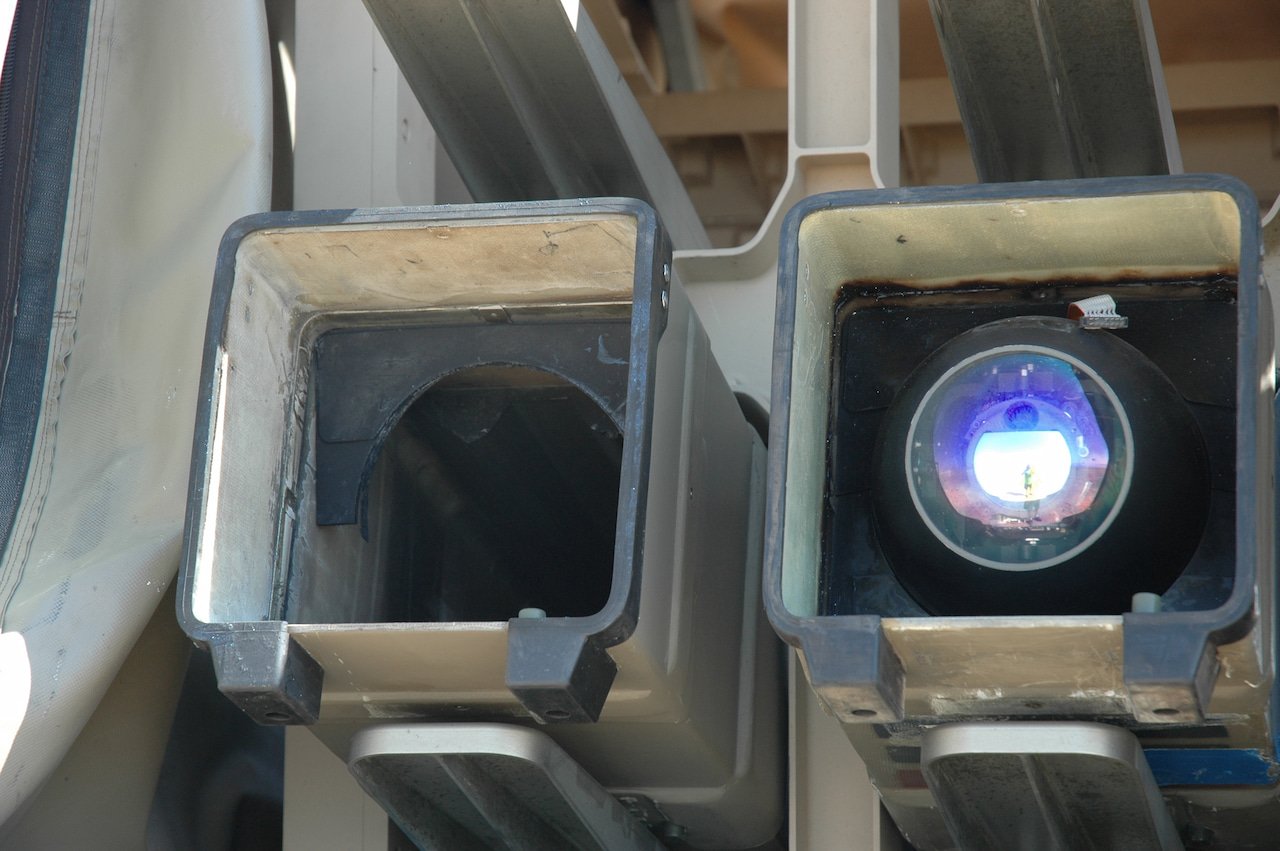
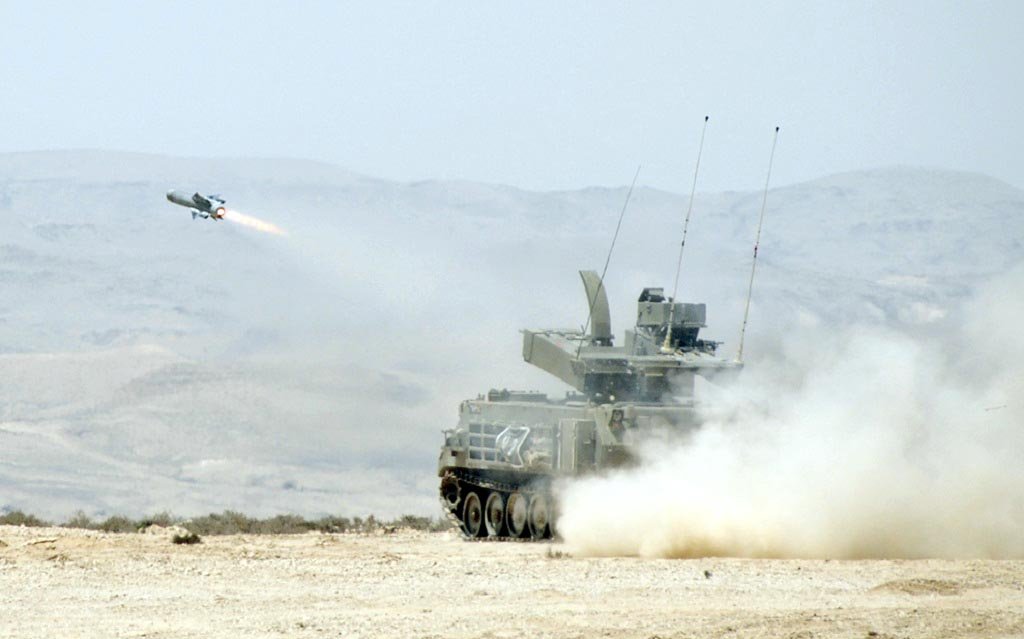
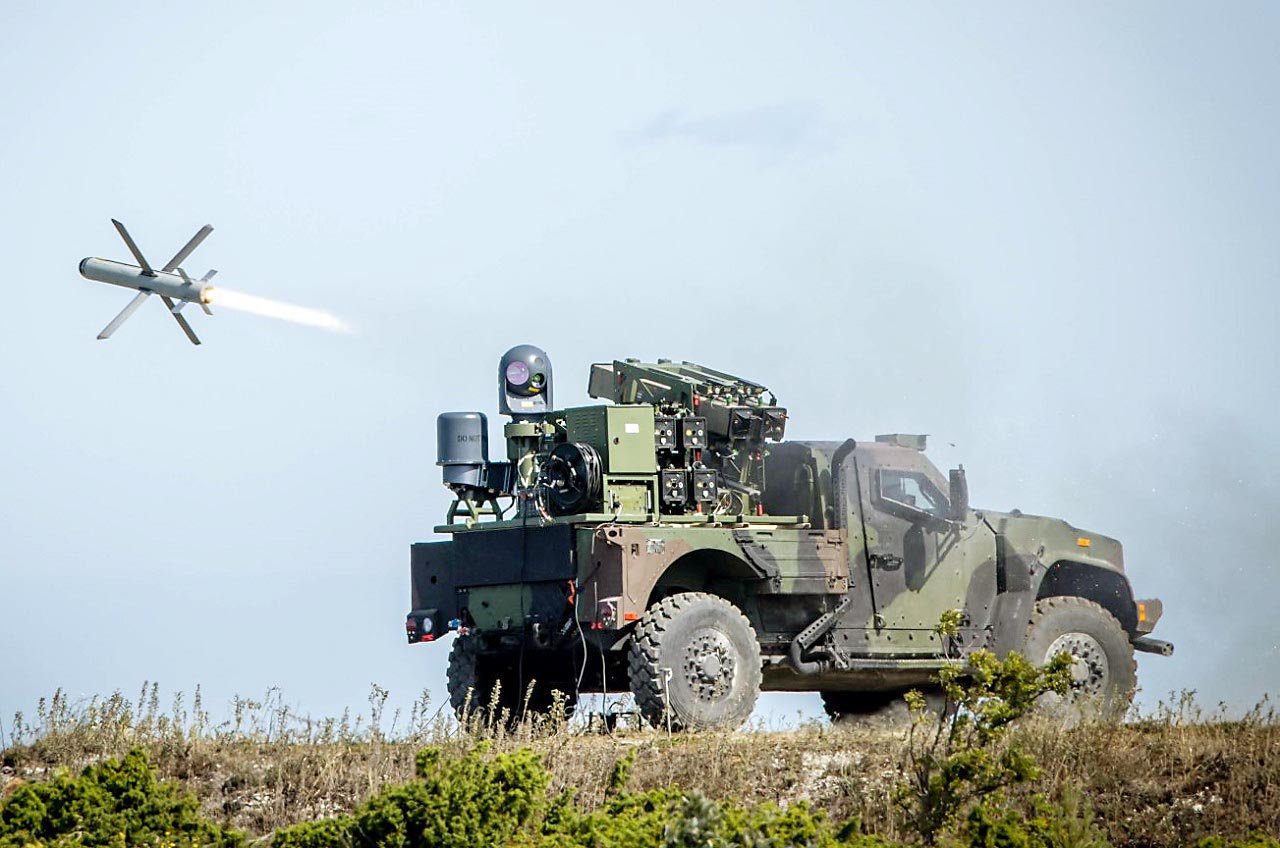
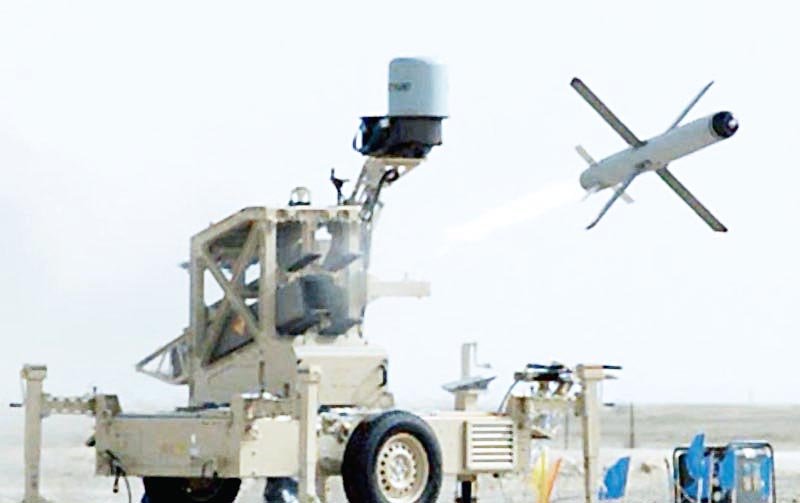
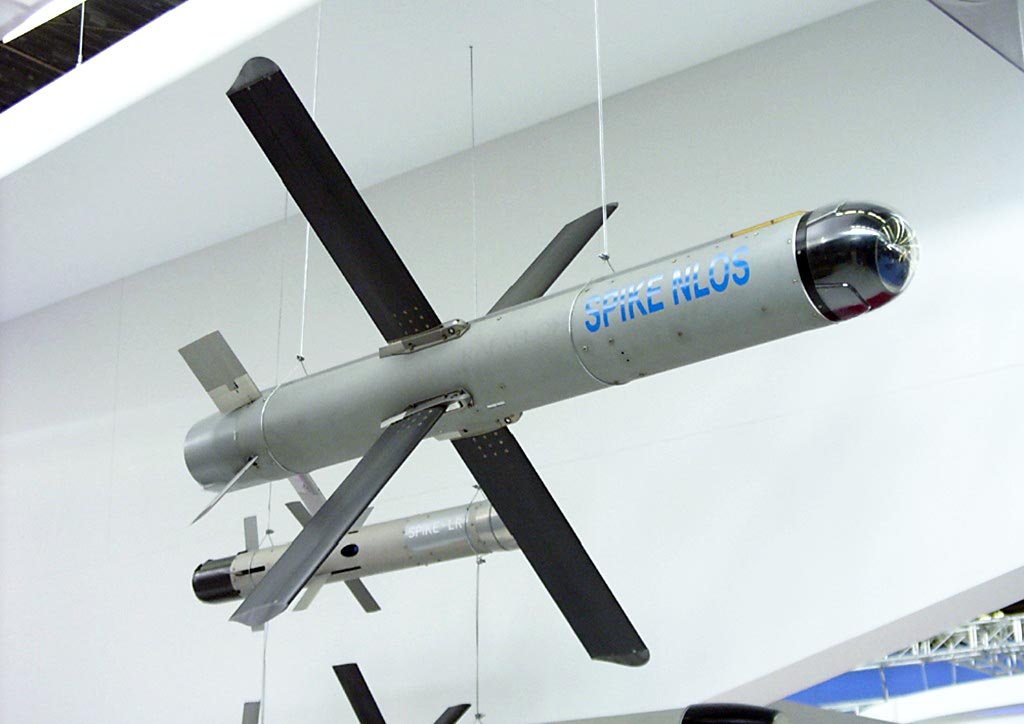
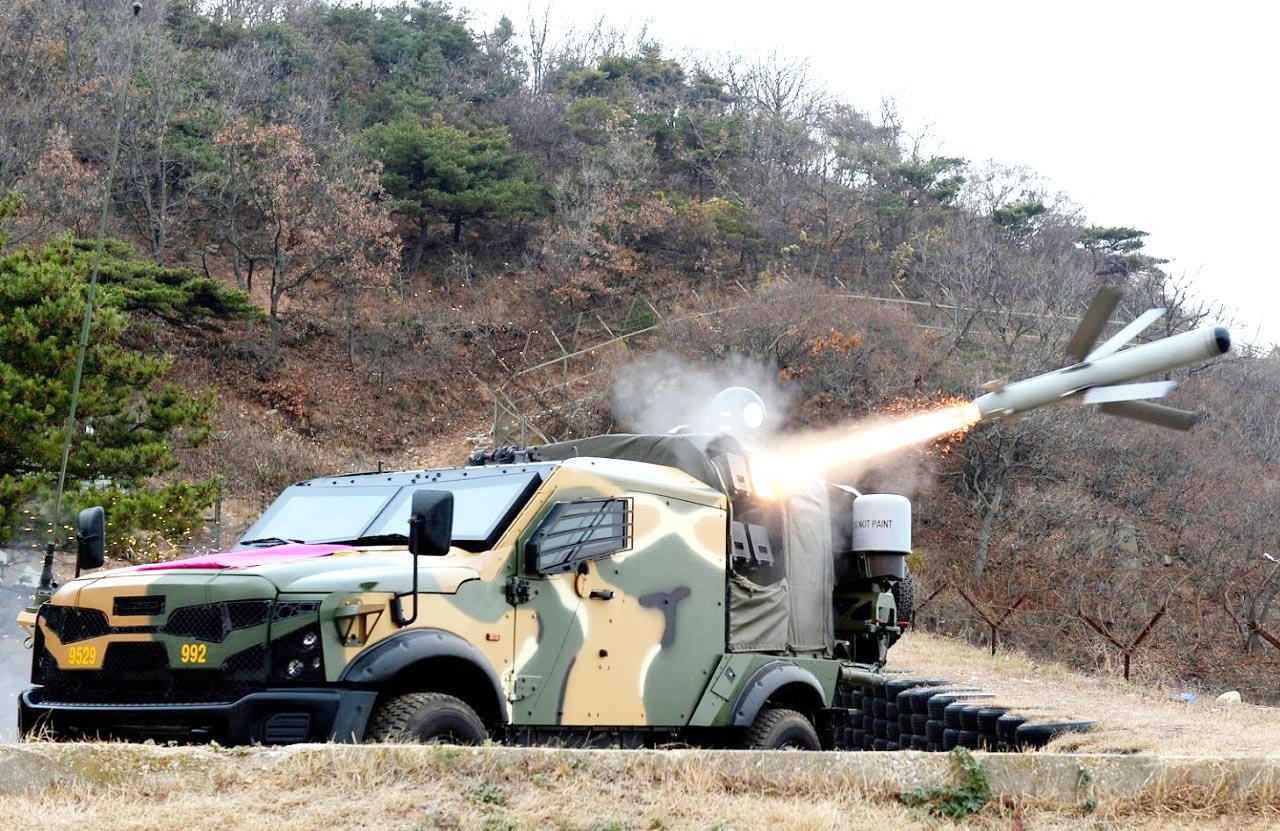
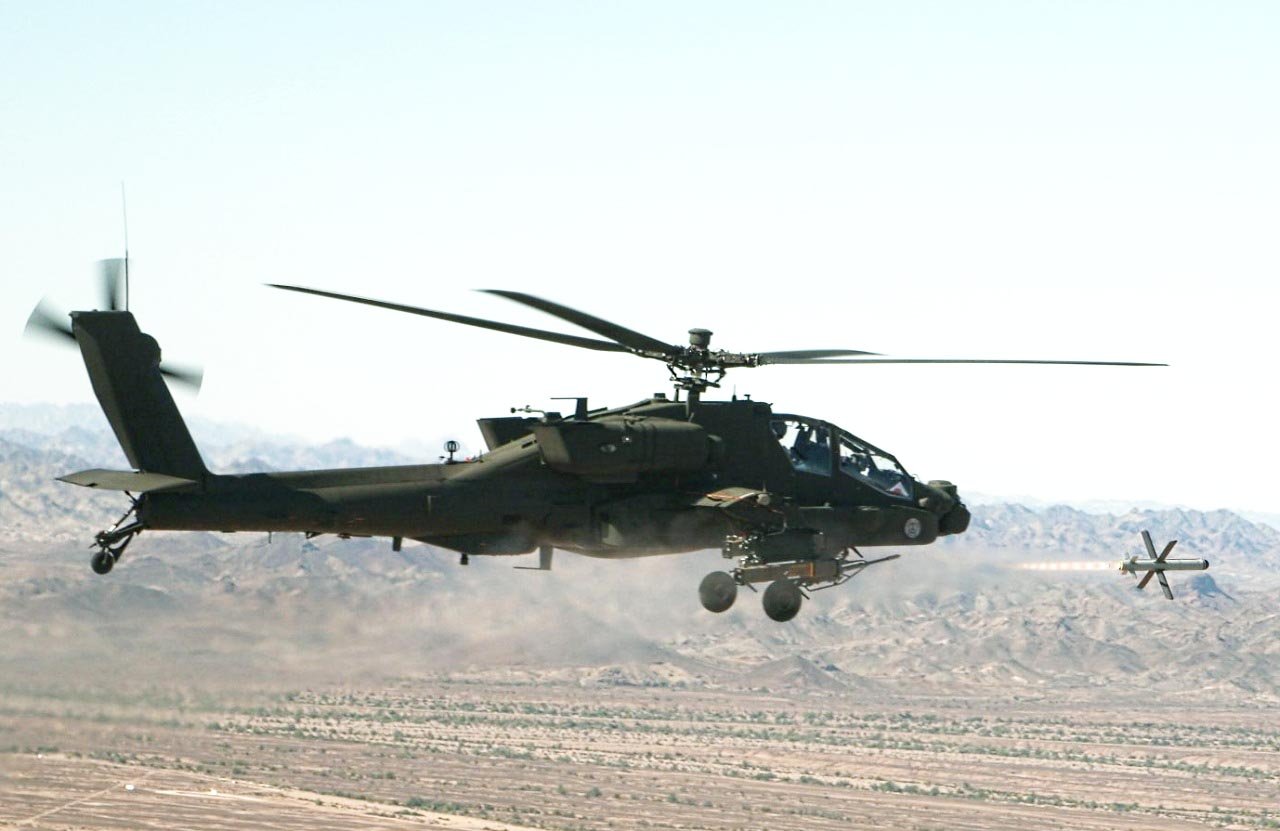
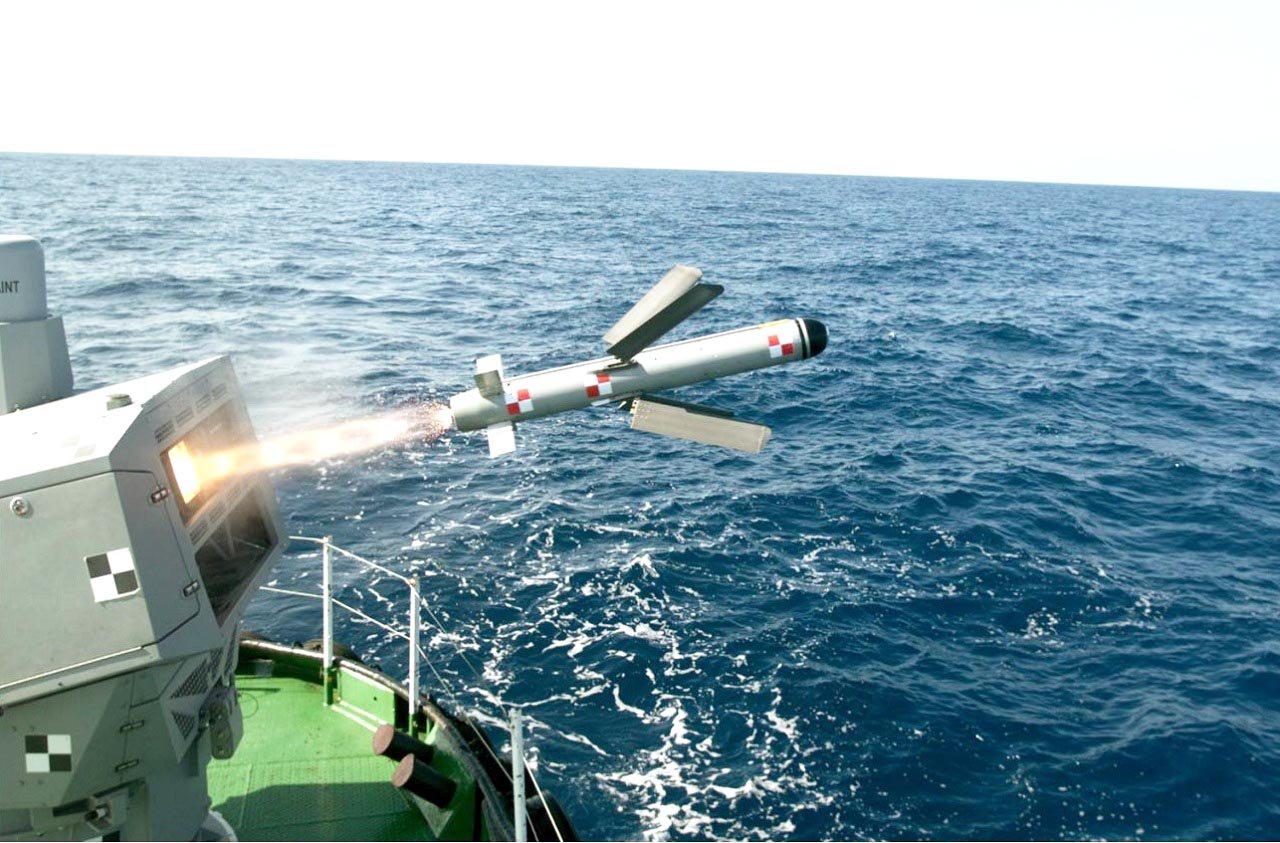
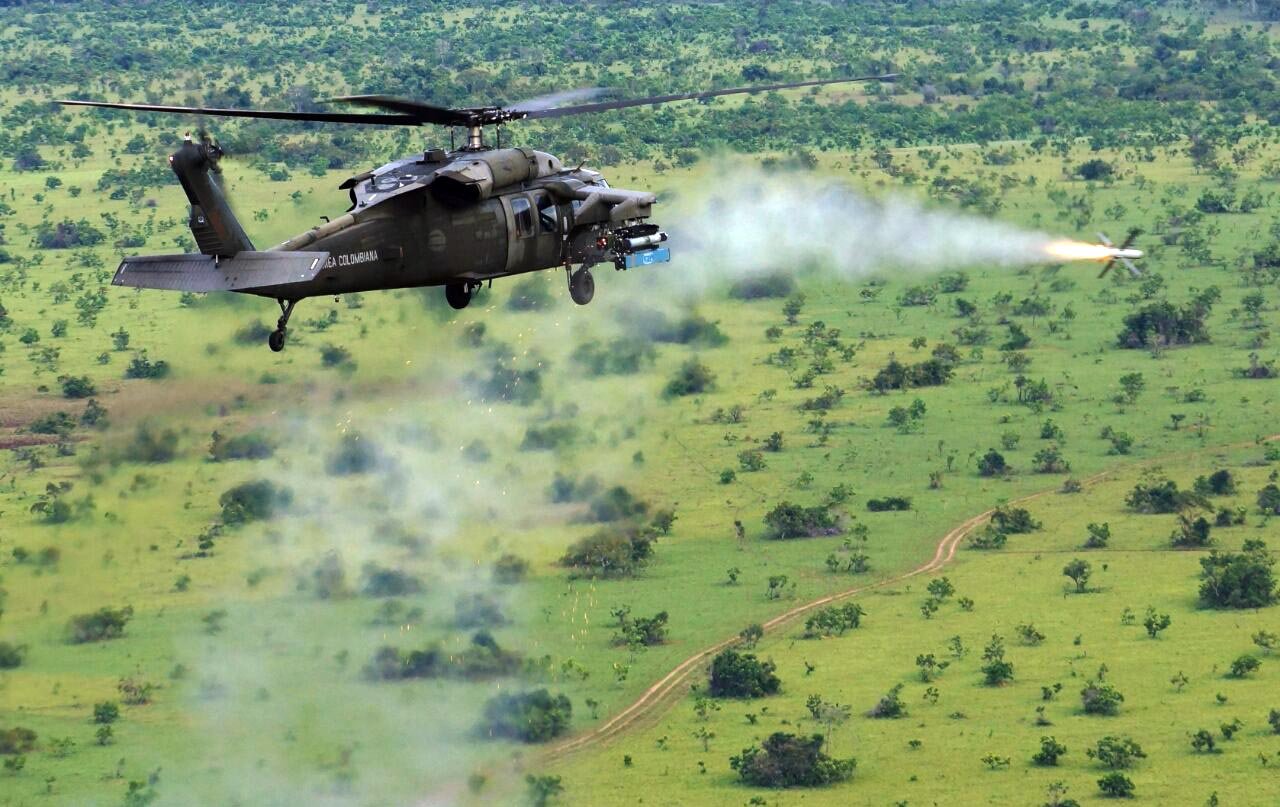
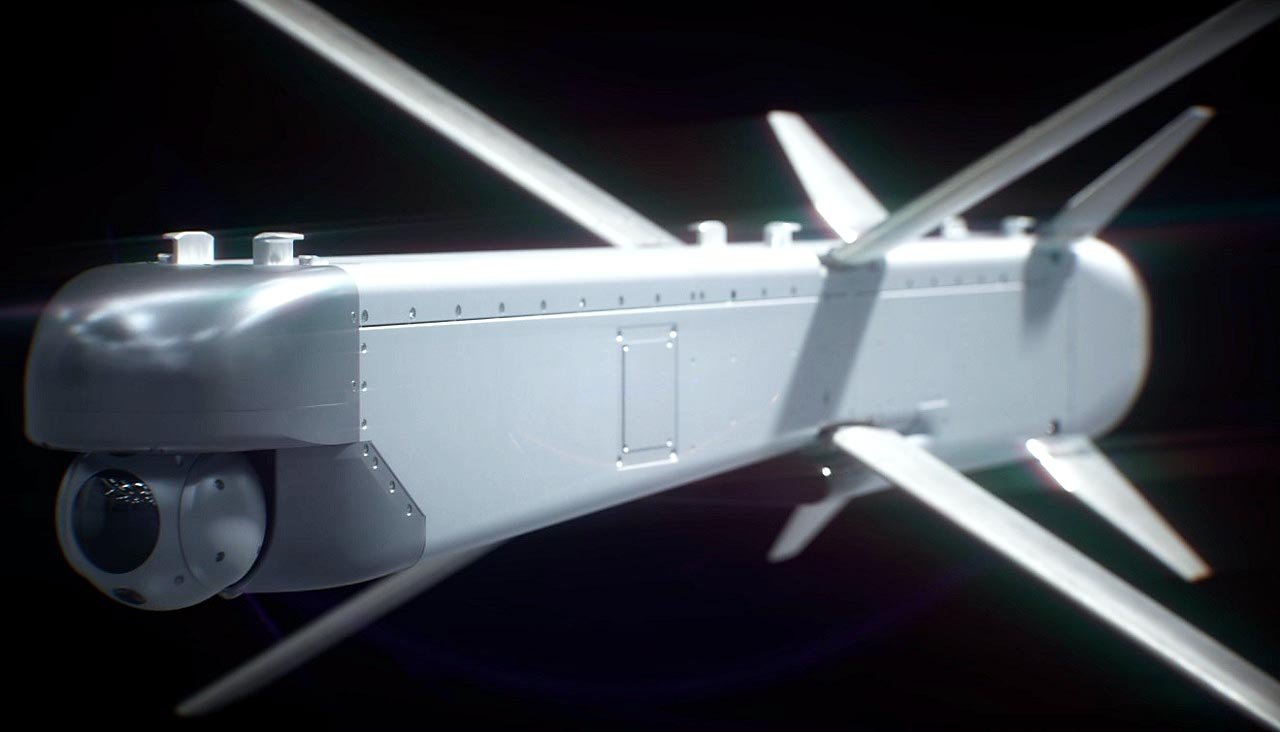
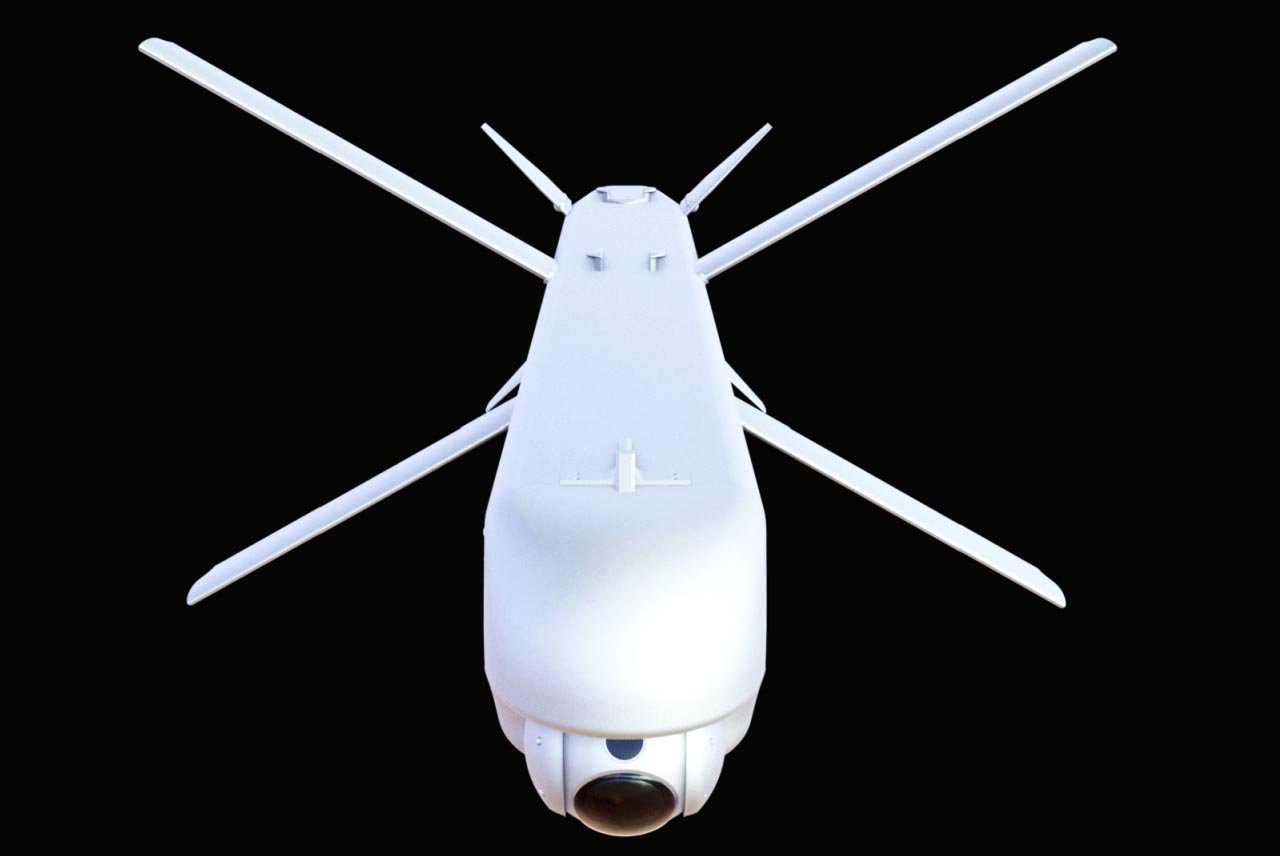
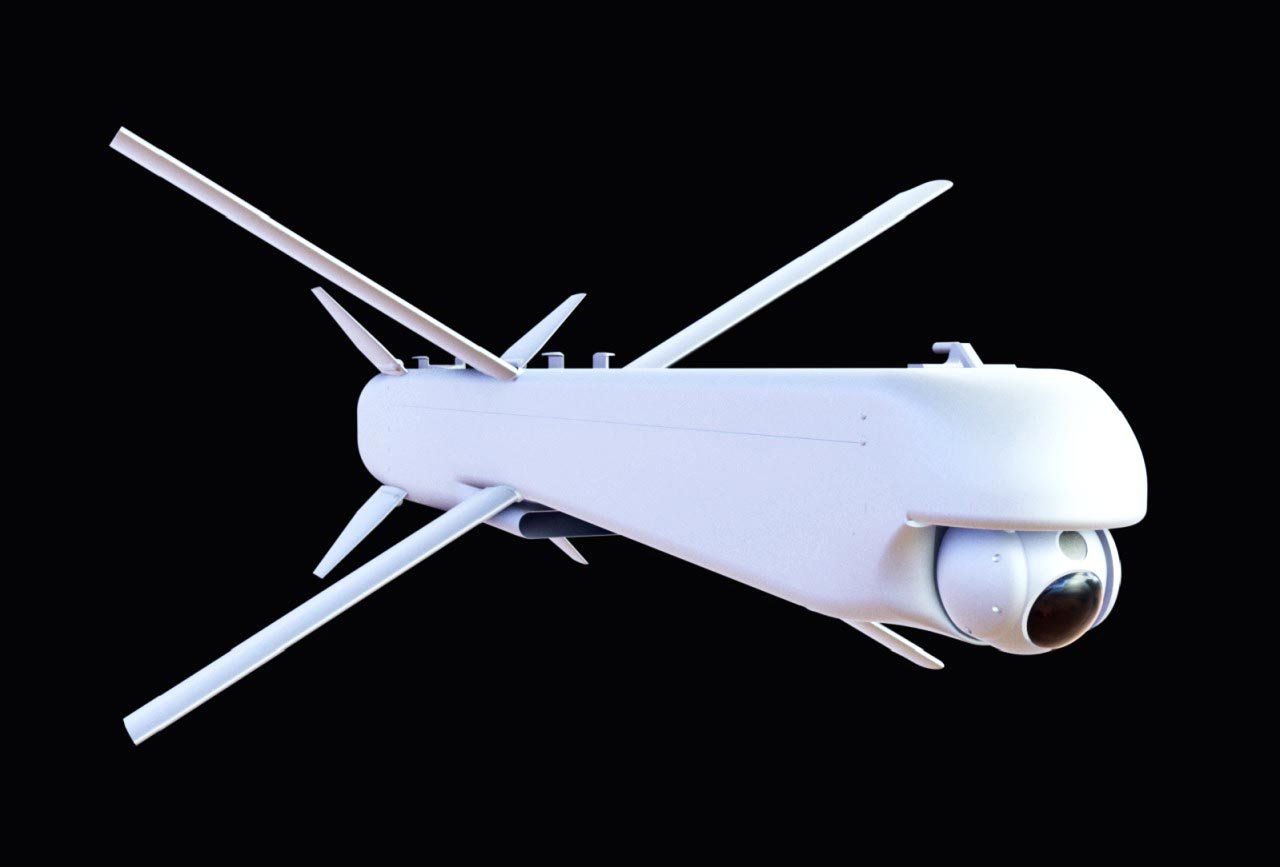
(Spike NLOS image). The origins of the Tamuz missile date back to the aftermath of the 1973 Yom Kippur War, when a commission called Agranat carried out an analysis of the failures of the Israeli Defense Forces (IDF) during that conflict. The commission concluded that a large number of anti-tank missiles were necessary to counter the superior numbers of Arab armored units and artillery in potential future conflicts. Because of this, Rafael began developing a new missile that would meet the requirements set by the Israeli Army. Finally, in the early 1980s, Rafael unveiled the result of several years of development: the “Tamuz” missile.(Pereh firing a Spike NLOS missile image). Tamuz missile entered service in 1984 and was intended for use by artillery units. More specifically, they were assigned to an elite artillery unit called “Meitar”. The arrival of the Tamuz missiles led to the development of a unique tank destroyer armed with these missiles, the “Pereh” (savage). The Pereh is an M-48 (Magach 5) main battle tank fitted with a 12-cell missile launcher and an electro-optical fire control system. A total of 40 tanks were modified and assigned to the Meitar unit.(Pereh firing a Tamuz missile image). Both the Tamuz missile and the Pereh tank destroyer were classified as “secret” by Israel, and it wasn’t until 2011 that the IDF revealed the existence of Tamuz missile. The Pereh was officially confirmed 4 years later, in June 2015. Due to the secrecy surrounding their development and use, complete data on their performance is unavailable, but it is known that the Tamuz was a 70 kg multi-purpose missile that could be used in limited visibility conditions, both day and night. Thanks to its low radar, optical, and acoustic signature, it was very difficult to detect once in flight and the missile carried a dual electro-optical guidance system (TV and IR) which made it very precise. The maximum speed was between 470 and 650 km/h and the maximum range was 25 km. This missile was usually used in conjunction with UAV systems that provided the precise location of the target.(Spike NLOS image). When Tamuz missile entered service in 1984, it featured some unique performance for a missile of its size. The missile could be launched from a stand-off position, away from enemy forces, without the launcher needing to have the target in sight (non line of sight). In this way, the missile could be launched toward a point approximately close to the target and its trajectory modified in flight using more precise data provided by observers on the ground or aerial vehicles such as helicopters or UAVs. The Tamuz was equipped with an anti-tank warhead capable of penetrating 1,000mm of armor, although it has been used to destroy any type of ground target in addition to armored vehicles, such as command centers, artillery, or troop concentrations.(Hafiz firing a Tamuz missile image). The sequence of use of the Tamuz missile was as follows: the missile was fired and ascended to a height where the TV and IR systems had an optimal view of the area to be attacked and sent the images of the possible targets via a data link to the operator, who then selected the target to attack and guided the missile to it. In addition to the Pereh tank destroyer, the missile was also used from another vehicle designated “Hafiz”. The Hafiz is an M-113 armored personnel carrier equipped with a 360º steerable turret that carries two sets of three missiles, one set on each side, and the necessary command and control elements. Inside the vehicle, another 4 missiles are being transported for reloading.(Spike NLOS image). Little is known about the use of this missile, but in 1992, it almost starred in a truly audacious operation. In response to Iraq’s launch of Scud missiles during the 1991 Gulf War, the Israeli General Staff decided to launch Operation Bramble Bush. This operation would have involved the infiltration of a Sayaret Matkal commando unit armed with Tamuz missiles into Iraq, specifically Tikrit, where they would attack Saddam Hussein while he was attending the funeral of his uncle. Ultimately, the operation was canceled, and the missile remained shrouded in secrecy for almost another 20 years.(Hafiz firing aTamuz missile image). In 1992 the Tzahal (IDF) decided that the missile would only be used in times of war, but in 2004 that order was revoked and it began to be used at will. This missile is known to have been used extensively during the Second Lebanon War in 2006, where around 600 were launched, but with largely unsatisfactory results. In 2009, during Operation Cast Lead, the Tamuz was used against Hamas targets in Gaza, this time with significant success due to a change in the doctrine for use in urban areas. During 2009, the missile was used intensively because the stockpiled missiles were nearing the end of their service life, and also because Rafael had completed the development of a new missile.(Spike NLOS image). Aside from Israel, the only other known user of the Tamuz missile was the United Kingdom, which in 2007 secretly acquired 600 missiles and 14 M-113 Hafiz launchers for use in Afghanistan directly from the Israeli inventory due to urgent need. The missiles were delivered in three different variants: 200 optical camera-equipped Tamuz Mk.2 in 2007, 200 thermal imaging-equipped Tamuz Mk.4 in 2008, and 200 dual camera-equipped Tamuz Mk.5 in 2009. The British Army designated these missiles EXACTOR-1 (Tamuz Mk.2 and Mk.4) and EXACTOR-2 (Tamuz Mk.5).(SPARC launcher image). The Tamuz Mk.4 was designed for night operations due to its thermal imaging camera, and the Tamuz Mk.5 was modified by adding wings to reduce its speed and improve its maneuvering flight. Additionally, the Mk.5’s original anti-tank warhead was replaced with a new multi-purpose warhead. The missile’s performance in combat with the British was somewhat uneven, as the Tamuz Mk.2 was too fast and difficult to guide. For this reason, the British funded the development of the Tamuz Mk.5 missile and a new towed remote launcher known as “SPARC”. The SPARC is a towed trailer that mounts four missiles on a 360° rotating turret that can be remotely fired from a distance of 500 meters. Although information regarding these missiles is confidential, it is quite likely that the British Army maintains this missile in service.On November 30, 2009, Rafael unveiled a new missile called Spike NLOS (Non-Line-of-Sight) (on the image). This new missile was essentially an upgrade of the Tamuz and is designed for use from all types of land, air, and naval platforms. It is an electro-optically (TV and IR) and CCD image sensor guided missile, weighing 70 kg and with a range of 25 km. It features terminal guidance, radio frequency communication, GPS mid-course navigation and has the ability to change its target at the last moment or abort the mission. The Spike NLOS missile uses a fiber optic link up to 8 km away, and then a radio data link for command guidance, although in the latest versions, the fiber optic link has been replaced by another radio data link. The original Spike NLOS missile carried a Rafael tandem shaped hollow charge armor-piercing warhead suitable against all types of armored vehicles.(South Korean Spike NLOS image). Spike NLOS is not man-portable, so Rafael has designed a launch system called Vehicle Missile Launching System (VMLS) that is integrated into all launch turrets. They also market the remote launch system SPARC, developed in 2009 along with the British. The missile features a “soft launch” system, similar to the American Javelin or the French Akeron MP, and is propelled by a solid-propellant rocket. The sequence of use of this missile differs slightly from the earlier Tamuz and is as follows: the missile is launched and reaches a certain altitude and maintains a relatively slow speed of almost 800 km/h, being able to remain in flight for about two minutes while the electro-optical system (TV and IR) sends real-time images, allowing the operator to acquire the target and fine-tune the point of impact (Man-in-the-Loop mode). Also features a direct attack mode using LOBL (Lock-On-Before-Launch) or LOAL (Lock-On-After-Launch) modes.Spike NLOS missile has been adapted for use from helicopters, the first being some Israeli AH-1 Zefas, which had their nose guns replaced with a steerable radio frequency antenna to guide the missiles. In this case, the missiles were designated “Machtselef”. The current Spike NLOS-Heli variant has a range extended to 50 km, carries multipurpose warhead and features man-in-the-loop capabilities like retargeting and mission abort. In 2014, it was chosen by the South Korean Navy for its Agusta Westland AW-159 Wildcat helicopters and 110 were ordered by Colombia for use in Sikorsky AH-60L Arpía IV helicopters. In 2020 the US Army began integration testing on its AH-64E Apache helicopters (on the image), and in 2021 placed an order for 205 missiles.(Naval Spike NLOS image). Since 2011, Rafael has introduced several improvements to the Spike NLOS guidance system, adding a new semi-active laser (SAL) seeker to the existing EO-IR/CCD systems. They have also developed various high-explosive fragmentation, blast-penetration, and anti-armor warheads which makes it a multi-purpose missile. In 2022, Rafael unveiled the new Spike NLOS 6th generation missile, which has a range of 50 km and can be fired in salvos of up to four missiles. Missile control can be transferred to another platform during flight, and it is adapted for use from Heron-TP UCAVs. It also features a modern system called “Target Image Acquisition Capability” that prioritizes the importance of targets to be attacked. There is also a naval variant used by the Israeli Navy that has a range of 32 km and features an infrared imaging camera with image processing capabilities and a dual passive electro-optical guidance system.(Colombian AH-60L Arpía IV image). Current users of the Spike NLOS missile are: Azerbaijan (Army), Bulgaria (Army), Colombia (Air Force), Greece (Army and Navy), Philippines (Navy), South Korea (Army, Navy and Marines), the United Kingdom (Army), and the United States (SOCOM, Marines and Army). Regarding its operational use, it is known to have been used by Israel during 2012 and 2013 against Syrian patrols and military posts in the Golan Heights, during Operation Protective Edge against Hamas in 2014, during the 2023 Israeli invasion of the Gaza Strip and recently by Mossad agents during the June 2025 Israeli strikes on Iran (Operation Rising Lion).In October 2025, Rafael unveiled a new missile designated “L-SPIKE 4X Launched Effect”. This system is a missile designed with integrated loitering capabilities, not a UAS (unmanned aerial system) equipped with a warhead, which is a key difference, as loitering munitions are typically slow and more vulnerable. It is an electro-optical (EO), day and night, 6th generation tactical loitering missile system with a maximum range of approximately 40 km. The missile features a turbo-jet engine and takes 5 minutes to travel these 40 km, and once there, it can loiter for up to 30 minutes in search of a target.The guidance system is entrusted to a dual seeker and a dual channel tracker with real-time automatic target location, identification and tracking capabilities. It also has simultaneous VIS/IR target tracking, target image acquisition (TIA) and automatic target recognition (ATR) supported by AI. All these systems provide a high strike precision with CEP (circular error probability) of less than 1 meter. Likewise, the L-Spike 4X has immunity to GPS jamming or spoofing countermeasures and it’s very difficult to detect thanks to its low signature profile and high speed. The missile comes in a canister, weighs 50 kg, and can be launched from land, air, or naval platforms.L-Spike 4X is fully compatible with Spike NLOS missile launchers and can be used simultaneously with them. It can also be launched from Spike LR2 launchers, with which it shares the day/night electro-optical guidance system. It can be fired in salvos of four missiles, and a single operator can monitor and coordinate them simultaneously, maintaining human decision authority at all times. Lethality is guaranteed thanks to the two types of warheads available; a tandem HEAT (High Explosive Anti-Tank) or a multipurpose PBF (Pentration Blast Fragmentation) warhead.