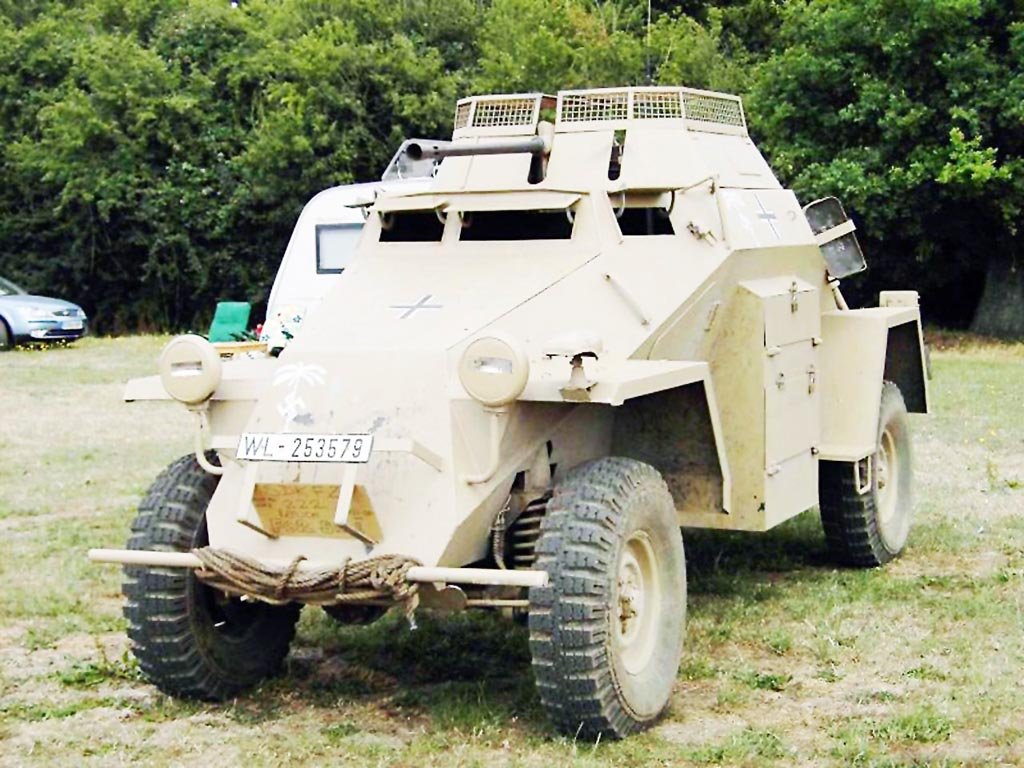
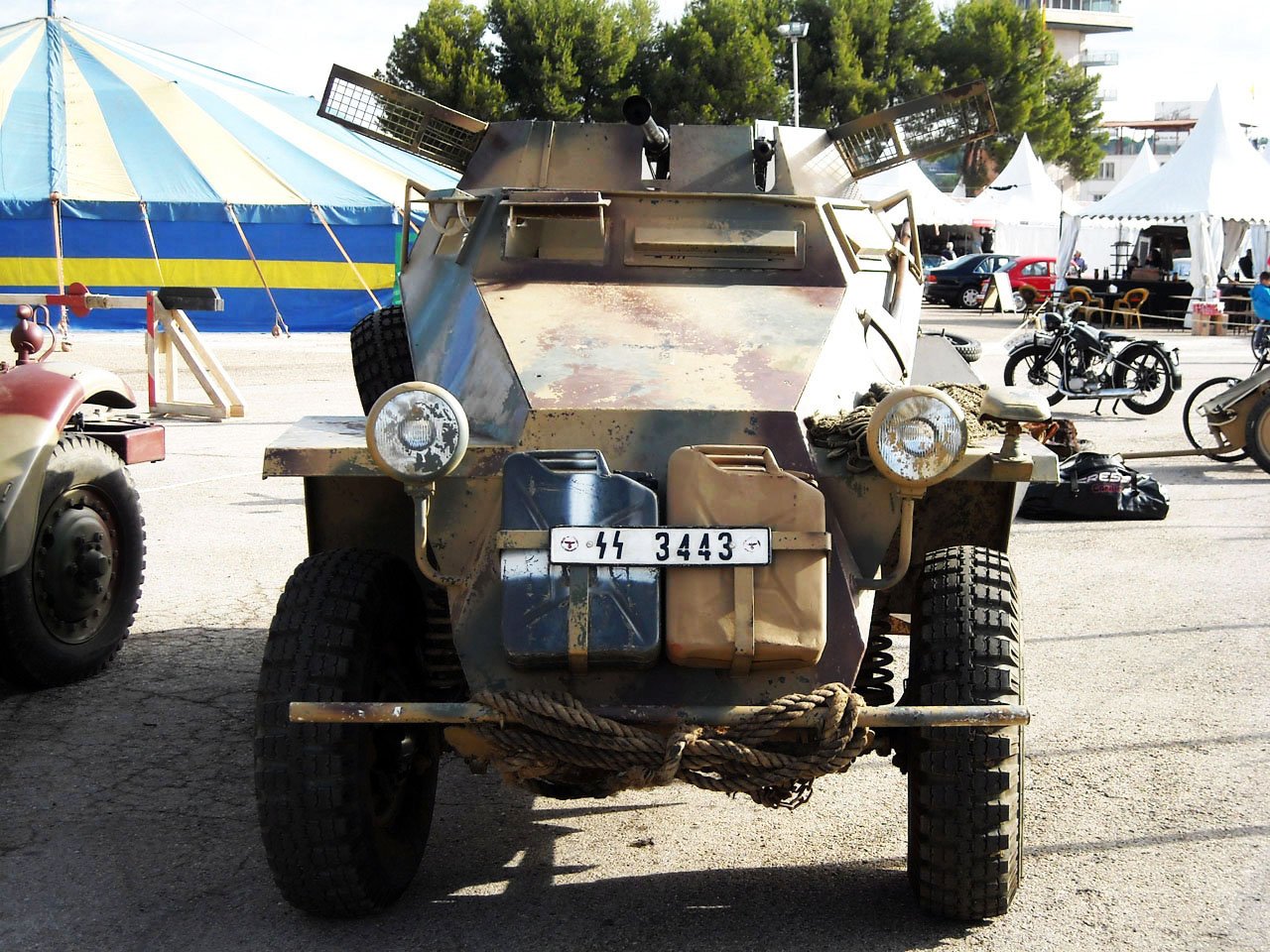
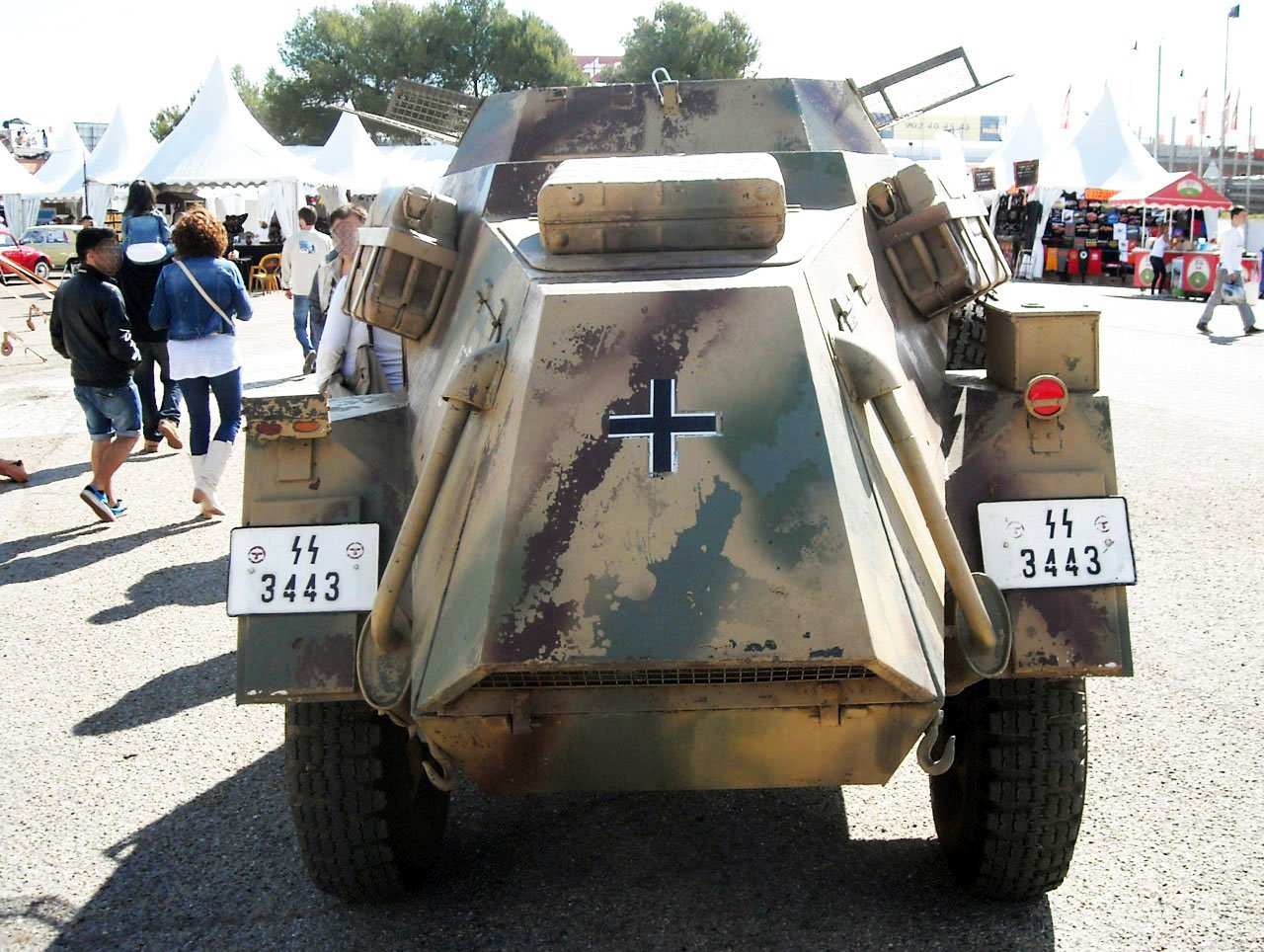
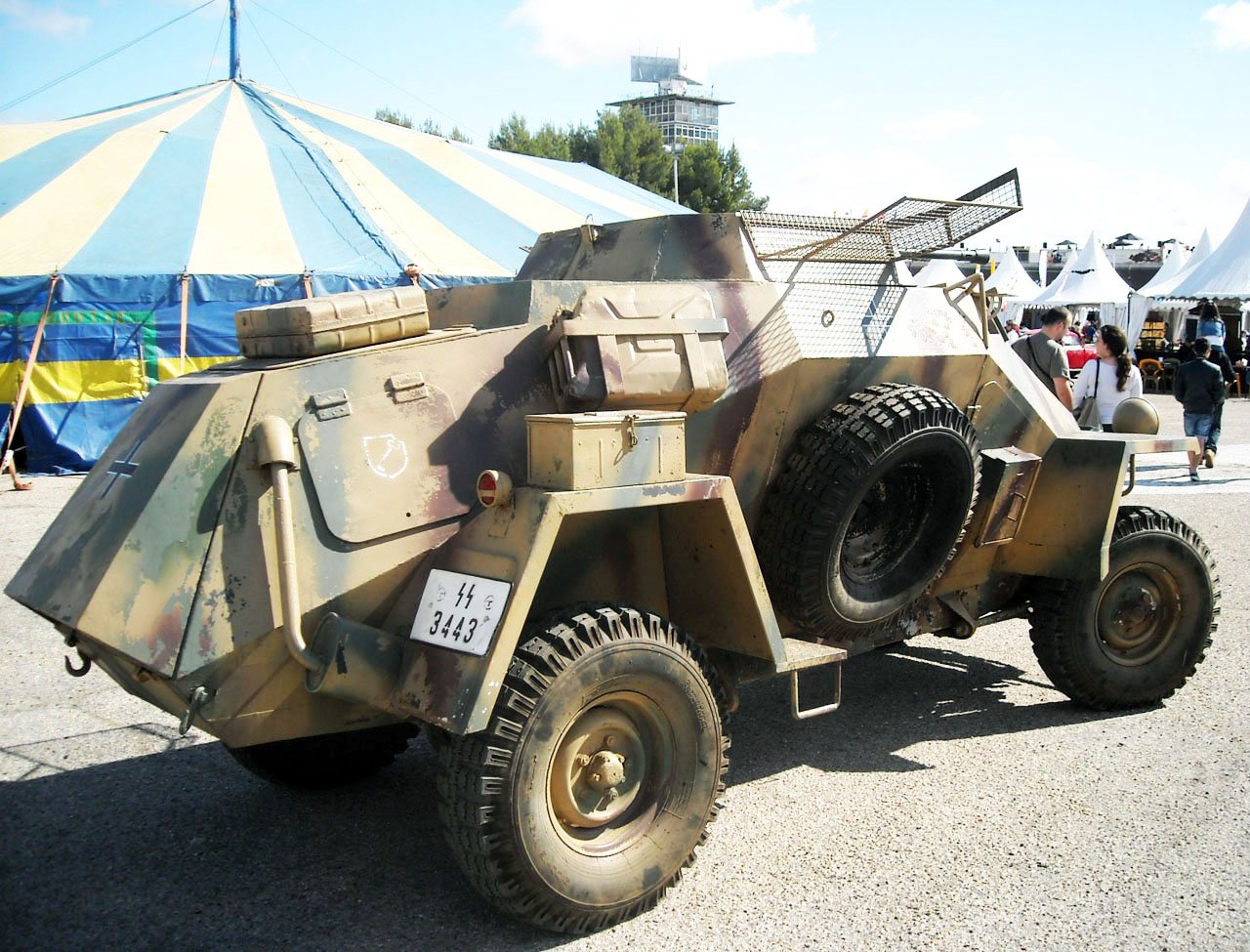
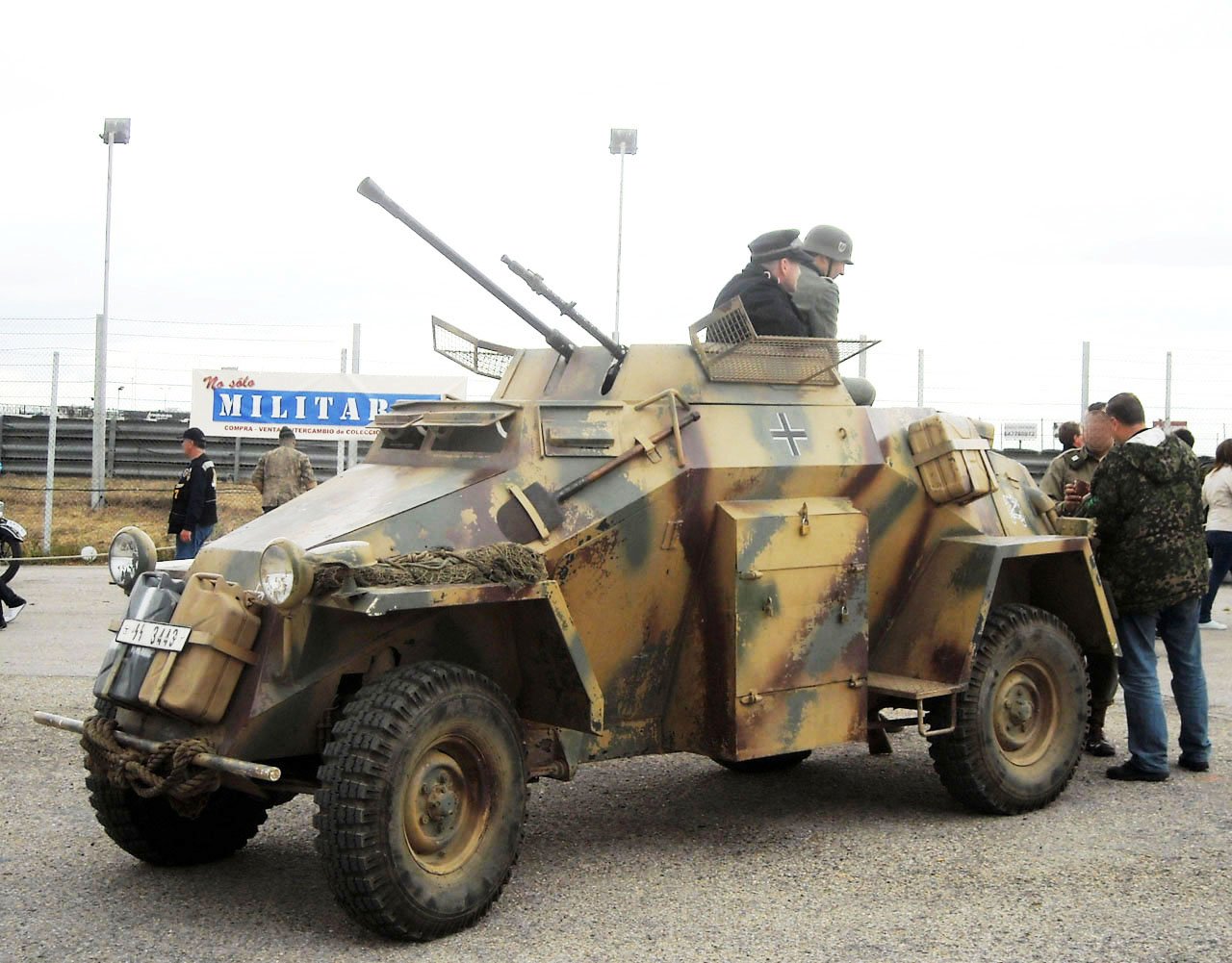
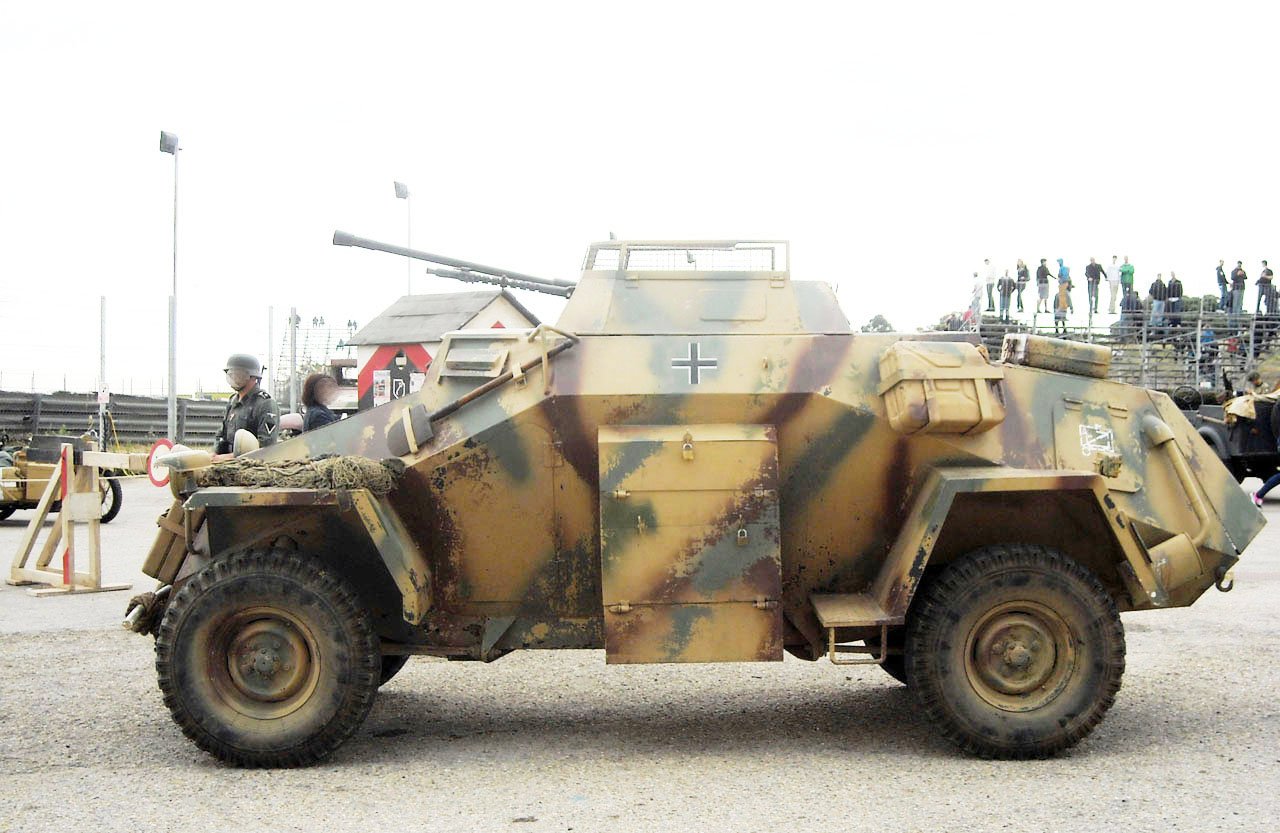
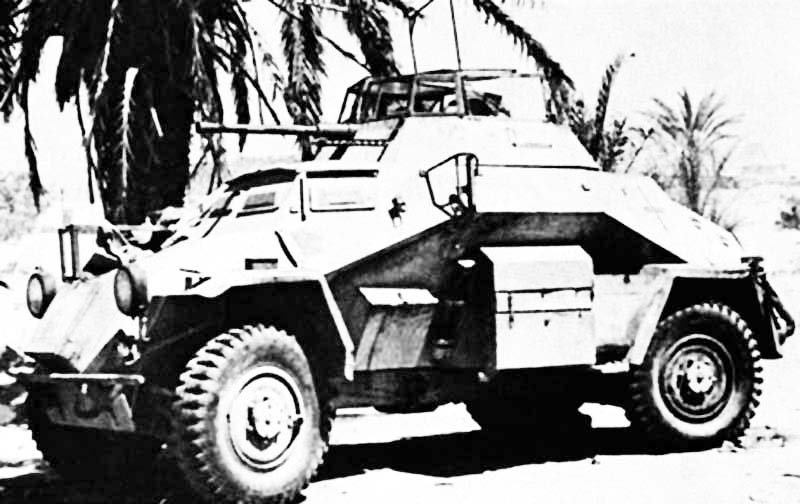
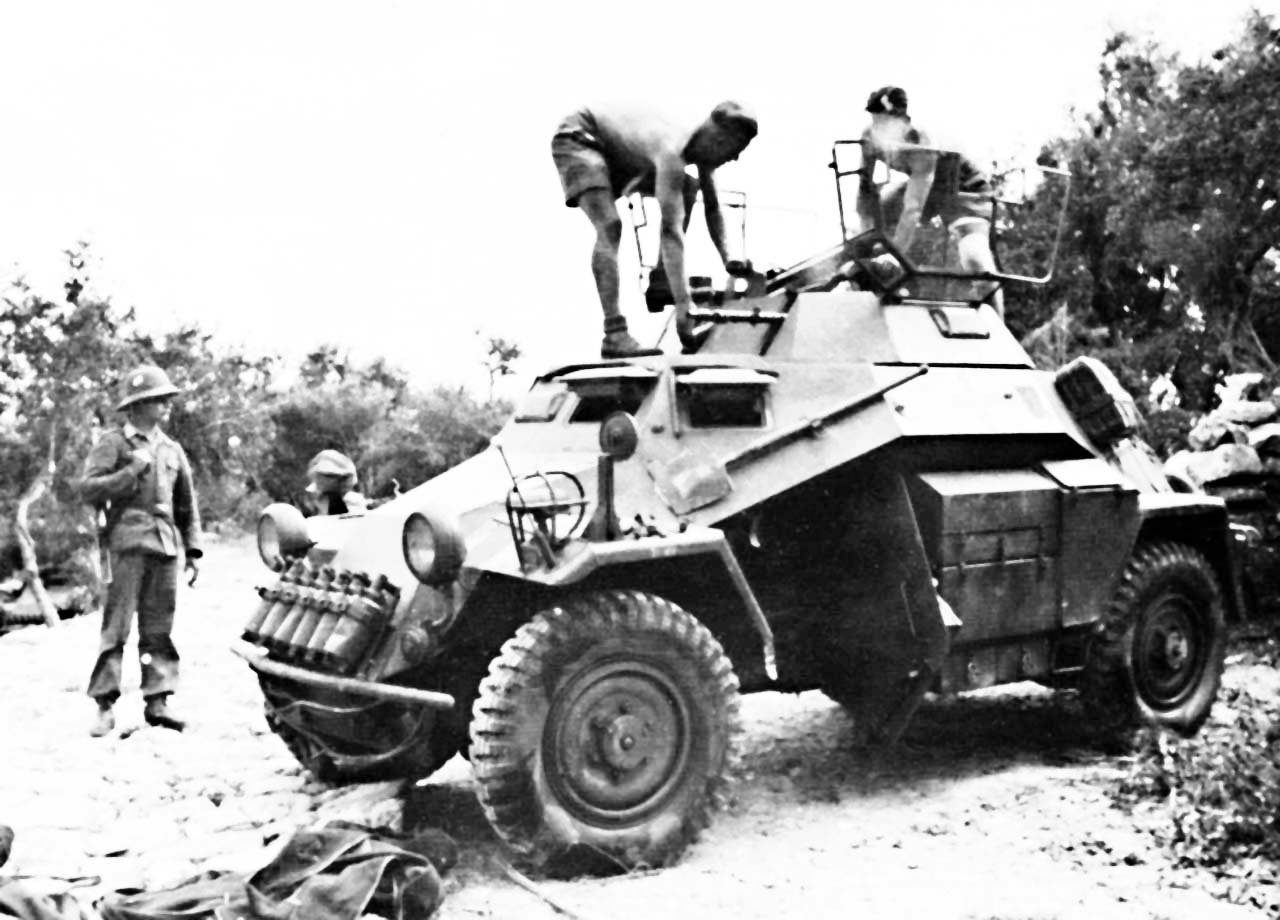
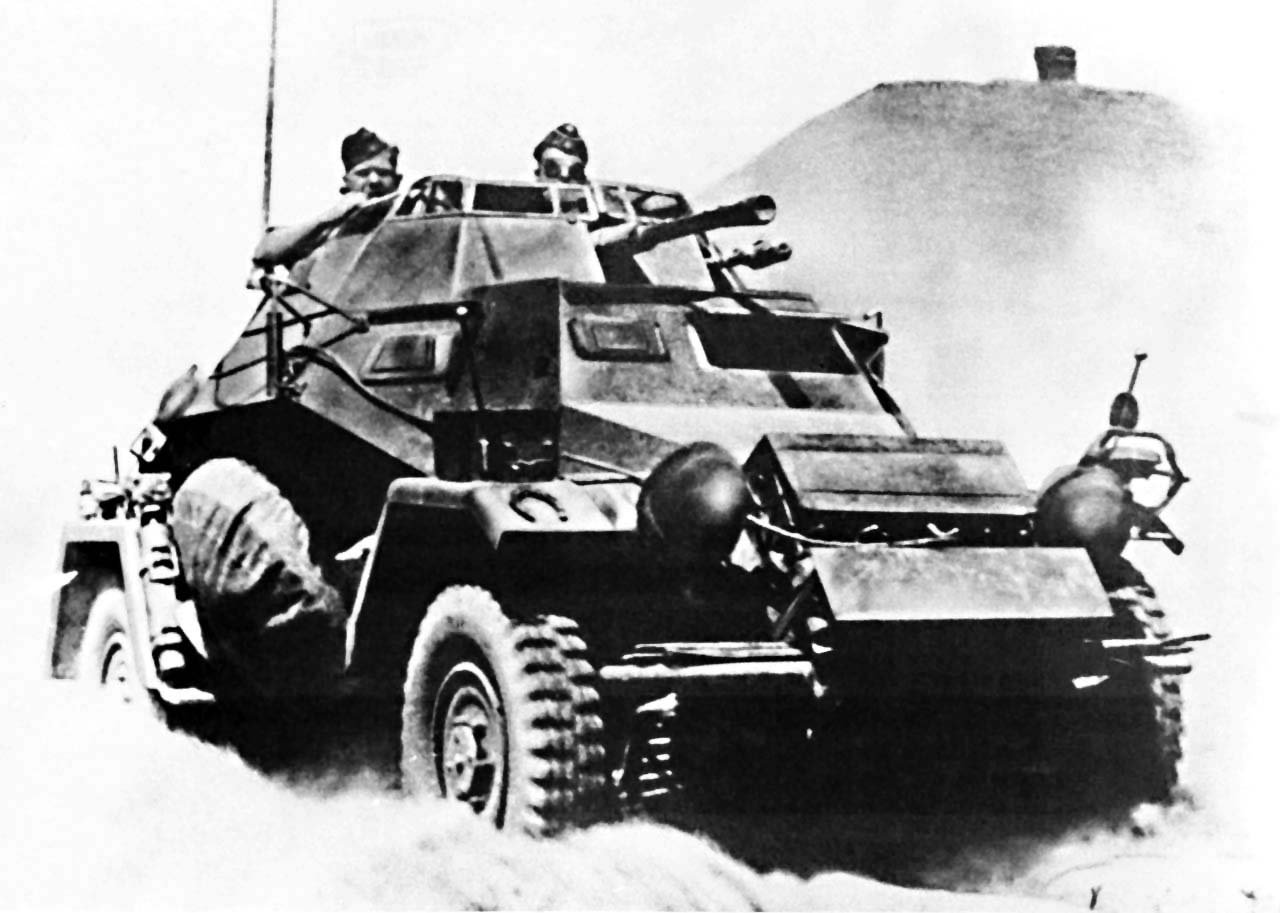
Sd Kfz.222 had a short-range radio, so it was usually used to accompany other vehicles with more powerful radio sets to provide them coverage and as combat enemy reconnaissance vehicles.A restored Sd Kfz.222 belonging to Fundacion Don Rodrigo, a Spanish Historic Military Foundation. In the Sd Kfz.222 the crew had to be increased to 3 due to the assembly of the turret, being able to relieve the commander of performing gunner tasks.Since 1942 the protection was increased, reaching 30mm in thickness on the front of the hull, although it remained unchanged in the rest of the vehicle, being the same as in the Sd Kfz.221.In the first five series the Sd Kfz.222 had a 3.5-liter Auto Union/Horch petrol engine, but since May 1942 the last two series had a 3.8-liter Horch petrol engine and new hydraulic brakes.With the turret assembly and the armour improvements, the total weight of the vehicle increased by 800 kg, but the performance and mobility remained similar to previous Sd Kfz.221.The gun and the coaxial machine gun could reach a large elevation angle and could be used effectively against enemy aircraft. The Sd Kfz.222 was the last 4-wheeled reconnaissance vehicle put into service by the Wehrmacht during WWII. From 1943 onwards, it was decided that 8-wheeled vehicles were much more effective and useful than those of 4 wheels, that stopped being manufactured.These vehicles were highly appreciated by their crews for being reliable and safe. In the 1940 France campaign, they usually marched in front of the Panzer divisions, and in the desert they rendered magnificent services despite their limited autonomy. Due to the limited range of Sd Kfz.222, (barely 200 km), in the Desert campaign the crews had to carry fuel jugs to travel the enormous distances they were deployed.On the eastern front the Sd Kfz.222 had to be replaced in the scouting tasks by half-track vehicles due to difficult terrain, so they carried out secondary missions. They recovered their effectiveness on the western front since the 1944 Normandy landings.