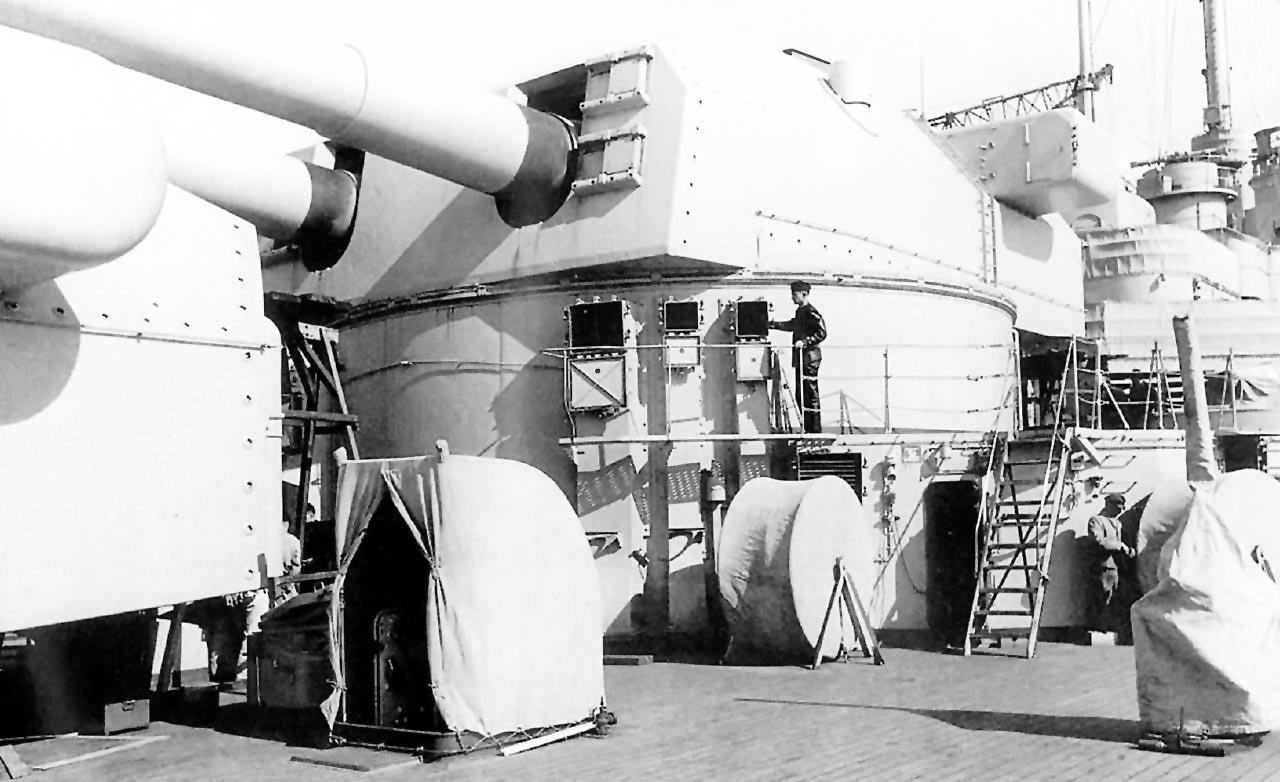
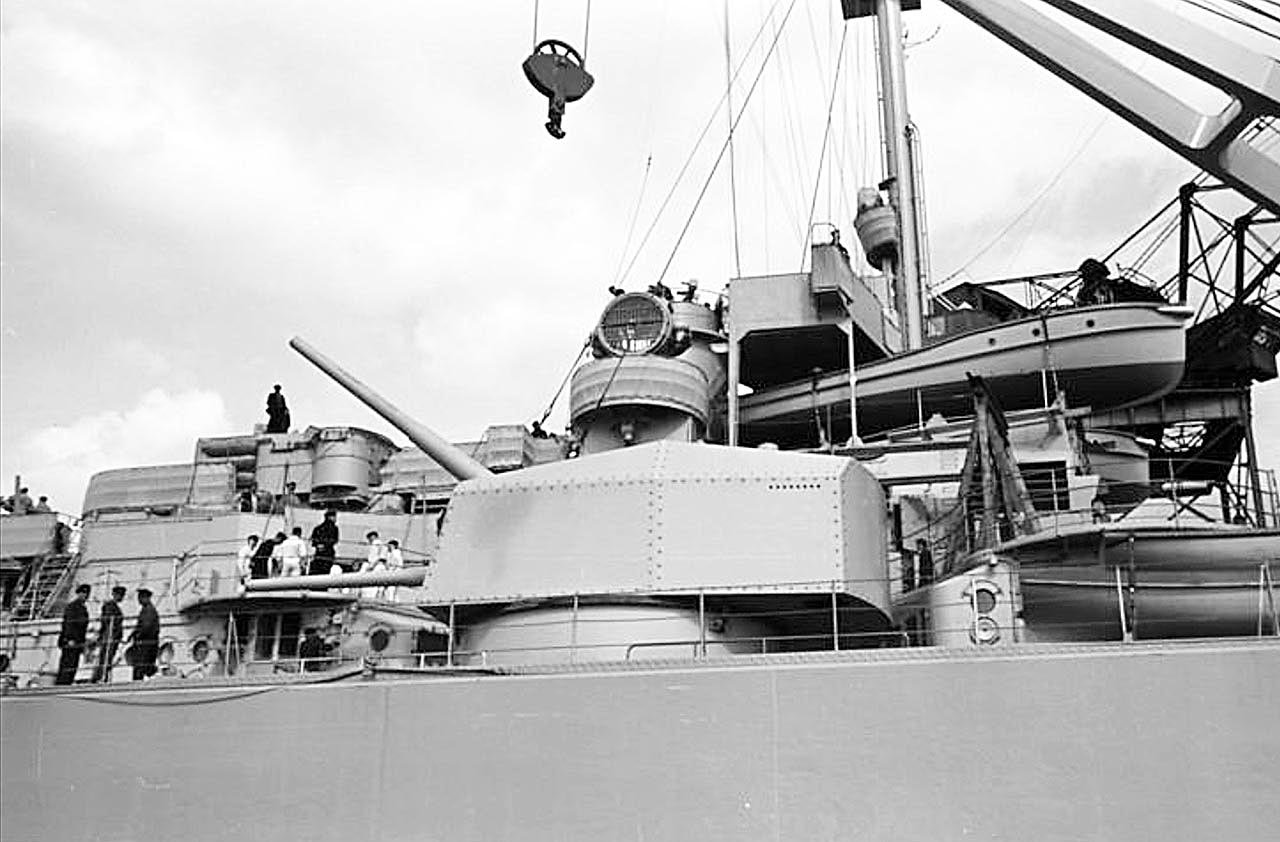
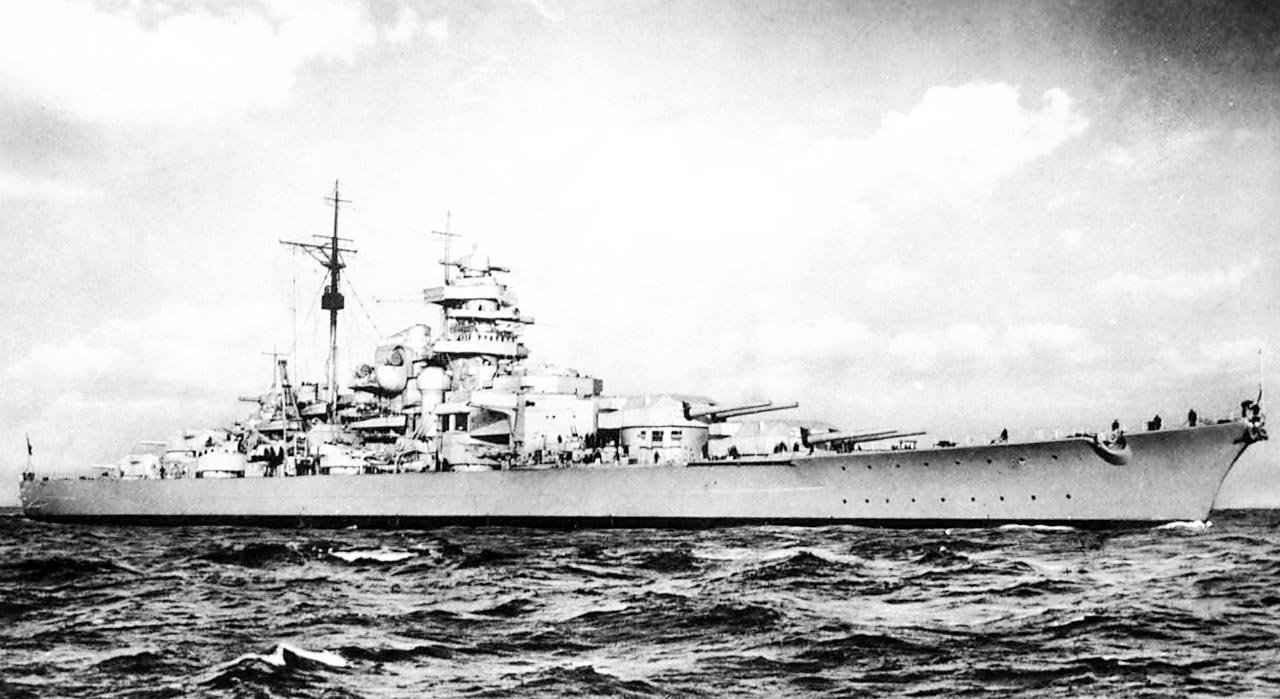
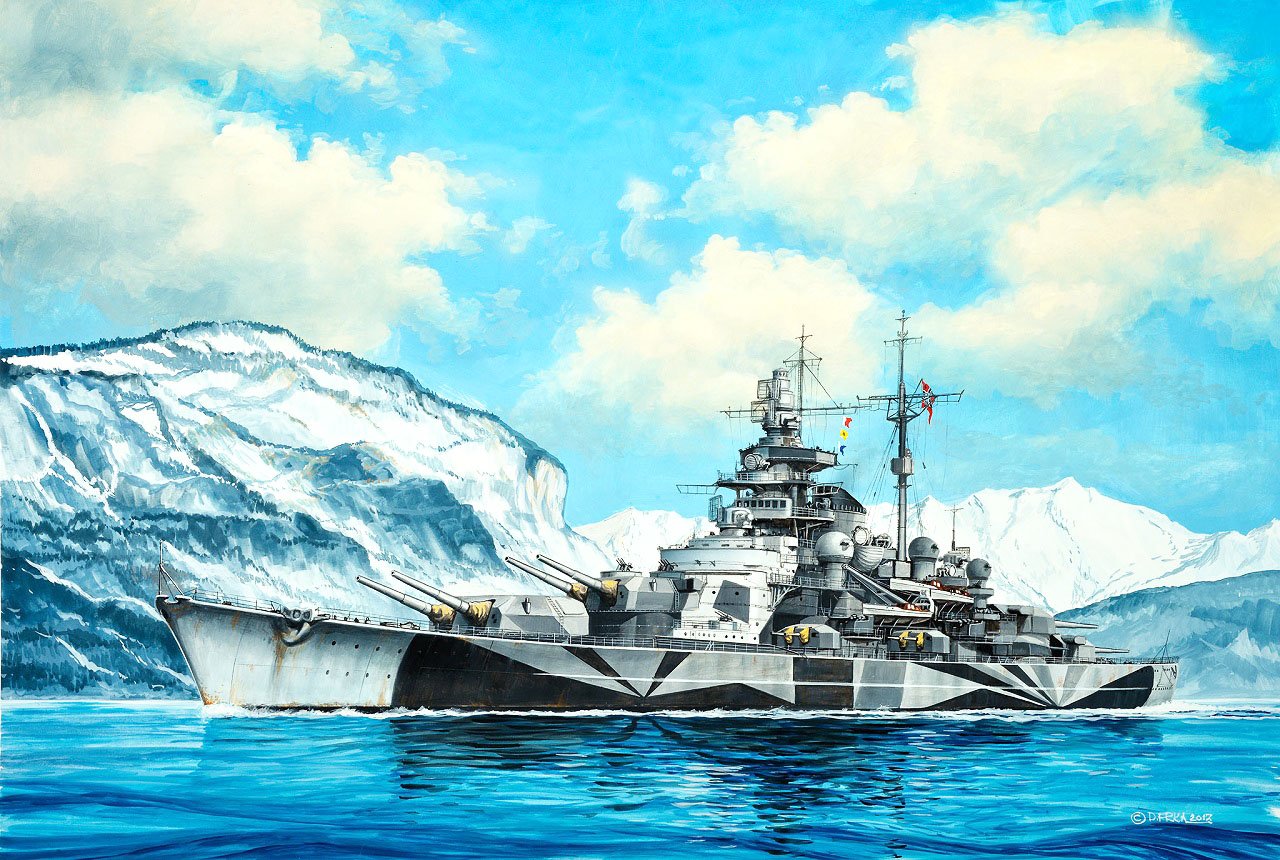
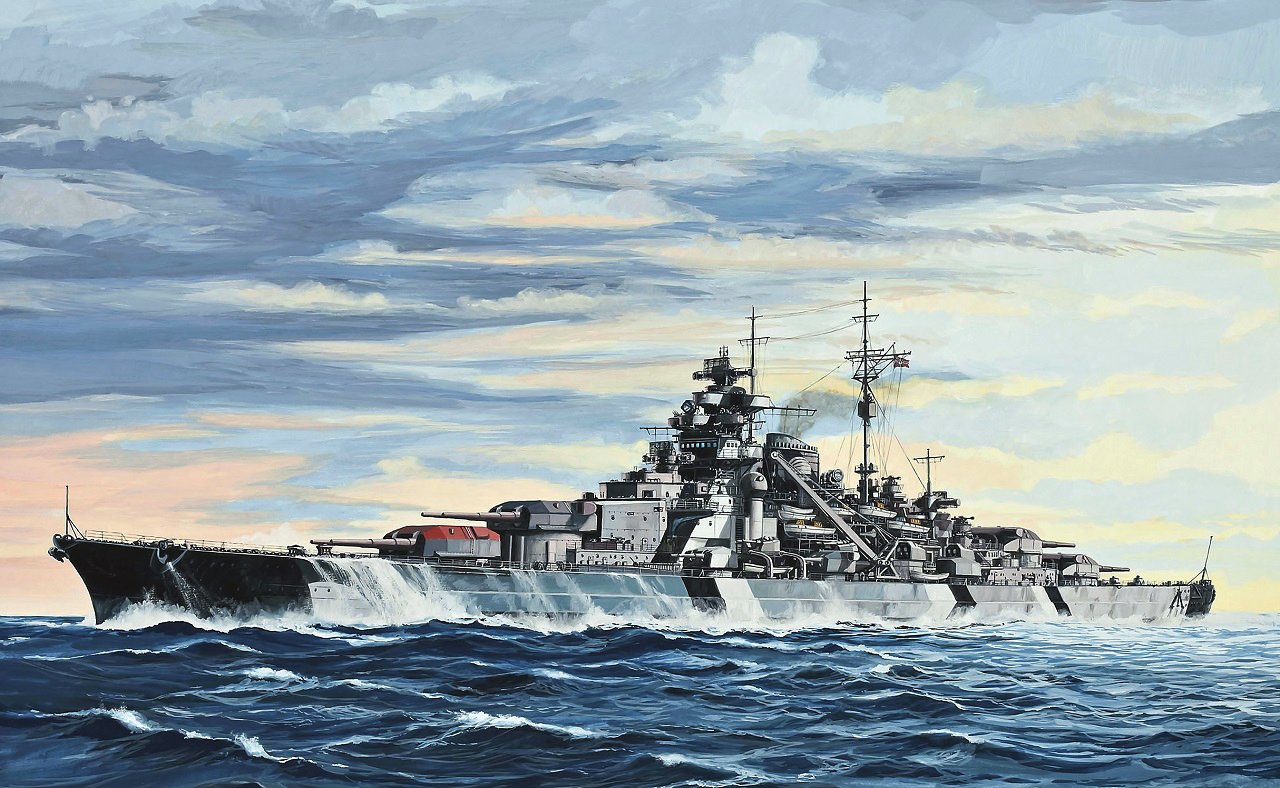
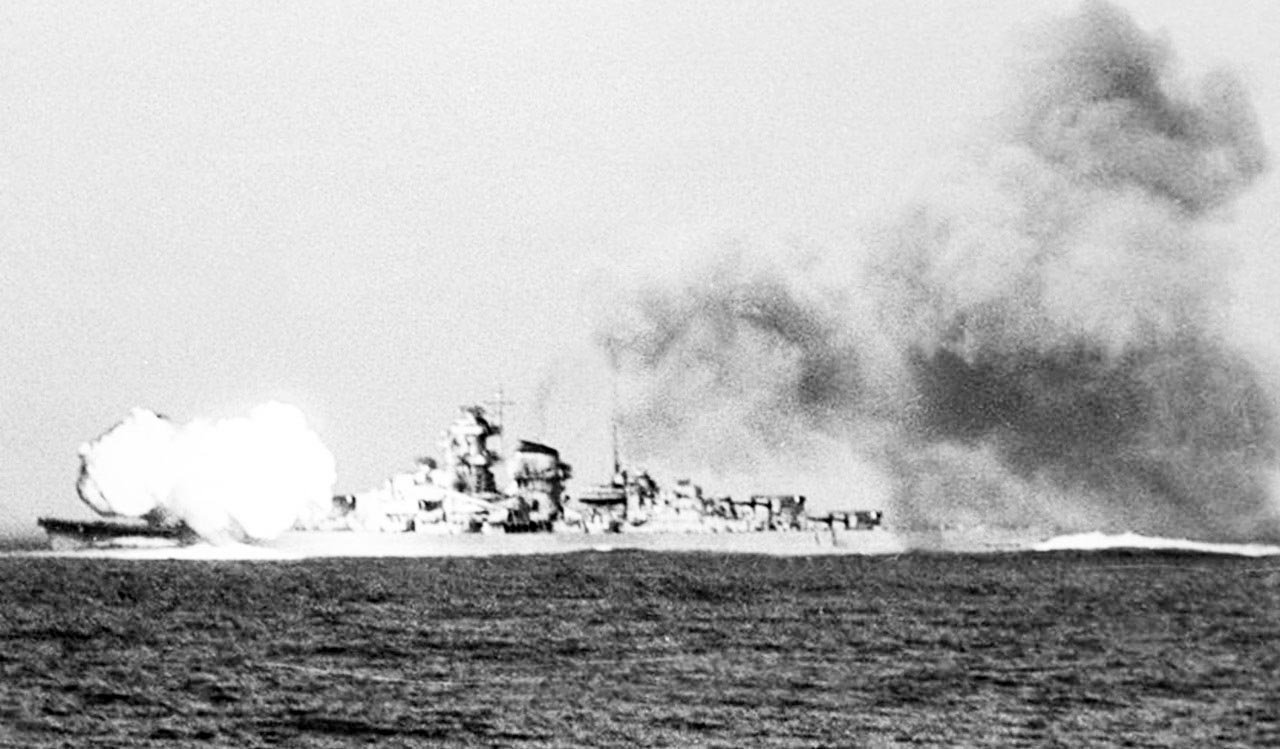
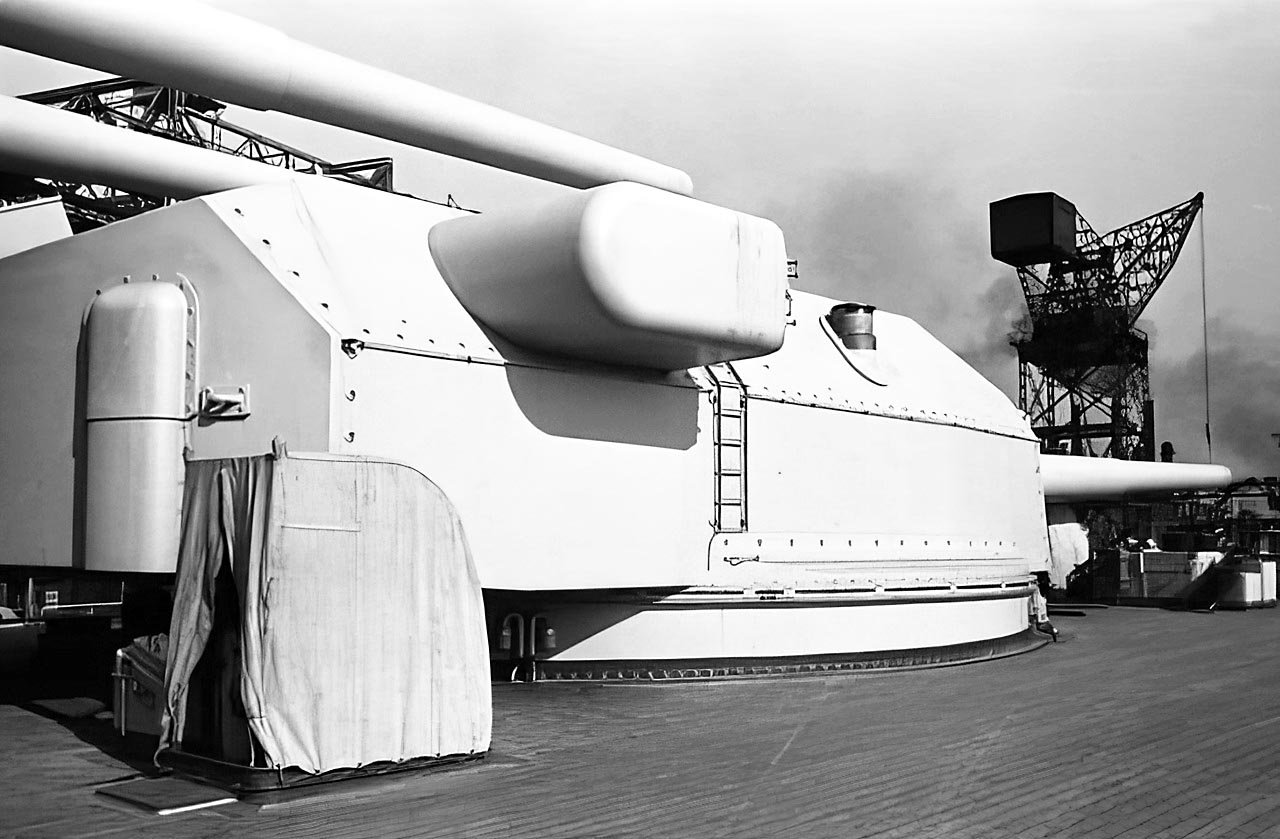
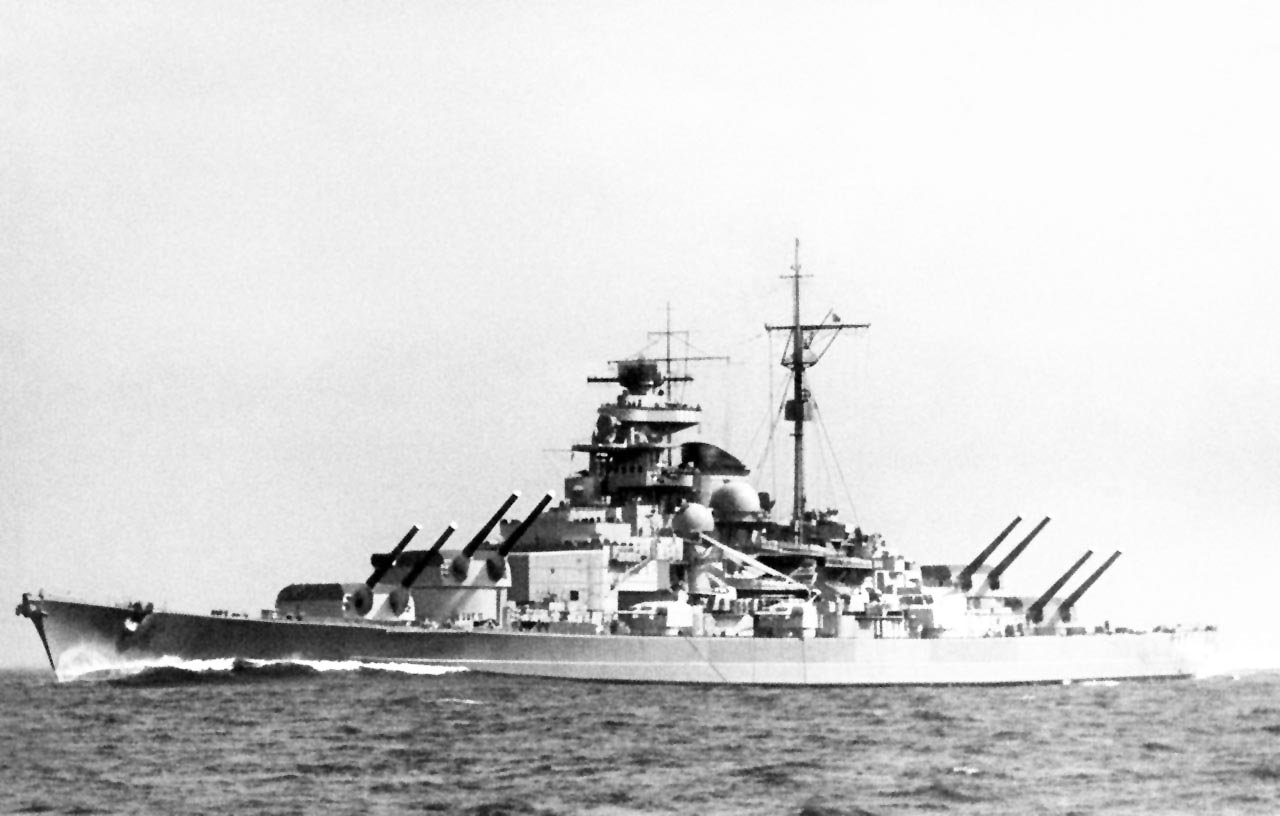
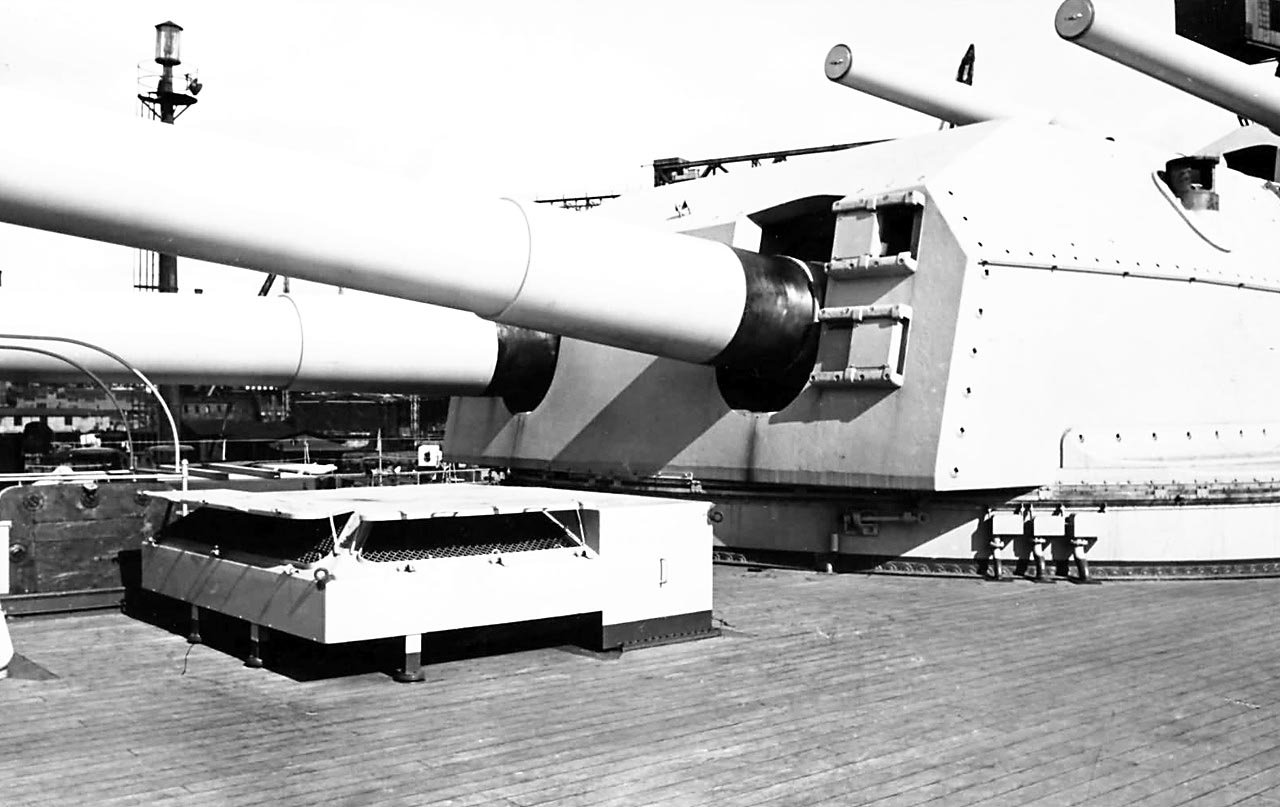
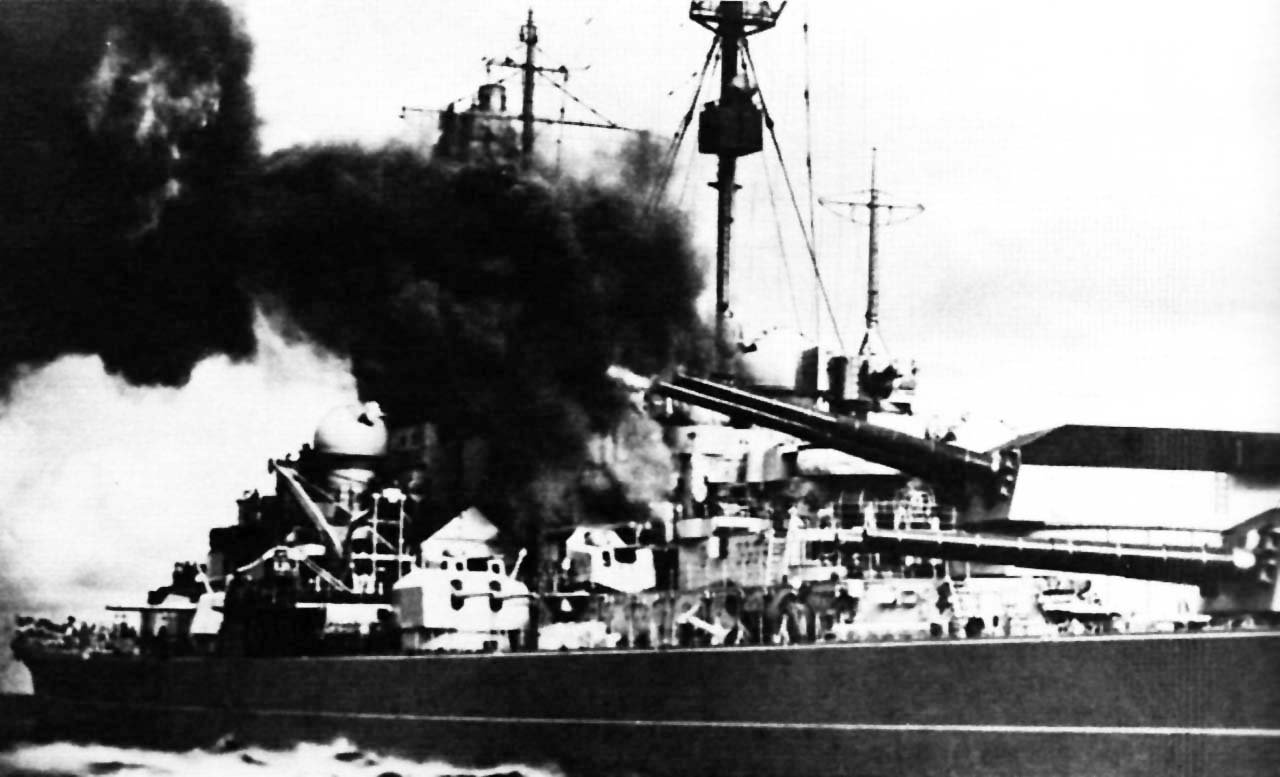
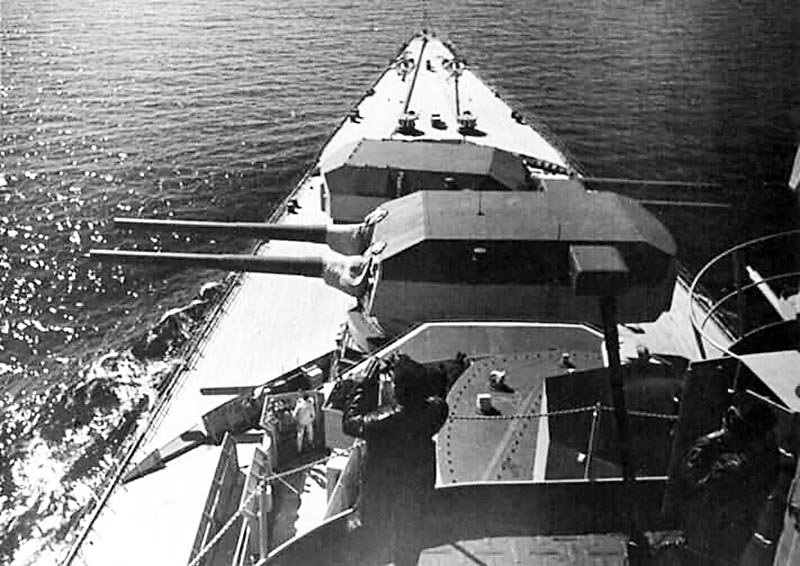
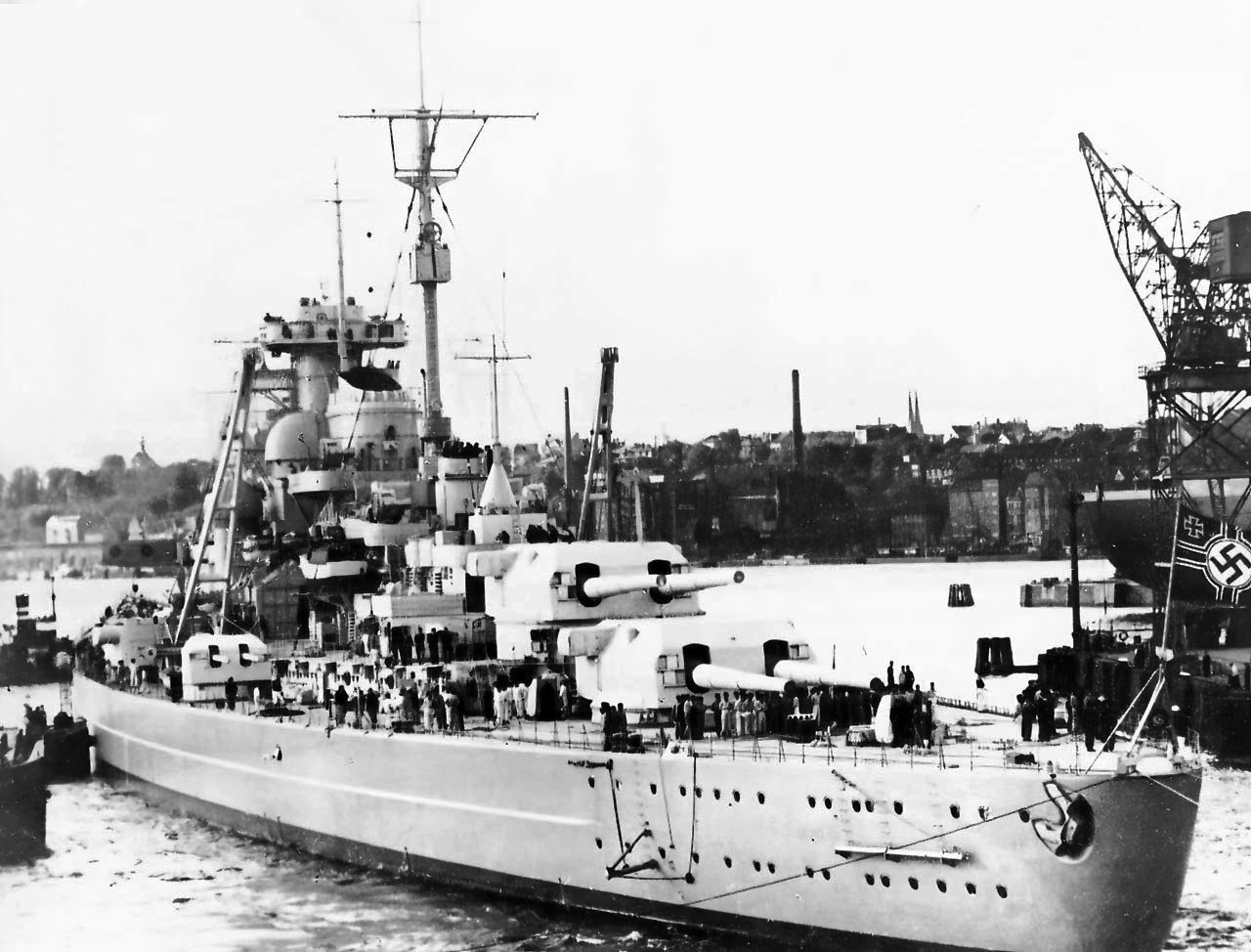
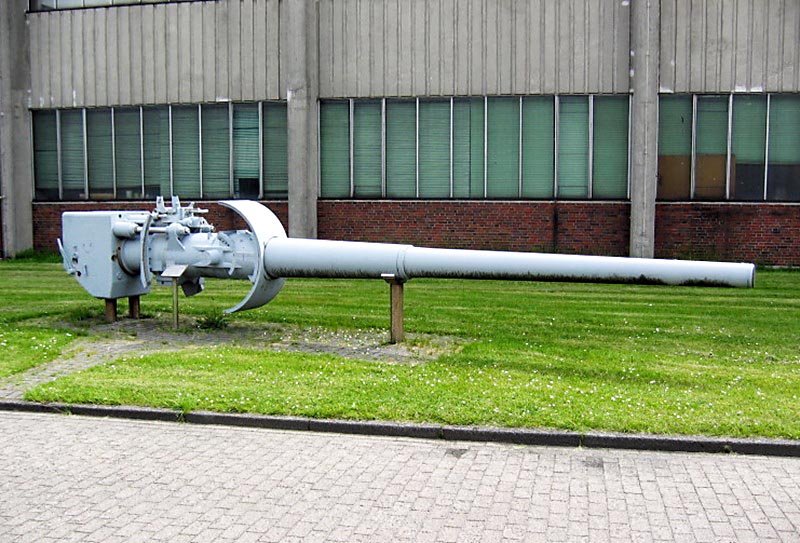
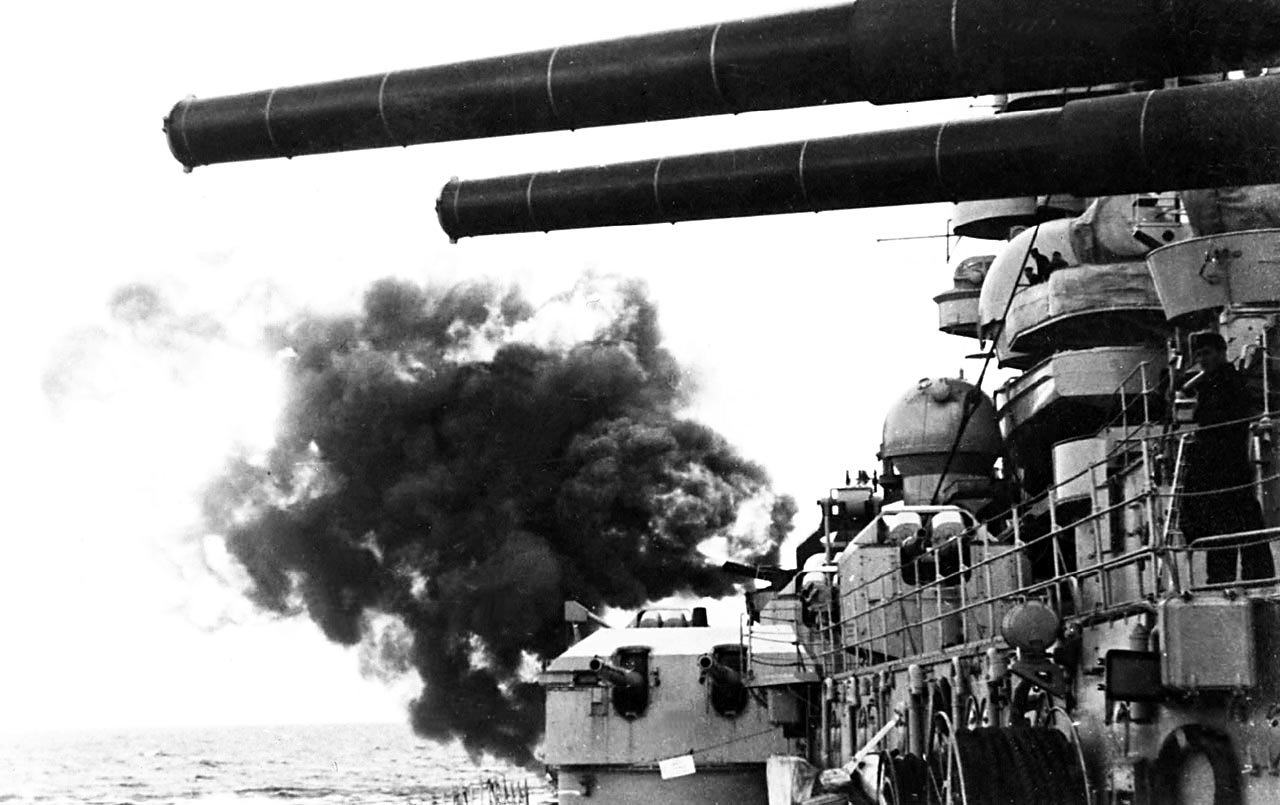
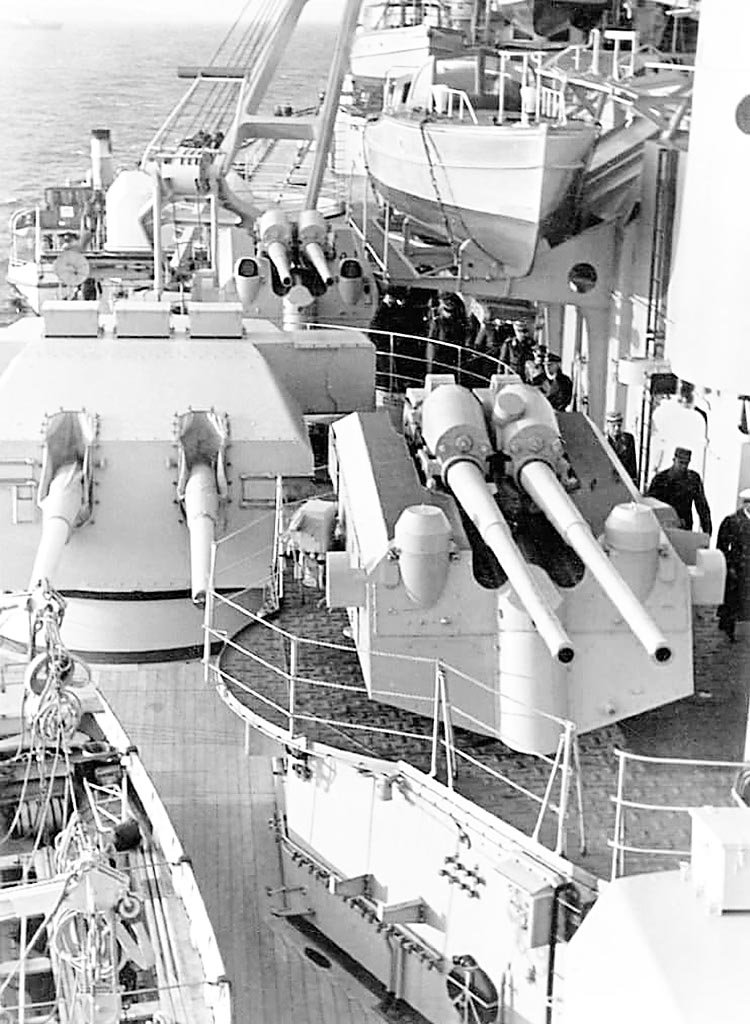
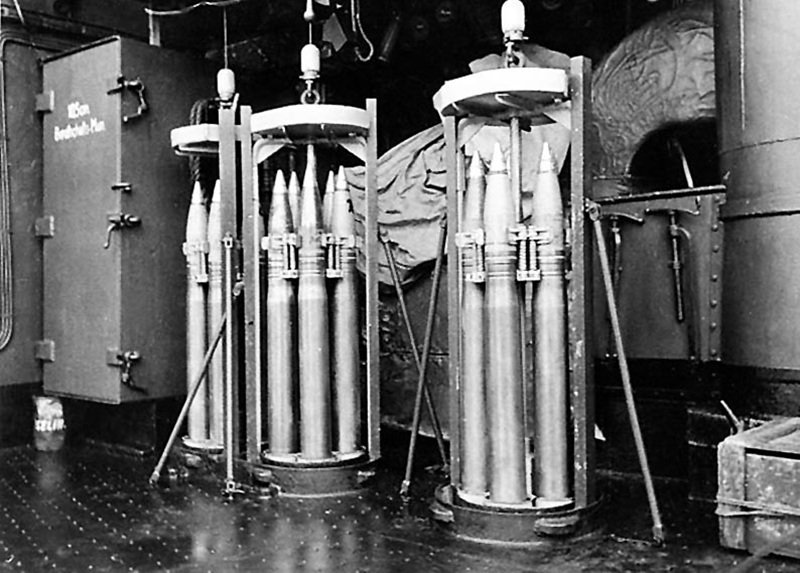
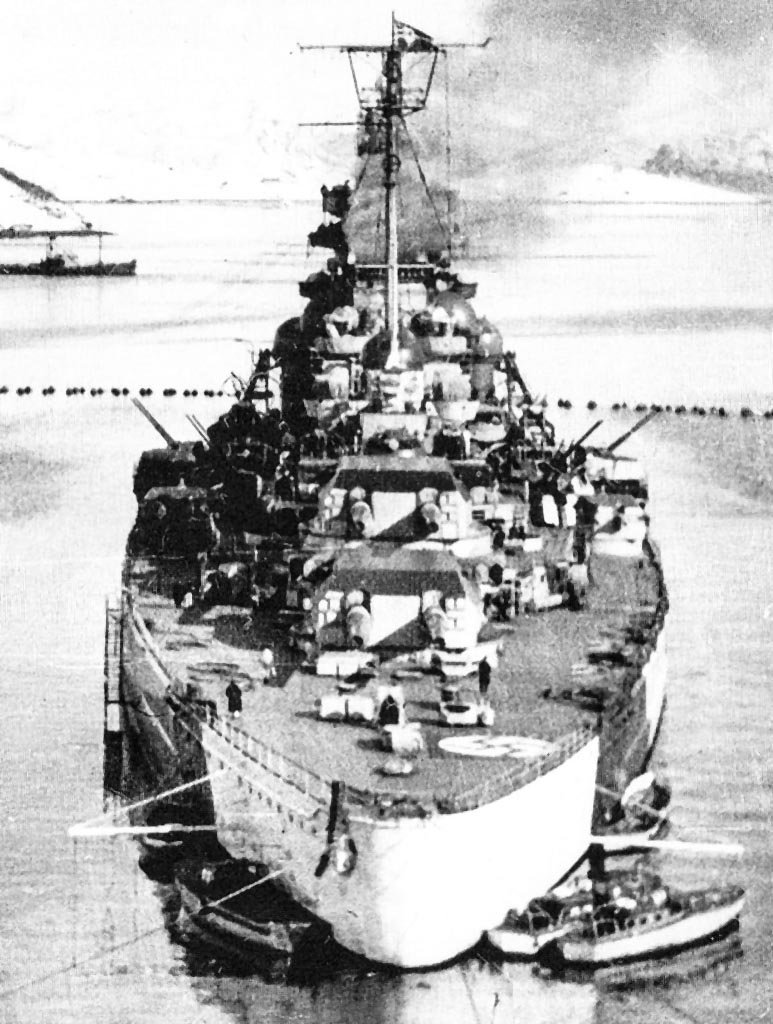
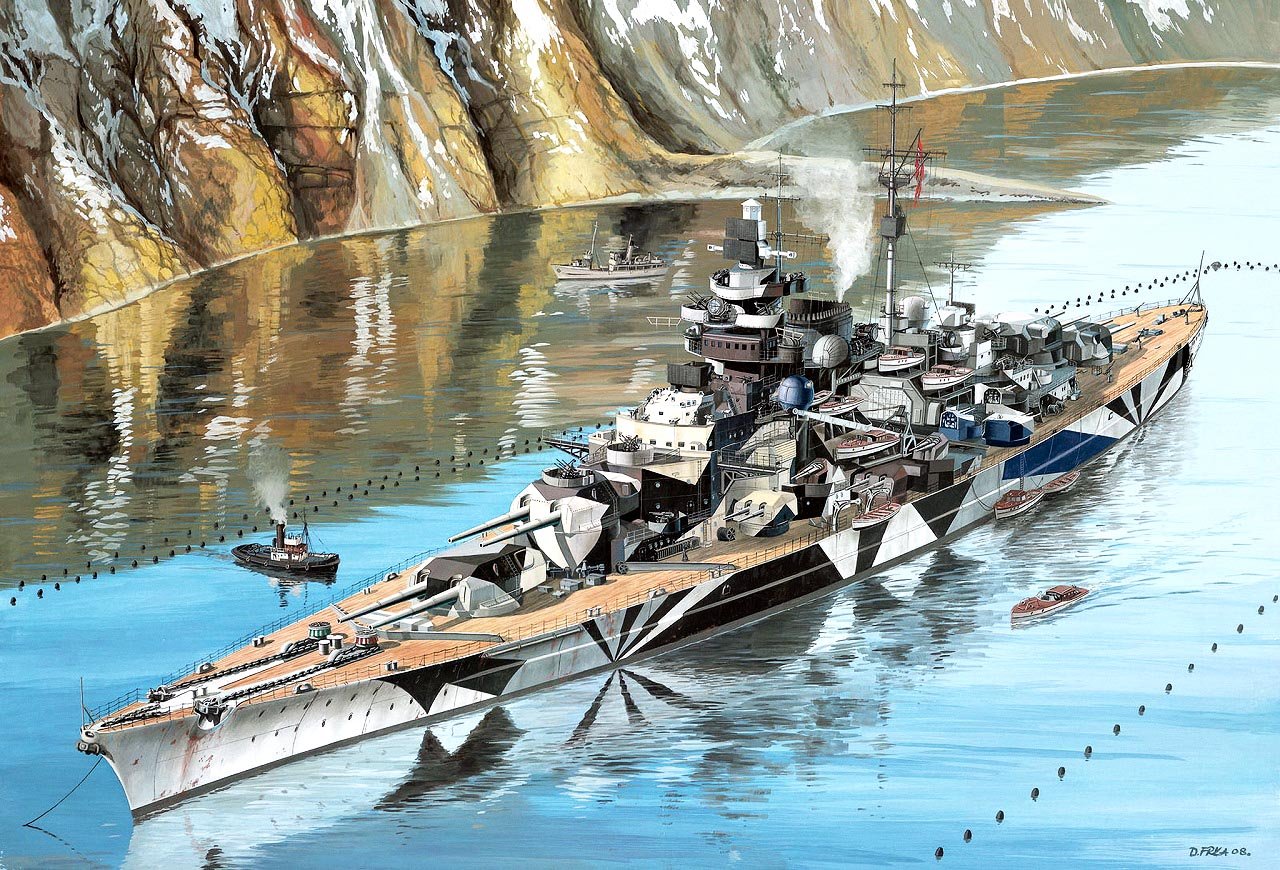
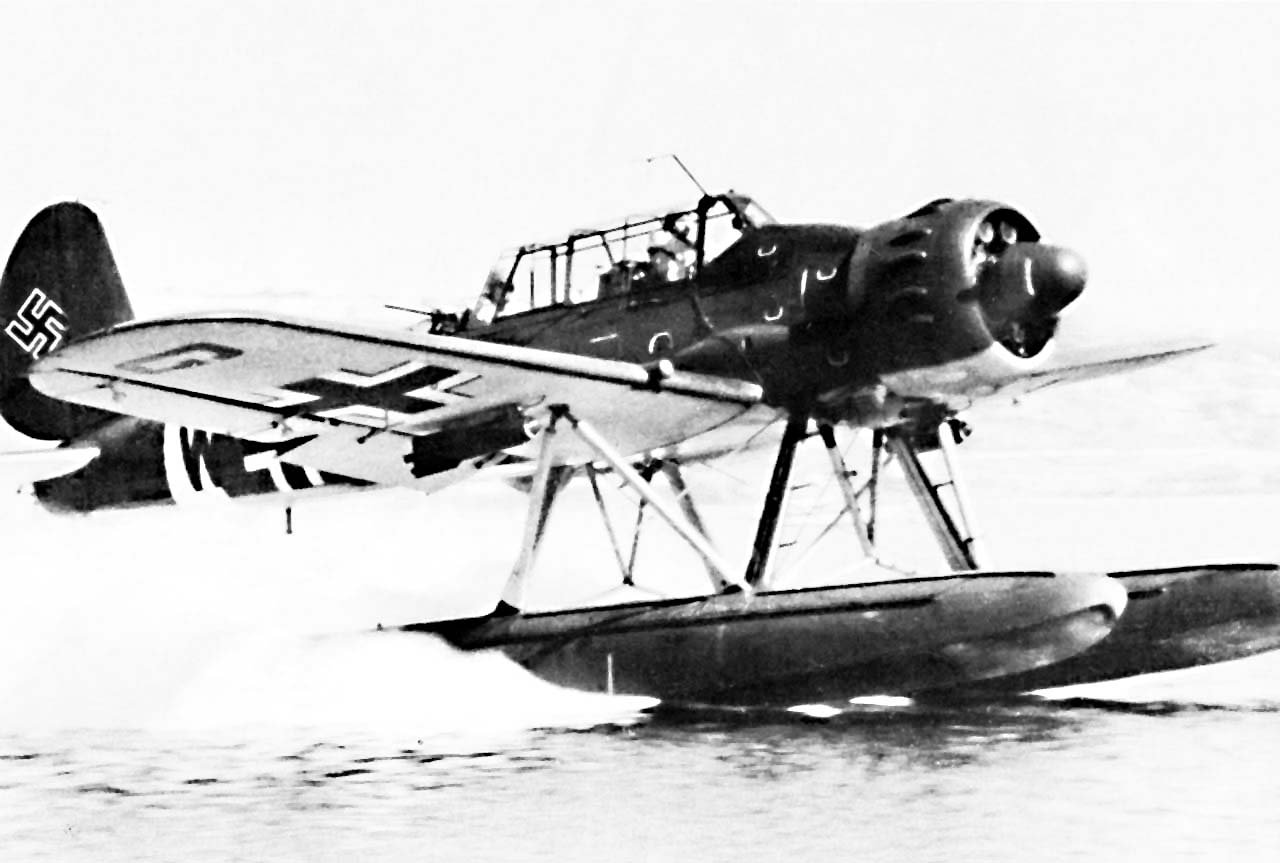
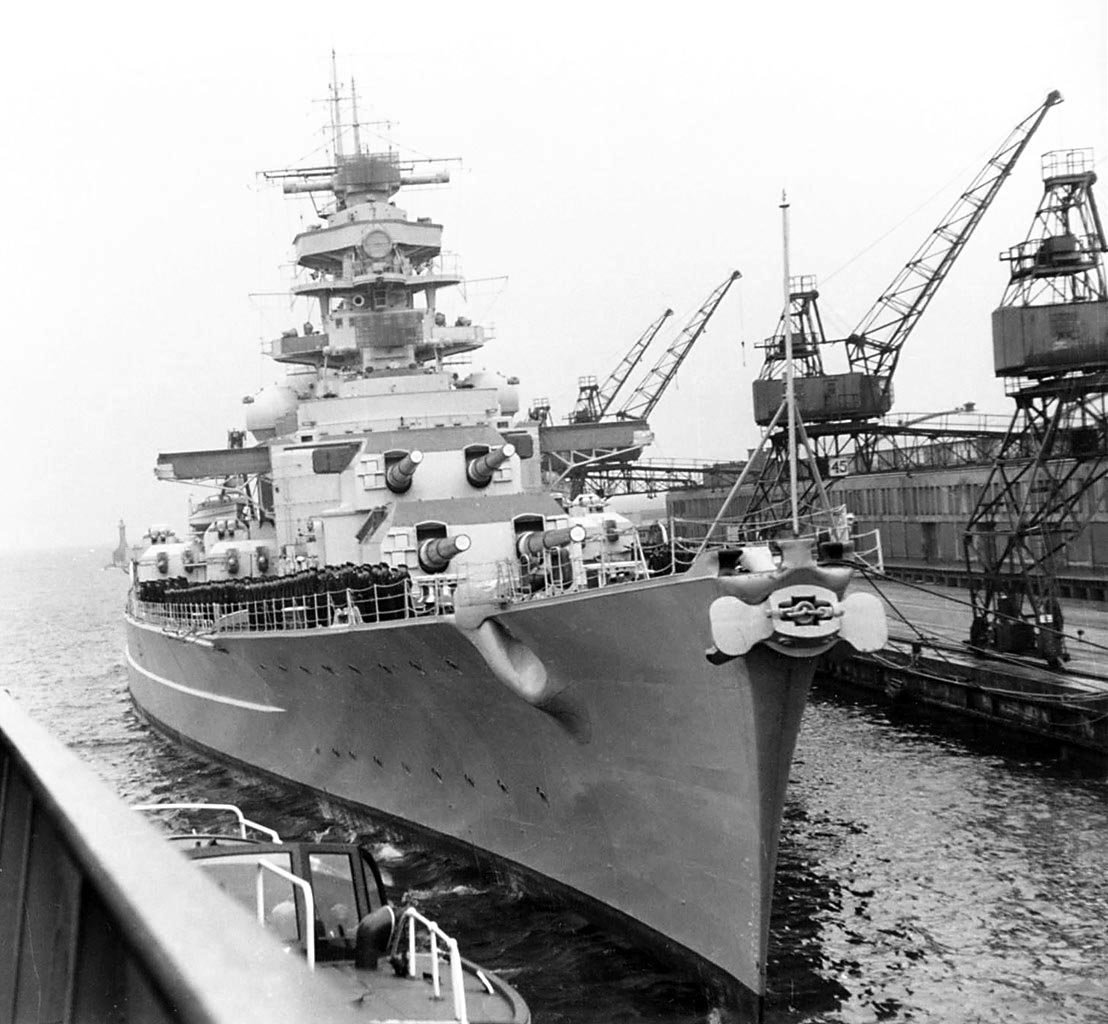
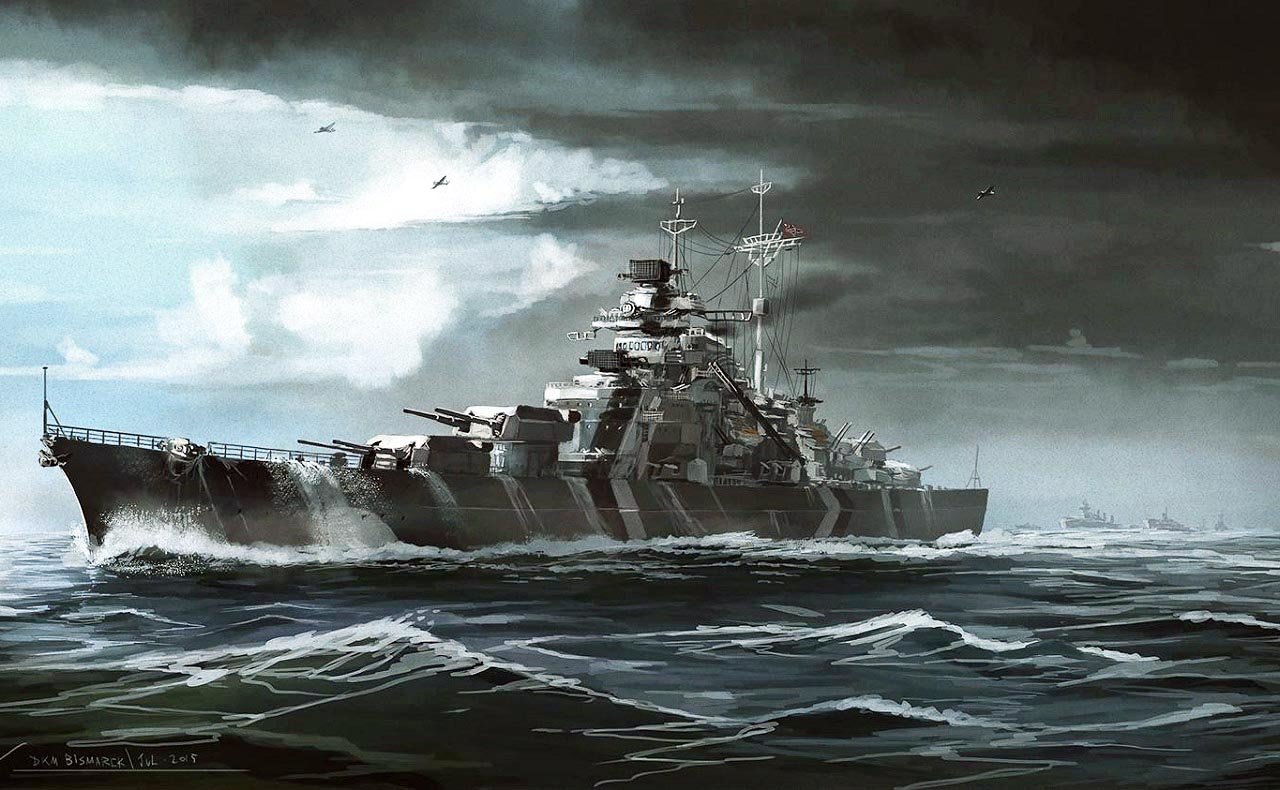
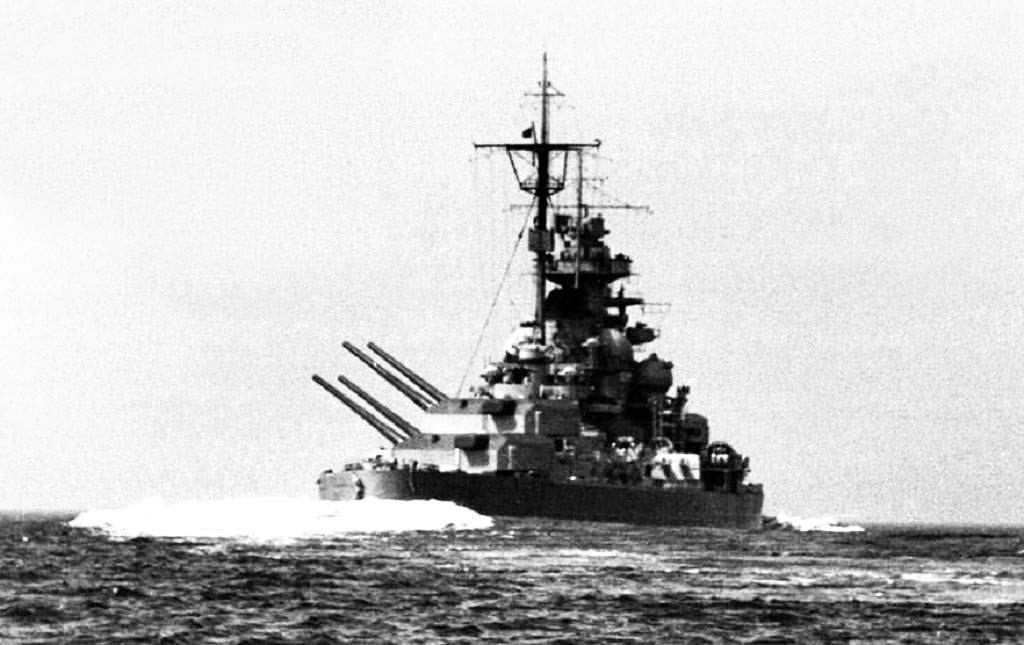
(Bismarck image). The main gun turrets and barbettes were the most heavily protected areas of the Bismarck class. On these ships, the front, side, and rear turret plates were sloped to reduce their thickness while offering the same protection as thicker vertical plates. The front plates were 360mm thick, the side plates were 220mm thick and the rear plates were 320mm thick. The roof plate was thicker over the gun chamber (180 mm) than in the rest of the turret (130 mm). The lower barbette ring was 220 mm thick and made of non-cemented armor, while the upper ring, more likely to be hit, was made of face-hardened steel and was 340 mm thick. Below the upper deck, the thickness was reduced, as the protection was compensated for by the upper deck itself.(Bismarck image). The secondary gun turrets were better protected than those of most battleships of the era, with the exception of the Japanese Yamato-class and the Italian Littorio-class. These gun batteries featured 80mm thick barbettes, although this protection was limited to a vertical height of 1.64 meters above the upper deck, with only 20mm of high-tensile steel below this area. The front of the turret was 100mm thick and the sides, rear and roof were 40mm thick. Although data on the immunity zones of these ships is unavailable, US Navy calculations indicate that the propulsion plant was immune to 406mm projectiles weighing 1,016 kilos between 11,000 and 21,000 meters, and the magazines were immune between point blank and 25,000 meters. The upper armor deck was vulnerable at ranges above 11,000 meters, as were most areas above the waterline.(Bismarck image). The torpedo protection was specially designed based on tests conducted with the old pre-dreadnought battleship Preussen and could withstand explosions of 250 kg of TNT. Inboard the main belt was an outer torpedo bulkhead. Between this bulkhead and the side armor was an empty space that could be used as a kind of counter-flooding tank in case of emergency. In this case, up to 75% of this space could be filled with water and oil. This empty space gradually increased in depth in the lower sections of the ship, acting as an expansion zone for the gases generated by the torpedo explosion, rapidly reducing the gas pressure as it spread over a wider area.(Tirpitz drawing).There were three of these bulkheads, 45mm thick and made of cemented steel, extending the entire length of the citadel and down to the bottom shell. At the midships section, the distance from the side armor to the main torpedo bulkhead was 5.30 meters and 2.35 meters to the outer torpedo bulkhead. The depth of this system was 5.50 meters and the principle was based on elasticity and the ability to deform upon the torpedo explosion without displacing from its connections with the armor deck or the inner bottom. In addition, these ships were equipped with trim tanks with large-capacity pumps to quickly counteract the list caused by flooding.(Bismarck drawing). Another key aspect in protecting these enormous ships was compartmentalization. In the case of the Bismarck class, this consisted of 22 main compartments divided by 21 transverse bulkheads, including armored bulkheads. These compartments were further subdivided by torpedo bulkheads 12.50 meters off the centerline, forming 16 wing compartments on each side. This system allowed for the loss of buoyancy in any two main compartments at the ends of the ship without the main deck submerging.(Tirpitz image). The main armament of the Bismarck class consisted of eight 380/47mm caliber guns designated “38cm SKC/34” mounted in four twin turrets. These guns were a new design, built by Krupp based on the earlier 38cm SLK/45 guns of the Bayern-class battleships of WWI. The breech and barrel weighed 111 tons and the barrel had a service life of 250 shells. The new guns had Krupp sliding-wedge breech plugs, and the powder was in brass cartridge cases. The new charge was filled with RPC38 propellant and consisted in two parts: the main charge (cased), weighing 182.5 k, with 112.5 kg of propellant, and the secondary charge (bagged), with 99.5 kg of propellant. Both charges were rammed into the gun with a single stroke of the rammer.(Bismarck image). The 38 cm SKC/34 guns could fire one shell every 18 seconds, including shell-cartridge placement into the barrel, firing of the gun, and ejection of the cartridge and they had to be loaded at an elevation of 2.5°. This rate of fire allowed for a broadside of 15,360 kg per minute. The maximum range was approximately 36.5 km, and they could fire at a maximum elevation of 30°. They could also fire at an unfavorable list of 10° to a maximum distance of 27.2 km. The total ammunition for the main battery was 1,040 shells, 130 for each gun.(Tirpitz image). The eight 380/47mm guns were mounted in four armored turrets named (from bow to stern) Anton (A), Bruno (B), Caesar (C), and Dora (D). Each of these turrets weighed 1,056 tons, excluding the substructure and ammunition hoists. They could traverse at a rate of 5 degrees per second, and the guns could elevate at a maximum rate of 6 degrees per second. The traverse system was electric, as were the auxiliary elevation system, auxiliary hoists, and other backup systems, but the main power system was hydraulic.(Bismarck image). The turrets had six working levels: the gun platform within the turret, the training platform, the machinery platform, and the intermediate platform (all within the barbette and below the armor deck), the magazine, and the shell rooms. Turrets B and C had an additional intermediate platform in the barbette. Originally, each turret carried a 10-meter stereoscopic rangefinder, providing excellent accuracy. Each gun had its own sight mounted inside the turret; the left gun’s was on the left side, and the right gun’s on the right.(Tirpitz image). There were three different types of ammunition for the 38 cm SKC/34 naval guns mounted on ships: -Pz.gr. (AP with a ballistic cap) L/4.4 (mh) of 800 kg with an explosive charge of 18.8 kg and a Bdz 38 fuse, -Spr.gr. (HE with a ballistic cap) L/4.5 (mh) Bdz of 800 kg with an explosive charge of 32.6 kg and a Bdz 38 fuse, and -Spr.gr. (HE with a ballistic cap) L/4.6 (mh) Kz of 800 kg with an explosive charge of 64.2 kg and a Kz 27 fuse. These three shells had a muzzle velocity of 820 m/s and a range of 36.5 km and were mounted on a 420mm diameter cartridge. The AP (armor-piercing) ammunition was capable of penetrating 510mm of armor from 10,000 meters, 364mm from 20,000 meters and 308mm from 25,000 meters. In addition, there were two other rounds for guns intended for coastal defense.(Tirpitz image). The choice of twin turrets for the main armament of the Bismarck-class battleships has generated debate among naval analysts, as it was considered possible to install three triple turrets, similar to those found on battleships of the Yamato, Iowa, or Littorio classes, among others. German naval engineers studied different possibilities but concluded that installing four twin turrets offered the advantages of more effective salvo fire, a simpler ammunition supply, a larger number of rounds available, better organization of firepower, and less firepower loss due to turret damage.(Bismarck image). There has also been much speculation about the caliber of the guns, and although mounting 406mm guns was feasible, this would have significantly delayed the ships’ development due to the testing required for the new guns and the inevitable increase in the ship’s size, among other issues. Of course, the choice of twin turrets also entailed some disadvantages compared to triple turrets, such as increasing the total displacement due to their greater weight, having one less gun, and having to lengthen the armor belt and citadel, adding even more weight to the ship.(Tirpitz‘s gun barrel image). The secondary battery consisted of twelve 150/55mm (15cm SKC/28) rifled naval guns mounted in twin Drh LC/34 turrets and sixteen 105/65mm (10.5cm SKC/33) anti-aircraft guns mounted in eight 8.8 Dop LC/31 twin stabilized mounts. The 150mm SKC/28 guns were designed for use against surface vessels and fired a 43.5 kg HE round to a maximum range of 23 km. These guns fired at elevation angles of +10 to +40° and had a maximum rate of fire of 6 rounds per minute. The barrel life was 1,100 rounds and each ship carried 105 rounds per gun, totaling 1,260 rounds. The six turrets were mounted in two groups of three on each side of the ship and were designated turrets “I”, “II”, and “III”. Turret “I” weighed 150.3 tons, turret “II” 131.6 tons, and turret “III” 97.7 tons. The forward turrets (“I”) had barbettes that reached the upper platform deck, but the “II” and “III” turrets only extended to the armored deck.(Tirpitz image). The “I” turrets had five working levels, but turrets “II” and “III” only had four. The guns were hand-served, and the cartridges were ejected from below the turret. The “II” turrets incorporated a 6.5-meter rangefinder, and the “I” and “II” turrets were equipped with a C/4 periscope. Each turret had a field of fire between 153° and 158°, and the main and reserve training motors were electric. The gun’s elevation system was hydraulic with an emergency manual operation system.(Bismarck image). At the time the Bismarck and Tirpitz entered service, the Kriegsmarine did not use dual-purpose guns, so long-range anti-aircraft guns were typically installed as part of the secondary battery. On this occasion, sixteen 10.5cm SKC/33 guns were installed for this purpose. These 105/65mm rifled guns fired a 27.35 kg round, of which 15.1 kg was the projectile. They had a muzzle velocity of 900 m/s and a maximum range of 17.7 km horizontally and 12.5 km at an elevation of 80°. These guns had a barrel life of 2,950 rounds and were located on the first superstructure deck, four on each side of the ship. Two mounts fired directly forward and two aft, with all four capable of firing laterally for barrage fire. Each ship carried 400 rounds per gun, totaling 6,400 rounds.(Tirpitz‘ 105mm rounds image). The “8.8 Dop LC/31” mounts, originally used for the 10.5cm SKC/33 guns, were designed for the 8.8cm guns, and ultimately only four of them were installed on the Bismarck for the forward guns. They were fully stabilized on three axes and controlled by equally stabilized fire directors. At the same time, more suitable mounts designated “10.5cm Dop LC/37” were built, completing the armament of the Bismarck (4 mounts) and the Tirpitz (8 mounts). Both traverse and elevation of the guns were achieved by electric drive, and they also had an emergency manual operation system. The rounds were supplied by a hoist but loaded manually, although an electric loading system was available for use at high angles of elevation.(Tirpitz image). Medium-to short-range anti-aircraft defense was entrusted to sixteen 37/83mm (3.7cm SKC/30) guns installed in eight LC/30 twin mountings. These guns were mounted in the superstructure and stabilized similarly to the 10.5cm SKC/33 guns. Elevation and traverse were manually operated, and an automatic stabilization mechanism allowed the guns to track targets regardless of the ship’s movement. These guns had a rate of fire of 160 rpm (80 rpm practical) and a muzzle velocity of 1,000 m/s, firing a complete 2.1 kg round, of which 0.74 kg was shell, to a maximum range of 8.5 km (horizontal) or 6.8 km (vertical). The barrel life was approximately 7,500 rounds and each ship carried 2,000 rounds per gun, totaling 32,000 rounds.(Tirpitz drawing). Initially, for close air defense, Bismarck and Tirpitz battleships were fitted with twelve 2cm C/30 anti-aircraft guns in single mounts. These 20/65mm guns had a maximum horizontal range of 4.9 km and a vertical range of 3.7 km, with a barrel life of 22,000 rounds. The maximum rate of fire was 120 rpm, and they fired at an elevation angle of -11° to +85°. The muzzle velocity was 835 m/s, and each ship carried 2,000 rounds per gun, totaling 24,000 rounds. In 1941 the Bismarck added two stabilized quadruple mounts equipped with 2cm C/38 guns, totaling 20 guns. The Tirpitz’s 20mm guns were progressively increased throughout the war, eventually reaching 78 guns in single and quadruple mounts. The design of these battleships did not include torpedo tubes, but after the sinking of the Bismarck, Hitler ordered that all large surface ships based in Norway be capable of attacking Soviet convoys. Consequently, in the autumn of 1941, two quadruple 533mm torpedo tubes were installed on the Tirpitz, one on each side, along with a supply of 24 torpedoes.(Arado Ar-196 floatplane image). For long-range fire support, reconnaissance, and bombardment, the Bismarck-class battleships could embark up to six Arado Ar-196 floatplanes, four of which were carried in four small hangars located amidships. Two more floatplanes were carried directly on the two fixed aftship catapults. The catapult located aft of the funnel was 32 meters long, but a 16-meter extension could be mounted on each side to allow the launch of two floatplanes simultaneously. There were two 12-ton capacity cranes, one on the starboard side and one on the port side, for handling the floatplanes and boats, of which each ship carried 18 of varying sizes.(Tirpitz image). These battleships had three main surface gunnery control positions. The forward position had a 7-meter stereoscopic rangefinder, and the other two positions had a 10-meter rangefinder each. They also carried three ZG C/38S directors equipped with periscope hoods, one on the centerline and the other two on the port and starboard sides. For night operations, they had two Zelsaule C38 directors and a starshell director. They also had mechanical computer, switch, and amplifier rooms to obtain data on the range, bearing, and inclination of the target for both the main and secondary artillery.(Bismarck drawing). The fire control system was complemented by two gyro rooms that provided stable data for the fire control computers. The anti-aircraft fire control system was highly advanced and had its main control position located on the highest part of the ship. This control system had four Zeilanweisergeräte (ZAG) or Target Information Sights, and range data was obtained through four stabilized SL8 high-angle rangefinders equipped with 4-meter base night rangefinders. The equipment was completed with two additional 3-meter base night rangefinders located on the Admiral’s bridge and eight portable 1.25-meter rangefinders for the 37mm and 20mm guns.(Tirpitz image). Bismarck-class battleships were originally equipped with radar sets primarily for search operations, with limited fire control capabilities, although effective for immediate target determination. The three fire control directors for the main and secondary guns carried a 6 by 3 meter radar antenna with six rows of dipoles. The installed radars were the Funkmessortung (FuMO) 23, 25, and 26 Seetakt Gema, although the Bismarck could not use them for rangefinding. Later, the Tirpitz received new FuMO 27 systems, which enabled some radar-assisted gunnery capabilities, and in 1944 a new Model 213 Würzburg fire-control radar was installed to improve height determination, although this radar had been removed at the time of its sinking in Norway.